
TL;DR
A dirty group head is the hidden cause of most bitter, sour, and inconsistent espresso. Coffee oils trapped in the dispersion screen and gasket grooves go rancid within days, contaminating every shot. Fix it with a simple routine: water backflush daily, detergent backflush weekly, and a monthly deep clean that takes under 15 minutes. [1]
You dialled in your grind. You weighed your dose. Your beans are fresh, your water is filtered — and the shot still tastes like an ashtray dipped in vinegar. Before you blame the beans, look at the one part of the machine you never see: the group head.
Here’s the uncomfortable truth: coffee oils go rancid within hours to days when they’re trapped inside the group head, the dispersion screen, and the gasket grooves. Every shot you pull drags water straight through that residue. You’re essentially brewing your beautiful single-origin through a layer of stale, oxidized sludge. [1]
In this guide, you’ll learn why the group head is the most neglected part of the machine, what actually hides behind that dispersion screen, and the exact daily, weekly, and monthly cleaning routine that will rescue your espresso. No gear reviews. Just the fix.
Coffee oils trapped in the group head turn rancid within 24–72 hours, so a machine cleaned less than weekly is flavoring every shot with stale, bitter compound…
Follow the three-tier routine: water backflush and brush daily, detergent backflush weekly (5–10 cycles), full screen-and-gasket inspection monthly.
Only backflush machines with a 3-way solenoid valve — machines like the Rok lack one and can be damaged by backflushing.
Replace your group gasket every 6–12 months and the dispersion screen about every 12 months, sooner if warped or clogged.
Never use dish soap — use dedicated espresso detergent (Cafiza, Puly Caff) and keep the portafilter handle out of any cleaning soak.
Why a Dirty Group Head Ruins Every Shot You Pull
A dirty group head is the silent killer of espresso quality — it quietly contaminates every shot with rancid oils, uneven water distribution, and stale grounds, no matter how good your beans are or how carefully you dialled in. It’s the brewing chamber. Everything that happens between your grinder and your cup passes through it. When it’s dirty, nothing downstream can compensate.
Think of it like cooking in a pan you never wash. You can buy the best ingredients in the world, but if the surface carries the burnt crust of last week’s dinner, that’s what you taste. Rancid coffee oils are the espresso equivalent of that burnt crust — bitter, metallic, faintly sour, and impossible to hide with milk. [1]
Here’s a concrete example of how this plays out. Say you pull a shot every morning for two weeks without cleaning. Each shot leaves a thin film of oil behind the dispersion screen. By day three, that film has oxidized. By day seven, you’re pulling your Monday shot through a residue layer seasoned with fourteen previous shots — shots of a different bean, a different roast, maybe a darker blend. This is why people report their espresso “changing flavor” without touching anything: the coffee isn’t changing, the contamination layer is growing. It also explains a maddening pattern many home baristas know — you buy a new bag of expensive beans, and it tastes almost the same as the old cheap one. The beans aren’t the problem. The group head is flattening everything into the same base of stale bitterness.
The flavors don’t stay subtle, and the implications compound. Rancid oil contamination doesn’t just taste bad — it actively sabotages your dialing-in process. If you chase a bitter note by coarsening your grind, you may end up under-extracting and adding sourness on top. You’re tuning around a variable that isn’t your technique at all. Baristas and home enthusiasts consistently report that a deep group cleaning transforms shots that tasted “flat” or “off” for weeks. The machine wasn’t broken. It was dirty.
The problem is invisible during normal use. The worst buildup hides behind the dispersion screen and inside the gasket channel — places you can’t see without taking the group apart. [1]
The 5 Places Gunk Hides in Your Group Head
Five specific spots collect buildup in a group head: the dispersion screen, the gasket channel, the group jet, the solenoid valve, and the underside of the portafilter basket. Knowing where the dirt lives tells you exactly what to clean — and why a quick wipe isn’t enough.
- Behind the dispersion screen. Old grounds accumulate in the gap between the screen and the group body. This is ground zero for rancid oils and invisible during daily use. [1]
- The gasket groove. The rubber group gasket that seals your portafilter has a channel that traps fine particles and oils. It’s also a genuine hygiene concern — machines cleaned infrequently can grow mold around the gasket and in the drip tray. [1]
- The group jet and solenoid valve. Scale and coffee debris here cause the classic dripping group head and unstable pressure. If your machine dribbles between shots, this is usually why.
- The dispersion screen surface. A partially clogged screen sprays water unevenly, causing channeling — water finds one weak path through the puck instead of flowing evenly.
- The portafilter and basket. The basket itself collects an oil film that ordinary rinsing never removes.
Channeling deserves special attention. When water can’t distribute evenly, you get under-extraction, inconsistent shot times, and weak crema — symptoms most people blame on their grinder or their technique. [1] You can spend a month chasing your grind settings when the real culprit is a screen caked in old coffee.
Daily vs Weekly vs Monthly: Your Complete Cleaning Schedule
The correct group head cleaning schedule is: water backflush and brush daily, detergent backflush weekly, and a full teardown with screen and gasket inspection monthly. Each level handles a different kind of buildup — skipping one lets the next problem grow. [1]
| Task | Daily | Weekly | Monthly |
|---|---|---|---|
| Water backflush (3-way valve machines) | Yes | Optional | Optional |
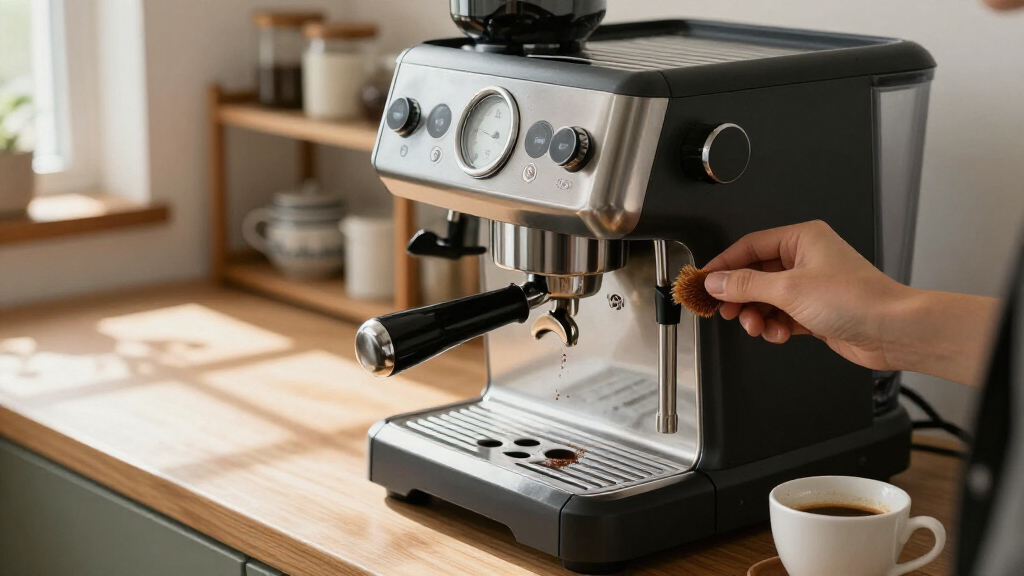
| Brush group gasket and screen | Yes | Yes | Yes |
| Detergent backflush (5–10 cycles) | No | Yes | Yes |
| Remove and scrub dispersion screen + basket | No | Yes | Yes |
| Soak portafilter and baskets in cleaner | Rinse only | Yes | Yes |
| Inspect/replace gasket and screen | No | No | Yes |
| Check group bolt and jet for clogs | No | No | Yes |
A few timing notes that matter. Purge the group before your first shot of the day — that first burst of water flushes stale water and surface residue. Rinse your portafilter daily, but don’t soak the handle in cleaning solution; the detergent can damage the finish and, on wooden handles, the wood itself.
Gaskets and screens don’t last forever. Plan on replacing your group gasket every 6–12 months and your dispersion screen roughly every 12 months — sooner if it’s warped, cracked, or stubbornly clogged. [1]
How to Backflush Your Group Head in 6 Steps
Backflushing is the process of forcing cleaning water backwards through the group head using a blind basket, and it takes about five minutes. Here’s exactly how to do it. One warning first, because it matters:
Only backflush machines with a 3-way solenoid valve. Machines without one — like the Rok and some entry-level units — have nowhere for the pressurized water to go. Check your manual before you start, or you risk damaging the machine. [1]
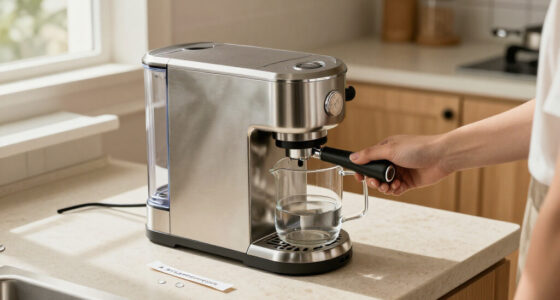
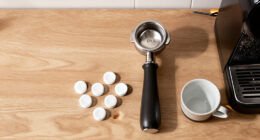
- Lock a blind basket (backflush disc) into your portafilter and insert it into the group as if making a shot.
- Run the pump for 10 seconds, then stop. The pressure releases through the solenoid into the drip tray. You’ll hear a sharp hiss — that’s the sound of dirty water escaping.
- Repeat 5–10 times with water only for your daily clean. The water that comes out should turn from coffee-brown to clear.
- For the weekly clean, add a small dose of espresso detergent (about 1/2 teaspoon of Cafiza or Puly Caff) to the blind basket.
- Run 5–10 detergent cycles — 10 seconds on, pause, release. Watch the drain water: if it’s still dark after the last cycle, run a few more.
- Finish with 5–10 rinse cycles, no detergent, to purge every trace of cleaner from the group.
One thing surprises first-timers: the amount of brown gunk that appears in the drip tray from a machine that “looked clean.” That’s the rancid oil that’s been seasoning your shots.
Why Dish Soap Will Wreck Your Machine (Use Real Espresso Detergent)
You should never use regular dish soap in your group head — dedicated espresso detergents like Cafiza or Puly Caff are formulated to dissolve coffee oils without foaming, corroding, or leaving residue. Dish soap does all three.
Espresso detergent is alkaline and low-suds, designed specifically to break down coffee oils. Dish soap foams massively under pump pressure, and that foam lingers in the group and solenoid for dozens of shots afterward. Your espresso will taste faintly lemony for a week. There’s also a newer category worth knowing: enzyme-based cleaners, marketed as gentler alternatives to caustic detergents — a reasonable option if you’re sensitive to chemical residue, though traditional detergents still do the heavy lifting faster. [1]
The same logic applies to your soak. Weekly, drop your baskets and the metal parts of your portafilter into hot water with a dose of espresso detergent for 15–20 minutes. They’ll come out with the oil film literally floating off. Scrub with a nylon brush, rinse thoroughly, and dry. Again: keep the handle out of the soak.
Bitter, Metallic, or Dripping? Match the Symptom to the Fix
Most group head problems announce themselves clearly once you know the signals. Bitter or metallic taste means rancid oils; dripping between shots means a worn gasket, dirty solenoid, or scale; weak crema means stale oils or uneven dispersion. Here’s your diagnostic cheat sheet. [1]
| Symptom | Likely Cause | Fix |
|---|---|---|
| Bitter, sour, or metallic taste | Rancid oils in screen and gasket | Deep clean: detergent backflush + screen removal |
| Group head drips between shots | Worn gasket, dirty solenoid valve, or scale | Replace gasket; backflush; descale if needed |
| Inconsistent shot times, channeling | Partially clogged screen or group jet | Remove screen; check jet for debris |
| Weak or thin crema | Stale oils and uneven water dispersion | Full detergent clean; inspect screen for warping |
| Off smell around group | Mold/bacteria in gasket or drip tray | Deep clean immediately; replace gasket; daily brushing |
Two practical notes. A naked (bottomless) portafilter makes almost all of these problems visible — you’ll see channeling as stray sprays and dirty splatter immediately, which is why so many home baristas buy one as a diagnostic tool. [1] And if your gasket or screen is stuck, don’t improvise with a screwdriver; use a proper gasket removal tool or screen removal key, a few dollars each, and save yourself a scratched group.
What’s Changing: Smart Machines and Rising Home Standards
Group head maintenance is getting easier and more visible. Blind baskets now ship as standard accessories with most prosumer machines, some smart machines include automatic backflush programs and cleaning reminders, and online communities have dramatically raised the bar for home maintenance. [1]
The shift is real. A decade ago, home baristas rarely backflushed — most didn’t know the word. Today, communities like r/espresso and YouTube channels like James Hoffmann have turned group head cleaning into standard knowledge, and manufacturers responded by building cleaning cycles directly into machines. [1]
Consider what this looks like in practice: a modern prosumer machine might prompt you every 200 shots to run its automatic cleaning cycle, which handles the detergent backflush for you at the press of a button. That’s a genuine tradeoff worth understanding — the automation covers the backflush, but not the gasket brushing, not the screen removal, not the gasket replacement schedule. Owners who trust the reminder light completely still end up with rancid gaskets, because the machine can only nag about what it can count (shots pulled), not what it can’t see (oil buildup behind the screen). The community knowledge works the same way: watching a Hoffman video tells you what to do, but the routine only works if you actually calendar it.
There’s also a market implication: as cleaning standards became mainstream knowledge, accessory prices dropped and availability exploded. A blind basket and a tub of Cafiza — once specialty-shop items — are now on the shelf at most kitchenware stores. The barrier to a clean group head has never been lower, which is precisely why a dirty one is no longer an excuse.
But the fundamentals haven’t moved. No machine reminds its way out of a rancid gasket. The routine — daily water, weekly detergent, monthly teardown — still does the work. The technology just nags you to actually do it.
Frequently Asked Questions
How often should I backflush my espresso machine?
Backflush with water daily and with espresso detergent weekly for home machines. Cafés running all day should backflush with detergent daily or even multiple times per day. The water flush removes loose grounds; the detergent flush dissolves the rancid oil film that plain water can’t touch.
Why does my espresso taste bitter or metallic even with fresh beans?
The most likely cause is rancid coffee oils built up in the dispersion screen and gasket grooves. These oils oxidize within days and contaminate every shot. Do a detergent backflush, remove and scrub the screen, and soak your baskets — the metallic bitterness usually disappears within one cleaning session.
Can I use regular dish soap to clean my group head?
No. Dish soap foams heavily under pump pressure, lingers in the group and solenoid valve, and leaves a soapy taste in your shots for days. Use a dedicated espresso detergent like Cafiza or Puly Caff — it’s formulated to dissolve coffee oils without foaming or leaving residue.
Why is my group head dripping between shots?
A dripping group head usually points to one of three things: a worn group gasket (replace it — they last 6–12 months), a dirty solenoid valve, or scale buildup in the group. Start with a detergent backflush; if the drip continues, replace the gasket and descale if you’re in a hard-water area.
Can I backflush any espresso machine?
No — only machines with a 3-way solenoid valve can be backflushed safely. Machines without one, like the Rok or some entry-level models, have no pressure-release path, and backflushing can damage them. Check your manual before attempting it.
Conclusion
Here’s the crisp takeaway: before you blame your beans, your grinder, or your technique, clean your group head. The routine costs you five minutes a day, ten minutes a week, and one Saturday coffee session a month. In exchange, you get shots that taste like the coffee you actually paid for. [1]
Run one detergent backflush tonight and watch the drip tray. If brown sludge comes out of a machine you thought was clean, you’ve just found the reason your espresso wasn’t.