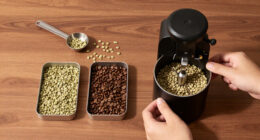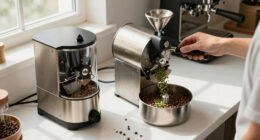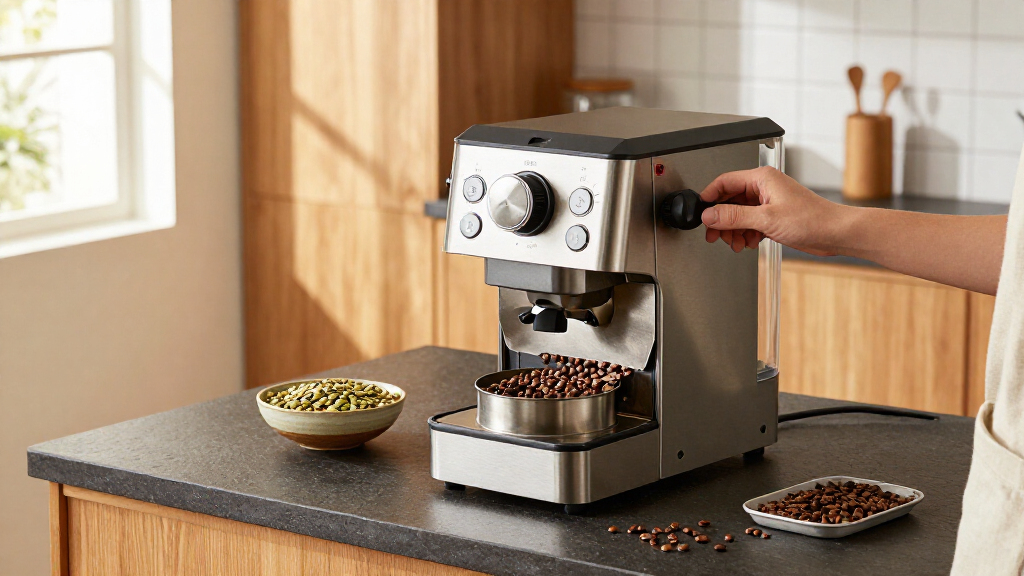
The best drum coffee roaster for home depends on how much coffee you roast, how you manage smoke, and how much control you want over each batch. My best overall pick is the NIASIA 500 g Home Coffee Roaster, which pairs a practical batch size with a smoke filter and chaff collector. For hands-on roasting, the ICZW 3.8L Roaster with Cooler stands out for its included cooling setup, while the Chef Prosentials 200 g Roaster suits smaller batches. The main tradeoff is between capacity and home-friendly handling: larger drums can roast more at once, but take more space and can be harder to manage. Read on for the full comparison and guidance on matching a roaster to your kitchen and routine.

Get coffee and tea gear delivered free with Prime
- Fast, free delivery on millions of items
- Prime Video, Amazon Music and more included
- Member-only deals all year
Complete the kit



Key Takeaways
- NIASIA’s 500 g capacity and smoke-handling features give it the most balanced profile for regular home batches among these picks.
- The ICZW 3.8L model includes a cooler, a useful distinction for buyers who want to move beans promptly from roasting to cooling.
- Chef Prosentials’ 200 g capacity favors smaller, more frequent roasts over producing a large supply in one session.
- Viewing windows and mesh windows help monitor beans, but visibility does not replace attention to heat and roast timing.
- The 14.5 L ICZW drum prioritizes capacity; buyers should weigh its larger footprint against how often they will roast bigger batches.
| ICZW 3.8L Stainless Steel Coffee Bean Drum Roaster with Cooler |  | Best Gas-Stove Pick | Model: JT-3A | Capacity: 3.8 L | Roasting capacity: 0.3–0.5 kg (0.66–1.1 lb) per batch | VIEW LATEST PRICE | See Our Full Breakdown |
| Electric Coffee Bean Roaster with Smokeless Drum and Automatic Baking |  | Best for Roast Control | Model: BAMI-T500 | Maximum bean capacity: 500 g | Roasting modes: Automatic, assisted, and manual | VIEW LATEST PRICE | See Our Full Breakdown |
| Yiujeoc Stainless Steel Drum Coffee Roaster with Mesh Window |  | Best for Adjustable Drum Speed | Material: Stainless steel | Stated capacity: 600–800 g; approximately 300–500 g per batch recommended | Rotation speed: 1–33 RPM, stepless control | VIEW LATEST PRICE | See Our Full Breakdown |
| Stainless Steel Coffee and Nut Roaster Drum, 25 RPM |  | Best for a Custom Heat Setup | Material: Stainless steel | Roasting style: Perforated rotating drum | Motor power: 40 W | VIEW LATEST PRICE | See Our Full Breakdown |
| NIASIA 500 g Home Coffee Roaster with Smoke Filter, Vent Pipes, and Chaff Collector |  | Best for Profile-Based Home Roasting | Model: PKF-500g | Power: 1000 W | Voltage: 110 V | VIEW LATEST PRICE | See Our Full Breakdown |
| Chef Prosentials Electric Coffee Bean Roaster, 200 g |  | Best Electric Drum Pick | Type: Electric drum coffee bean roaster | Model: BAMI-200G | Power: 1000 W | VIEW LATEST PRICE | See Our Full Breakdown |
| Stainless Steel Drum Coffee Roaster with Cooler and Thermometer, 3.8 L |  | Best for Gas-Stove Batch Control | Capacity: 3.8 L (3.45 qt) | Batch capacity: 0.3–0.5 kg (0.66–1.1 lb) | Material: Stainless steel | VIEW LATEST PRICE | See Our Full Breakdown |
| Stainless Steel Home Coffee Roaster with Viewing Window |  | Best for Watching the Roast | Material: Stainless steel | Roasting capacity: About 300–500 g per batch; approximately 600–800 g also stated | Motor speed: 1–33 RPM, stepless adjustment | VIEW LATEST PRICE | See Our Full Breakdown |
| ICZW 14.5 L Stainless Steel Drum Coffee Bean Roaster |  | Best for Very Large Batches | Model: JT-3A | Capacity: 14.5 L | Batch capacity: Approximately 3.5–4.0 kg (7.7–8.8 lb) | VIEW LATEST PRICE | See Our Full Breakdown |
| Bokknppo Stainless Steel Coffee Bean Roaster with Adjustable Drum |  | Best Stovetop Pick for Gas or Electric | Material: Polished stainless steel | Capacity: 3.8 L (3.45 qt) | Batch capacity: 0.66–1.1 lb | VIEW LATEST PRICE | See Our Full Breakdown |
| drum coffee roasters for home | Dimensions | Material | Model | Weight |
|---|---|---|---|---|
| ICZW 3.8L Stainless Steel Coff | 8.8 × 8.7 × 9.8 in (D × W × H) | Stainless steel | JT-3A | 7 lb |
| Electric Coffee Bean Roaster w | 19.29 × 10.24 × 15.75 in | — | BAMI-T500 | 22 lb |
| Yiujeoc Stainless Steel Drum C | 15 × 8.7 × 7.9 in (D × W × H) | Stainless steel | — | — |
| Stainless Steel Coffee and Nut | — | Stainless steel | — | — |
| NIASIA 500 g Home Coffee Roast | 16 × 12 × 20 in (D × W × H) | — | PKF-500g | — |
| Chef Prosentials Electric Coff | 12.6 × 8 × 10.2 in | — | BAMI-200G | 22 lb |
| Stainless Steel Drum Coffee Ro | 9.4 × 7.1 × 9.99 in | Stainless steel | — | 9.9 lb |
| Stainless Steel Home Coffee Ro | 15 × 8.7 × 7.9 in | Stainless steel | — | — |
| ICZW 14.5 L Stainless Steel Dr | 8.8 × 8.7 × 9.8 in | Stainless steel | JT-3A | 7 lb |
| Bokknppo Stainless Steel Coffe | 9.4 × 7.1 × 10 in | Polished stainless steel | — | — |
More Details on Our Top Picks
ICZW 3.8L Stainless Steel Coffee Bean Drum Roaster with Cooler
The ICZW JT-3A is a practical choice for home roasters who already have a gas stove and want a rotating drum with a separate cooling step built in. Its 0.3–0.5 kg batch range suits regular home use, while the stainless steel drum and double baffles are designed to keep beans moving as they roast. The included cooler is a useful advantage over the Stainless Steel Coffee and Nut Roaster Drum, which lists a tray but no dedicated cooler. The tradeoff is that the ICZW depends on an open gas burner, so it offers less self-contained operation than the electric NIASIA 500 g Home Coffee Roaster. I’d choose it for a hands-on, multi-use setup; buyers seeking electric controls or larger batches should look elsewhere.
Pros:- Stainless steel construction is durable and easy to clean.
- Double baffles and a rotating drum support steady bean movement.
- Included cooler provides a dedicated way to cool roasted beans.
- Can also roast peanuts, soybeans, and other suitable foods.
Cons:- Requires a gas stove for heat, rather than operating as a self-contained electric roaster.
- Batch capacity tops out at approximately 0.5 kg.
Best for: Home roasters with a gas stove who want a stainless steel drum, a dedicated bean cooler, and the option to roast nuts or soybeans.
Not ideal for: People without a gas burner or anyone who wants an electric, closely monitored roast cycle.
- Model:JT-3A
- Capacity:3.8 L
- Roasting capacity:0.3–0.5 kg (0.66–1.1 lb) per batch
- Material:Stainless steel
- Heating method:Gas stove
- Cooling:Included coffee bean cooler
- Dimensions:8.8 × 8.7 × 9.8 in (D × W × H)
- Weight:7 lb
Our verdict“Choose the ICZW if you have a gas stove and value a dedicated cooler and multi-use drum over electric controls.”
Electric Coffee Bean Roaster with Smokeless Drum and Automatic Baking
This electric drum roaster suits buyers who want more involvement in roast decisions without giving up beginner-friendly automation. Its automatic, assisted, and manual modes let a new roaster start with guided operation and later work with temperature, rate-of-rise, firepower, and damper controls. That makes it more adjustable than the profile-led NIASIA 500 g Home Coffee Roaster, though NIASIA specifies nine automatic profiles and a separate cooling tray. The built-in smoke and dust purifier is a strong home-use feature, but “smokeless” should not be read as a guarantee of zero smoke. At 22 pounds and nearly 20 inches long, it also needs a committed counter spot. I’d favor this model for learners who want roast data and manual control; those seeking a smaller, simpler machine may prefer another option.
Pros:- Three roasting modes accommodate different skill levels and preferences.
- Bean temperature and rate-of-rise detection help users follow roast changes.
- Firepower and damper controls allow manual adjustments.
- Built-in purifier treats smoke and dust before discharge.
Cons:- At 22 pounds and 19.29 inches long, it takes substantial counter space.
- Manual mode requires users to adjust roasting parameters themselves.
- Maximum batch capacity is 500 g.
Best for: Home roasters who want to learn through temperature and rate-of-rise monitoring, with automatic and assisted modes available as they build confidence.
Not ideal for: Buyers with limited counter space or people who want a compact machine with no manual parameter adjustments.
- Model:BAMI-T500
- Maximum bean capacity:500 g
- Roasting modes:Automatic, assisted, and manual
- Controls and detection:Bean temperature, rate of rise, firepower, and damper
- Smoke and dust purification:Built-in purifier
- Dimensions:19.29 × 10.24 × 15.75 in
- Weight:22 lb
Our verdict“Pick this electric model if you want roast monitoring and room to move from automatic to manual control.”
Yiujeoc Stainless Steel Drum Coffee Roaster with Mesh Window
The Yiujeoc stands out for stepless rotation from 1 to 33 RPM, giving gas-stove users more scope to vary bean movement than the fixed-speed Stainless Steel Coffee and Nut Roaster Drum, 25 RPM. Its perforated stainless steel drum is also designed to release smoke and chaff, and its cordless or plugged-in operation adds flexibility around the roasting setup. The capacity deserves a cautious read: the listing states 600–800 g, but recommends approximately 300–500 g per batch, so I would plan around the lower figure. This is a more adjustable alternative to the straightforward ICZW gas-stove roaster, but it still relies on a gas heat source and needs good ventilation. I’d skip it if you roast indoors without suitable airflow or need induction compatibility.
Pros:- Stepless rotation control spans 1–33 RPM.
- Perforated drum is designed to release smoke and chaff.
- Cordless or plugged-in operation offers flexibility for the rotation mechanism.
- Can roast coffee, nuts, grains, dried fruit, and popcorn.
Cons:- Requires a gas stove and is not compatible with induction cooktops.
- Roasting can produce smoke, so good ventilation is needed.
- Capacity and body-weight details in the product information are inconsistent.
Best for: Gas-stove users who want to vary drum speed and roast coffee alongside foods such as nuts, grains, or popcorn.
Not ideal for: Induction-cooktop owners, people without a well-ventilated roasting area, or buyers who need unambiguous capacity specifications.
- Material:Stainless steel
- Stated capacity:600–800 g; approximately 300–500 g per batch recommended
- Rotation speed:1–33 RPM, stepless control
- Heating method:Gas stove
- Cooktop compatibility:Natural gas and gas cooktops; not induction
- Power operation:Cordless or plugged-in; 220/110 V stated
- Maximum runtime:Up to 4 hours on a full charge
- Dimensions:15 × 8.7 × 7.9 in (D × W × H)
Our verdict“Choose the Yiujeoc for adjustable drum speed on a gas stove, but only if its capacity ambiguity and ventilation needs fit your setup.”
Stainless Steel Coffee and Nut Roaster Drum, 25 RPM
This model is a rotating drum attachment rather than a complete roaster: its 25 RPM motor tumbles ingredients, but the buyer must supply the heat from a stovetop, gas burner, or electric hot plate. That separates it from the ready-to-use electric NIASIA 500 g Home Coffee Roaster and the gas-stove ICZW, both of which specify a more integrated roasting setup. The perforated stainless steel drum and broad stated capacity may appeal to people who already have a suitable heat source and want one tool for coffee, nuts, and grains. But the listed approximately 2.6 kg capacity should not be treated as a guarantee of a suitable coffee batch; the product data does not explain how that figure applies to coffee. I’d pass if you want a simple, controlled home-roasting appliance.
Pros:- Rotating perforated drum is designed to tumble ingredients during roasting.
- Stainless steel construction is durable and corrosion-resistant.
- Can be used for coffee, peanuts, nuts, and grains.
- Works with a separate stovetop, gas burner, or electric hot plate.
Cons:- No built-in heat source is included, so roasting requires a separate appliance.
- The listed capacity does not clarify a recommended coffee batch size.
- Offers less integrated roast monitoring and convenience than electric drum roasters such as the NIASIA.
Best for: DIY-minded home roasters who already own a compatible heat source and want a rotating drum for several ingredients.
Not ideal for: Beginners seeking an all-in-one roaster, or anyone without a separate burner or hot plate.
- Material:Stainless steel
- Roasting style:Perforated rotating drum
- Motor power:40 W
- Rotation speed:25 RPM
- Drum diameter:14 cm (5.5 in)
- Listed capacity:Approximately 2.6 kg (5.7 lb)
- Heat source:Not built in; requires a separate heat source
- Included items:Roaster and stainless steel tray
Our verdict“Buy this drum only if you already have a suitable heat source and prefer a flexible attachment over a self-contained roaster.”
NIASIA 500 g Home Coffee Roaster with Smoke Filter, Vent Pipes, and Chaff Collector
The NIASIA is the most home-focused pick here for buyers who want guided roasting and a defined cooling setup. Its nine automatic profiles sit alongside manual operation, while the separate cooling tray and high-speed fan help move beans out of the roasting stage promptly. Unlike the Electric Coffee Bean Roaster with Smokeless Drum and Automatic Baking, which emphasizes temperature and rate-of-rise monitoring with assisted controls, the NIASIA leans on preset profiles and smoke routing that changes with roast level. Plan on 350–400 g batches rather than filling its 500 g maximum, and expect to vent medium or dark roast smoke outdoors. The listing also warns that irregular or defective beans may jam the drum. I’d choose it for occasional home batches, not frequent or commercial production.
Pros:- Nine automatic profiles offer guided options for roast levels and processing methods.
- Manual operation gives users an alternative to preset roasting.
- Smoke purifier and vent pipes support different roast-level exhaust needs.
- Separate cooling tray and high-speed fan help cool beans after roasting.
Cons:- Recommended batches are 350–400 g, below the 500 g maximum.
- Medium and dark roasts require venting smoke outdoors.
- Irregular or defective beans may jam or get stuck in the drum.
Best for: Home users who want automatic roast profiles, a manual mode, and a separate cooling tray for occasional batches.
Not ideal for: Frequent or commercial roasters, and anyone who cannot vent medium or dark roast smoke outdoors.
- Model:PKF-500g
- Power:1000 W
- Voltage:110 V
- Maximum batch capacity:500 g
- Recommended batch capacity:350–400 g
- Roasting modes:Manual and automatic; 9 automatic profiles
- Smoke exhaust:Purifier for light roasts; two aluminum alloy vent pipes for medium and dark roasts
- Cooling:High-speed cooling fan and separate cooling tray
- Dimensions:16 × 12 × 20 in (D × W × H)
Our verdict“Choose the NIASIA for profile-led home roasting and a dedicated cooling tray, provided outdoor venting and occasional-use capacity suit you.”
Chef Prosentials Electric Coffee Bean Roaster, 200 g
For home roasters who want drum-style roasting without relying on a gas burner, I’d put the Chef Prosentials ahead of the gas-heated Bokknppo. Its 1000 W electric heating and stated 200–300 g working range suit modest batches, while the 304 stainless steel body cavity offers a food-contact material detail that the product data does not specify for every alternative. A smoke purifier, chimney pipe, and several handling tools come in the package, giving it a more ready-to-use setup than the Bokknppo, which requires assembly. The tradeoff is less flexibility on batch size: the ICZW 14.5 L is aimed at much larger runs, while this model tops out at 300 g. It also needs a 110 V / 60 Hz supply, and the extra chimney pipe and filter cotton ship separately.
Pros:- Electric drum heating avoids dependence on a gas stovetop.
- Food-grade 304 stainless steel is specified for the body cavity.
- Includes a smoke purifier, chimney pipe, and several roasting and handling tools.
- The 200–300 g stated working range suits smaller home batches.
Cons:- Maximum stated roast quantity is 300 g, limiting batch size compared with the ICZW 14.5 L.
- Requires a 110 V / 60 Hz power supply.
- The extra chimney pipe and filter cotton are shipped separately.
Best for: Home roasters who want an electric drum setup for small batches and prefer included smoke-management and handling accessories.
Not ideal for: Buyers who need large batches, want to roast over a gas stove, or cannot use a 110 V / 60 Hz power supply.
- Type:Electric drum coffee bean roaster
- Model:BAMI-200G
- Power:1000 W
- Voltage:110 V / 60 Hz
- Best roast quantity:200–300 g
- Maximum roast quantity:300 g
- Body cavity material:Food-grade 304 stainless steel
- Dimensions:12.6 × 8 × 10.2 in
- Weight:22 lb
Our verdict“Choose the Chef Prosentials if you want a small-batch electric drum roaster with smoke-management accessories and do not need the larger capacity of a gas-heated model.”
Stainless Steel Drum Coffee Roaster with Cooler and Thermometer, 3.8 L
This 3.8 L roaster makes more sense for a gas-stove owner who wants adjustable drum motion and a cooling setup than for someone seeking an all-in-one electric machine. Its 5–60 RPM speed range gives the operator room to vary rotation, while the thermometer helps monitor heat and the included fan and sieves support post-roast cooling and sorting. Compared with the Bokknppo, it has a very similar stated batch range and accessory package, but the Bokknppo lists gas and electric stovetop compatibility; this model specifically calls for gas. It can handle batches up to about 0.5 kg, far more than the Chef Prosentials, but far less than the ICZW 14.5 L. That middle scale is useful for household roasting, though it still requires hands-on heat management and ingredients must meet the stated minimum diameter.
Pros:- Adjustable 5–60 RPM motor supports changes in drum rotation.
- Thermometer, cooling fan, and two sieves are included.
- Stated batch range reaches approximately 0.3–0.5 kg.
- Drum baffles are designed to support even bean movement.
Cons:- Heating depends on a gas stovetop.
- The stated minimum ingredient diameter of 0.08 inches limits what can be roasted.
- Roasting requires the user to manage the stove heat.
Best for: Gas-stove users who roast moderate batches and want adjustable rotation, temperature monitoring, and cooling tools in one set.
Not ideal for: People with induction or electric-only cooktops, or buyers who want an electric roaster that controls heat without a stove.
- Capacity:3.8 L (3.45 qt)
- Batch capacity:0.3–0.5 kg (0.66–1.1 lb)
- Material:Stainless steel
- Motor:DC 12 V, 18 W
- Rotation speed:5–60 RPM, adjustable
- Heating compatibility:Gas stovetop
- Dimensions:9.4 × 7.1 × 9.99 in
- Weight:9.9 lb
- Included components:Cooler, roaster, speed controller, thermometer, and two sieves
Our verdict“Pick this model over the Chef Prosentials if you have a gas stove and want a larger batch with adjustable rotation and included cooling equipment.”
Stainless Steel Home Coffee Roaster with Viewing Window
The standout here is the viewing window, which gives a home roaster a way to observe bean color and movement without relying only on the thermometer. The perforated drum is designed to release smoke and help with cooling and chaff removal, and its variable 1–33 RPM speed adds a degree of control not listed for the much larger ICZW 14.5 L. Unlike the Bokknppo, which includes a cooler and sieves, this model’s supplied details emphasize visibility and multi-use roasting rather than a complete post-roast kit. Capacity claims need careful reading: the description gives about 300–500 g per batch, while the specifications also state approximately 600–800 g. It is a gas-stove design, not induction-compatible, and the manufacturer calls for good ventilation. That makes it a flexible food roaster, but not a smoke-free or plug-in coffee solution.
Pros:- Viewing window helps users observe bean color and movement.
- Stepless 1–33 RPM adjustment allows drum-speed changes.
- Perforated drum is designed to release smoke and aid cooling and chaff removal.
- Can also roast peanuts, chestnuts, barley, dried fruit, and popcorn.
Cons:- Requires gas-stove heating and is not suitable for induction.
- Roasting can produce smoke, so good ventilation is needed.
- Capacity information varies between the stated per-batch range and the larger specification figure.
Best for: Gas-stove users who value seeing the beans during roasting and want one drum for coffee and other suitable foods.
Not ideal for: Induction users, buyers seeking an electric heat source, or anyone roasting in a poorly ventilated kitchen.
- Material:Stainless steel
- Roasting capacity:About 300–500 g per batch; approximately 600–800 g also stated
- Motor speed:1–33 RPM, stepless adjustment
- Heating method:Gas stove; not suitable for induction
- Power options:Wireless charging or plug-in operation; 220/110 V stated
- Battery working time:Up to 4 hours per full charge
- Dimensions:15 × 8.7 × 7.9 in
- Item weight:2.6 kg
- Additional uses:Peanuts, chestnuts, barley, dried fruit, and popcorn
Our verdict“Choose this over the Bokknppo if watching the beans and roasting a range of foods matter more to you than a clearly specified cooling-and-sieve package.”
ICZW 14.5 L Stainless Steel Drum Coffee Bean Roaster
The ICZW is the capacity outlier in this group: its stated 3.5–4.0 kg batch size is several times the roughly 0.3–0.5 kg range of the 3.8 L roasters. That scale suits frequent roasting for a larger household or small group, but is excessive for someone who wants to experiment with small batches. A thermometer, external motor, cooling holes, and double baffles provide practical support for monitoring and bean movement; compared with the Chef Prosentials, however, this is a gas-heated drum rather than an electric unit with a smoke purifier. Its listed dimensions are compact relative to the claimed capacity, so buyers should verify the fit and setup against their actual stove and workspace. It can also roast nuts and soybeans, but ingredient size is restricted to pieces larger than 2 mm. The gas requirement and scale are the main reasons it will not suit every home.
Pros:- Stated 3.5–4.0 kg batch capacity is substantially larger than the 3.8 L alternatives.
- Thermometer supports temperature monitoring.
- Cooling holes and double baffles are designed to support bean movement and roasting.
- Stainless steel construction and an external motor are specified.
Cons:- Requires a gas stove for heating.
- The very large stated batch capacity is poorly matched to small household roasts.
- Suitable materials must be larger than 2 mm in diameter.
Best for: Frequent home roasters or small groups who need unusually large batches and already have a suitable gas stove.
Not ideal for: Beginners who want small experimental batches, electric operation, or a roaster with a supplied smoke purifier.
- Model:JT-3A
- Capacity:14.5 L
- Batch capacity:Approximately 3.5–4.0 kg (7.7–8.8 lb)
- Material:Stainless steel
- Operation:Gas-heated drum
- Motor:External motor
- Temperature control:Included thermometer
- Dimensions:8.8 × 8.7 × 9.8 in
- Weight:7 lb
Our verdict“Choose the ICZW over the smaller 3.8 L models only if you can use its gas-heated setup and have a genuine need for multi-kilogram batches.”
Bokknppo Stainless Steel Coffee Bean Roaster with Adjustable Drum
Among the stovetop options here, the Bokknppo has the broadest stated heating compatibility: it is listed for gas and electric stovetops, while the Stainless Steel Drum Coffee Roaster with Cooler and Thermometer is specified for gas only. Its 0.66–1.1 lb batch range is similar to that model’s, and a 5–60 RPM adjustable drum, thermometer, viewing window, cooler, and two sieves give it a useful set of tools for a home roasting routine. That makes it more fully equipped than the viewing-window model, whose listed details do not include the same cooling and sieve package. The tradeoffs are hands-on stovetop heat control, required assembly, and a batch size that cannot match the ICZW 14.5 L. Buyers should also confirm their cooktop style and the product’s stated voltage before purchase.
Pros:- Stated gas and electric stovetop compatibility offers more options than the gas-only 3.8 L alternative.
- Adjustable 5–60 RPM drum and thermometer support roasting control.
- Viewing window and lockable drum door assist observation and handling.
- Includes a cooler and two sieves.
Cons:- Requires assembly before use.
- Batch capacity is limited to 0.66–1.1 lb.
- Heat comes from the stovetop, so the user must manage burner temperature.
Best for: Home roasters who want a moderate batch size, adjustable drum speed, and included cooling tools, especially those with a gas or compatible electric stovetop.
Not ideal for: People seeking a plug-in roaster that supplies its own heat, buyers who dislike assembly, or anyone needing multi-kilogram batches.
- Material:Polished stainless steel
- Capacity:3.8 L (3.45 qt)
- Batch capacity:0.66–1.1 lb
- Drum speed:5–60 RPM
- Motor:12 V DC, 18 W
- Voltage:110–120 V
- Stovetop compatibility:Gas and electric
- Dimensions:9.4 × 7.1 × 10 in
- Included components:Roaster, cooler, two sieves, speed controller, thermometer, and English manual
Our verdict“Pick the Bokknppo over the gas-only 3.8 L roaster if its stated electric-stovetop compatibility fits your kitchen and you want the included cooler and sieves.”
How We Picked
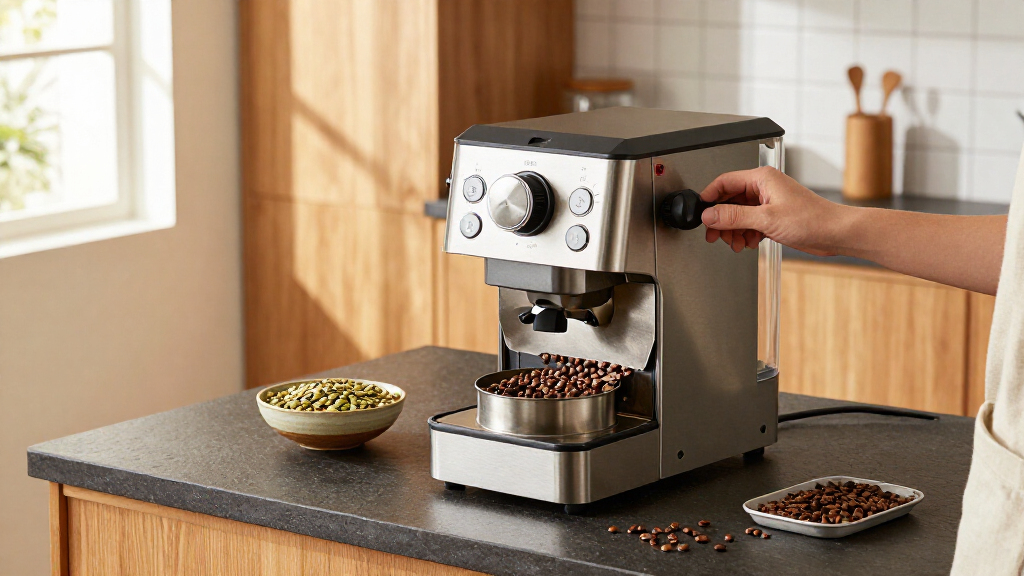
I compared the ten listed models through the needs of a home roaster: batch capacity, smoke and chaff handling, visibility, cooling, and ease of fitting the equipment into a home setup. I also considered how clearly each product’s listed features support a particular use, such as small-batch practice, larger runs, or closer visual monitoring. The product names and supplied feature details do not establish roast consistency, temperature control precision, or long-term durability, so I do not claim those advantages without evidence.
The ranking favors useful home-focused combinations of capacity and handling features over size alone. NIASIA leads for its stated 500 g capacity and smoke filter, vent pipes, and chaff collector; the ICZW 3.8L model with cooler follows for its cooling provision. Smaller or simpler designs rank lower for buyers seeking a versatile primary roaster, but can make more sense for compact routines or specific preferences. The 14.5 L drum offers the most stated capacity, yet its size is a tradeoff rather than an automatic advantage at home.
| drum coffee roasters for home | Model | Material |
|---|---|---|
| ICZW 3.8L Stainless Steel Coff | JT-3A | Stainless steel |
| Electric Coffee Bean Roaster w | BAMI-T500 | — |
| Yiujeoc Stainless Steel Drum C | — | Stainless steel |
| Stainless Steel Coffee and Nut | — | Stainless steel |
| NIASIA 500 g Home Coffee Roast | PKF-500g | — |
| Chef Prosentials Electric Coff | BAMI-200G | — |
| Stainless Steel Drum Coffee Ro | — | Stainless steel |
| Stainless Steel Home Coffee Ro | — | Stainless steel |
| ICZW 14.5 L Stainless Steel Dr | JT-3A | Stainless steel |
| Bokknppo Stainless Steel Coffe | — | Polished stainless steel |
Factors to Consider When Choosing Best Drum Coffee Roasters For Home
Before choosing a drum roaster, I would match the machine to the way you plan to roast—not just the largest batch it can hold. These broader checks can help prevent a mismatch between a roaster’s capacity, your kitchen, and the effort you want each session to take.
Choose Batch Size Around Your Drinking Routine
A large stated capacity only helps if you will use the coffee before it goes stale. Think about how much coffee your household consumes between roasting sessions, then leave room for smaller batches when you want to try different beans or roast levels. A smaller-capacity machine can make experimentation less wasteful, while a larger drum can reduce the number of sessions for frequent coffee drinkers. Check whether a listed capacity refers to a practical roasting batch or simply the drum’s volume; those figures are not interchangeable. Avoid buying for an occasional peak batch if most of your roasting will be modest.
Plan for Smoke, Chaff, and Ventilation
Roasting creates smoke and chaff, and home kitchens vary widely in how well they handle both. A smoke filter or vent pipes may help with the setup, but the product name alone cannot tell you how effective the system is or whether it suits your room. Look for clear instructions about vent routing, outdoor use, and safe placement before deciding where the roaster will operate. Chaff collection can simplify cleanup, but it does not remove the need to clean the machine and surrounding area. A common mistake is choosing a roaster by capacity before deciding where its exhaust and debris will go.
Treat Cooling as Part of the Roasting Workflow
Beans continue to develop heat after roasting, so a prompt cooling step is part of controlling the final result. An included cooler can reduce the need to improvise equipment and may make a repeatable routine easier to manage. If a model does not list a cooler, check what cooling method the manufacturer recommends and whether you have space for it. Consider the full workflow—from loading beans to cooling and cleanup—rather than judging the drum alone. Buyers new to roasting often focus on the roast cycle and underestimate the time and space needed immediately afterward.
Use Windows for Observation, Not as a Substitute for Control
A mesh or viewing window can help you watch bean color and movement without opening the drum. That is useful for learning how a roast changes, but visibility by itself does not provide precise temperature control or a repeatable profile. Check whether the roaster also documents temperature monitoring, adjustment options, and operating guidance. If you are choosing between a visible drum and a model with stronger stated smoke or cooling provisions, decide which gap matters more in your setup. Do not assume that a window makes a roaster beginner-proof.
Check the Whole Footprint Before Paying for More Capacity
Drum capacity is only one part of a roaster’s home footprint. The body, motor or heating setup, ventilation connections, cooling area, and clearance around hot surfaces all affect where it can be used safely. Compare the dimensions and installation requirements with your intended counter, utility area, or outdoor workspace before ordering. A very large drum may be a poor fit if storage is tight or if you roast only occasionally. Paying more or choosing a bigger model makes sense when the extra capacity supports a real routine, not simply because the number looks impressive.
Frequently Asked Questions
Is a 500 g home drum roaster enough for regular use?
It can suit a household that wants to roast a useful batch without moving to the largest drum in this roundup. Whether it is enough depends on how much coffee you drink and how often you want to roast. Smaller batches can help keep experiments manageable, while frequent drinkers may prefer a larger capacity to reduce session frequency. Confirm the maker’s recommended working batch size rather than assuming the full stated capacity is appropriate for every roast. Also account for cooling and storage after each session.
Does a smoke filter mean I can roast anywhere indoors?
No. A listed smoke filter or vent system does not by itself confirm that a roaster is suitable for every indoor space. Read the operating instructions for ventilation, exhaust routing, clearances, and whether the manufacturer calls for outdoor use. Smoke output can vary with beans and roast level, so a small or poorly ventilated room may still be uncomfortable. Make your location decision before buying, and do not rely on the word “smokeless” as a guarantee of zero smoke.
Should I choose a roaster with a cooler or buy cooling equipment separately?
An included cooler can simplify the workflow and reduce the number of separate items you need to source. A model without one may still work if its instructions explain a suitable cooling method and you have the space and equipment to carry it out. Compare the full setup, including where hot beans will go and how quickly you can cool them after the roast. For a first roaster, a clear, self-contained workflow can be easier to manage than assembling a separate cooling station. The right choice depends on whether convenience or flexibility matters more to you.
Are viewing-window drum roasters easier for beginners?
A window can make it easier to observe color changes and bean movement, which can support learning. It does not automatically provide temperature data, automatic roast control, or guidance on when to stop a batch. Beginners should also look for clear operating instructions, manageable batch sizes, and a practical cooling plan. If those details are absent, a window alone may not make the learning process easier. Choose visibility as one helpful feature, not as a substitute for control and instruction.
Is the 14.5 L ICZW roaster a better buy than a 3.8 L model?
Only if its larger capacity fits your actual roasting routine and available space. The 14.5 L model may appeal to buyers who want larger runs, while the 3.8 L ICZW option is listed with a cooler and may suit a more modest home workflow. Drum volume does not tell you the recommended bean load, so check the maker’s batch guidance before comparing capacity claims. Also account for storage, ventilation, and cooling needs. If you roast small amounts or only occasionally, the larger drum may add bulk without a meaningful benefit.
Conclusion
For most buyers seeking a balanced home setup, I would start with the NIASIA 500 g Home Coffee Roaster: its stated capacity and smoke and chaff features make it the strongest all-around fit in this lineup. For best value in practical features, the ICZW 3.8L model with cooler is a sensible alternative when post-roast handling matters; value here means feature fit, not a price claim. I would treat the ICZW 14.5 L drum as the best premium-style choice for buyers who genuinely need larger batches and have room for the setup. Beginners who want to keep batches small can look at the Chef Prosentials 200 g roaster, while buyers who prioritize observation should compare the mesh- and viewing-window models. Choose the roaster that matches your batch size, ventilation plan, and cooling workflow—not the largest capacity on the list.