
TL;DR

Get coffee and tea gear delivered free with Prime
- Fast, free delivery on millions of items
- Prime Video, Amazon Music and more included
- Member-only deals all year
Small batch roasting can help you test more ideas with less green coffee, but a small roast may behave differently from a normal production batch. Track the load as a share of roaster capacity, change one major variable at a time, taste consistently, and repeat promising trials at the intended production size.
Use small batches to explore ideas cheaply when your roaster handles them consistently.
Record load as a percentage of rated capacity; grams alone do not describe the machine conditions.
Change one major variable at a time and compare cups using a consistent method.
Repeat promising trials, then validate profiles at the batch size you plan to roast.
A faster trial schedule is not the same as a reliable conclusion.
Small Batch Roasting How batch size changes learning speed
Smaller trials can stretch a coffee supply across more experiments, but the results may not transfer to production. Faster testing only helps when each roast gives you a fair, repeatable comparison.
Small batches speed up exploration
Using less green coffee per trial can leave more supply for testing ideas, tasting, and repeats.
- Screen heat or airflow approaches with lower-cost trials.
- Use a small batch to ask whether a direction seems promising.
- Repeat promising trials to check whether the result holds.
- Validate at the batch size intended for production.
Make each roast a fair test
A focused question and controlled comparison make results easier to interpret.
Decide what change you want to assess and what result would matter.
Record the coffee lot, load, machine, settings, and usual conditions.
Keep other conditions as steady as possible and note unavoidable differences.
Compare samples consistently, then repeat a promising result before deciding.
Read batch size in context
Grams alone do not describe the roast environment; compare loads as a share of rated capacity.
| Question | Useful test | What to confirm |
|---|---|---|
| Does this approach show promise? | A manageable small batch | Repeatability and cup quality |
| Will it suit production? | A batch near the intended load | Consistency in normal conditions |
| Did airflow cause the change? | Comparable batches with one planned change | Side-by-side tasting and a repeat |
Speed is not the same as confidence
Machine design, load, coffee characteristics, and operating conditions all shape how a roast behaves.
More trials per lot
Smaller batches can make it possible to explore more ideas with the same coffee supply.
Evidence that transfers
A small roast is a useful lead, not proof that a profile will work at production scale.
Record the machine
Log batch size as a share of rated capacity and follow the manufacturer’s operating guidance.
Why small batches let you test more ideas for the same coffee
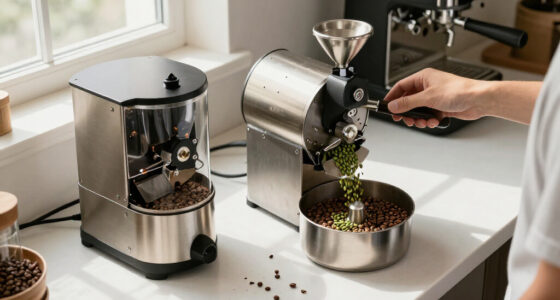
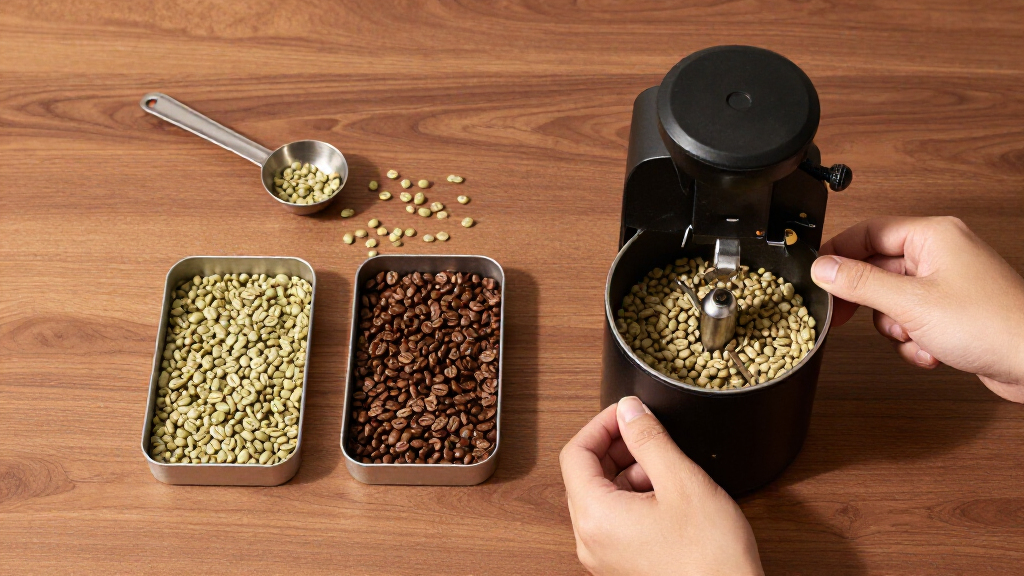
Small batch roasting can speed up early exploration because each trial uses less green coffee, so you can test more ideas from the same lot. That helps when you are deciding whether a coffee responds better to a different heat approach, airflow setting, or roast development. The gain is in **experiment throughput**: more chances to ask a focused question before your supply runs low. Say you have 2 kg of a new coffee and want to compare three airflow approaches. If your machine handles 200 g batches consistently, you can reserve some coffee for repeats and tasting rather than spending most of it on a single large test. Each batch becomes a small clue. You can smell the dry fragrance, listen for roast events, and later compare the cooled beans and brewed cups. But extra roasts do not guarantee extra learning. If you change airflow, charge temperature, and heat application all at once, you may like the result without knowing why it changed. A dozen loosely controlled roasts can teach you less than a few well-planned ones. Write down the question before you heat the machine, and decide what result would count as a meaningful difference. Batch size affects the cost of a trial, but also its usefulness. A tiny batch is good for screening possibilities: “Does this direction seem promising?” It cannot, on its own, answer whether a profile will work reliably at a normal production load. Think of a small roast as a sketch in pencil. It helps you find the shape of an idea before you commit to painting the whole wall.Products Worth Considering

KitchenAid Artisan Series 5-Quart Tilt-Head Stand Mixer, Juniper

Cuisinart Chef's Style Portable Propane Tabletop Gas Grill, CGG-306P

Breville Bambino Espresso Machine, Brushed Stainless Steel
As an affiliate, we earn on qualifying purchases.
How to run a roast test that teaches you something
A useful roast experiment starts with one question, holds other conditions steady, and ends with a repeatable tasting comparison. That gives you a better chance of connecting a change in the roast to a change in the cup. Keep a simple log; a few clear notes beat a memory of how the kitchen smelled last Tuesday.- Choose one question. For example, “Does a small airflow increase reduce the smoky finish?” State the batch size and the coffee lot.
- Set a baseline. Record the usual settings and machine condition, then roast a control batch if you need a fresh comparison.
- Change one major variable. Keep the load, preheat routine, and other settings as consistent as you can. Note unavoidable differences such as room conditions.
- Record events and observations. Log times, temperatures, settings, cooling approach, and anything unusual. Interpret readings in the context of your machine.
- Taste the samples consistently. Use the same brew method and, where practical, compare samples side by side or blind.
- Repeat a promising result. Check whether the same change produces a similar cup before you make a lasting decision.
Why the machine’s capacity matters more than the gram number
Batch size makes sense only in relation to the roaster’s rated capacity and operating range. A 500 g load is 50% of a 1 kg roaster’s rating, but just 5% of a 10 kg machine’s rating. Those loads put very different amounts of coffee into the same nominal capacity, so the gram number alone cannot tell you whether two trials are comparable. The machine’s thermal mass, airflow, drum speed, and heating system all affect how it responds to a load. The green coffee adds its own differences: bean size, density, moisture, and processing can change how it absorbs heat. So can preheating, the machine’s recent use, and the room. A smaller load may alter timing or heat transfer, but there is no single direction or timing rule that applies to every roaster. Imagine you test 250 g in a sample roaster designed to handle small loads, then use the same profile on a production machine at 8 kg. The numbers on the screen may look familiar, yet airflow and heat response can differ. The sample offers a useful lead; it does not promise a matching curve or cup at the larger scale. When you record a roast, include **batch size and rated capacity**, along with the machine and key settings. That context helps you compare your own trials and makes notes useful months later. Follow the manufacturer’s operating guidance, especially at very low loads. If your machine cannot hold a consistent roast at a particular size, that size is too small for dependable experiments on that machine.When a small roast is a good screen—and when it is weak evidence
A small roast is useful for screening ideas when the machine handles that load consistently; it is weak evidence for production decisions until you test the profile at the intended scale. The right batch depends on the question you want answered. Exploration rewards low-cost trials, while production planning needs evidence from realistic operating conditions.| Your question | Useful starting point | What to confirm |
|---|---|---|
| Does this coffee show promise with a different heat approach? | A manageable small batch on a sample roaster | Repeatability and cup quality in a follow-up test |
| Will this profile work for a café order? | A batch near the intended production load | Consistency across repeats and normal operating conditions |
| Did airflow cause the flavor change? | Comparable batches with one planned airflow change | A side-by-side tasting and a repeat of the result |
What “learning speed” really means for a roaster
Learning speed has two parts: how quickly you can run and assess trials, and how quickly you can reach a conclusion that holds up when you repeat it. Smaller batches can improve the first measure by conserving coffee and making exploration cheaper. Larger or repeated roasts can improve the second by showing whether a result survives realistic conditions. That distinction matters because a fast first impression can send you in the wrong direction. Suppose a sample roast tastes sweet and clean after one adjustment. If that roast was unusually warm from a recent run, the apparent improvement might come from the machine’s condition rather than the setting you changed. A repeat on another day can reveal whether the result follows the change or vanishes with the circumstances. Try to treat a roast curve as a record of what happened, not a score for whether the coffee will taste good. Temperature readings and event timing can help you compare your own runs, but their meaning depends on the machine, the probe, and the load. Tasting gives you the cup-level evidence; notes help you connect it back to the roast. The most useful learning loop often alternates between small tests and bigger confirmation runs. Start small when you want to explore a direction, then repeat the strongest candidates and validate them at the scale you plan to use. More data helps only when the trials answer a clear question and you can compare them fairly.How to turn a promising sample roast into a dependable profile
A promising small roast becomes a dependable profile only after you test its repeatability and adapt it to the target machine and batch size. Treat a sample result as a hypothesis: useful evidence that tells you what to try next, not a finished instruction sheet for production. Start by choosing the production load you actually need. If a café normally roasts 5 kg at a time, a much smaller test cannot confirm how the machine will behave at 5 kg. Run a first validation roast using the production setup, then record its load, settings, timing, machine condition, and cup notes. Repeat the run under similar conditions to see whether the profile produces a comparable result. A practical sequence is to explore with a manageable low-cost load, compare the candidates with consistent brewing and tasting, then move the strongest option to the intended production size. Change only the settings you need to adapt, and document each adjustment. If the production roast tastes flatter or develops differently, use that evidence to guide the next trial instead of copying the sample settings by reflex. For a home roaster, the target may be repeatable batches for a weekly brew rather than commercial volume. The same principle applies: find a load your machine handles well, keep a log, and repeat the cup you like. If you are choosing equipment for this kind of experimentation, the guide to small batch coffee roasters for home brewing can help you compare machines built for smaller loads.How to avoid the common mistakes that slow learning down
The mistakes that slow roast learning down usually make trials hard to compare: changing several settings at once, ignoring load size, tasting inconsistently, or treating one result as proof. These habits create confusing clues. You may roast more often but still struggle to explain what happened. One common trap is comparing a 300 g sample roast with a 1 kg run as though batch size were the only difference. The two loads may change machine behavior, while cooling, preheat, or ambient conditions may shift too. Keep those details with the roast notes. If you change batch size, call it out as a test condition rather than silently comparing the profiles. Another trap is expecting every smaller batch to roast faster. Batch size can influence timing, but the result depends on machine design, load range, settings, and the coffee. If a small batch seems unusually quick, repeat it before drawing a conclusion. If your machine struggles to manage that load, move up to a size it handles consistently. Use this short checklist before a decision-making roast:- Write down the question and one major change.
- Record the load as grams and a share of rated capacity.
- Keep tasting conditions consistent, ideally with a side-by-side comparison.
- Repeat meaningful results and confirm production profiles at production load.
Frequently Asked Questions
Does a smaller batch always roast faster?
No. Batch size can affect roast timing, but the result depends on your machine, its load range, settings, and the coffee. Repeat the test under similar conditions before treating a faster roast as a pattern.
Will a small-batch profile work on a production roaster?
Not automatically. Use the small roast to identify a promising direction, then test and adapt it on the production machine at the intended load. Compare the cup and repeat the validation before relying on the profile.
What is the ideal batch size for learning?
There is no universal ideal. Choose a size your machine can roast consistently that also fits your question: smaller loads can help you explore, while production sized loads help you confirm a profile for regular use.
How small is too small for a coffee roast?
A batch is too small when your roaster cannot manage it consistently or when its measurements and results become unreliable. Check the manufacturer’s guidance and test whether repeated runs at that size produce comparable observations.
How many roast trials should I run before deciding?
Run enough trials to see whether the result repeats, especially when the decision affects production. One roast can point you toward an idea, but a repeat and a confirmation at the target batch size provide stronger evidence.
Does more roast data mean faster learning?
Only when the trials are comparable and answer a clear question. A few controlled roasts with consistent tasting can teach you more than many runs where batch size, settings, and evaluation keep changing.