TL;DR
Air coffee roasters suspend beans in moving hot air, while drum roasters tumble beans against a heated rotating drum and also heat them with hot air. Air roasting is often linked with a clean, vivid cup and responsive adjustments; drum roasting offers stored heat and a broad range of profiles, often associated with fuller body. These are tendencies, not promises: bean quality, batch size, roast choices, and skill shape the final cup.
The same green coffee can taste bright and tea-like from one roast, then round and cocoa-rich from another. The roaster matters, but the label on the machine does not decide the flavor by itself. What matters first is how heat reaches the beans—and what the operator does with that heat.

Get coffee and tea gear delivered free with Prime
- Fast, free delivery on millions of items
- Prime Video, Amazon Music and more included
- Member-only deals all year
Air coffee roasters suspend beans in a stream of hot air; drum roasters tumble them inside a heated rotating drum. That difference affects heat response, bean movement, and the controls you work with, but it does not produce a guaranteed “air-roasted” or “drum-roasted” taste.
This guide explains what changes in the cup, what control feels like in practice, and how to compare machines without getting distracted by a single temperature reading. You’ll also get practical advice for choosing a style that fits your batches, space, and roasting goals.
Air roasters heat beans mainly with moving hot air; drum roasters combine hot air with contact against a heated rotating drum.
Air roasting is often linked with clean, bright flavors, while drum roasting is often linked with fuller body and round sweetness—but neither tendency is guara…
Air-roaster control centers on airflow, temperature, and bean circulation; drum-roaster control also includes drum speed, exhaust, and stored heat.
Temperature readings do not transfer neatly from one machine to another; use roast timing, appearance, aroma, and taste as context.
Compare the same coffee at similar roast levels and brew it the same way before deciding which style you prefer.
Air vs Drum Roasters Flavor and control
Air roasters heat beans mainly with moving hot air; drum roasters combine hot air with contact against a heated drum. That changes how you manage a roast, but the machine type alone does not decide the flavor.
How heat reaches the beans
Different heat paths shape bean movement and how the machine responds to adjustments.
- Moving hot air heats the beans and keeps them circulating.
- Airflow and temperature are central controls.
- Changes may feel quick, but airflow also affects bean movement.
- Hot air and contact with the heated drum transfer heat.
- A rotating chamber tumbles the beans.
- Stored drum heat can continue shaping the roast after adjustments.
Flavor tendencies, not promises
Roast choices, coffee quality, batch size, and operator skill can matter more than the roaster label.
Often clean and bright
Fruit, floral notes, and acidity may stand out. Poorly managed airflow or roast development can still produce uneven flavors.
Often round and full
Stored heat and drum contact can support sweetness and body, but a drum roast can also be light and bright.
Compare the machines fairly
Use these common differences as a guide, not a scorecard.
| What you compare | Air roaster | Drum roaster |
|---|---|---|
| Bean movement | Airflow lifts and circulates beans | Rotating drum tumbles beans |
| Controls to watch | Airflow, air temperature, time, circulation | Heat input, drum speed, exhaust, stored heat |
| Common challenge | Balancing airflow and bean movement | Managing residual heat and avoiding unevenness |
| Typical settings | Home, sample, and some commercial roasting | Home, sample, and commercial roasting |
Choose for your roasting routine
Flavor associations are only one part of finding a suitable machine.
Check capacity and whether the machine suits the batch sizes you roast.
Compare ventilation, cooling, noise, cleaning, and access to replacement parts.
Air roasting emphasizes airflow and circulation; drum roasting also requires attention to stored heat.
Roast the same coffee to similar levels and brew it the same way before choosing a preference.
How each roaster gets heat into your coffee beans
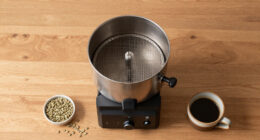
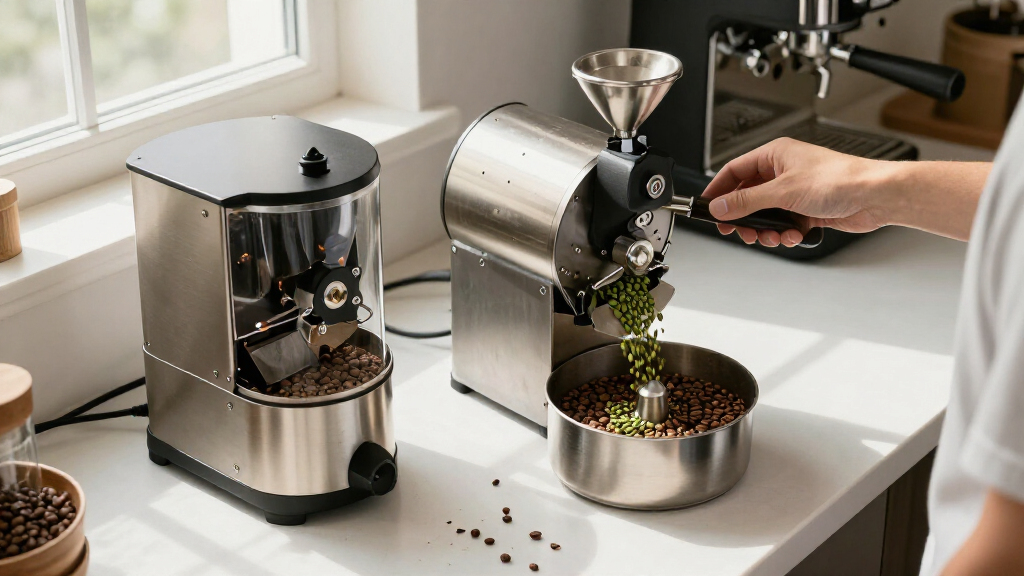
Air coffee roasters heat beans mainly with moving hot air, while drum roasters combine hot air with contact against a heated drum. That is the practical difference behind the familiar air-versus-drum labels. Air roasters suspend beans in a stream of hot air; drum roasters tumble them so beans repeatedly meet both hot air and the drum surface.
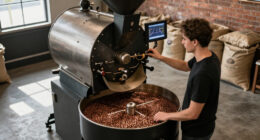
In an air roaster, airflow does two jobs at once: it transfers heat and keeps beans moving. You can often watch them lift and circulate, like leaves caught in a steady gust. In a drum roaster, the rotating chamber turns the beans through the roast. The drum’s metal holds heat, so contact with its surface adds another route for heat transfer.
Imagine roasting a small batch of beans on a Saturday morning. In an air machine, changes to airflow or temperature may show up quickly in bean movement and roast progress. In a drum machine, the drum itself stays warm and continues influencing the roast after you adjust the heat. The difference is not that one method uses “real heat” and the other does not; it’s that they apply heat through different combinations of moving air and contact.
That distinction matters when you make adjustments. Airflow, air temperature, and circulation are central in air roasting. Heat input, drum speed, exhaust, and stored heat matter in drum roasting. Machine design changes the details, so two roasters of the same broad type may still behave differently.
Products Worth Considering

KitchenAid Artisan Series 5-Quart Tilt-Head Stand Mixer, Milkshake

KitchenAid Classic Series 4.5-Quart Tilt-Head Stand Mixer, Onyx Black

Instant Pot Duo Crisp Ultimate 6.5-Quart 13-in-1 Pressure Cooker and Air Fryer
As an affiliate, we earn on qualifying purchases.
What flavor difference can you actually taste?
Air roasts are often described as clean and bright, while drum roasts are often associated with fuller body and rounder sweetness. These are useful starting points, not rules. Roast degree, coffee variety, processing, batch size, and the operator’s choices can shift the cup more than the roaster category alone.
Because air roasting keeps beans in motion and heats them primarily through air, drinkers may notice distinct fruit, floral aromas, or crisp acidity in a well-made roast. Think of a washed coffee with a citrus-like edge: a clear roast might let that note stand out rather than bury it under heavy roast flavors. But a poorly managed air roast can taste uneven or underdeveloped, and an air roaster can also make a sweeter, fuller cup with the right profile.
Drum roasting brings hot-air heating together with contact against the drum. Many roasters use that setup to develop sweetness, body, or deeper caramel-like flavors. A medium roast brewed as a rich espresso might feel round and chocolatey, for example. Yet a drum roaster can make light, lively coffee too; the drum does not force every batch toward a dark, heavy taste.
For a fair comparison, taste coffees made from the same green beans and roasted to similar levels. Brew them using the same method and water. If you compare a light air roast with a dark drum roast, you are comparing roast decisions as much as machine design. Your palate gets a clearer answer when you change fewer variables at a time.
Compare air and drum roasters without trusting stereotypes
Air roasters emphasize moving hot air and fast response; drum roasters add stored heat and drum contact. That contrast can help you predict how a machine behaves, but it cannot tell you exactly how a particular coffee will taste. Use the table as a map of common tendencies, not a scorecard.
| What you’re comparing | Air roaster | Drum roaster |
|---|---|---|
| How heat reaches beans | Mostly through moving hot air | Hot air plus contact with the heated drum |
| How beans move | Airflow lifts and circulates them | A rotating drum tumbles them |
| Common flavor associations | Clean, bright, clearly defined notes | Fuller body, round sweetness, developed flavors |
| Controls to watch | Airflow, air temperature, circulation, time | Heat input, drum speed, exhaust, stored heat |
| Common challenge | Keeping airflow and bean movement suitable | Managing residual drum heat and avoiding unevenness |
Consider two home roasters buying a first machine. One wants to roast small batches and quickly test how a coffee’s fruit notes change. An air roaster may suit that routine, provided the user can manage airflow and the machine’s capacity. Another wants to repeat a profile for espresso and explore larger batches. A drum roaster may fit, but the user will need to learn how the warm drum carries heat forward.
Neither type wins every row. Many air models are compact and quick to clean, but not all are small or simple. Drum machines cover home, sample, and production settings, though their size and heat behavior vary. Capacity, ventilation, cooling, noise, cleaning, and access to replacement parts can matter as much as a flavor association.
What control feels like while a roast is happening
Control means managing different variables on each machine, not choosing a universally superior design. Air roasting puts airflow and bean circulation close to the center of your decisions. Drum roasting asks you to track heat input and the energy already stored in the drum, alongside drum speed and exhaust.
An air roaster may react quickly when you change a setting, which can feel direct and responsive. But that response comes with a balancing act: airflow affects both heat transfer and whether the beans move properly. If a small batch circulates poorly, the operator may have to adjust conditions rather than assume the displayed temperature tells the whole story.
A drum roaster can feel steadier once you have a repeatable routine, but its thermal mass has a memory. Lowering the heat does not instantly remove warmth from the drum. Picture a roast that is gaining momentum as you approach a desired development level: you need to anticipate the stored heat rather than wait until the beans look finished to make your first adjustment.
Both types can record temperatures and roast events with probes or software. Those records help you repeat a process, but a probe reading is not a universal truth. Sensor placement, airflow, batch size, and machine design all affect the number. Treat your roast curve as a useful log, then compare it with bean color, smell, timing, and the taste of the cooled coffee.
Use this five-step tasting process to judge both styles
The clearest way to judge air and drum roasting is to compare the same coffee under similar roast and brewing conditions. A side-by-side tasting helps separate the machine’s influence from differences in beans, roast level, and preparation. You do not need laboratory equipment; a notebook and two clean cups can reveal useful patterns.
- Choose one green coffee. If you can, use the same lot for both roasts. A different origin or processing method can add flavor changes that confuse the comparison.
- Keep batches and roast targets as close as practical. Record batch size, roast duration, and the final appearance. Similar-looking beans are not a perfect match, but they are a better starting point than comparing a pale roast with a dark one.
- Rest both coffees for the same length of time. Freshly roasted coffee releases gas, and the rest period can affect how it brews. Follow a consistent schedule rather than tasting one batch the next day and the other a week later.
- Brew with the same water and method. Use the same grinder setting and, where possible, the same coffee-to-water ratio. Taste for aroma, acidity, sweetness, body, and any harsh or grassy notes.
- Repeat before deciding. One batch can reflect an operator mistake or a machine setting that needs adjustment. Roast again and see whether the flavor difference holds up.
For example, if the air-roasted cup seems brighter on the first try, ask whether it also tastes less developed or simply shows clearer citrus notes. If the drum-roasted cup feels heavier, check whether its roast level or brew strength was higher. Good comparisons control the obvious variables so you can notice what is actually different.
Choose a roaster that fits your kitchen and routine
The right roaster is the one whose capacity, controls, and practical demands fit how you actually roast. Flavor preferences matter, but so do smoke, ventilation, noise, cleaning, cooling, and the size of each batch. A machine that makes wonderful coffee but sits unused because it is awkward to run is not a good fit for your routine.
If you want small, frequent batches and like seeing beans move, an air roaster may be a comfortable place to start. Some models roast quickly, though roast time depends on the machine, batch, and profile; “air” does not automatically mean faster. Airflow and bean movement also take practice, so a compact design does not mean every part of roasting is effortless.
If you want to explore a wide range of profiles or roast more coffee per batch, a drum roaster may appeal. Its stored heat can help support repeatable work once you understand the machine, but it also means you must anticipate how the drum carries heat through an adjustment. Home models vary widely, so check the maker’s stated batch range and consider where hot exhaust will go.
Before buying, write down how much coffee you brew in a week and where you can roast safely. Green coffee expands as it roasts, smoke and chaff need sensible handling, and freshly roasted beans need cooling. If you are comparing compact models, a guide to air coffee roasters can help you understand the kinds of features and capacities available. Treat ventilation and cleanup as part of the decision, not an afterthought.
Avoid these three mistakes when reading roast results
Three common mistakes are treating flavor tendencies as guarantees, comparing different coffees, and trusting temperature numbers alone. Each can make you blame the roaster for a result caused by a different variable. A little care in how you record and taste batches gives you a more honest answer.
- Mistake one: assuming air always means light and acidic. Air-roasted coffee can taste fuller or sweeter, depending on the profile. Likewise, drum-roasted coffee can preserve bright acidity.
- Mistake two: assuming more body proves a drum-roaster effect. Bean variety, roast level, and brewing method all shape body. A stronger brew can feel heavier even if the roast itself is similar.
- Mistake three: comparing temperature readings across unrelated machines. Probe position and airflow change what a displayed reading represents. A number on one machine does not necessarily match the same number on another.
Imagine two roast logs that both show the same peak temperature. That does not prove the beans received the same heat or followed the same development. One machine may have a probe near a moving air stream; another may measure conditions closer to the drum or beans. Read numbers alongside timing, color, smell, and taste.
Consistency is possible with either design, but it comes from repeatable batch size, careful maintenance, sensible calibration, and a steady process. If a roast tastes uneven, check bean movement and batch loading on an air machine, or stored heat and contact effects on a drum machine. Then change one variable and roast again.
Frequently Asked Questions
Does air roasting taste better than drum roasting?
Neither method tastes better for everyone. Air roasting is often associated with clean, bright flavors, while drum roasting is often associated with fuller body or round sweetness. Compare the same beans at similar roast levels to see which cup you prefer.
Is air-roasted coffee always lighter or more acidic?
No. Air roasting can produce a bright cup, but roast profile and bean characteristics shape acidity and body. A skilled operator can make a fuller air roast, just as a drum roaster can produce a light, lively coffee.
Does drum roasting always create more body?
No, drum roasting does not guarantee more body. The heated drum can contribute to a range of roast profiles, but coffee variety, roast development, and brewing choices also affect how full the cup feels. A concentrated brew can seem heavier even when the roast difference is small.
Which roaster is easier for a beginner to use?
It depends on the machine and your comfort with its controls. Some air roasters are straightforward, though managing airflow and bean movement takes practice. Drum roasters can offer a steady roasting routine, but you need to learn how stored heat continues to affect the beans after you adjust the heat.
Can I compare two roasters using temperature alone?
No; temperature readings alone do not make a reliable cross-machine comparison. Probe placement, airflow, batch size, and machine design affect what each number means. Record temperature alongside timing, bean color, aroma, and the final taste.
Conclusion
Choose by heat behavior, practical fit, and the coffee you want to make—not by a promise that one roaster tastes better. Air machines often offer quick response and vivid, clean cups; drum machines add contact heat and stored warmth that can support a wide range of profiles. Both reward careful roasting.
Try the same beans in a fair side-by-side tasting, and let the cups make the argument. One may sparkle like citrus in a bright window; the other may settle into a warm, cocoa-rich finish.