
TL;DR

Get coffee and tea gear delivered free with Prime
- Fast, free delivery on millions of items
- Prime Video, Amazon Music and more included
- Member-only deals all year
First crack marks the bean’s expansion as steam pressure fractures its structure; second crack signals further breakdown and a darker roast. Lighter coffees often need more help extracting in espresso, while darker coffees can extract quickly and taste bitter if pushed too far. Use crack stages as clues, then let the cup guide your grind, temperature, and ratio.
First crack marks bean expansion from internal steam pressure and the start of roast development.
Second crack signals further structural breakdown; the coffee may taste darker and extract more readily.
Lighter roasts may need finer grinding, hotter water, or a longer ratio to improve extraction.
Darker roasts may benefit from coarser grinding, lower temperature, or a shorter ratio if they taste bitter.
Change one espresso variable at a time, and use flavor—not crack stage or crema alone—to judge the result.
Roast cues · Espresso practice
The First Crack and Second Crack Guide for Espresso Drinkers
Those popcorn-like pops mark changes inside the bean. Learn what each crack can suggest about flavor and extraction, then let your shot—not the sound—set the recipe.
Steam pressure fractures the bean’s structure as it expands.
Further breakdown often brings more solubility and roasty notes.
TL;DR First crack marks bean expansion and the start of roast development; second crack signals further breakdown and a darker roast. Lighter coffees may need more help extracting, while darker coffees can turn bitter if pushed too far. Use crack stages as clues, then adjust grind, temperature, or ratio one at a time.
01 / What the sounds mean
Two cracks, two stages of change
Crack names describe roasting milestones. They offer useful context for espresso, but they are not a complete roast label or a promise of how a coffee will taste.
First crack: pressure releases
Moisture inside the bean becomes steam. As pressure builds, the bean expands and its structure fractures with dry, popcorn-like snaps. Roasters may stop soon after this point or continue developing the coffee.
Second crack: structure breaks down further
With continued heat, smaller, sharper pops indicate further breakdown. Oils may become visible. The resulting coffee often tastes more bittersweet, smoky, or roasty and can extract readily.
Keep the clue in perspective: Two coffees can reach the same crack stage and still taste different. Bean origin, heat, development time, freshness, and the brewer’s recipe all matter.
02 / Flavor and extraction
Read roast character as a starting point
Lighter coffees are often denser and less soluble, so they may need more extraction. Darker coffees are often more soluble, so a familiar recipe may push them too far.
| Roast clue | Flavor you may notice | Espresso adjustment to try |
|---|---|---|
| Stopped soon after first crack | Bright, fruity, sometimes floral or acidic | Try hotter water, a finer grind, or a longer ratio. |
| Developed further after first crack | More rounded sweetness and balance may emerge | Start with your usual recipe; adjust only if taste calls for it. |
| Roasted into second crack | More bittersweet, smoky, or roasty; less perceived acidity | Try a coarser grind, lower temperature, or a shorter ratio. |
Choose by preference: A lighter roast may suit crisp fruit flavors; a darker roast may give a dense, chocolate-like shot that stands up well in milk. Neither crack stage is a quality score.
03 / A repeatable dial-in
Change one thing, then taste
A controlled adjustment gives you clearer evidence than changing grind, temperature, and dose together. Keep your dose steady so you can compare shots fairly.
Set a baseline
Use your usual dose and ratio. Note shot time and flavor—for example, 18 g in, 36 g out, 28 seconds.
Taste first
Sharp, thin, lemony flavor can suggest under-extraction. Harsh, smoky flavor can suggest over-extraction.
Choose one change
For sour light coffee, try finer or hotter. For bitter dark coffee, try coarser, cooler, or a shorter ratio.
Compare the cup
Keep other settings steady. Record whether sweetness, body, or bitterness improved.
Try a finer grind or higher brew temperature to help extract more sweetness and body.
Try a coarser grind, lower temperature, or shorter ratio to limit extraction.
04 / Follow the evidence
From roast milestone to a better shot
Crack stages help explain what may be happening, but flavor is the practical test. Freshness matters too: very fresh beans can release abundant carbon dioxide, creating excess crema and less consistent shots. Many coffees become easier to dial in after resting, though the ideal rest varies.
Quick answers
Common questions
Does first crack mean the coffee is ready?
It means the roast has reached a light-roast stage. The roaster may continue to develop the flavor.
Does second crack always mean over-roasted?
No. It marks a darker roast. Whether that style tastes good depends on the coffee and the intended result.
Which crack stage is best for espresso?
Neither is best in every case. Choose by flavor preference, bean, freshness, and how well you can extract it.
Why can light roasts taste sour?
They may be under-extracted, especially if dense beans meet a low temperature or too little water. Try finer or hotter, one change at a time.
What first crack tells you about a coffee roast
First crack is the popping sound that happens when steam pressure builds inside a roasting bean and fractures its expanding structure. The coffee has reached a light-roast stage, and the roaster is entering the part of the process where further development shapes the flavor. Think of the bean as a small pressure vessel giving a series of dry, popcorn-like snaps.
The first crack and second crack guide for espresso drinkers starts here because this milestone helps explain why a light roast can behave differently in your portafilter. A roaster who stops shortly after first crack may preserve more floral, fruity, or acidic notes. The coffee may also remain relatively dense and less soluble, which can make it harder to extract evenly.
For example, if a light-roasted coffee tastes like sharp lemon and leaves a thin, quick shot, the problem may be under-extraction, not a bad bean. A finer grind or hotter water can help pull more sweetness and body from it. First crack tells you where the roast reached a turning point; your cup tells you whether the final roast and recipe work together.
The sound is a roasting cue, not a finish line. Some roasters continue developing the coffee after the pops begin, while others stop sooner to keep a brighter profile. Two coffees that both reached first crack can taste quite different because the beans, heat, and time after the crack all shape the result.
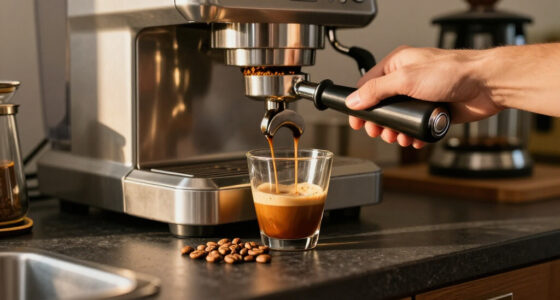
espresso grinder with stepless grind adjustment
As an affiliate, we earn on qualifying purchases.
As an affiliate, we earn on qualifying purchases.
How second crack changes flavor and espresso behavior
Second crack signals that a bean’s structure is breaking down further under continued heat, usually as the roast moves darker. The pops tend to sound smaller and sharper than first crack, and oils may become visible on the bean’s surface. For espresso, that often means a coffee that extracts readily and tastes more bittersweet, smoky, or roasty.
That extra solubility can make a dark roast easy to brew, but it also narrows the margin for error. If your usual light-roast recipe runs long on a coffee roasted into second crack, the cup can become bitter or ashy. Try a slightly coarser grind, lower brew temperature, or shorter ratio, then taste again.
Imagine switching from a bright, lightly roasted Ethiopian coffee to a dark blend for a milk drink. The dark coffee may cut through steamed milk with chocolate-like, roasted flavors, while the lighter coffee’s fruit can get lost. Neither style is automatically superior; they deliver different results for different preferences.
Oily beans are not automatically harmful to your equipment, but their surface oils can leave residue more quickly in a grinder and espresso machine. If you use a very dark roast daily, regular cleaning matters. The roast milestone helps explain what you may notice, but the coffee’s actual taste and your maintenance routine remain the useful measures.
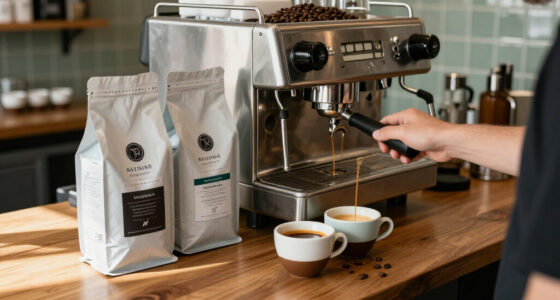
espresso machine with adjustable brew temperature
As an affiliate, we earn on qualifying purchases.
As an affiliate, we earn on qualifying purchases.
Which crack stage works best for espresso?
No crack stage is best for every espresso. First crack often points toward a lighter, brighter coffee that may need more extraction, while second crack often points toward a darker, more soluble coffee that can turn bitter if pushed too far. Your preferred flavor, the bean’s origin, and your recipe decide which one belongs in your cup.
Here’s a practical comparison. Treat each row as a starting clue, not a strict rule: roasting decisions vary, and coffees from different origins can respond differently even at similar roast levels.
| Roast clue | Flavor you may notice | Espresso adjustment to try |
|---|---|---|
| Stopped soon after first crack | Brighter, fruitier, sometimes floral | Try hotter water, a finer grind, or a longer ratio |
| Developed further after first crack | More rounded sweetness and balance may emerge | Start with your usual recipe, then adjust by taste |
| Roasted into second crack | More bittersweet, smoky, or roasty | Try a coarser grind, lower temperature, or shorter ratio |
Say you’re choosing beans for a straight espresso and enjoy crisp fruit. A lighter coffee may suit you, though you might need to work harder to get sweetness from it. If you prefer a dense shot with a dark chocolate edge, a roast developed further may be a better fit.
Crack stage is a clue, not a quality score. A well-handled dark roast can taste satisfying, and a light roast can be unbalanced. Let the flavor you enjoy decide, then use the roast information to make a sensible first adjustment.
coffee roasting thermometer for home coffee roaster
As an affiliate, we earn on qualifying purchases.
As an affiliate, we earn on qualifying purchases.
How to dial in espresso after you learn the roast level
To dial in a coffee after noticing its roast level, change one brewing variable at a time and taste what each change does. A crack milestone can suggest a direction, but a controlled adjustment gives you better evidence than changing grind, temperature, and dose all at once. Keep your dose steady so you can compare shots fairly.
- Start with a baseline. Use your usual dose and shot ratio, and note the shot time and flavor. For instance, write down that 18 grams in produced 36 grams out in 28 seconds.
- Taste before adjusting. A sharp, thin, lemony shot may need more extraction; a harsh, smoky shot may already be extracting too much.
- Choose one change. For a light roast that tastes sour, grind a little finer or raise the brew temperature. For a dark roast that tastes bitter, grind coarser, lower temperature, or shorten the ratio.
- Pull another shot and compare. Keep the dose and other settings steady. Record whether sweetness, body, or bitterness improved.
This process keeps your recipe from turning into guesswork. If you change grind size and ratio together, you may get a better shot without knowing why; the next adjustment then becomes harder to predict. A small notebook beside the grinder can make a week of experiments much clearer.
For a concrete example, say a light roast tastes sour at your normal setting. Try a finer grind first. If that improves sweetness but makes the shot painfully slow, back off slightly or try hotter water instead. Espresso recipes involve tradeoffs, so aim for a cup you enjoy rather than a particular number on a timer.
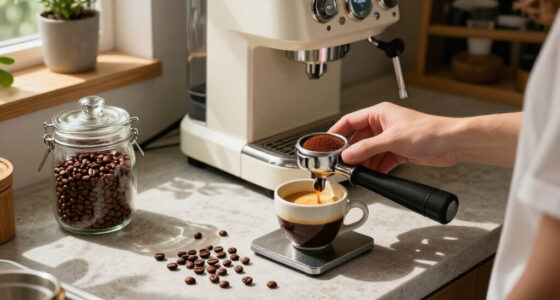
espresso scale with timer for dialing in shots
As an affiliate, we earn on qualifying purchases.
As an affiliate, we earn on qualifying purchases.
Why freshness can make a good roast hard to dial in
Freshness affects espresso because roasted beans release carbon dioxide. Coffee used very soon after roasting can produce abundant crema and inconsistent shots, so the first pour may not tell you how the coffee will behave after it rests. A short resting period can make many coffees easier to dial in, though the right timing depends on the coffee, roast, and packaging.
That matters when you compare crack stages. A light roast and a dark roast may both be difficult to judge if one bag has just been roasted and the other has had time to degas. A thick cap of crema is not proof of a better shot; freshness, roast, and extraction all influence it.
Picture opening a bag the day it was roasted and getting a fast, foamy shot that tastes uneven. Instead of immediately blaming the grinder, give the beans a little time and try again. Note the roast date and how the coffee tastes over the next several days; your own shots can show when it becomes easier to work with.
Store beans sealed and away from heat, light, and moisture. Avoid leaving an open bag beside a warm espresso machine or on a sunny counter. Good storage protects aroma, but it does not stop aging forever, so buy an amount you can use while the coffee still smells lively.
Why the crack sound cannot predict the whole cup
Crack sounds describe moments in roasting, not a complete flavor profile. The same milestone can lead to different results because roasters manage heat and development differently, and beans from different origins respond in their own ways. How the coffee tastes after roasting is the more direct guide for your espresso.
Current specialty-coffee practice often pays attention to the roast profile, the time spent developing the coffee after first crack, and the sensory result in the cup. Roast-color measurements and careful logging can help roasters repeat a profile. Those tools add context, but they do not replace tasting or guarantee that every customer will prefer the result.
For example, two bags may both be described as light roasts, yet one tastes like berries and the other like tea and citrus. Their origins, processing, and roast development can all contribute. If you buy only by the crack stage, you miss the details that make each coffee distinct.
Use crack terms to ask better questions: Was the roast developed beyond first crack? Does the roaster describe the cup as bright, sweet, or roasty? Then check those clues against your own shot. A crack is a useful mile marker on the roasting route, while the espresso itself is the destination you can actually taste.
What to remember when you hear about popping sounds
Popping sounds roasted beans make can help explain roast development, but they should not decide your recipe on their own. First crack marks expansion and the start of the flavor-development phase; second crack indicates further breakdown and a darker roast. For you, the useful question is how those changes affect the flavor and extraction in your cup.
If you roast at home, you may hear the cracks, although a roaster’s fan can mask quieter pops. Treat sound as one cue among several, and follow safe roasting practices and your equipment’s instructions. A sharp pop can be exciting, but it does not replace attention to heat, airflow, and the beans themselves.
Here’s a simple way to connect the clues to your next shot: a light coffee that tastes sour may need finer grinding, hotter water, or a longer ratio; a dark, smoky coffee that tastes bitter may respond to a coarser grind, cooler water, or a shorter ratio. Change one thing and taste again. These are starting points, not laws.
Next time you open a bag, note the roast date, the roaster’s flavor description, and how your first shot tastes. If the beans make as much crema as a cappuccino’s foam, remember that crema alone does not measure quality. Let sweetness, balance, and the flavors you enjoy guide your decision.
Frequently Asked Questions
Does first crack mean the coffee is ready to drink?
First crack means the beans have reached a light-roast stage and entered the phase where the roaster develops flavor. The roaster may continue roasting to reach the taste they want. For espresso, taste the coffee and see how it extracts rather than treating the crack as a signal that the roast is finished.
Is second crack always a sign that coffee is over-roasted?
No. Second crack marks a darker roast, but whether that style tastes good depends on the coffee and the result the roaster wants. Roasting well beyond it can create pronounced burnt or ashy flavors, but reaching second crack alone does not make a coffee bad.
Why does my light roast espresso taste sour?
A light roast can be dense and less soluble, so your shot may be under-extracted. Try a finer grind, hotter water, or a longer ratio, changing one variable at a time. If the flavor becomes sweeter and rounder, you’ve moved in a useful direction.
Why does my dark roast espresso taste bitter or smoky?
Dark roasting brings stronger roasty flavors, and a shot that extracts too much can add bitterness. Try a slightly coarser grind, lower brew temperature, or shorter ratio. Some smoky character may come from the roast itself, so choose beans whose flavor profile suits your taste.
Are oily espresso beans bad for my machine?
Oily beans are not automatically harmful, but their surface oils can leave residue more quickly in grinders and brewing equipment. Clean your grinder and espresso machine regularly, especially if you use dark roasts often. The oiliness is a maintenance clue, not a simple quality rating.
How long should coffee beans rest after roasting?
There is no single resting period that suits every coffee. Very fresh beans release carbon dioxide and can produce inconsistent espresso, while beans kept too long lose aroma. Note the roast date, let the coffee rest briefly, and taste it over time to find when it becomes easiest to dial in.
Conclusion
Remember the cracks as useful clues: first crack begins roast development, and second crack points toward a darker roast with further structural breakdown. Neither one can tell you exactly how the espresso will taste, because the bean, roast profile, freshness, and recipe all shape the shot. Start with what’s in your cup. Adjust one setting, taste again, and keep the changes that bring out sweetness and balance. Let the crack mark the road; let the espresso tell you when you’ve arrived.Halloween Picks
halloween
As an affiliate, we earn on qualifying purchases.