TL;DR
Wipe your steam wand with a clean, dedicated damp cloth and purge it after every use; purge before steaming if your machine’s instructions recommend it. These small habits help remove fresh milk residue, reduce buildup that can affect flavor or block steam holes, and make deeper cleaning easier. Follow your machine’s manual, because cleaning methods and removable parts vary.
One forgotten splash of milk can turn a shiny steam wand into a sticky patchwork by the time you make your next coffee. The mess is easy to miss while you are focused on the milk in the pitcher, but dried residue can smell stale, affect flavor, and collect around the steam tip.
A clean steam wand is a small but essential part of making good coffee and keeping your machine in working order. Here, you’ll learn the quick after-use routine, how to care for the cloth, and when a wipe is not enough.
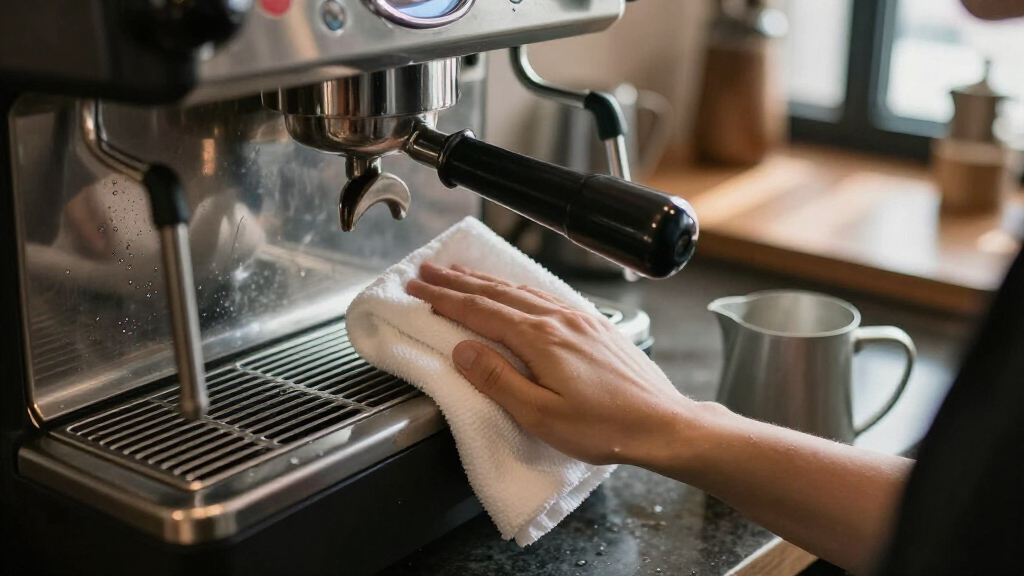
Wipe the steam wand with a clean, dedicated damp cloth after every use.
Purge after steaming to help expel milk residue; purge before steaming when your machine’s instructions recommend it.
Replace or launder the wand cloth often, and do not leave it wet and soiled between uses.
Clean removable tips and perform deeper cleaning only by the machine maker’s directions.
Treat the wand as hot after steaming, and remember that cleaning reduces hygiene risks but does not sterilize equipment.
Coffee care / Field guide 01
Steam Wand Hygiene: The Small Habit That Prevents Big Problems
A clean wand helps protect coffee flavor and steam flow. Wipe fresh milk away, purge as your machine directs, and keep deeper cleaning tied to the maker’s guidance.
The cloth cleans the outside. A purge helps clear the inside.
01 / The repeatable routine
Wipe, purge, inspect
A brief pause after each drink helps keep milk from drying around the joint and steam tip.
Wipe promptly
Use a clean, damp cloth reserved for the wand. Keep fingers clear of the hot outlet.
Purge after steaming
Briefly open the valve as the machine manual directs to help expel milk residue.
Purge if recommended
Some manuals advise clearing condensation before frothing fresh milk.
Check for residue
Look around the nozzle and openings. Clean only by the maker’s instructions.
Fresh milk wipes away more easily than dried residue. Buildup can smell stale, affect flavor, make cleaning harder, or interfere with normal steam flow.
02 / The tools behind the habit
Keep the cloth clean
A dedicated cloth helps keep dirt and cleaning chemicals from other jobs away from the wand.
A simple cloth standard
A milky, wet cloth can spread old residue across the surface you are trying to clean. Keep clean replacements nearby and launder or replace used cloths often.
When a wipe needs backup
- ✓For dried milk, follow the machine’s deeper-cleaning instructions.
- ✓Use an espresso-machine-safe cleaner only by its recommended method; rinse thoroughly.
- ✓Clean removable tips only as directed. Avoid poking holes with pins or needles.
- ✓Do not soak, immerse, or use harsh chemicals unless the maker explicitly permits it.
03 / Early warning signs
Five cues to check the wand
These signs are reasons to inspect and follow the machine’s cleaning directions; they do not diagnose a specific fault.
Wipe fresh deposits; use the approved method if they have dried.
Clean the wand and consider whether residue could affect the next drink.
Check for milk residue around the exterior and steam tip.
Once cool, inspect the tip as directed. Do not force a tool into openings.
Switch to a clean cloth and wash or replace the used one.
Wipe after each use; milk can dry while the machine sits idle.
Frequent use may call for faster cloth changes and clear handoffs.
Treat the wand as hot; keep hands and the steam path clear.
Cleaning reduces risk; it does not sterilize equipment or replace sanitation procedures.
Why a clean wand protects flavor and steam flow
Steam wand hygiene helps keep dried milk from affecting your coffee’s smell and taste or obstructing the steam tip. Milk left on the exterior can harden, while residue inside or around the nozzle can make cleaning more difficult and interfere with normal steam flow.
Think of fresh milk residue like a drop of honey on a spoon: it wipes away easily at first, then turns stubborn as it sits. If you finish a cappuccino and go straight to the next task, that thin white streak can dry around the wand joint or tip.
Regular cleaning helps limit places where microbes can grow, but it does not make equipment sterile. A clean wand supports good hygiene; it is one part of making coffee safely, alongside clean hands, well-managed cloths, and the food-safety practices that apply to your setting.
Wipe and purge after every drink
Steam wand hygiene starts with wiping the wand promptly after every use and purging it as your machine manual directs. Wiping removes milk from the outside; purging helps clear milk left inside the wand, so the two actions do different jobs.
- Keep a clean, damp cloth reserved for the wand. Hold it carefully and wipe the exterior after steaming, keeping your fingers clear of the hot outlet.
- Purge after steaming. Briefly open the steam valve to help expel milk residue. Follow the duration and method in the machine’s instructions.
- Purge before steaming if the manual recommends it. This can clear condensation from the wand before you froth fresh milk.
- Check the tip. Look for visible milk around the nozzle or holes, and clean it according to the manufacturer’s directions if needed.
For example, after pouring a latte, wipe the wand and purge it before you set the pitcher down or take an order. That short pause is easier than scraping a dried ring off the nozzle later.
Use a cloth that won’t spread the mess
A dedicated, clean cloth helps prevent dirt or cleaning chemicals from counters and other jobs from reaching the wand. A damp cloth lifts fresh milk well; a soiled one can simply spread old residue across a surface that touches your next drink.
In a busy café, the same cloth may wipe several wands during a rush. If it stays wet and milky between drinks, it becomes part of the hygiene problem. Keep replacement cloths close and launder or replace them often, following your workplace’s sanitation routine.
At home, give the wand cloth its own spot rather than tossing it beside a dish towel used for spills. Wash it regularly, and do not leave it damp and dirty in a heap by the machine. Small but essential details like cloth care make the wipe more useful.
Know when a wipe needs backup
A daily wipe and purge handle fresh residue, but deep cleaning may be needed when milk has dried on the wand or your machine manual calls for it. There is no single schedule that fits every machine, since wand designs, use patterns, and cleaning instructions differ.
If your machine has a removable steam tip, remove and clean it only as the manufacturer directs. Milk residue can collect around its holes; avoid poking them with pins, needles, or other objects that could damage the openings. If the tip seems blocked, let the wand cool and consult the manual before trying to clear it.
Use an espresso-machine-safe cleaner and the recommended method when deeper cleaning is needed, then rinse thoroughly. Do not soak parts, immerse the wand, or use harsh chemicals unless the manufacturer explicitly permits that method. Dry inside and around any removable parts only as the instructions allow; some designs should not be dismantled or dried in the same way.
Avoid burns while you clean
A steam wand can stay hot enough to burn your skin after steaming, so keep your hands away from the outlet and handle the cloth with care. A quick wipe does not make the metal cool; treat the wand as hot until your machine’s instructions say otherwise.
If you need to remove a tip or handle a part directly, let it cool first and follow the manual’s safety directions. For instance, do not grip a recently used nozzle with bare fingers just because you have switched off the steam. A towel can protect your hand during an exterior wipe, but it does not make a hot part safe to dismantle.
Never point the steam outlet toward yourself or another person when purging. Keep the pitcher, cloth, and your hand positioned so escaping steam has a clear path away from skin.
Match your routine to home or café use
The core routine stays the same at home or in a café: wipe after each use, purge as the manual directs, and keep the cloth clean. A café may need faster cloth changes and closer staff coordination because several people use the wand repeatedly through a shift.
At home, imagine making one cappuccino in the morning and another after lunch. Even with a few hours between drinks, the first wipe matters because milk can dry while the machine sits idle. In a café, the same habit needs a clear handoff so the next barista does not inherit a sticky wand or a damp, soiled cloth.
Machine instructions and local food-safety requirements govern the details, especially for commercial service. Cleaning reduces residue and hygiene risks; it is not a substitute for the café’s full sanitation procedures.
Five signs your wand needs attention
Check the wand if you notice stale milk smell, visible crust, uneven steam, or openings that appear blocked. These signs do not tell you exactly what is wrong, but they give you a reason to stop and follow the machine’s cleaning instructions before making more drinks.
- White or yellowish residue: Wipe fresh deposits; use the approved deeper-cleaning method if they have dried.
- Off odors or flavors: Clean the wand and assess whether milk residue could be affecting the next drink.
- Weak or uneven steam: Check the tip and its holes as directed; do not force a tool into them.
- A cloth that stays milky or grimy: Replace it with a clean one and wash the used cloth.
For example, if a latte suddenly takes longer to texture and the steam seems to sputter, inspect the tip once the wand has cooled. A quick look may catch buildup early, before it becomes a more frustrating cleaning job.
Frequently Asked Questions
Should I wipe the steam wand after every drink?
Yes. Wipe it promptly with a clean, damp cloth reserved for the wand after every use, then purge it as your machine’s instructions direct. Fresh residue is easier to remove than dried milk.
Why do I need to purge the wand?
Purging before steaming can clear condensation when the machine maker recommends it. Purging after steaming helps expel milk residue left inside the wand; follow your manual for the method and duration.
Can I use the same cloth for the wand and the counter?
Use a separate cloth for the steam wand so dirt or cleaning chemicals from other surfaces do not transfer to it. Launder or replace the wand cloth regularly, and do not leave it wet and soiled between uses.
How often should I deep-clean the steam wand?
There is no single schedule for every machine. Deep-clean when residue builds up and follow the manufacturer’s recommended routine for your wand and any removable tip.
Can I soak the steam tip in cleaner?
Only if your machine’s manual permits soaking and explains how to do it. Some parts can be damaged by unsuitable chemicals or cleaning methods, so check the instructions first and rinse thoroughly when directed.
Conclusion
Make the wipe and purge part of the last motion you take after steaming. Your wand will be easier to clean, your next drink will start with less old milk around the tip, and your machine will be ready for the next pour.
Fresh milk in the pitcher, clean metal at the wand. That small habit keeps tomorrow’s coffee from inheriting today’s mess.