
TL;DR
Water filtration can reduce particle buildup, clogged passages, and some forms of scale-related fouling, helping machines that use water stay cleaner and easier to maintain. Results depend on matching treatment to water quality and equipment requirements: a sediment filter does not soften hard water, fix corrosive chemistry, or replace cleaning. Track flow, pressure drop, water quality, and maintenance records to see whether your filtration program is helping.
A clear glass of water can still leave a machine coated in scale. Dissolved minerals slip past your eyes, then collect on a heater or heat exchanger one hot cycle at a time. Months later, the machine may run longer, heat less evenly, or need a cleaning that could have been planned earlier.

Get coffee and tea gear delivered free with Prime
- Fast, free delivery on millions of items
- Prime Video, Amazon Music and more included
- Member-only deals all year
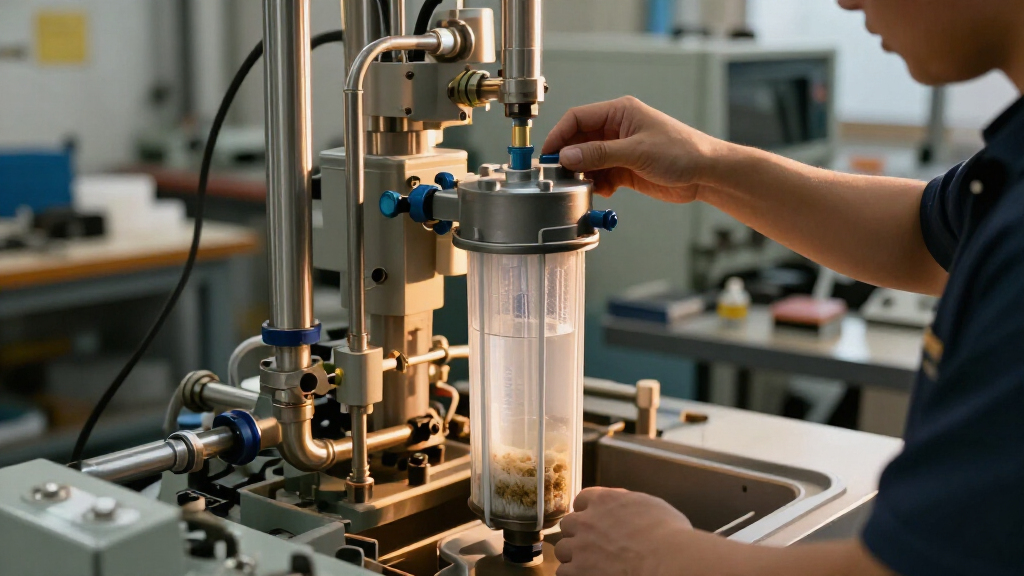
Water filtration can change that maintenance story by capturing the contaminants a filter is designed to remove. The right setup may help protect pumps, valves, small passages, and heat-transfer surfaces in equipment that uses water for cooling, washing, humidification, or steam. But filtration is a tool, not a force field: it cannot fix every water problem or replace regular care.
Here, you’ll learn which water issues filtration can address, how to match treatment to your machine, and what to record so you can tell whether it is paying off. The practical goal is simple: fewer preventable surprises and a maintenance routine based on what your water and equipment actually need.
Test water and check the equipment manual before choosing filtration or treatment.
A conventional sediment filter can capture particles but generally does not soften hard water or remove dissolved salts.
Match filter rating and capacity to the machine’s flow requirements; finer filtration can clog sooner or restrict flow.
Track pressure drop, flow, water quality, filter service, and recurring repairs to judge whether treatment is working.
Keep cleaning, chemistry management, and microbial controls in the maintenance plan where the system requires them.
How Water Filtration Changes Long-Term Machine Care
Well-matched filtration can capture particles before they clog passages or foul components. Water testing and machine requirements determine what treatment can help.
Match treatment to the water
Different water problems need different responses; a particle filter does not address every contaminant.
| Water concern | What treatment may do | What to keep in mind |
|---|---|---|
| Sand, rust, particles | Suitable filtration can capture some particles. | Match rating and flow capacity to the equipment. |
| Dissolved hardness | Softening or another targeted treatment may help. | Sediment filters generally do not soften water. |
| Corrosive chemistry | Water treatment may address chemistry directly. | Particle filtration alone does not correct corrosion. |
| Possible microbial growth | Separate treatment and cleaning may be needed. | Filtration alone is not a substitute for control. |
What filtration can change
Capturing the contaminants a system targets may help preserve flow and make maintenance more predictable.
Protect narrow passages
Particles can collect in lines, valves, tanks, and nozzles.
Limit fouling
Hardness minerals can form scale on heaters and heat exchangers.
Plan routine service
Filter checks add work but may reduce some downstream cleaning.
Build a practical routine
Use water results and equipment guidance to choose and maintain treatment.
Review the manual for water-quality and flow limits.
Identify the contaminants that need treatment.
Choose suitable media, rating, and flow capacity.
Record pressure drop, flow, water quality, filter service, and repairs.
Keep other care in the plan
Filtration is one part of maintenance; it cannot solve every water problem or replace regular cleaning.
- Check for scale, corrosion, and recurring clogs.
- Manage water chemistry when required.
- Keep appropriate cleaning and microbial controls in place.
See how small amounts of contamination turn into big maintenance jobs
Water filtration changes long-term machine care by reducing the contaminants a properly selected system can capture before they reach sensitive parts. Particles may clog narrow passages or collect in tanks; hardness minerals can form scale on hot surfaces; and other water chemistry issues may affect materials or sensors. Which problem matters most depends on the machine and its water.
Think of a machine’s internal water path as a set of narrow streets. Sand, rust, or other particles can pile up at a tight turn, while scale slowly narrows a heated passage like mineral frost growing on its walls. A small restriction can change flow, put extra work on a pump, or make temperature control less steady. In a washer, that may show up as a blocked nozzle; in a humidifier, as stubborn deposits around a heated component.
These effects can compound. When a passage narrows, the machine may need more time or pressure to deliver the same flow. That can increase wear on pumps and make output less consistent. Scale also acts as insulation on heated surfaces, so a heater may need more energy or operating time to transfer the same amount of heat. Neither symptom proves water is the cause, but both can justify checking the water path before a minor restriction becomes an unplanned shutdown.
Filtration can help preserve flow and reduce the amount of downstream cleaning when it captures the material causing the trouble. Yet not all clear water is gentle water. Dissolved minerals and salts are too small for many ordinary particle filters, so a spotless-looking supply may still cause scale or other chemistry-related problems. Treatment therefore involves a tradeoff: adding a filter can reduce one kind of fouling, but a poorly selected unit may add pressure loss, service work, or cost without addressing the main cause.
Imagine two identical hot-water units, one supplied with water carrying rust flakes and the other with water containing mostly dissolved hardness minerals. A sediment filter may catch the rust flakes and protect small passages in the first unit. The second may still develop scale unless its treatment addresses hardness. The first care decision, then, is not “Should I install a filter?” but “What is in my water, and what does this machine need?” That distinction directs maintenance toward a cause that treatment can actually change.
Products Worth Considering

Le Creuset Signature Enameled Cast Iron Saucepan, 2.25 qt., Cerise

Cuisinart SS-10P1 Single-Serve Coffee Maker, 72 oz, Silver

KitchenAid Artisan Series 5-Quart Tilt-Head Stand Mixer, Milkshake
As an affiliate, we earn on qualifying purchases.
Know which machine problems filtration can reduce—and which it cannot
Filtration can reduce particle-related clogging and, when paired with suitable treatment, may help limit mineral deposits or fouling. It cannot remove every contaminant by default. A filter only treats what its media and design target, and some water problems need a different treatment or a separate cleaning plan. This matters because symptoms can look alike: reduced flow might result from particles, scale, a worn pump, or a combination, and choosing treatment from appearance alone can leave the underlying cause untouched.
Hardness minerals offer a common example. A sediment cartridge may trap grit but generally does not soften water or remove dissolved salts. If hard water is leaving a chalky ring on a heater, changing to a finer particle filter will not solve the underlying issue. The finer cartridge may even need more frequent replacement or restrict flow sooner, while the scale continues to form. A softener, reverse osmosis, or another method may be appropriate, but the choice depends on water testing, equipment specifications, and operating conditions; treatment that is unsuitable for the machine can create its own operating or maintenance burden.
Water chemistry can also contribute to corrosion, and a particle filter alone will not correct corrosive conditions. Biological growth may occur when temperature and operating conditions allow it; filtering particles does not replace proper water treatment, sanitation, or cleaning. In a cooling loop, for instance, a clean screen can catch debris while leaving chemistry and microbial controls as separate maintenance needs. Treating those issues as separate jobs helps prevent a false sense of protection from a filter that is working as designed but was never meant to control them.
For a practical comparison, picture a small steam generator whose heater is coated in white scale. A particle cartridge can protect a valve from grit, yet scale may continue on the heater. If the problem is mineral buildup, test the water and choose a treatment that addresses those dissolved minerals. Treat each symptom as a clue, not proof: flow trouble can come from particles, scale, a worn pump, or more than one issue at once. Looking at the machine’s requirements alongside water results helps avoid replacing a useful particle filter with a treatment that solves a different problem.
| Water concern | What filtration or treatment may do | What to keep in mind |
|---|---|---|
| Sand, rust, or suspended particles | A suitable particle filter can capture some of them. | Rating and flow capacity must fit the equipment. |
| Dissolved hardness minerals | Softening or another targeted treatment may help. | A conventional sediment filter generally does not soften water. |
| Corrosive chemistry | Water treatment may need to address chemistry directly. | Particle filtration alone does not correct corrosion. |
| Possible microbial growth | A separate treatment and cleaning program may be needed. | Filtration alone is not a substitute for appropriate control. |
Choose treatment that fits your water and machine
The right treatment starts with the machine’s water requirements and a water test, not a generic filter label. Your manual may set limits for flow, water quality, or treatment type; testing can help identify the contaminants that matter. From there, you can select a filter rating and capacity that address the problem without restricting the equipment. Both sides of the match matter: treatment that misses the contaminant may not prevent maintenance, while treatment that exceeds the machine’s flow or water requirements can interfere with operation.
Imagine a workshop with two machines on the same supply: a rinse unit with small spray nozzles and a cooling system with a different flow demand. The same cartridge might suit one and create too much pressure loss in the other. A finer filter can capture smaller particles, but it may load up faster or restrict flow if the system was not designed for it. “Finer” is not automatically “better.” Its practical value depends on the particle size that causes trouble, how much water the machine needs, and how quickly the cartridge can be serviced.
Different treatment methods serve different purposes. Particle filters capture suspended material; activated carbon can address certain treatment chemicals or tastes where relevant; softeners target hardness; and reverse osmosis removes many dissolved substances but brings its own operating needs. These tools are not interchangeable. Choose them based on measured water conditions and the equipment maker’s stated limits. More treatment can mean more equipment, maintenance steps, and operating costs, so the best setup is the one that handles the relevant risk without adding complexity the machine does not need.
A useful decision record can be short: note the water test date, the problem you are addressing, the machine requirement, selected treatment, and expected flow. If a supplier recommends a filter but cannot explain which measured issue it addresses, pause and compare the recommendation with your equipment manual. This small check can prevent installing a filter that looks impressive on paper but leaves the real maintenance problem untouched. It also gives you a baseline to judge later whether the treatment is working or needs adjustment.
- Read the manual for water-quality and flow requirements.
- Test incoming water, and circulating water too when the system calls for it.
- Match the treatment to the identified contaminant and required flow.
- Keep the results so later maintenance has a useful baseline.
Build a filter routine that catches trouble before a shutdown
A filtration routine works best when it tracks filter condition and machine performance together. Check pressure drop or differential pressure where the system provides a gauge, watch for changes in flow, and inspect or replace elements according to manufacturer guidance. The right interval depends on water quality, operating hours, filter capacity, and the consequences of a failure. These checks answer different questions: pressure drop can show that a cartridge is loading, while flow helps show whether the machine is still receiving what it needs.
Picture a busy wash line that runs every weekday. Its filter may load more quickly than the same model on a lightly used machine, especially if incoming water carries sediment. A calendar reminder is a useful starting point, but pressure readings and observed loading can show whether the interval needs attention. If flow falls or a differential-pressure indicator rises, investigate rather than waiting for a nozzle to stop spraying. A change can also point to a leak, valve issue, or other fault, so compare readings with the machine’s normal baseline before assuming the filter is the only cause.
Use a repeatable sequence so a rushed service visit does not skip the basics:
- Check requirements: confirm the machine’s water and flow limits in its manual.
- Establish a baseline: record incoming water results, flow, and pressure readings when the system is operating normally.
- Inspect on schedule: check gauges, filter condition, leaks, and visible deposits at intervals suited to actual use.
- Service as directed: clean or replace elements using the equipment and filter maker’s instructions.
- Review the result: compare readings and recurring maintenance problems with the baseline.
Filter maintenance becomes part of machine maintenance. A clogged element can restrict flow, so letting it sit indefinitely defeats the purpose of the system. Conversely, changing cartridges far earlier than needed may waste materials without improving protection. The best routine uses manufacturer guidance and real observations together, with a clear log that the next technician can understand. That log helps refine service intervals over time: frequent loading may call for closer checks or a change in capacity, while stable readings may show that the current schedule is adequate.
Use maintenance records to prove whether filtration is helping
Maintenance records show whether a filtration program is reducing the problems you installed it to address. Compare water test results, pressure and flow readings, filter loading, cleaning frequency, and component failures over time. A filter’s presence alone does not prove that it has improved reliability. Looking at several measures together matters because one improvement can hide another: fewer clogs may coincide with continued scale, or lower flow may mean a filter is protecting the equipment while also needing service.
Suppose a small production machine needed its spray passages cleared every month before filtration. After installing a correctly sized particle filter, the log shows fewer blockages over the next several months, while flow remains within the manufacturer’s range. That pattern supports the case that particle control is helping. If deposits keep returning on the heater, the records may point to hardness treatment as a separate gap. The useful conclusion is specific: the filter appears to address particle blockages under these operating conditions, while a different issue still needs attention.
Energy use deserves the same careful reading. Scale or fouling can reduce heat-transfer performance, so addressing the cause may help a system maintain temperature more effectively. But energy savings depend on the machine, the starting condition, operating hours, and treatment. Record a baseline and compare like with like where possible; do not assume a lower bill came from filtration if production volume or weather also changed. Without comparable conditions, an energy change is only a signal to investigate, not evidence that treatment caused it.
A simple maintenance log can capture the date, machine, incoming water result, filter type, pressure drop, flow, service performed, and observed issue. Over time, this turns a vague claim—“the machine seems cleaner”—into a useful trail. If a part still fails, the log helps separate water-related wear from a worn component, poor installation, or an unrelated operating fault. It can also reveal the cost of the program: cartridge use and service time should be weighed against reduced cleaning, fewer clogs, and avoided downtime.
Keep the evidence close to the machine: a short record of water quality, pressure, flow, and repairs can reveal whether treatment is preventing repeat work.
Avoid the five filtration mistakes that create new problems
Most filtration setbacks come from a mismatch: the treatment targets the wrong contaminant, the filter restricts flow, or nobody tracks when it needs service. A plan can be well intentioned and still fail if it ignores how the machine operates. Check the fit before treating a cartridge as a cure-all. A treatment decision has consequences beyond capture: it can add pressure loss, replacement work, and operating cost, so the benefit should match the risk it is meant to reduce.
For example, an operator sees white scale on a kettle-like heater and installs a finer sediment filter. The water looks clear, but the deposits return because dissolved hardness minerals pass through that filter. The extra-fine cartridge may now need more frequent replacement without changing the scale problem. In another shop, a cartridge catches particles well but is too restrictive for a pump’s required flow. The filter may be doing its job while the machine struggles to do its own. Both cases can add maintenance instead of reducing it.
- Do not treat clear water as proof that dissolved minerals or chemical issues are absent.
- Do not assume a finer rating is safer; confirm the machine can maintain its required flow.
- Do not use one treatment for every machine when requirements and water paths differ.
- Do not skip cleaning or microbial controls when the system needs them.
- Do not replace elements by guesswork alone; use manufacturer guidance and observed loading.
Some systems need layered treatment. A particle filter may protect a valve while a softener addresses hardness, for example, but additional equipment adds parts to inspect and service. That added complexity is worthwhile only when each stage has a clear job and its maintenance needs are manageable. Keep the setup as simple as the measured problem allows. When recurring damage continues, review water quality, installation, flow, and machine condition together before buying another filter. This keeps the response tied to evidence instead of escalating treatment without knowing whether the last change helped.
Frequently Asked Questions
Does water filtration make machines last longer?
It can help when waterborne contaminants contribute to clogging, wear, or fouling. The outcome depends on the machine, water chemistry, treatment choice, installation, and maintenance. Compare recurring repairs and performance readings before and after treatment to judge the effect.
Does a sediment filter prevent scale?
Usually, no. A conventional sediment filter captures suspended particles but generally does not remove dissolved hardness minerals. Scale control may require a softener, reverse osmosis, or another treatment chosen for the application and water test.
How often should I change a water filter?
There is no universal replacement interval. Follow the filter and equipment manufacturers’ guidance, and consider pressure drop, flow, water quality, operating hours, and observed loading. A log helps you spot whether your site needs closer inspection.
Can water filtration lower energy use?
It may help when suitable treatment prevents scale or fouling that reduces heat-transfer performance. Savings depend on the machine and its starting condition, so measure energy use under comparable operating conditions rather than assuming filtration caused a change.
Can filtration prevent corrosion or biological growth?
Not by itself in every case. Corrosion depends on water chemistry and the materials in the system, while biological growth may require separate treatment and cleaning controls. A particle filter does not replace those measures.
How can I tell if my filtration system is working?
Look for evidence across water quality, flow, pressure, and repair history. Record filter loading and pressure drop, note recurring clogs or deposits, and compare maintenance frequency over time. Continued scale with fewer particle blockages may mean one treatment is helping while another water issue remains.
Conclusion
Match water treatment to a measured problem, then keep a record of what changes. That is the most useful way to make filtration part of long-term machine care: protect the parts a filter can protect, address scale or chemistry with the right method, and service each component on evidence and manufacturer guidance.
A clean filter is a quiet worker inside the machine. Check its readings, note what it catches, and let your maintenance log show whether the next service visit can be shorter.