
TL;DR

Get coffee and tea gear delivered free with Prime
- Fast, free delivery on millions of items
- Prime Video, Amazon Music and more included
- Member-only deals all year
Premium capsule machines make quick, repeatable espresso-style drinks, but a higher price does not guarantee better-tasting coffee or less waste. Compare the cost per cup, compatible capsule choices, cleaning needs, and actual local recycling routes before buying; the best fit is the one whose convenience you will use and whose waste you can realistically manage.
A capsule can leave the machine in seconds, but its packaging may stay in your kitchen, recycling bag, or waste stream for much longer. That gap is the real trade-off behind premium capsule machines: speed and predictable drinks come with recurring costs and a disposal question you need to answer locally.
This guide helps you weigh convenience, taste, waste, and cost before choosing a machine. You’ll see what the premium label can mean, why espresso-style coffee differs from café espresso, and how to check whether a capsule’s recycling claim works where you live. For example, a machine that saves you ten minutes each morning may be a smart fit if its capsules have an affordable return route and you use the drink settings it offers.
The practical test is simple: count your usual cups, price the compatible capsules, and check the disposal instructions before you buy. Then decide whether the quick press of a button is worth the ongoing trade-offs.
Premium usually means added settings, drink options, materials, or design; it does not guarantee superior coffee.
Price the capsules you would actually buy and estimate your cups per week before comparing machine prices.
Confirm the exact capsule format and local disposal route; recyclable packaging may need a special return program.
Reusable capsules can reduce disposable packaging, but filling, cleaning, and dialing in the grind take effort.
Follow the machine’s cleaning and descaling directions, with extra care for milk-contact parts.
The everyday coffee decision · Buyer’s guide
Premium Capsule Machines: Convenience, Waste, and Taste Trade-Offs
Fast, repeatable espresso-style drinks can make a premium capsule machine a useful morning shortcut. The higher price does not guarantee better-tasting coffee or less waste: the best fit depends on your routine, compatible capsules, real cost per cup, and a disposal route you will use.
The key insight
“Recyclable” on the pack does not mean accepted in your household recycling.
Quick drinks with little measuring
Include capsules and upkeep
Beans, dose, water and brew size
Confirm the exact format
01 / What the premium label buys
More options can help. They cannot promise a better cup.
Premium often describes adjustable drink sizes, multiple brew styles, sturdier materials or polished design. The practical value comes down to whether those features fit your actual morning.
Convenience
Repeatable by design
Pre-portioned coffee removes measuring and grinding. A quick button press can make the drink you otherwise might skip.
Choice
Format sets the limits
Each machine fits certain capsules. A narrow range can restrict blends, sellers and affordable alternatives over time.
Ownership
Some upkeep stays
Capsules still need storage. Machines need cleaning and descaling, and milk-contact parts require care after use.
02 / Taste is a system
The capsule matters as much as the machine.
A sealed capsule can help protect coffee from air and moisture, but it cannot guarantee fresh, high-quality beans. Brew volume and capsule design shape the cup alongside the machine.
Default or dialed in?
A short extraction can taste concentrated and bold; a longer volume can feel thinner or more bitter. Adjustable settings help only if you use them.
Convenient milk, extra care
Built-in frothers simplify lattes and cappuccinos, while adding parts to clean. A separate frother may be easier to wash and replace.
Repeatability versus control
Capsules reproduce a chosen style reliably. Café espresso offers more control over grind, dose, tamp and extraction.
Price the cup you want
Compare the compatible capsules you would actually buy, plus maintenance and accessories, against your household’s usual weekly cups.
03 / The waste question
Recycling depends on the route, not the label.
Single-use capsules can use plastic, aluminum or multiple materials. Local collection systems differ, and some brands require separate collection, a drop-off point or mail-back.
The real test is the disposal path you can follow on an ordinary, busy week. A capsule may be technically recyclable yet excluded from your local cart.
Check the exact compatible capsule, its material, your waste provider’s rules and any required return program before buying. A mail-back scheme is only useful if you will collect and send the capsules.
Checklist stages, not measured recycling rates. Acceptance varies by capsule format and location.
04 / Reusable capsules
Less disposable packaging asks more of your routine.
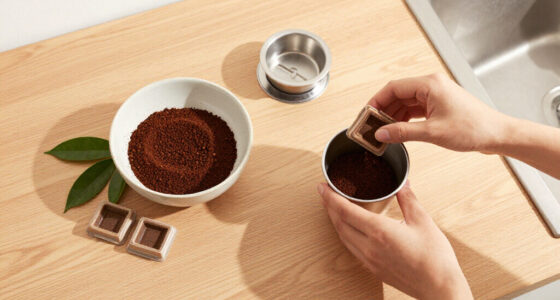
Reusable inserts can reduce single-use packaging and let you choose your own ground coffee. Compatibility comes first, and the extra filling and washing must fit your schedule.
Possible gain
Choose your own coffee
Using ground coffee can reduce disposable capsule packaging when the reusable option becomes part of your routine.
Added effort
Fill, wipe, rinse
Loose grounds and small parts add steps to each brew. A rushed weekday may feel different from a quiet Sunday.
Cup variation
Grind and dose matter
A coarse grind or loose fill may taste weak; a fine, tightly packed dose can impede flow and make cleanup harder.
05 / Five-step buying check
Choose a system you will keep using.
A few practical checks can reveal whether the quick press of a button is worth the ongoing trade-offs for your household.
Count your cups
Estimate your household’s weekly servings.
Price the capsules
Use the compatible blends you would buy.
Check the format
Confirm fit, choice and seller availability.
Verify disposal
Find the local collection or return route.
Match your routine
Compare speed with cleaning and upkeep.
Before you buy
- Compare machine price with ongoing cost per serving.
- Check warranty terms and replacement-part costs.
- Read cleaning and descaling directions.
- Confirm whether milk parts need cleaning after every use.
The practical verdict
The best machine is the one whose convenience you will use and whose waste you can realistically manage.
Convenience · Taste · Cost · DisposalWhat a Premium Capsule Machine Actually Adds to Your Morning
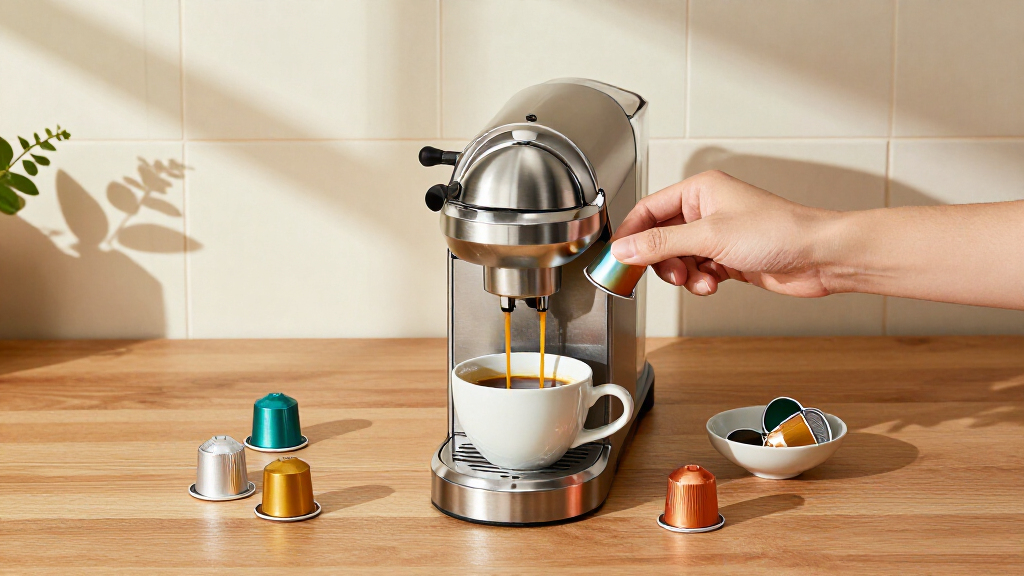
Premium capsule machines use pre-portioned coffee and a compatible brewing system to make a repeatable cup with little measuring or cleanup. The premium label can refer to more drink choices, adjustable serving sizes, different brew styles, sturdier materials, or a more polished design. It does not guarantee better beans or a better-tasting drink.
That distinction matters at 7:15 a.m. If you normally skip coffee because grinding, weighing, and cleaning feel like too much, being able to insert a capsule and press a button may mean you actually get the drink you want. Portioning also removes one common variable: you are less likely to make Monday’s cup much weaker than Tuesday’s because your scoop was different.
Convenience still has boundaries. Each machine accepts certain capsule formats, so a system with a narrow selection can limit your coffee choices or leave you dependent on a small number of sellers. Capsules also need storage space, and the machine still needs cleaning and descaling according to its instructions.
Think of the purchase like choosing a commuter route: the shortest route only helps if it fits your real schedule. If you make one cup each morning and value quick cleanup, the features may earn their keep. If your household makes several large mugs, capsule capacity, cup size, and cost per serving may matter more than a shiny control panel.
As an affiliate, we earn on qualifying purchases.
Why the Capsule Matters as Much as the Machine for Taste
Premium capsule machines can make enjoyable, consistent coffee, but the machine alone does not decide how the cup tastes. The coffee’s roast and storage, capsule dose and design, water temperature, pressure, and brew volume all shape the result. A sealed capsule can help protect coffee from air and moisture; it cannot promise fresh, high-quality beans.
Imagine pouring the same capsule into two cups with different brew settings. A short extraction can taste concentrated and bold, while a longer volume may feel thinner or more bitter. A premium machine with adjustable drink sizes can help you find a setting you like, but that control only helps if you actually use it. If you always press the default button, the capsule blend may make a bigger difference than the menu.
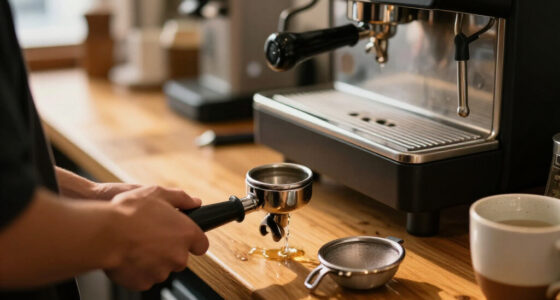
Espresso-style capsules can produce a concentrated drink topped with crema-like foam. That cup can be satisfying, but it may differ from café espresso made with freshly ground coffee, where a barista can adjust dose, grind, tamp, and extraction. In plain terms, a capsule system can reproduce a chosen style reliably; it does not give you the same control over the coffee puck.
Milk drinks add another layer. A built-in frother can make a cappuccino convenient, but milk-contact parts need cleaning after use, as the manufacturer directs. If you make a latte only on weekends, a separate frother may be easier to wash and replace than a complex built-in milk system.
As an affiliate, we earn on qualifying purchases.
How to Check Whether Capsule Recycling Works Where You Live
Capsule recycling depends on the material and collection route, not just the label on the box. Single-use capsules may use plastic, aluminum, or multiple materials, and local recycling systems do not necessarily accept every design. Some programs require you to collect used capsules separately and return them at a drop-off point or by mail.
That makes the kitchen-bin test a poor shortcut. A neighbor may toss capsules into a recycling cart because the packaging says recyclable, while the local provider asks residents to keep them out. The capsule can then be sorted as contamination or sent to disposal. Check the capsule maker’s instructions and your waste provider’s rules for the exact format you plan to use.
Compostable does not mean home-compostable. Some capsules need specific processing conditions or a dedicated collection program. If your town does not accept them and your home compost bin cannot handle them, the claim may not change what happens to the used capsule. Ask where it should go before treating it as a low-waste choice.
A practical check takes a few minutes: look up the compatible capsule, identify its material, and confirm whether the stated return or recycling route is available in your area. For example, a mail-back program may sound workable until you realize you rarely have enough capsules to justify packing and sending them. The best disposal plan is one you will follow on an ordinary, busy week.
reusable coffee capsules for espresso machine
As an affiliate, we earn on qualifying purchases.
As an affiliate, we earn on qualifying purchases.
What Reusable Capsules Save—and What They Ask You to Do
Reusable capsules can cut disposable packaging and let you choose your own ground coffee, but they add filling and washing to every brew. Their performance depends on fit, grind size, dose, and how firmly you pack the coffee. They may not work with every machine, so compatibility comes first.
Picture your weekday routine: you tap grounds into a reusable capsule, wipe the rim, brew, then rinse coffee residue from the small parts. On a quiet Sunday, that can feel easy. On a rushed morning, the loose grounds and extra rinse may erase some of the convenience that led you to buy a capsule machine. The environmental benefit depends partly on whether you keep using the reusable option.
Taste can vary as well. A grind that is too coarse or a loose fill may produce a weak cup; a very fine grind packed tightly may impede water flow or make cleaning harder. You may need a few attempts to get a result you enjoy, and the outcome may be less repeatable than a factory-filled capsule.
Before buying a reusable insert, check the machine maker’s compatibility guidance and the insert maker’s cleaning instructions. Try one capsule at a time rather than filling several and leaving them around; ground coffee can lose aroma when exposed to air. If you enjoy experimenting, a reusable capsule may pair nicely with a favorite roast. If you want a near-zero-effort cup, disposable capsules may fit your habits better, though they leave more packaging to manage.
coffee machine with adjustable brew settings
As an affiliate, we earn on qualifying purchases.
As an affiliate, we earn on qualifying purchases.
Compare the Full Cost Before the Machine Reaches Your Counter
The purchase price is only one part of capsule ownership; capsule prices, maintenance, accessories, and your household’s cup count shape the longer-term cost. A low-cost machine can become expensive if each serving costs more or its capsules come from few sellers. A premium model can offer flexibility, but extra drink settings have little value if you never use them.
For a useful comparison, write down how many cups you make in a typical week and the price per compatible capsule. Multiply that weekly amount across a month, then add any milk accessory, descaling supplies, and likely replacement parts. You do not need a perfect lifetime forecast. Even a rough monthly estimate can show whether a machine fits your budget better than buying coffee by the bag for another brewing method.
| Cost or ownership factor | What to check | Everyday example |
|---|---|---|
| Capsules | Price per serving and number of compatible sellers | A favorite blend may cost more than a supermarket option |
| Maintenance | Descaling instructions and cleaning supplies | A milk system adds parts to wash after lattes |
| Accessories | Frother, cups, or reusable insert | A separate frother may be simpler if you make milk drinks rarely |
| Choice over time | Format compatibility and availability | A proprietary format may narrow your buying options |
Before you commit, check warranty terms, replacement-part availability, and the price of capsules you would be happy to drink every day. If you want to compare features across models, you can consult a guide to premium capsule espresso machines, then verify current capsule prices and compatibility with the manufacturers. A machine that fits your routine and budget beats one whose controls look impressive in a shop.
Use This Five-Step Check to Choose a System You’ll Keep Using
A short pre-purchase check can reveal whether a capsule system suits your household. Start with your actual routine instead of the machine’s promotional drink menu. Someone who wants one quick black coffee before a commute has different needs from someone who makes three milk drinks after dinner.
- Count your cups. Track a normal week, including guests and weekends. Twelve cups a week tells you more about recurring costs than guessing from memory.
- Price the capsules. Check the price per serving for blends you would genuinely drink, and see how many sellers carry them.
- Confirm compatibility. Match the machine to the exact capsule format. Do not assume capsules that look similar will fit or brew properly.
- Check waste routes. Read local instructions for that material and find out whether returns, drop-off, or accepted recycling are available.
- Test the maintenance burden. Read cleaning and descaling directions, especially if the model includes a milk system.
Try the sequence with a real example: you drink two coffees most weekdays, but only one on weekends. Count the weekly servings, price the capsules you like, and add a realistic recycling routine, such as keeping used capsules in a small container until a scheduled drop-off. If the container will sit beside your sink for months or the compatible capsules strain your budget, the system may not feel convenient for long.
Premium models and capsule packaging keep changing, and availability varies by market. Check current prices, model details, and disposal claims with the maker and your local waste provider before buying. That quick check is more useful than assuming a broad trend, such as compostable packaging, applies to every capsule sold today.
Frequently Asked Questions
Do premium capsule machines make better coffee?
They can offer more consistent brewing or more drink settings, but taste depends on the capsule’s coffee, dose, freshness, and brew volume too. A machine with adjustable cup sizes helps only if you use those settings. Try the coffee itself before treating a higher price as proof of better flavor.
Are coffee capsules recyclable in household bins?
Sometimes, but acceptance depends on the capsule material and your local recycling rules. Some systems require separate collection and a designated drop-off or mail-back program. Check the instructions for the exact capsule you use and confirm them with your local waste provider.
Are reusable capsules worth the extra work?
They can reduce disposable packaging and give you access to your own ground coffee. You will need to fill and clean them, and grind size and packing can affect the cup. They are a better fit if you enjoy that hands-on routine and have confirmed that the insert works with your machine.
Can a capsule machine make real espresso?
Capsule machines can make concentrated espresso-style coffee, often with crema-like foam. The result can differ from café espresso made with freshly ground coffee and adjustable dose, grind, tamp, and extraction. It can still make a tasty drink; the label describes a style, not a guarantee of identical brewing.
Do capsule machines need regular cleaning?
Yes. Follow the manufacturer’s directions for cleaning and descaling, even if the machine makes coffee with one button press. Milk systems need attention to their milk-contact parts after use. A separate frother may be easier to wash if you only make milk drinks occasionally.
Does compostable packaging always break down at home?
No. Some compostable capsules need specific processing conditions or a collection route that a home compost bin does not provide. Check the capsule’s disposal instructions and whether the required service exists where you live. Without that route, the label alone does not tell you what happens after use.
Conclusion
Choose a capsule machine by matching its daily convenience to the full routine: the cup cost, the coffee you enjoy, the cleaning you will do, and the waste route you can follow. A premium label matters only when its features make your real mornings better.
Before you buy, price a week of capsules and check where the empties go. Then imagine the machine beside your kettle on a rushed morning: if the cup, cost, and cleanup still make sense, that small button press may earn its place.
Halloween Picks
halloween
As an affiliate, we earn on qualifying purchases.