TL;DR

Get coffee and tea gear delivered free with Prime
- Fast, free delivery on millions of items
- Prime Video, Amazon Music and more included
- Member-only deals all year
Repairable espresso gear can stay useful after common failures such as worn seals, pumps, or grinder burrs, reducing waste and making long-term costs more predictable. Before buying, check parts availability, service documentation, and repair support; maintain the machine to its specific instructions, and use a qualified technician for electrical, boiler, or pressure-system work.
A tiny rubber gasket can turn a dependable espresso machine into a drippy, frustrating counter ornament—but that leak may call for a replacement seal, not a whole new machine. Repairability in espresso gear is the difference between fixing a worn component and throwing away equipment that still has years of useful life in it.
Espresso machines work with heat, water, pressure, and vibration, often several times a day. Wear is inevitable. What matters is whether you can diagnose the fault, find the part, and get safe help when a repair goes beyond routine maintenance.
This guide explains what repairability looks like, why longevity matters for your budget and the environment, and how to check service support before you buy. You’ll also learn when a repair makes sense, what you can maintain yourself, and when it’s time to step away from the toolbox.
Before buying, check parts availability, repair documentation, service options, and warranty terms for the exact espresso-machine model.
Common service items include gaskets, pumps, valves, heating elements, switches, and grinder burrs; symptoms need diagnosis before you order parts.
Follow the machine’s own cleaning and descaling instructions, since water hardness and machine design affect the right care routine.
Use a qualified technician for work involving mains electricity, boilers, or pressurized systems, and stop using a machine with a burning smell or a hazardous…
Compare repair cost, parts access, machine condition, and expected remaining service before deciding whether to fix or replace.
Ownership · Service · Longevity
Repairability in Espresso Gear: Why Longevity Matters
A worn seal or failed pump need not end a machine’s useful life. Learn what makes espresso gear serviceable, how to check support before buying, and where safe repairs require an expert.
Why repairability matters
Espresso equipment faces heat, water, pressure, vibration, and frequent use. Wear is inevitable; replacing the whole machine is not. Serviceable gear can stay useful longer, preserve familiar performance, reduce waste, and make ownership costs easier to plan.
Fix the failed part
Accessible seals, pumps, valves, or burrs can be serviced while other working components remain in use.
Plan beyond checkout
Parts access, service labor, maintenance, warranty coverage, and expected service life all shape the real cost.
Extend useful life
Repair can avoid discarding equipment when a replaceable component wears out, though some failures make replacement sensible.
Common wear points, clues, and next steps
Symptoms can point toward a problem, but they do not confirm the cause. Check the model’s manual and seek diagnosis before ordering parts.
Leak at group head
A worn seal may be involved. Follow the maker’s inspection and replacement guidance.
Weak or uneven flow
Scale, blockage, or pump trouble can affect flow. Rule out simple causes only as directed.
Uneven grinding
Residue or worn burrs may matter. Clean and maintain the grinder before assuming a part has failed.
Check repairability before you buy
Price and claims about build quality cannot tell you whether a particular model is practical to service. Look for evidence that connects a fault to a part and a qualified repair option.
Search by model
Look for common spare parts and confirm they are listed for the exact model.
Find the documents
Check for manuals, diagrams, and service information that help owners and technicians.
Ask who can fix it
Confirm maker or independent repair support is available in your area.
Read the ownership terms
Review warranty details, parts policy, maintenance needs, and likely service life.
Longevity changes the real cost
Compare the full ownership picture, not only the purchase price. A modest repair may keep the boiler and frame working; a sealed or unsupported assembly can make an otherwise small failure uneconomic to fix.
When repair can make sense
A fault is diagnosed, the part is available, the rest of the machine is in sound condition, and service cost fits its expected remaining life.
- Accessible component and clear repair route
- Parts and service support for the specific model
- Routine care follows the machine’s instructions
When replacement may be sensible
Corrosion, severe electrical damage, obsolete parts, difficult disassembly, or high labor costs can outweigh the value of repair.
- Compare repair quote with machine condition
- Consider parts access and likely service life
- Account for downtime and disposal too
Know when to step away from the toolbox
Some routine cleaning or simple part replacement may suit a confident owner following the service manual. Work involving mains electricity, boilers, or pressurized systems belongs with a qualified technician. Stop using the machine if you notice a burning smell or another hazardous condition.
Follow the manual
Clean the machine and grinder using the model’s stated products, schedule, and methods.
Use a qualified technician
Electrical, boiler, and pressure-system repairs can create serious hazards if handled incorrectly.
Check local support
Right-to-repair policies and parts access vary by country, product category, manufacturer, and model.
Why Repairability Keeps a Small Failure from Becoming a Big Expense
Repairability in espresso gear means you can identify a problem, access the failed part, and restore the machine without replacing the entire appliance. A repairable design gives you a route from symptom to fix: a manual, a standard screw, an available gasket, and a technician who can reach the component.
That matters because espresso equipment works under demanding conditions. A group-head seal faces hot water and repeated pressure; a pump moves water through the system; a grinder’s burrs meet coffee beans day after day. These parts don’t all fail on the same schedule, but a machine can keep brewing when a replaceable piece wears out.
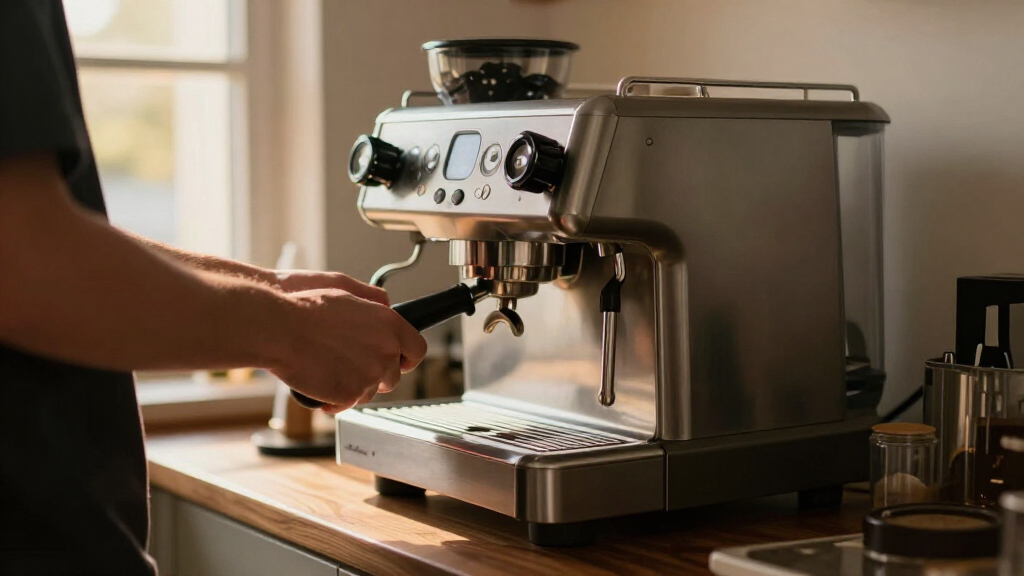
Imagine your machine starts dripping around the portafilter during a morning rush. If the gasket is accessible and sold as a spare, the fix may be a straightforward service task. If the machine is sealed, parts are unavailable, or no one can find service information, the same small fault can leave you comparing replacement models instead.
Why repairability matters reaches beyond one repair bill. It can help you keep familiar equipment, avoid replacing still-working components, and restore consistent coffee. A machine that can be serviced is more like a bicycle with replaceable tires than a sealed toy: individual parts can wear without ending the whole thing’s useful life.
Products Worth Considering

Breville Bambino Espresso Machine, Brushed Stainless Steel

De'Longhi Dinamica Plus Fully Automatic Espresso Machine

De'Longhi Stilosa Compact Manual Espresso Machine with Milk Frother
As an affiliate, we earn on qualifying purchases.
Which Parts Usually Wear Out—and What Those Failures Look Like
Common espresso-machine repairs involve seals, gaskets, pumps, valves, heating elements, and switches; grinders also need attention when their burrs wear or collect residue. Those parts face different kinds of stress, so a symptom points toward a possible problem but does not prove its cause.
A hard-to-lock portafilter or water escaping around the group head can suggest a worn seal. Weak or inconsistent flow may involve scale, a blockage, or a pump issue. A grinder that produces uneven grounds or struggles to feed beans may need cleaning or service, but worn burrs are only one possibility.
Think of a serviceable machine as a house with accessible plumbing. A tap can fail without requiring you to tear down the kitchen—but you still need to identify the faulty part before ordering a replacement. The exact parts and repair difficulty vary by model, which is why a familiar symptom should lead to a manual or diagnosis, not a guess.
For example, if your shots suddenly run much faster, changing the grinder setting may help, but it won’t fix a leaking valve or a failing pump. Write down what changed, when it began, and whether you see leaks, unusual sounds, or error lights. That short record gives a technician a more useful starting point than “it stopped working.”
- Leaks around the group head: check the manual for the gasket’s inspection and replacement guidance.
- Changes in flow or pressure: rule out simple causes only as the manufacturer directs.
- Grinder performance shifts: clean and maintain it according to its instructions before assuming the burrs need replacing.
How to Check Repairability Before You Buy
Repairability in espresso gear is easier to judge before checkout than after a machine fails. Look for spare parts, service manuals or diagrams, clear warranty terms, and repair support for the specific model—not just reassuring claims about quality or a high price.
- Search for parts by model number. Check whether common service items, such as seals or other model-specific components, are listed and available.
- Look for repair information. Manuals, exploded diagrams, and service instructions help owners and technicians understand what can be replaced.
- Ask who can service it. Check whether the maker or an independent repairer supports the model in your area.
- Read the warranty and parts policy. Confirm coverage details and ask how long parts are expected to remain available, if that information is published.
- Compare the likely ownership costs. Include maintenance, parts, service labor, warranty coverage, and expected service life—not only the purchase price.
For instance, a budget machine may look like a bargain until you discover that its pump assembly is sold only as part of a larger sealed unit. A pricier model is not automatically better: price alone does not guarantee repairability. Check the exact model’s support, because two machines from the same brand can have very different service arrangements.
Give customer support a practical test before you buy. Ask whether a replacement gasket or pump is available, what documentation a repairer can access, and where the machine can be serviced. Specific answers are more useful than a vague promise that the product is built to last.
How Longevity Changes the Real Cost of Owning Espresso Gear
Why longevity matters becomes clear when you compare the purchase price with the cost of keeping a machine in service. A low upfront price may not stay low if a modest failure forces an early replacement; meanwhile, a more expensive machine only earns its keep if parts, maintenance, and service remain practical.
Compare two household scenarios. In the first, a machine develops a leaking group-head seal, and a technician can replace that component while leaving the boiler and frame in service. In the second, the failed part is inaccessible or unavailable, so the owner replaces the whole machine. The repair cost is only one part of the story; time without coffee, delivery, and disposal also affect the decision.
Repairability and durability are different qualities. A robust machine can resist damage yet still be difficult to open. A service-friendly machine can be straightforward to fix but need regular maintenance. Think of durability as a strong coat and repairability as a patch kit: the best long-term ownership often needs both.
Use this comparison when you’re weighing two models. Don’t invent a service-life number from a product page; look for concrete evidence about parts and support, and ask what a common repair would involve. If the maker cannot say whether parts will be available, treat that uncertainty as part of the ownership cost.
| What to compare | Repair-friendly sign | Possible warning sign |
|---|---|---|
| Parts | Common components are listed as replaceable spares. | Parts are missing, bundled into costly assemblies, or hard to identify. |
| Access | Fasteners and components allow service access. | Glued, sealed, or difficult-to-open construction blocks repair. |
| Information | Manuals, diagrams, or repair guidance are available. | Owners and technicians cannot find basic service details. |
| Support | Manufacturer or independent service is available. | No clear repair route exists for the model. |
What You Can Maintain at Home—and When to Call a Technician
Routine maintenance can prevent avoidable wear, but safe tasks depend on your machine and its instructions. Follow the manufacturer’s guidance for backflushing, cleaning, descaling, and replacing service items; don’t assume that one schedule or cleaning method fits every machine.
Water makes the difference. Its hardness and mineral content affect scale buildup, but descaling advice varies with the machine and local water. An unsuitable product or procedure can cause harm, so check your manual or ask the manufacturer rather than pouring a generic solution into the tank because a forum post recommended it.
For example, a café-style routine might include backflushing only if the machine supports it, wiping and cleaning removable components, and keeping grinder burrs free of old coffee residue. Follow the specified products and steps. Good care is less dramatic than a repair, but it can keep small deposits and neglected residue from building into larger problems.
Electrical, boiler, and pressure-system repairs require extra caution. A machine can retain hot water or pressure, and mains electricity creates a serious hazard. If you notice a burning smell, a leak near electrical parts, unusual pressure behavior, or other safety concerns, stop using the machine and consult its manual or a qualified repairer.
Safety rule: Don’t open a machine or work on its electrical, boiler, or pressure components unless you have the training and instructions to do so safely.
Some confident owners can handle routine cleaning or a simple replacement described in the service manual. If the repair involves wiring, a boiler, pressure, or uncertainty about how to make the machine safe, hand it to a qualified technician. Saving a service fee is never worth risking injury or a flooded counter.
When Repair Is the Greener Choice—and When It Isn’t
Keeping equipment in use can reduce replacement demand and waste, but repair is not automatically the greener choice in every case. The result depends on what failed, what parts and transport the repair needs, how much useful life the machine has left, and what a replacement would involve.
If a sound machine needs one available seal or pump, repairing it can keep a large set of still-working components in service. By contrast, severe corrosion, major electrical damage, obsolete parts, or very high labor costs can make replacement the more practical option. The sensible choice depends on the repair estimate and the condition of the rest of the machine.
Imagine an older machine with a solid frame and boiler but a failed replaceable switch. If a technician confirms that the repair is safe and parts are available, a targeted fix may be more reasonable than discarding the whole appliance. If corrosion has spread through key components and no replacement parts exist, the same machine may no longer be a sound repair candidate.
Broader interest in right-to-repair policies and product longevity has put parts access and repair information in the spotlight. Rules vary by country and product category, so don’t assume a particular policy applies to every espresso machine. Check current local requirements and the manufacturer’s model-specific parts policy before you rely on a legal guarantee of support.
Repairability also supports better coffee when service restores stable operation. A properly diagnosed and repaired machine can return to more consistent brewing than one that keeps running with a failing component. That benefit matters, but it should not lead you to ignore safety or spend more than the machine’s remaining condition justifies.
How to Decide Whether Your Old Machine Deserves a Repair
A repair is worth considering when the fault is identifiable, parts and skilled labor are available, and the rest of the machine remains sound. Compare the estimate with the cost of a replacement and the likely useful life you’ll get after service; neither age nor one failed component decides the case by itself.
Start with what you know. Does the machine leak, fail to heat, make a new noise, or produce a different flow? Note when the issue began and what maintenance you’ve done. Then consult the manual or a repairer; a symptom can have multiple causes, and replacing a part on a hunch can waste money.
For example, a grinder that suddenly produces inconsistent grounds might need a careful cleaning, service, or new burrs. If the motor and other parts remain in good condition and the burrs are available, the repair may extend its useful life. If the motor has failed and the grinder’s internal assembly is unavailable, replacement could be the more sensible option.
Ask for an estimate that separates parts, labor, diagnosis, and any safety concerns. Check whether the proposed repair includes a warranty and whether other worn parts are likely to need attention soon. A repair can look expensive in isolation but still make sense if it restores a well-maintained machine; a cheap repair can be poor value if another major failure is close behind.
Make the decision with facts rather than guilt. Longevity is not a contest to keep every appliance running forever. It means using equipment thoughtfully, repairing it when that is safe and practical, and replacing it when the machine can no longer serve you responsibly.
Frequently Asked Questions
What usually breaks first in an espresso machine?
Seals and gaskets are common wear items, while pumps, valves, heating components, and electronics can also fail. The first problem depends on the model, water, use, and maintenance, so treat a symptom as a clue rather than a diagnosis.
Can I repair my espresso machine myself?
You may be able to do routine cleaning or a simple part replacement if the manufacturer’s service instructions describe the task and you can follow them safely. Electrical, boiler, and pressure-system work can expose you to serious hazards, so leave those repairs to a qualified technician.
How can I tell whether a machine is repairable before buying it?
Search for model-specific spare parts, service manuals, diagrams, and repair support. Ask the manufacturer or seller what parts and service are available, and check the warranty terms. A premium price by itself does not prove that repairs will be easy.
Is it worth repairing an older espresso machine?
It can be, especially when the frame and major components remain sound and the fault involves an available replaceable part. Compare a repair estimate—including labor and parts—with the cost and expected service life of a replacement. Severe corrosion, obsolete components, or major electrical damage can make replacement the better option.
How often should I descale my espresso machine?
Follow the manufacturer’s guidance and account for your water hardness and how often you use the machine. There is no single schedule that fits every espresso maker, and the wrong descaling product or method can cause damage.
Does repairability help the environment?
Keeping a machine in use can reduce demand for replacements and prevent waste, especially when a repair restores a machine with many sound components. The overall impact depends on the parts, labor, transport, and the condition and energy use of the equipment, so repair is not automatically the best choice in every situation.
Conclusion
Buy for serviceability, not just sturdiness. A strong machine can still become waste if you can’t find its parts or get it repaired, while an accessible design and sensible maintenance can keep useful equipment brewing after a component wears out.
Before your next purchase—or before you give up on the machine you already own—check the parts, instructions, and repair route. A small fix can keep the familiar hiss of your espresso routine on the counter instead of sending a whole machine to the bin.