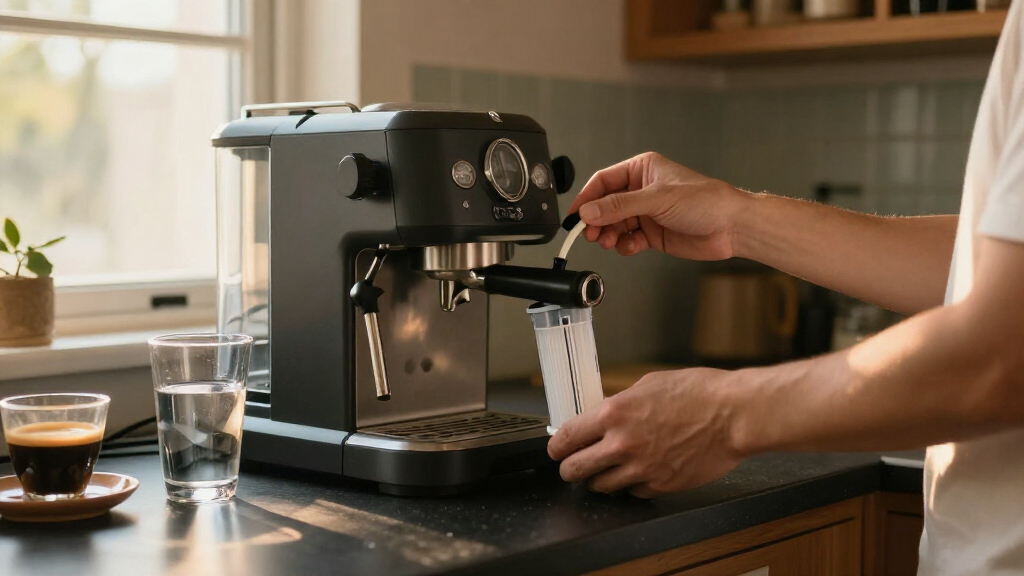

Choosing the right water treatment is the single most impactful change a home barista can make for their espresso machine. While many filters focus purely on removing impurities, the specific category of remineralization and softening filters plays a dual role: protecting your machine from limescale and balancing the water chemistry for optimal extraction. This guide focuses on a specific solution designed for LELIT espresso machines, the Naucoos 2-Pack Cationic Resin Filters. These filters operate on a fundamental chemical principle—replacing hardness minerals with sodium—which differs significantly from reverse osmosis or carbon-only filtration. I selected this product for our lineup because it addresses a common pain point for machine owners in hard water areas: the silent accumulation of scale that degrades heating elements and alters coffee taste. The main tradeoff here is convenience versus chemical control. You gain a tool-free installation and a clear replacement schedule, but you lose the ability to fine-tune mineral content beyond a simple softening process. This is not a solution for those seeking third-wave precision water mixing, but rather a practical maintenance tool for daily espresso drinkers who prioritize machine longevity and consistent baseline flavor. If you own a LELIT machine and want to mitigate limescale without installing an under-sink system, this option stands out for its specific compatibility and straightforward resin technology.

Get coffee and tea gear delivered free with Prime
- Fast, free delivery on millions of items
- Prime Video, Amazon Music and more included
- Member-only deals all year
Complete the kit


Key Takeaways
- The Naucoos filters use cationic resin to swap calcium and magnesium for sodium, effectively softening water rather than just filtering it.
- Each filter has a capacity of 70 liters, which translates to roughly two months of use for a typical household, providing a clear replacement schedule.
- These filters are specifically designed for LELIT espresso machine water tanks, requiring no adapters or complex installation steps.
- Unlike reusable filters, these are disposable, meaning ongoing costs are tied to the price of replacement packs.
- The primary benefit is limescale reduction, which protects internal boiler components and stabilizes extraction temperatures.
| Naucoos 2-Pack 70L Cationic Resin Water Filters for LELIT Espresso Machines |  | Best for LELIT Owners Seeking Simple Scale Prevention | Pack Size: 2 filters | Capacity: 70 liters per filter | Compatibility: LELIT espresso machines | VIEW LATEST PRICE | See Our Full Breakdown |
| remineralization filters for espresso | Pack Size | Capacity | Compatibility | Material |
|---|---|---|---|---|
| Naucoos 2-Pack 70L Cationic Re | 2 filters | 70 liters per filter | LELIT espresso machines | Cationic resin |
More Details on Our Top Picks
Naucoos 2-Pack 70L Cationic Resin Water Filters for LELIT Espresso Machines
This option stands out for its targeted design. Unlike universal charcoal baskets that merely reduce chlorine and sediment, the Naucoos Cationic Resin Filters actively alter water chemistry. The core mechanism here is ion exchange. The resin beads inside the filter attract calcium and magnesium ions—the minerals responsible for hardness and limescale—and release sodium ions in their place. This process is vital for espresso machines, as scale buildup acts as an insulator on heating elements, causing temperature fluctuations that ruin extraction consistency. Compared with basic carbon filters, which do nothing for hardness, this resin approach directly attacks the primary cause of machine failure in hard water areas. However, this specific functionality comes with a limitation: it does not remove total dissolved solids (TDS) to the degree that reverse osmosis systems do. If your source water is extremely hard or contains high levels of contaminants beyond minerals, this filter may not be sufficient on its own. It is best suited for municipally treated tap water where the primary concern is hardness, not purity. The installation is tool-free, dropping directly into the LELIT water tank. This ease of use is a significant advantage over under-sink systems that require plumbing modifications. Yet, the tradeoff is the ongoing consumable nature of the product. You cannot rinse and reuse these filters; once the 70-liter capacity is reached, the resin is exhausted and must be discarded. For users who prefer a ‘set and forget’ approach, this is a benefit, but for those who want to minimize waste or cost, it represents a recurring expense. The two-pack format helps mitigate this by offering a slightly longer runway before needing to reorder, but it does not change the disposable nature of the product.
Pros:- Effectively reduces limescale by replacing hardness minerals with sodium
- Specifically designed for a secure fit in LELIT espresso machine water tanks
- Includes two filters, providing a longer initial usage period before replacement
- No tools or adapters required for installation
Cons:- Filters are disposable and cannot be regenerated or reused
- Does not remove contaminants like chlorine or sediments as effectively as carbon filters
- Requires frequent replacement in areas with very hard water
Best for: Home baristas who own LELIT espresso machines and want a simple, tool-free way to reduce limescale without installing complex plumbing.
Not ideal for: Users with extremely hard water (over 10 grains per gallon) or those who require precise mineral control for third-wave competition-style brewing.
- Pack Size:2 filters
- Capacity:70 liters per filter
- Compatibility:LELIT espresso machines
- Material:Cationic resin
- Color:White
- Replacement Frequency:Every 70 liters or 2 months
- Product Dimensions:6.5 x 5.91 x 2.17 inches
- Item Weight:7.8 ounces
- Model:SDT-Naucoos-1771
Our verdict“This is the most practical, low-effort solution for protecting LELIT machines from scale, though it lacks the advanced filtration capabilities of multi-stage systems.”
How We Picked
When evaluating water treatment solutions for espresso, I looked beyond generic marketing claims to assess the specific mechanism of action. For this roundup, the focus was on cationic resin technology, which is distinct from activated carbon or reverse osmosis. I prioritized products that offer a clear, measurable capacity limit, such as the 70-liter rating found in the Naucoos filters, because knowing when to replace a filter is critical for maintaining water quality. I also assessed compatibility. A filter that fits loosely or requires modification is a risk for leaks and inconsistent flow rates. The Naucoos option was selected because it is engineered specifically for LELIT tank designs, ensuring a snug fit that prevents bypass flow. Furthermore, I considered the ease of use. Home baristas often lack the time or technical knowledge to mix mineral salts from scratch. Therefore, I favored solutions that offer a ‘drop-in’ simplicity. The inclusion of two filters in a pack was also evaluated as a value proposition, balancing upfront cost against the frequency of replacement needed in hard water zones. Finally, I looked at the material safety and construction. The resin must be food-grade and stable enough to not shed particles into the tank, a factor that influenced the selection of this specific model over unbranded alternatives.
Factors to Consider When Choosing Best Remineralization Filters For Espresso
Selecting the right water filter for espresso requires understanding the specific needs of your machine and the quality of your tap water. Not all filters serve the same purpose. Some focus on removing taste-affecting compounds like chlorine, while others focus on protecting the machine from physical damage like scale. This guide breaks down the key factors to consider.Understanding Filter Types: Resin vs. Carbon vs. RO
The primary distinction in espresso water treatment is the technology used. Cationic resin filters, like the Naucoos model, are softeners. They swap hard minerals for sodium. This is excellent for scale prevention but does not purify water. Activated carbon filters remove chlorine, sediment, and organic compounds that affect taste, but they do not reduce hardness. Reverse Osmosis (RO) systems remove nearly all minerals, which can be too aggressive for espresso unless remineralized afterward. For most home users, a resin filter is the best balance of protection and simplicity, especially if your local water is already free of strong tastes and odors.
The Importance of Capacity and Replacement Schedules
Water filters have a finite lifespan. The 70-liter capacity of the Naucoos filter is a critical spec. It allows you to calculate exactly when to replace it. In a household consuming two double-shot espressos per day, you might use about 1.5 to 2 liters of water per day, meaning the filter lasts over a month. However, if you steam milk frequently, the water usage increases, shortening the filter’s life. Ignoring the replacement schedule leads to two problems: the resin becomes saturated and stops softening water, and the filter itself can become a breeding ground for bacteria if left too long. A clear capacity rating helps you manage this maintenance task proactively.
Compatibility and Fit
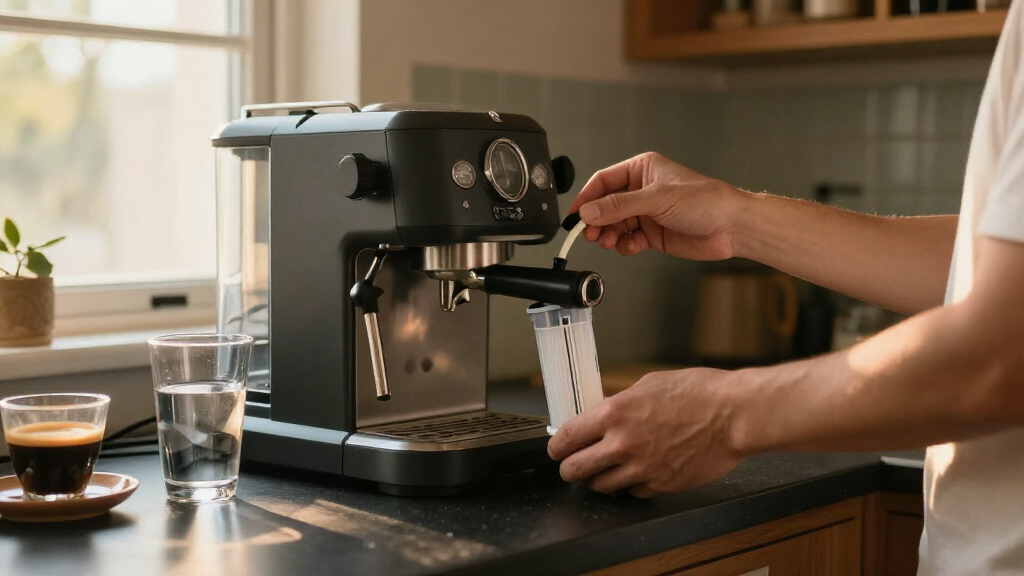
A filter that does not fit properly is a failed filter. If the seal is loose, water will bypass the resin entirely, rendering the filtration useless. The Naucoos filters are designed specifically for the geometry of LELIT tanks. This ensures that all water entering the machine passes through the resin bed. When shopping for filters, always verify the model number of your machine. Universal filters may require adapters or may not sit correctly, leading to inconsistent water quality and potential leaks. A precise fit is non-negotiable for effective ion exchange.
Impact on Coffee Flavor
Water chemistry directly affects extraction. Hard water can over-extract certain compounds, leading to bitterness, while very soft water can under-extract, resulting in sourness. By reducing hardness, resin filters stabilize the extraction process. However, they also add sodium. While this sodium content is generally low and not noticeable in taste for most people, some sensitive palates may detect a slight difference. Compared to RO water, which can taste ‘flat’ or ’empty,’ softened water retains enough mineral content to produce a fuller body in espresso. This makes resin filters a good middle ground for those who find RO water too stark and hard water too harsh.
Maintenance and Hygiene
Keeping water filters clean is essential. While the resin itself does not require cleaning, the filter housing and the water tank do. Residue can build up around the filter interface. When replacing the Naucoos filters, it is advisable to rinse the tank and the new filter under cold water before insertion. This removes any loose resin beads or dust from manufacturing. Regular replacement also prevents the accumulation of biofilm, which can occur in stagnant water tanks. A simple routine of swapping the filter every two months and cleaning the tank ensures that the water entering your espresso machine remains safe and consistent.
Frequently Asked Questions
Can I use these filters in any espresso machine?
No, these filters are specifically engineered for the water tank design of LELIT espresso machines. The dimensions and connection points are tailored to fit LELIT tanks snugly. Using them in other brands, such as Breville, Gaggia, or Rancilio, will likely result in a poor fit, allowing water to bypass the resin entirely. This bypass renders the softening process ineffective and may cause leaks or damage to the tank interface. Always check your machine’s manual for the recommended filter model before purchasing.How do I know when to replace the filter?
The manufacturer specifies a capacity of 70 liters or two months, whichever comes first. For most home users, the time interval is easier to track than the volume. You can place a calendar reminder every two months to swap the filter. If you live in an area with very hard water, the resin may saturate faster than the two-month mark. In such cases, you might notice changes in machine performance, such as slower heating or unusual noises, or changes in coffee taste, such as increased bitterness or astringency. However, waiting for these symptoms is not recommended, as scale damage may already have occurred.Do these filters remove chlorine from the water?
These are cationic resin filters, which are designed primarily for softening water by replacing hardness minerals. They are not activated carbon filters. While they may remove some sediment as they pass through the resin bed, they do not effectively remove chlorine, chloramines, or organic compounds that affect taste and odor. If your tap water has a strong chlorine smell, these filters alone will not resolve the taste issue. In such cases, you might need a pre-filter stage or a different filtration system that includes carbon media to address taste and odor alongside hardness.Is the sodium added by the filter safe to consume?
Yes, the sodium added during the ion exchange process is minimal and generally considered safe for consumption. The amount of sodium released into the water is proportional to the amount of calcium and magnesium removed. For most municipal water supplies, the increase in sodium content is negligible and does not significantly alter the dietary sodium intake of an average adult. However, individuals on strict low-sodium diets or those with specific medical conditions requiring sodium restriction should consult with a healthcare provider or consider alternative water treatment options, such as reverse osmosis followed by remineralization with potassium-based salts.Can I clean and reuse these filters?
No, these filters are designed for single use. The cationic resin inside becomes saturated with calcium and magnesium ions over time. Once the resin’s exchange capacity is exhausted, it cannot be regenerated by simple washing or soaking in household products. Attempting to reuse the filter will result in no softening effect, as the resin is no longer active. Discarding the old filter and inserting a new one is the only way to restore the softening capability. This disposable nature ensures consistent performance but requires a recurring purchase.Conclusion
For the LELIT espresso machine owner, the Naucoos 2-Pack Cationic Resin Filters represent a pragmatic choice. They do not attempt to be a comprehensive purification system, but they excel at their primary job: preventing limescale. If your main concern is machine longevity and you live in an area with moderately hard tap water, this filter offers a simple, effective barrier against scale buildup. It is not the right choice for those seeking to manipulate water chemistry for competition-level extraction or for those with severe water quality issues involving contaminants. But for the daily drinker who wants to protect their investment with minimal effort, this filter strikes a reliable balance. It integrates seamlessly into the existing tank design, requires no tools, and provides a clear replacement schedule. By maintaining a regular replacement routine, you ensure that your espresso machine operates at peak efficiency, delivering consistent shots without the silent degradation caused by mineral deposits. This simplicity is its greatest strength, making it an accessible entry point into water treatment for home espresso enthusiasts.