TL;DR

Get coffee and tea gear delivered free with Prime
- Fast, free delivery on millions of items
- Prime Video, Amazon Music and more included
- Member-only deals all year
Home espresso machines commonly draw about 800 to 1,500 watts while heating, but actual energy use depends on warm-up time, brewing frequency, standby behavior, and your electricity rate. Track the machine’s kilowatt-hours for a week, then compare habits such as switching it off after use, using a timer, and avoiding unnecessary warm-ups; simple routine changes can matter more than buying a new machine.
Your espresso machine can pull more than a kilowatt while heating, but that number alone won’t tell you what it costs to make your morning coffee. A machine that heats for a few minutes and then switches off has a different energy footprint from one left warm on the counter all day.
This guide breaks down where the electricity goes, how to estimate the cost, and which everyday habits can make a difference. You’ll also see why wattage is not the same as energy consumption, and how to compare a quick routine change with the cost of replacing your machine.
Think of the heater as a kitchen tap: power is how fast the water flows, while kilowatt-hours measure how much you used. Once you separate those ideas, you can make a more useful decision than simply choosing the machine with the lowest wattage.
A machine’s wattage describes power draw, not your total bill; use kWh measurements to estimate energy use.
At 25 cents per kWh, a measured 0.3 kWh coffee session costs about 7.5 cents.
Switching off after your final drink can avoid unnecessary heat maintenance during long idle periods.
Compare similar days when testing standby, auto-off, or grouped brewing; machine designs behave differently.
Calculate a new machine’s likely savings before buying; routine changes may offer better value.
What actually drives your espresso machine’s energy use?
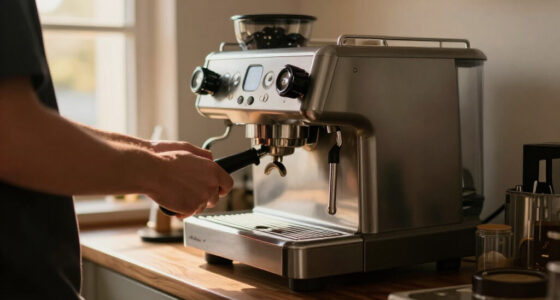
Energy use in home espresso comes mainly from heating water and keeping the machine hot, not from the few seconds spent pulling a shot. Many home machines are rated around 800 to 1,500 watts, but they do not necessarily draw that much every minute they are switched on: thermostats turn heaters on and off to hold the set temperature.
That distinction explains why two machines with similar wattage can use different amounts of electricity over a morning. A compact machine that heats a small thermoblock for a short session may behave differently from a machine with a large boiler that stays hot for an hour. Insulation, room temperature, settings, and how often you draw steam also affect how frequently the heater cycles.
For a quick estimate, multiply watts by hours and divide by 1,000. A 1,200-watt heater running continuously for 15 minutes would use 0.3 kWh (1.2 kW × 0.25 hours), but that is a simple upper-bound illustration, not a guaranteed reading for a real brew session. The heater may cycle, and warm-up may take less than 15 minutes.
Picture a weekday routine: you switch on the machine, shower while it warms, pull one shot, and turn it off. Your bill reflects the full heating and waiting period, not just the short hiss of the pump. A plug-in energy monitor can help you measure that pattern directly; follow the monitor’s safety instructions and use a properly rated device.
energy-efficient home espresso machine
As an affiliate, we earn on qualifying purchases.
As an affiliate, we earn on qualifying purchases.
How can you estimate the cost of a daily espresso habit?
Energy use in home espresso becomes easier to manage when you convert measured kilowatt-hours into money using your electricity rate. Multiply the machine’s kWh use by your price per kWh; if you pay 25 cents per kWh and the machine uses 0.3 kWh in a session, that session costs about 7.5 cents.
Use a week of measurements rather than a single morning. Your Monday routine may include two drinks and milk steaming, while Saturday’s longer brunch may involve several rounds of heating and waiting. A monitor’s weekly total captures those differences better than a guess based on the machine’s label.
Here’s a practical comparison using a hypothetical 25-cent electricity rate. These are examples, not promised performance figures: actual results depend on the machine, local tariff, and how much time the heater spends on.
| Measured use | At 25 cents per kWh | What it could represent |
|---|---|---|
| 0.2 kWh | 5 cents | A short, measured coffee session |
| 0.5 kWh | 12.5 cents | A longer warm-up or several drinks |
| 1.0 kWh | 25 cents | A high-use day, depending on the machine |
Multiply your daily reading by the number of days you brew to estimate a monthly cost. If you use the machine every day, 0.3 kWh per day works out to about 9 kWh over 30 days, or $2.25 at 25 cents per kWh. The point is not that every kitchen will match this example; it’s that your own meter reading and tariff make the estimate personal.
automatic espresso machine with auto-off
As an affiliate, we earn on qualifying purchases.
As an affiliate, we earn on qualifying purchases.
Which daily habits save power without spoiling your coffee?
The biggest habit change is to match heating time to when you actually make coffee. If you pull one espresso at 7 a.m. and leave the machine ready until lunch, you may be spending electricity to keep metal and water hot while nobody uses them. Switching it off after your last drink is often a straightforward way to avoid that idle heating.
Try this routine for a normal workday: set the machine to warm while you grind beans and prepare your cup, make your drink, then power it down when you finish. If your model needs a longer warm-up for stable temperature, follow its manual and test a schedule that still gives you the shot quality you want. Saving energy should not mean rushing a machine before it reaches its intended operating temperature.
Several small choices can reduce wasted heating:
- Batch drinks when you are making coffee for two people, rather than reheating the machine for separate sessions.
- Use auto-off or sleep mode if your machine offers it; check how quickly it wakes and whether the feature changes your routine.
- Make only the hot water you need when your machine heats water for other uses.
- Skip long idle warm-ups when you can prepare cups, milk, and grounds during the machine’s normal warm-up.
For example, if you and a housemate each make a drink 20 minutes apart, preparing them in one session may avoid a second warm-up. The actual saving depends on your machine and timing, but the habit costs nothing to test. Keep food safety in view too: refrigerate milk promptly, and don’t leave it sitting warm beside the machine while you stretch the coffee session.
As an affiliate, we earn on qualifying purchases.
Should you switch the machine off or leave it on standby?
For most home routines, switching the machine off after your final drink avoids paying to maintain heat during hours when you are not brewing. Standby can use less power than full heating, but “less” does not mean zero, and the amount varies by machine. A short pause between drinks may make standby convenient; leaving a machine ready through an empty afternoon is a different choice.
Think about the gap, not just the button label. If you make a second drink ten minutes later, keeping the machine on may save you a wait and a second heat-up. If your next coffee is tomorrow morning, it usually makes little sense to keep a boiler warm overnight solely for that shot.
Compare your options with a simple trial. Measure a typical day with the machine left in standby, then measure a similar day when you switch it off after the final drink. Keep the number of drinks and approximate schedule similar. This small kitchen experiment is more dependable than assuming all standby modes behave alike.
Standby is a convenience setting, not a promise of zero energy use. Check the manual for the machine’s auto-off behavior and use a meter if you want to know what it draws at home.
One caution: do not unplug or use a timer in a way that conflicts with the manufacturer’s instructions, especially if the machine has a programmed cleaning cycle or needs a particular shutdown process. Follow the manual, keep cords and plugs dry, and avoid overloading power strips. A modest saving is never worth an electrical hazard or a damaged machine.
low power consumption espresso maker
As an affiliate, we earn on qualifying purchases.
As an affiliate, we earn on qualifying purchases.
Does machine type change the energy bill?
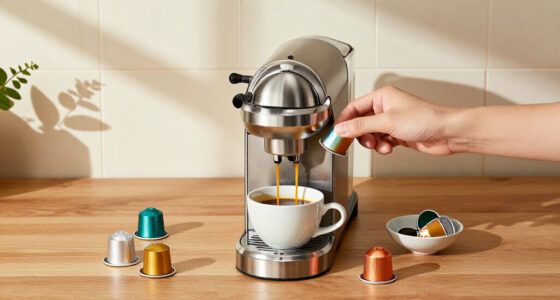
Machine type can change how energy is used, but the label alone cannot tell you which one costs least to run. A manual lever machine, semi-automatic, fully automatic, or capsule system may differ in heater size, warm-up time, standby behavior, and how much hot water it keeps ready. Your actual routine can outweigh the broad category.
A thermoblock heats water as it passes through, while a boiler stores heated water. That difference can affect warm-up and temperature stability, but it does not prove that every thermoblock is more efficient than every boiler. A well-insulated boiler with a sensible auto-off routine may use less across your day than a small machine left running for hours.
Here’s a familiar contrast: one household makes a single espresso each morning and shuts down the machine; another makes several milk drinks across a slow weekend breakfast and keeps the machine on between rounds. Even if the second household owns a machine with a lower rated wattage, its longer operating window could result in higher daily use.
When shopping, compare features that match your habits: automatic shut-off, sleep settings, warm-up behavior, and available energy measurements. Don’t treat a general claim that modern models use less standby power as a guaranteed saving for your situation; ask for a measured standby figure or test the machine if you can. A new purchase also has a cost, so a small reduction in electricity may not quickly repay the price of replacing a working machine.
How can you cut waste without buying a new machine?
You can often reduce wasted energy with a better routine before replacing your espresso machine. Start by measuring a normal week, then change one habit at a time. That approach helps you see whether a timer, auto-off setting, or shorter idle period makes a meaningful difference in your kitchen.
Use this simple sequence to find your best adjustment:
- Record your baseline. Note how many drinks you make, when the machine turns on and off, and the meter’s kWh reading for several typical days.
- Find the idle window. Notice how long the machine stays hot with no one brewing. A machine left on from breakfast until late morning is an obvious place to test a change.
- Try one adjustment. Use auto-off, switch the machine off after the final drink, or group drinks into one session.
- Compare like with like. Repeat the measurement on similar days with a similar number of drinks, then check the difference.
Suppose you normally leave your machine on for an hour after breakfast. Try powering down as soon as you finish, then warm it again only if you genuinely want another drink. You might lose the convenience of an immediately ready machine, but you could avoid an hour of temperature maintenance. Whether that tradeoff feels worthwhile depends on your coffee schedule and the measured change.
Smart plugs and connected controls can help schedule a machine, but use them only when the machine’s instructions allow it. Some espresso makers need a manual startup or shutdown, and a remote power cut may interrupt cleaning or other functions. A timer is a tool, not a substitute for understanding your appliance.
When does a more efficient machine make financial sense?
A more efficient machine makes financial sense only when its real energy savings justify its purchase cost for your household. Features such as insulation, rapid heating, or a lower-power sleep mode can help, but savings depend on how often you brew and how long your current machine stays warm. A heavy daily user may see a different result from someone who makes one espresso every other morning.
To check the payback, compare measured energy use before and after a change, then multiply the difference by your electricity rate and the number of days you use the machine. For example, if a change saves 0.1 kWh per day and power costs 25 cents per kWh, that saves 2.5 cents daily. Over a year of daily use, that is about $9.13. A new machine that costs hundreds of dollars would not repay itself through that saving alone in the near term.
That example does not account for repair costs, lifespan, or other reasons to replace an appliance. It simply keeps energy claims in proportion. If your present machine is failing or you want features for other reasons, efficiency can be one part of the decision; if it works well, adjusting idle time may be the more sensible first move.
Look for clear, comparable information rather than broad promises. A stated standby wattage or an independent energy reading tells you more than a vague “eco” label. Then ask how the feature fits your actual mornings: a scheduled warm-up can be useful if you reliably brew at the same time, but it may waste power on days when you sleep in or leave home early.
Frequently Asked Questions
How much does a home espresso machine add to the electricity bill?
It depends on warm-up time, heating cycles, standby use, drink frequency, and your electricity price. Measure the machine’s kWh over several typical days, then multiply by your local cost per kWh for a useful estimate.
Is it cheaper to turn an espresso machine off after every drink?
For a long gap, switching it off usually avoids the energy used to keep the machine hot. For a short pause between drinks, staying on may be more convenient; compare the measured use and follow the manufacturer’s shutdown instructions.
Do thermoblock machines always use less electricity than boiler machines?
No. Heating design affects how a machine warms and holds water, but insulation, standby settings, warm-up time, and your habits also matter. Compare measured use for the exact machine and routine rather than relying on the category name.
Can a smart plug reduce espresso machine energy use?
A smart plug can help schedule power or switch off a compatible machine, but it does not automatically reduce energy. Check the appliance manual first, since remote power cuts could interrupt a shutdown or cleaning function.
How do I measure my espresso machine’s electricity use?
A properly rated plug-in energy monitor can record kWh over a brewing session or several days. Follow the monitor’s safety instructions, keep the setup dry, and compare days with similar drink counts and schedules.
Conclusion
Your espresso bill depends on the hours your machine heats, not just the seconds it pulls a shot. Measure a typical week, shorten idle time where it fits, and compare the result at your electricity rate before blaming the machine or replacing it.
Keep the coffee ritual; lose the empty hours of heat. A warm cup should be the part you pay for, not a boiler waiting alone on the counter.
Halloween Picks
halloween
As an affiliate, we earn on qualifying purchases.