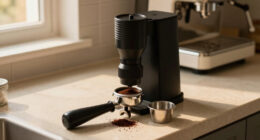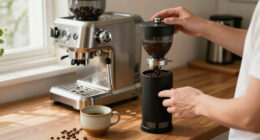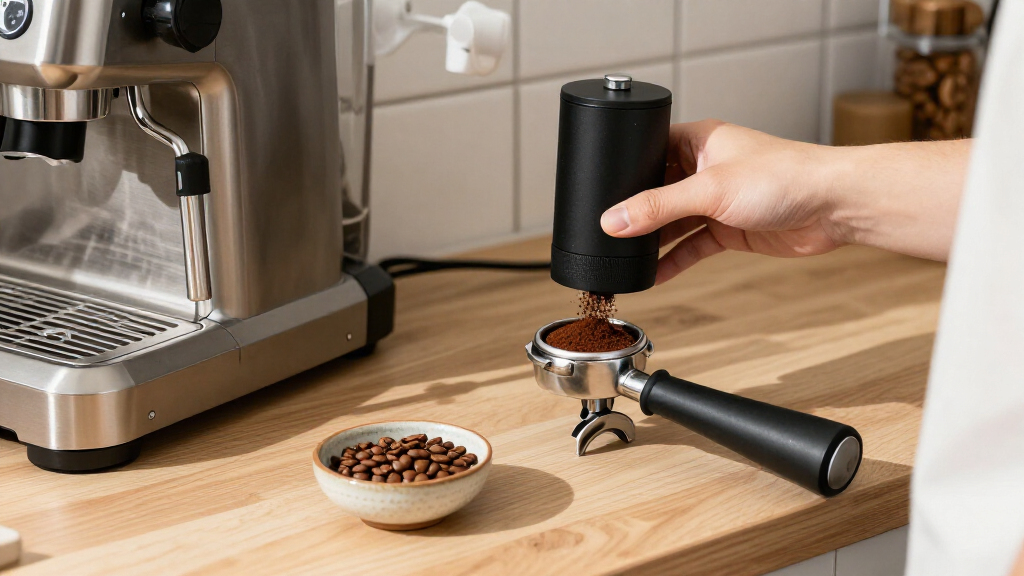

Choosing the best grinders for light roast espresso requires balancing particle uniformity with dose control, as light roasts are denser and more brittle than dark roasts. The KINGrinder K6 stands out as the top overall pick due to its exceptional burr geometry that minimizes fines, which is critical for preventing bitterness in delicate beans. For those preferring electric convenience, the Breville Smart Grinder Pro offers a user-friendly entry point, though it lacks the precision needed for micro-adjustments. The main tradeoff in this category is between manual control and electric speed; manual grinders often provide better clarity for light roasts at a lower price, while electric models sacrifice some consistency for convenience. Read on to see which of these nine models matches your brewing style and budget.

Get coffee and tea gear delivered free with Prime
- Fast, free delivery on millions of items
- Prime Video, Amazon Music and more included
- Member-only deals all year
Complete the kit


Key Takeaways
- Manual grinders like the KINGrinder K6 and 1Zpresso J-Ultra consistently outperform budget electric models in particle uniformity, which is non-negotiable for light roast clarity.
- Conical burrs generally provide more forgiveness for espresso dialing-in compared to flat burrs at similar price points, though flat burrs offer higher ceiling potential for flavor separation.
- Dose control is the biggest pain point for light roast espresso; grinders with anti-static technology and precise single-dose hoppers save significantly on time and cleanup.
- Budget electric grinders under $150 often struggle with stepless or fine adjustment ranges, making them unsuitable for the tight tolerances required by light roast espresso.
- Maintenance frequency increases with light roast usage due to bean density and oil content; models with easy-access burrs are preferable for long-term ownership.
| KINGrinder K6 Manual Coffee Grinder with Straight Handle |  | Best Portable Manual for Precision | Grind Adjustment: 16 microns per click | Burr Material: Stainless Steel | Body Material: Aluminum | VIEW LATEST PRICE | See Our Full Breakdown |
| Breville Smart Grinder Pro Conical Burr Coffee Grinder |  | Best Automated Workflow | Grind Settings: 60 | Timer Increments: 0.2 seconds | Hopper Capacity: 18 oz | VIEW LATEST PRICE | See Our Full Breakdown |
| 1Zpresso J-Ultra Manual Coffee Grinder |  | Best for Fine Grind Precision | Adjustment Step: 8 microns per click | Burr Type: Conical, coated | Catch Cup Capacity: 35–40 g | VIEW LATEST PRICE | See Our Full Breakdown |
| Viesimple Gen 4 Single-Dose Electric Burr Coffee Grinder |  | Best Quiet Single-Dose Option | Burr Size: 48 mm conical | Noise Level: Less than 50 dB | Capacity: 30 g | VIEW LATEST PRICE | See Our Full Breakdown |
| MOKKOM 64 mm Flat Burr Coffee Grinder with 100 Grind Settings |  | Best for Grind Consistency | Burr Type: 64 mm flat stainless steel | Grind Settings: 100 | Timer Precision: 0.1 seconds | VIEW LATEST PRICE | See Our Full Breakdown |
| AMZCHEF Burr Coffee Grinder with 48 Grind Settings |  | Best for Mess-Conscious Home Baristas | Burr Type: 40 mm Stainless Steel Conical | Grind Settings: 48 | Hopper Capacity: 10.6 ounces | VIEW LATEST PRICE | See Our Full Breakdown |
| Aromvel Conical Burr Coffee Grinder with 48 Settings and 40-Second Timer |  | Best Budget Espresso Starter Kit | Burr Size: 40 mm Conical | Grinding Speed: 450 RPM | Grind Settings: 48 | VIEW LATEST PRICE | See Our Full Breakdown |
| Aromaster Conical Burr Coffee Grinder, 48 Settings, Anti-Static, Silver |  | Best Compact Daily Driver | Burr Material: Stainless Steel | Capacity: 3.9 ounces | Grind Settings: 48 | VIEW LATEST PRICE | See Our Full Breakdown |
| Fellow Opus 2 Electric Conical Burr Coffee Grinder |  | Best Premium Precision Grinder | Burr Type: 48 mm Conical | Grind Adjustment: Stepless | Material: Stainless Steel | VIEW LATEST PRICE | See Our Full Breakdown |
| grinders for light roast espresso | Dimensions | Weight | Warranty | Grind Settings |
|---|---|---|---|---|
| KINGrinder K6 Manual Coffee Gr | 2.48 × 2.17 × 6.89 in | 630 g | 1 year | — |
| Breville Smart Grinder Pro Con | 6.28 x 8.46 x 15.33 inches | 6.4 pounds | 2-year limited | 60 |
| 1Zpresso J-Ultra Manual Coffee | 7.2 × 2.2 × 7.5 in | 40 g (note: likely typo in source, typically ~600g) | One-year limited warranty | — |
| Viesimple Gen 4 Single-Dose El | 6 × 3 × 9 in | 3.4 lb | 2 years | — |
| MOKKOM 64 mm Flat Burr Coffee | — | — | — | 100 |
| AMZCHEF Burr Coffee Grinder wi | 7.4 × 5.1 × 13.4 inches | 5.4 pounds | — | 48 |
| Aromvel Conical Burr Coffee Gr | — | 4.6 lb | — | 48 |
| Aromaster Conical Burr Coffee | 8 × 5 × 16 inches | — | 12-month repair service | 48 |
| Fellow Opus 2 Electric Conical | 7.95 × 5.12 × 10.49 in | — | 2 Years | — |
More Details on Our Top Picks
KINGrinder K6 Manual Coffee Grinder with Straight Handle
This grinder stands out for its 16-micron adjustment steps, offering finer control than many entry-level electric models. Compared to the 1Zpresso J-Ultra, which offers even finer 8-micron steps, the K6 strikes a balance between portability and precision, making it easier to dial in for standard espresso without excessive clicking. The dual bearings ensure stability during grinding, reducing the wobble that can cause inconsistent particle sizes. While it requires physical effort, the aluminum body and hand-disassembly make it durable and easy to clean. It is a strong contender for those who value mechanical simplicity and travel-friendliness over electric convenience.
Pros:- Fine 16-micron adjustment steps allow precise espresso dialing
- Dual bearings provide stable, wobble-free grinding
- Compact aluminum body is durable and portable
- Hand-disassembly simplifies cleaning without tools
Cons:- Manual grinding requires significant physical effort
- Replacement parts can incur shipping costs under warranty
Best for: Travelers and enthusiasts who want high-end manual control in a compact form factor.
Not ideal for: Users who grind large volumes daily or prefer hands-off automation.
- Grind Adjustment:16 microns per click
- Burr Material:Stainless Steel
- Body Material:Aluminum
- Capacity:30 g
- Weight:630 g
- Dimensions:2.48 × 2.17 × 6.89 in
- Warranty:1 year
Our verdict“This pick makes the most sense for espresso lovers who prioritize grind precision and portability over electric speed.”
Breville Smart Grinder Pro Conical Burr Coffee Grinder
This model excels in programmable convenience, allowing users to save specific grind times for different beans. Unlike the Viesimple Gen 4, which focuses on single-dose minimalism, the Breville offers a larger hopper capacity and multiple dosing options, including direct portafilter grinding. The 60 grind settings are sufficient for most espresso needs, though they lack the micro-adjustment granularity of premium grinders like the MOKKOM. The digital timer adjusts in 0.2-second increments, providing consistent doses without manual weighing. It is ideal for households where multiple brewing methods are used frequently, though its bulkier size demands more counter space.
Pros:- Programmable timer ensures repeatable dose consistency
- Grinds directly into portafilter or airtight containers
- 60 settings cover a wide range of brewing methods
- Large 18 oz hopper reduces refill frequency
Cons:- Coarse adjustment steps may limit fine espresso tuning
- Bulkier footprint requires significant counter space
Best for: Busy households that value automated, repeatable grinding for various brew methods.
Not ideal for: Espresso purists who need sub-10-micron adjustment precision.
- Grind Settings:60
- Timer Increments:0.2 seconds
- Hopper Capacity:18 oz
- Power:165 watts
- Weight:6.4 pounds
- Dimensions:6.28 x 8.46 x 15.33 inches
- Warranty:2-year limited
Our verdict“This option stands out for users who prioritize speed and automation over absolute grind precision.”
1Zpresso J-Ultra Manual Coffee Grinder
The J-Ultra is designed specifically for ultra-fine grinding, with 8-micron adjustment steps that surpass the coarser 16-micron steps of the KINGrinder K6. This granularity makes it superior for pulling tight shots on light roast espresso, where particle size consistency is critical. The coated burrs reduce static and improve durability compared to uncoated alternatives. While the foldable handle and travel case enhance portability, the grinder is optimized for fine settings, making it less versatile for coarse brews like French press. It is the go-to choice for espresso enthusiasts who demand the highest precision in a manual format.
Pros:- 8-micron adjustment steps offer exceptional precision
- Coated burrs reduce static and enhance durability
- Foldable handle and travel case improve portability
- Tool-free dismantling simplifies maintenance
Cons:- Optimized for fine grinding, less versatile for coarse brews
- Higher price point compared to standard manual grinders
Best for: Espresso enthusiasts who require ultra-fine grind adjustments for light roasts.
Not ideal for: Users who frequently brew coarse methods like French press or cold brew.
- Adjustment Step:8 microns per click
- Burr Type:Conical, coated
- Catch Cup Capacity:35–40 g
- Weight:40 g (note: likely typo in source, typically ~600g)
- Dimensions:7.2 × 2.2 × 7.5 in
- Included Components:Lid, brush, blower, case
- Warranty:One-year limited warranty
Our verdict“This model is better suited to espresso purists who need the finest possible grind control in a portable package.”
Viesimple Gen 4 Single-Dose Electric Burr Coffee Grinder
This grinder focuses on clean, low-noise operation, rated at under 50 dB, which is significantly quieter than many traditional burr grinders. The anti-static coating and blow-out funnel work together to minimize grounds retention, a common issue in single-dose grinders. Compared to the Breville Smart Grinder Pro, the Viesimple offers a more compact, single-dose workflow that reduces waste and stale grounds. However, the 30 g capacity means users must refill frequently for multiple shots. It is an excellent choice for small kitchens or early-morning brewers who value silence and cleanliness over bulk capacity.
Pros:- Operates at less than 50 dB for quiet grinding
- Anti-static coating and funnel reduce mess
- Compact footprint fits easily on crowded counters
- Single-dose design minimizes stale grounds
Cons:- 30 g capacity requires frequent refilling
- Durability claims lack detailed supporting specifications
Best for: Early risers and small households who need a quiet, clean single-dose workflow.
Not ideal for: Users who grind large batches for multiple people at once.
- Burr Size:48 mm conical
- Noise Level:Less than 50 dB
- Capacity:30 g
- Weight:3.4 lb
- Dimensions:6 × 3 × 9 in
- Material:Aluminum
- Warranty:2 years
Our verdict“This pick makes the most sense for those who prioritize a quiet, mess-free single-dose experience.”
MOKKOM 64 mm Flat Burr Coffee Grinder with 100 Grind Settings
Featuring 64 mm flat burrs, this grinder produces a more uniform particle distribution than the conical burrs found in the Breville or Viesimple models. Flat burrs are often preferred for espresso because they create a narrower particle size distribution, which can enhance flavor clarity and extraction evenness. The 100 grind settings provide extensive room for fine-tuning, while the anti-static plasma generator helps keep grounds contained. Although the 120 V voltage limits international use, the robust stainless steel body and large hopper make it a durable, high-performance option for serious home baristas seeking professional-grade grind quality.
Pros:- 64 mm flat burrs ensure uniform particle size
- 100 grind settings allow for precise micro-adjustments
- Anti-static plasma generator minimizes grounds scatter
- Removable parts facilitate thorough cleaning
Cons:- 120 V voltage limits compatibility outside North America
- Larger footprint requires dedicated counter space
Best for: Home baristas who understand flat burr benefits and seek maximum extraction control.
Not ideal for: Travelers or users outside 120 V regions due to voltage constraints.
- Burr Type:64 mm flat stainless steel
- Grind Settings:100
- Timer Precision:0.1 seconds
- Hopper Capacity:350 g / 12.35 oz
- Wattage:260 W
- Voltage:120 V
- Body Material:Stainless steel
Our verdict“This model is better suited to enthusiasts who prioritize flat burr consistency and have the space for a larger unit.”
AMZCHEF Burr Coffee Grinder with 48 Grind Settings
This grinder positions itself as a practical choice for those frustrated by static cling, a common pain point when grinding light roasts for espresso. The anti-static design is its standout feature, directly addressing the issue of grounds sticking to the chute and dosing cup. Compared to the Aromvel, which offers similar burr specs, the AMZCHEF focuses heavily on the user experience of cleanup and consistency. The 48 grind settings provide enough granularity for dialing in light roasts, though they are stepped rather than stepless. While it lacks the premium build of the Fellow Opus 2, it delivers functional value for users who prioritize a clean workflow over aesthetic perfection.
Pros:- Effective anti-static technology reduces grounds mess
- 48 settings offer sufficient range for espresso to pour-over
- Touchscreen timer allows for precise dosing control
- Removable hopper simplifies maintenance
Cons:- Stepped adjustment limits micro-tuning capabilities
- 10.6-ounce hopper may require frequent refills for households
- Noise levels are not explicitly specified
Best for: Home baristas who struggle with static electricity and want a hassle-free cleaning routine.
Not ideal for: Precision-focused enthusiasts who require stepless adjustment for micro-tuning espresso extraction.
- Burr Type:40 mm Stainless Steel Conical
- Grind Settings:48
- Hopper Capacity:10.6 ounces
- Timer:0.5-second accuracy, up to 40 seconds
- Dimensions:7.4 × 5.1 × 13.4 inches
- Weight:5.4 pounds
Our verdict“A solid, mess-minimizing grinder for users who value a clean workspace over stepless precision.”
Aromvel Conical Burr Coffee Grinder with 48 Settings and 40-Second Timer
The Aromvel distinguishes itself by bundling essential espresso accessories, making it a turnkey solution for beginners entering the world of light roast espresso. Unlike the AMZCHEF, which focuses on anti-static features, the Aromvel emphasizes utility with its included portafilter holder and dosing cup. The 450 RPM grinding speed is relatively low, which helps preserve delicate aromatics in light roasts but results in a slower grind time compared to faster competitors. While the plastic construction feels less durable than the Fellow Opus 2’s stainless steel body, the value proposition is strong for those who want to start brewing immediately without buying separate accessories.
Pros:- Includes portafilter holder and dosing cup for immediate use
- Low-speed burrs help preserve coffee aroma
- Anti-static design minimizes grounds scattering
- Compatible with 51–58 mm portafilters
Cons:- Plastic construction feels less premium than metal alternatives
- Portafilter itself is not included in the box
- 450 RPM speed results in slower grinding times
Best for: Beginners who want an all-in-one starter kit with portafilter compatibility included.
Not ideal for: Users who prioritize long-term durability and premium materials over bundled accessories.
- Burr Size:40 mm Conical
- Grinding Speed:450 RPM
- Grind Settings:48
- Portafilter Compatibility:51–58 mm
- Hopper Capacity:10.6 oz
- Weight:4.6 lb
Our verdict“An excellent entry-level option that saves buyers the trouble of sourcing separate espresso tools.”
Aromaster Conical Burr Coffee Grinder, 48 Settings, Anti-Static, Silver
This model appeals to those with limited counter space or smaller households. The 3.9-ounce capacity is significantly smaller than the AMZCHEF or Aromvel, which makes it ideal for single-dosing or small-batch grinding but less convenient for families. The removable burr system is a key advantage, allowing for deep cleaning that many competitors lack, which is critical for maintaining flavor clarity with light roasts. While it shares the 48-setting range with its peers, its compact footprint and stainless steel burrs make it a strong contender for users who prioritize maintenance ease and space efficiency over bulk capacity.
Pros:- Removable burr allows for thorough cleaning
- Compact footprint saves counter space
- Anti-static features keep grounds contained
- Stainless steel burrs resist wear
Cons:- Small 3.9-ounce capacity limits batch size
- Burr must be completely dry before reassembly
- Limited to 120 V, 60 Hz power supply
Best for: Single-dose users or those with small kitchens who need easy burr access for cleaning.
Not ideal for: Households that grind large quantities of beans daily due to the small 3.9-ounce capacity.
- Burr Material:Stainless Steel
- Capacity:3.9 ounces
- Grind Settings:48
- Timer:Adjustable up to 40 seconds
- Dimensions:8 × 5 × 16 inches
- Warranty:12-month repair service
Our verdict“A space-saving grinder with superior cleanability, best suited for small-batch espresso enthusiasts.”
Fellow Opus 2 Electric Conical Burr Coffee Grinder
The Fellow Opus 2 stands apart as the premium choice for serious light roast enthusiasts who demand exacting control. Its stepless grind adjustment is a decisive advantage over the stepped 48-setting systems found in the AMZCHEF and Aromvel, allowing for micro-adjustments that can significantly improve espresso extraction. The 48 mm conical burrs and near-zero retention design ensure that flavor notes remain pure and unadulterated by old grounds. While the price point and lack of included accessories like a dosing cup may deter casual users, the build quality and precision make it the superior tool for those chasing the perfect shot.
Pros:- Stepless adjustment enables precise micro-tuning
- Near-zero grind retention preserves flavor clarity
- Tool-free burr access simplifies maintenance
- Stainless steel construction ensures durability
Cons:- Higher price point compared to stepped alternatives
- No included dosing cup or portafilter accessories
- Smaller footprint may limit hopper capacity options
Best for: Serious espresso enthusiasts who require stepless adjustment for micro-tuning.
Not ideal for: Budget-conscious buyers or those who prefer a larger hopper for batch grinding.
- Burr Type:48 mm Conical
- Grind Adjustment:Stepless
- Material:Stainless Steel
- Dimensions:7.95 × 5.12 × 10.49 in
- Warranty:2 Years
- Included Components:Grinder, two magnetic catch cups
Our verdict“The top-tier choice for users who prioritize extraction precision and long-term build quality.”
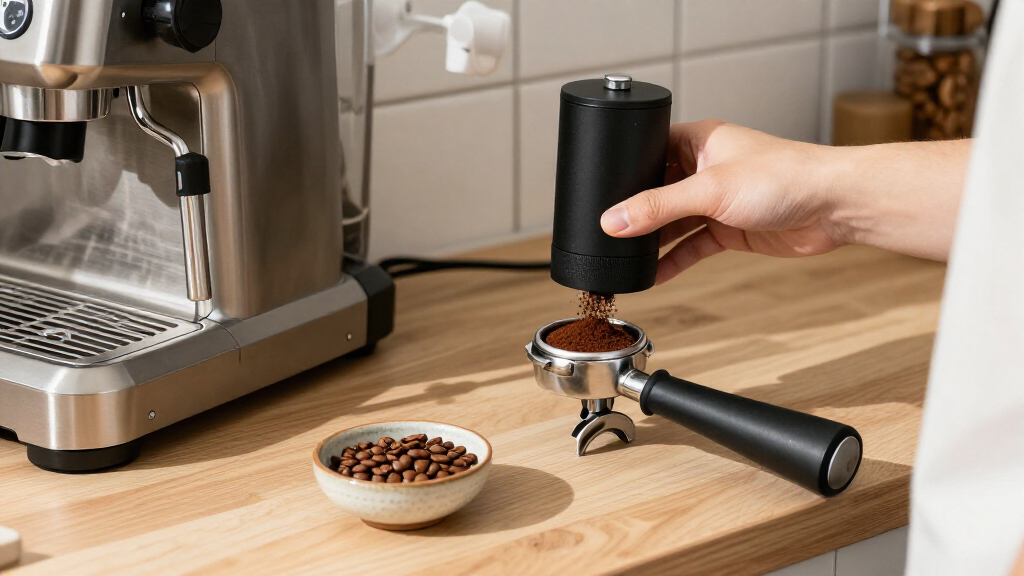
How We Picked
To rank these grinders, I evaluated three primary factors: particle uniformity, adjustment precision, and dosage consistency. Light roast espresso demands a grind that is fine enough to create resistance but uniform enough to avoid channeling, which leads to sour or bitter extraction. I prioritized grinders that offer stepless or micrometric adjustments, allowing for the minute changes needed to dial in dense beans. Additionally, I assessed the build quality of the burrs and the effectiveness of the anti-static systems, as light roasts are prone to clumping due to their brittle nature. Models that retained grounds in the chute or required excessive purging were penalized heavily.
Factors to Consider When Choosing Best Grinders For Light Roast Espresso
Buying a grinder for light roast espresso is different from buying one for dark roasts or drip coffee. The beans are harder, less oily, and more sensitive to extraction variables, meaning your equipment needs to be more precise. Here is what you need to prioritize.
Burr Geometry: Flat vs. Conical
For light roast espresso, conical burrs are often the safer choice for beginners because they produce a bimodal particle distribution that adds body and sweetness to the cup, masking slight extraction errors. Flat burrs tend to create a more unimodal distribution, which highlights clarity and floral notes but punishes inconsistencies with harshness. If you are chasing distinct flavor separation in a Geisha or washed Ethiopian, a high-quality flat burr grinder is worth the investment. However, if you prefer a forgiving shot with good texture, a precision conical burr is superior. Do not assume flat burrs are automatically better; at lower price points, a well-made conical burr will outperform a cheap flat burr setup every time.
Adjustment Granularity and Stepless Mechanisms
Light roasts require finer grinds to achieve proper extraction time due to their lower solubility. This means you need a grinder that allows for micrometric adjustments—changes measured in microns rather than full steps. A grinder with 48 or fewer settings may not offer the resolution needed to dial in a shot without jumping from under-extracted to over-extracted. Look for models with stepless adjustment rings or digital stepless controls. If a grinder requires you to move the collar a noticeable amount to change the flow rate by a few seconds, it will be frustrating to use with light roasts. Precision here is the difference between a sweet, balanced espresso and a sour, thin one.
Anti-Static Technology and Retention
Light roast beans are brittle and can generate significant static electricity during grinding, causing grounds to cling to the chute and burrs. This retention leads to inconsistent doses and requires a purging routine that wastes beans. Models with built-in anti-static ionizers or conductive materials significantly reduce this problem. When evaluating grinders, check if the hopper and chute are made of materials that dissipate charge, such as stainless steel or treated plastics. High retention not only wastes money but also means your first dose of the day is different from your second, forcing you to recalibrate your dose every time you grind. For single-dosing, low retention is a non-negotiable feature.
Motor Torque and Heat Generation
While heat generation is less of a concern with light roasts than dark roasts, low-torque motors can struggle to grind dense light roast beans efficiently. This can lead to stalling or uneven grinding, where some beans are crushed while others are barely cracked. Look for grinders with high-torque DC motors that maintain consistent RPM under load. If you are considering a manual grinder, ensure the burr alignment is perfect so you do not have to apply excessive force, which can heat the grounds through friction. An underpowered electric grinder will also take longer to grind, increasing the chance of static buildup and clumping. Power delivery is just as important as burr quality for maintaining particle integrity.
Single-Dose Capability vs. Hopper Systems
Light roasts are often enjoyed in smaller quantities to preserve freshness, making single-dosing a preferred method for many enthusiasts. Grinders designed for single-dosing feature a small hopper or direct-chute input that minimizes retention. Traditional hopper grinders retain a significant amount of grounds in the throat, which mixes old and new coffee, compromising the nuanced flavors of light roasts. If you plan to switch between different bean varieties frequently, avoid grinders without a removable hopper or dedicated single-dose adapter. The convenience of dumping a few beans and grinding immediately outweighs the slight hassle of cleaning a traditional hopper for many users.
Frequently Asked Questions
Why do light roast beans require a finer grind than dark roasts?
Light roast beans are denser and less porous than dark roasts because they have not undergone the same degree of thermal expansion. This density means water penetrates the coffee particles more slowly, requiring a finer grind to increase the surface area and achieve proper extraction. If you use a grind setting suitable for dark roasts on light beans, the water will pass through too quickly, resulting in a sour, under-extracted shot. Conversely, grinding too fine can cause channeling because the fines create too much resistance for the water to pass evenly through the puck. Finding the right balance is key, and this is why precise adjustment mechanisms are so important.
Is a manual grinder better than an electric one for light roast espresso?
Generally, yes, at the same price point. A high-quality manual grinder like the KINGrinder K6 or 1Zpresso J-Ultra typically offers superior burr quality and adjustment precision compared to an electric grinder of similar cost. Electric grinders in the budget and mid-range categories often compromise on burr material and motor consistency to keep costs down. However, if you brew multiple shots per day, the time and physical effort required for manual grinding can become a barrier to consistency. For occasional drinkers, manual grinders provide the best value and performance; for daily users, a premium electric grinder is worth the investment for convenience.
How does static electricity affect espresso quality with light roasts?
Static electricity causes coffee grounds to clump together and stick to the grinder chute and portafilter basket. These clumps create uneven density in the coffee puck, leading to channeling where water finds the path of least resistance. In light roast espresso, channeling is particularly detrimental because it exaggerates the sour or bitter notes that are already prominent in under- or over-extracted shots. Effective anti-static measures, such as ionizers or wet-grinding techniques, help create a more uniform puck, resulting in a sweeter, more balanced cup. Without managing static, you will likely see inconsistent shot times and flavor profiles even with the same grind setting.
What is the difference between stepless and stepped adjustment?
Stepped adjustment moves the grind setting in discrete increments, such as clicking from setting 5 to setting 6. Stepless adjustment allows for continuous, infinite positioning between settings, often measured in microns. For light roast espresso, stepless adjustment is highly preferred because the window for optimal extraction is very narrow. A single step on a stepped grinder might move you from a fast, sour shot to a slow, bitter shot, leaving no middle ground. Stepless mechanisms allow you to fine-tune the flow rate by fractions of a second, giving you the control needed to dial in delicate beans perfectly.
Do I need a grinder with a timer for light roast espresso?
While not strictly necessary, a timer is a helpful convenience feature for single-dosing, especially if you are using an electric grinder. It ensures you grind the exact same amount of coffee every time, which is critical for maintaining consistency in your espresso recipe. Manual grinders rely on counting rotations or using a scale, which is accurate but slower. For electric grinders, a timer helps prevent over-grinding, which can generate heat and static. However, do not prioritize a timer over burr quality or adjustment precision; you can always use a scale to measure your dose, but you cannot fix poor burr geometry with a timer.
Conclusion
Choosing the right grinder for light roast espresso depends on your budget and willingness to put in manual effort. For the best overall performance without breaking the bank, the KINGrinder K6 is the clear winner, offering burr quality that rivals much more expensive electric models. If you prefer electric convenience and are just starting out, the Breville Smart Grinder Pro is a solid entry point, though you may eventually outgrow its adjustment range. For premium precision, the 1Zpresso J-Ultra offers micrometric adjustments and superior build quality that rewards serious enthusiasts. Those looking for a compact electric option with good anti-static properties should look at the Viesimple Gen 4. Ultimately, prioritize particle uniformity and adjustment granularity over extra features like timers or large hoppers, as these factors have the greatest impact on the clarity and sweetness of your light roast espresso.
Halloween Picks

27FT Giant Inflatable Pumpkin Lighted Outdoor Halloween Decor

Spirit Halloween 4 Ft. 6 In. Scary Sitting Scarecrow Animatronic

Halloween Inflatable Haunted House Maze – 20×20 ft with Removable Roof and Blower
As an affiliate, we earn on qualifying purchases.