
TL;DR

Get coffee and tea gear delivered free with Prime
- Fast, free delivery on millions of items
- Prime Video, Amazon Music and more included
- Member-only deals all year
Green coffee starts as the seed inside a coffee cherry, and its variety, growing conditions, and processing shape the flavors a roaster can bring out. Roasting creates the aromas and browning flavors associated with espresso; then freshness, grind size, water, and extraction determine what reaches your cup. You can taste the difference by changing one variable at a time and keeping your beans stored cool, dry, and airtight.
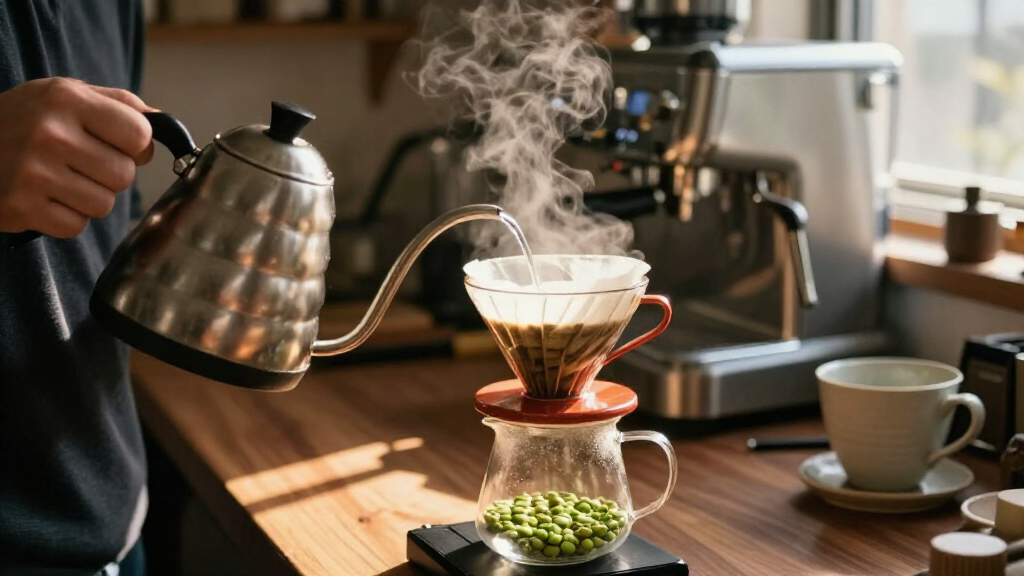
A green coffee bean smells more like hay or raw peas than the rich, sweet espresso you expect. The transformation happens through a chain of changes: the coffee cherry develops a seed, processing removes the fruit, roasting builds aroma and color, and espresso brewing pulls selected compounds into a small, intense drink.
Follow that chain and you can make better choices at the counter and at home. You’ll learn what processing and roast contribute, why the same beans can taste different from one espresso machine to another, and how to adjust a shot without guessing wildly. Think of flavor as a relay: every stage passes something valuable to the next.
Green coffee is the seed inside a coffee cherry; its variety, growing conditions, harvest, and handling shape the roaster’s starting material.
Washed, natural, and honey processing describe different ways producers remove and dry fruit around the seed, creating tendencies rather than guaranteed flavor…
Roasting creates brown color and many familiar aromas, while roast level influences whether origin notes or roast-forward flavors stand out.
A starting espresso recipe of 18 grams in and about 36 grams out gives you a useful baseline, but taste should guide adjustments.
Store beans sealed in a cool, dry cupboard, and change only one brewing variable at a time when dialing in a shot.
What green coffee is before roasting
Green coffee is the seed of a coffee cherry, cleaned and dried before roasting; it is not yet the aromatic brown bean you grind for espresso. The seed usually sits inside a fruit with layers of skin, pulp, and parchment-like material, and the way those layers are handled shapes what the roaster receives. Raw beans are dense, pale green or yellowish, and often smell grassy rather than sweet.
That distinction matters when you read a bag label. A coffee described as tasting of citrus or chocolate has not been flavored with those ingredients; those notes describe similarities in the brewed cup. A washed coffee may suggest lemon peel, for example, while a coffee dried with its fruit may come across as more berry-like or syrupy. Those are tendencies, not guarantees.
Imagine two lots of coffee from the same region. One comes from a cooler, higher-elevation farm and ripens slowly; the other ripens faster in warmer conditions. Even before roasting, differences in seed development and density can affect how each lot responds to heat. The roaster cannot make every green bean taste the same, just as a cook cannot turn every apple into the same pie.
Green coffee sets the starting point, not the finished flavor. Its species, variety, growing conditions, harvest quality, and post-harvest handling all matter. A clean, carefully sorted lot gives a roaster more room to bring out sweetness and clarity; damaged or uneven beans can produce distracting, harsh flavors. Think of green coffee as the ingredients in a recipe: they place real limits on what you can make.
Products Worth Considering

Breville Smart Grinder Pro Conical Burr Coffee Grinder, Brushed Stainless Steel

De'Longhi Dinamica Plus Fully Automatic Espresso Machine

De'Longhi Stilosa Compact Manual Espresso Machine with Milk Frother
As an affiliate, we earn on qualifying purchases.
How processing gives coffee its first flavor direction
How Green Coffee Becomes Espresso Flavor begins before the roaster ever turns on a machine: processing removes the fruit and dries the seed, and those choices help shape flavor and texture. In a washed process, producers remove the cherry’s outer layers, often ferment the remaining material to loosen it, wash the seed, and dry it. Carefully managed washing can let the coffee’s own acidity and origin character come through clearly.
In a natural process, producers dry the whole cherry before removing the fruit. The seed spends more time in contact with the pulp, and a well-managed lot may taste fruitier or feel rounder in the cup. The tradeoff is that drying takes care and even airflow. If fruit dries unevenly or becomes damaged, the cup can taste musty or fermented in an unpleasant way.
A honey or pulped-natural process sits between those approaches: producers remove the skin but leave some sticky fruit material on the seed as it dries. The name refers to that tacky layer, not necessarily to added honey. Depending on how much material remains and how drying is handled, the coffee may show a balance of sweetness and clarity. For example, a café espresso made from a clean washed lot might taste like orange and cocoa, while a natural lot could lean toward ripe berries.
Processing steers the flavor; it does not write it alone. Variety, ripeness, drying, storage, and roasting all work alongside it. When you compare coffees, note the process and then taste with an open mind instead of assuming every natural coffee tastes alike. If one bag seems boozy or sharply fruity and another tastes clean and citrusy, processing can help explain the difference, but it is only one clue.
What roasting changes inside the bean
Roasting turns dense green seeds into brittle, aromatic coffee beans by driving off water and applying heat that changes their structure and flavor compounds. As the bean warms, it shifts from green toward yellow and then brown. A familiar toasted aroma develops as browning reactions create new compounds; the beans also expand and release gases. The loud crackling known as first crack is a useful roasting cue, not a universal finish line.
Roasters track time, temperature, airflow, and how quickly the roast progresses. A lighter roast often preserves more high, bright, origin-linked notes, such as citrus or floral aromas. A darker roast tends to bring more roast-forward flavors, such as toasted nuts, dark chocolate, or smoke. Neither is automatically better for espresso: a light roast can make a lively shot, while a darker roast can give a familiar, heavy-bodied cup.
Consider a café serving the same coffee at two roast levels. The lighter batch might taste like orange zest when brewed as espresso, with a sharp finish if the extraction runs short. The darker batch might taste more like cocoa and toasted sugar, yet become bitter and ashy if the roast goes too far. Roast flavor can help or overwhelm the coffee’s earlier character.
Roast color alone cannot tell you how a coffee will taste. A glossy surface may indicate oils at the bean’s exterior, especially on a darker roast, but it does not reveal the whole roast profile or the coffee’s age. Roast date, smell, and a well-pulled shot provide better clues. You might prefer a medium roast for milk drinks because its sweetness and body stay noticeable beside milk; for a straight shot, you may enjoy a lighter roast’s brighter detail.
Why espresso makes small flavor differences feel huge
Espresso concentrates coffee into a small serving, so differences in roast, grind, and extraction can feel unusually intense. An espresso machine pushes hot water through a compact bed of finely ground coffee under pressure. The resulting drink contains concentrated dissolved coffee compounds and may carry a layer of crema, the tan foam formed partly by gas released from the beans. Crema can look inviting, but its thickness alone does not prove that a shot tastes good.
Espresso’s concentration makes balance easy to notice. A sour shot can taste like biting into a lemon wedge; a bitter, over-extracted shot can leave a dry, lingering finish. A balanced shot may bring sweetness, acidity, and bitterness together, much like a dark chocolate bar with a bright fruit center. The same beans can show different sides depending on how much water passes through them and how evenly the coffee bed extracts.
For example, a barista might pull a shot with 18 grams of ground coffee and stop when the cup holds about 36 grams of espresso. That 1:2 brew ratio is a starting point, not a rule that suits every coffee. A dense, light-roasted coffee may taste better with a longer shot, while a darker coffee could become harsh if you push the extraction too far. Taste decides whether the recipe works.
Pressure does not erase mistakes. A high-pressure machine cannot rescue stale beans, uneven grinding, or channeling, when water finds an easy path through the coffee bed. If one side of the cup tastes sharp and another tastes bitter, uneven flow may be the culprit. You can learn more from a clean, repeatable shot than from chasing a particular crema color or machine setting.
How to tune a shot without changing everything at once
How Green Coffee Becomes Espresso Flavor becomes easier to understand when you change one brewing variable at a time. Start with a consistent dose and a basic recipe, then taste the shot before making an adjustment. If you alter grind size, dose, water amount, and temperature together, you will not know which change helped. A small notebook can turn a frustrating morning into a useful experiment.
- Choose fresh, suitable beans. Start with a bag that lists a roast date and has been stored sealed. Many coffees benefit from a short rest after roasting as gas escapes, but the ideal rest varies. If a very fresh shot spurts or tastes oddly sharp, try it again after several days.
- Set a repeatable starting recipe. Weigh 18 grams of coffee and aim for roughly 36 grams of espresso in about 25 to 35 seconds. Treat these numbers as a baseline, not a test you must pass.
- Taste before adjusting. Sour, thin coffee often needs more extraction; grind a little finer or let slightly more water pass. Harsh, dry bitterness can point to too much extraction; grind coarser or stop the shot sooner.
- Make one small change. Adjust grind size by a modest amount, keep other settings steady, and pull another shot. Write down the result so you can repeat it tomorrow.
- Clean up and taste again. Rinse the basket and keep the machine clean. Old grounds and coffee oils can add stale, rancid notes that obscure the beans’ real flavor.
Here is a concrete example: your first shot tastes sharply sour and finishes in 19 seconds. You keep the 18-gram dose and 36-gram yield, then grind slightly finer. If the next shot takes 28 seconds and tastes sweeter, you have evidence that the first one ran too quickly. If it now tastes dry and bitter, move slightly coarser or shorten the yield.
Change one thing, then taste. Shot time helps you compare attempts, but it is not a flavor score. Different coffees and grinders behave differently, and a delicious shot may fall outside a standard time window. Use the clock as a clue and your palate as the final judge.
How to store beans so their flavor lasts
Store roasted beans in a cool, dry, airtight place to slow the damage caused by oxygen, moisture, heat, and light. Keep the bag closed between uses, press out excess air when practical, and avoid storing coffee beside a hot oven or in a sunny window. A sealed, opaque bag in a cupboard works well for most home kitchens. The goal is to keep beans away from the conditions that make their aroma fade.
Freshness does not mean using beans the moment they leave the roaster. Coffee releases carbon dioxide after roasting, and that gas can interfere with brewing. Many espresso coffees taste more settled after a rest, but the timing varies with roast level, bean, and packaging. If a bag smells vivid but produces unstable shots on day one, try again later rather than assuming the coffee is defective.
Buy an amount you can use while it still tastes lively. If you pull one or two shots a day, a small bag may stay fresher than a large bag left open for weeks. For longer storage, freezing well-sealed portions can work, but avoid repeatedly taking a large container in and out of the freezer. Condensation can form as cold beans warm, adding unwanted moisture.
Do not refrigerate an open bag of coffee. Fridge odors and humidity can dull or contaminate its aroma. A practical routine is to keep a small working supply in an airtight container and leave the rest sealed in its original bag. For example, if you buy 500 grams but use only 18 grams per day, divide the unopened portion into sealed packages rather than exposing the full supply to air each morning.
What a flavor note can—and cannot—tell you
A flavor note is a tasting comparison, not a promise of an added ingredient. When a bag says “blueberry,” the coffee should suggest some combination of fruit aroma, sweetness, acidity, or finish that reminds the taster of blueberry. You should not expect the shot to taste exactly like fresh berries. Your water, grinder, recipe, and palate all influence what you notice.
Descriptions also work better as a map than a verdict. “Cocoa” may point to a rounded, chocolate-like quality; “citrus” may signal bright acidity. If you drink espresso with milk, a coffee that tastes of caramel and nuts on its own may feel like chocolate fudge in a small latte. A very delicate floral note could disappear beneath milk’s sweetness and creamy texture.
Try tasting with a simple comparison. Brew one coffee as a straight espresso and another in the same way, using the same cups and similar shot ratios. Notice aroma first, then sweetness, acidity, body, and aftertaste. You might find that a natural coffee smells fruitier while a washed coffee finishes cleaner; that observation tells you more than trying to guess every tasting note on the bag.
Your own preference matters more than matching a label. If you like syrupy, chocolate-forward espresso, choose coffees described with cocoa, caramel, or nuts. If you prefer a vivid, fruit-led shot, try coffees described with berry or citrus notes. Keep expectations flexible: a coffee’s flavor changes as it cools, and the first sip can taste different from the last drops in the cup.
Frequently Asked Questions
Does green coffee already have the flavor of espresso?
No. Green coffee has not been roasted, so it lacks many of the aromas associated with brewed coffee and may smell grassy or hay-like. Its seed quality and processing still influence the flavors that roasting can develop.
Does a natural-process coffee always taste fruity?
No. Natural processing can encourage fruit-forward or rounded flavors, but variety, growing conditions, drying, storage, and roasting also shape the cup. Taste a specific coffee rather than treating its process as a guarantee.
How many grams should I use for an espresso shot?
A useful starting recipe is 18 grams of ground coffee for about 36 grams of espresso. Your basket and coffee may suit a different dose or yield, so use that ratio as a baseline and adjust according to taste.
Why does my espresso taste sour?
A sour, thin shot can mean the water extracted too little from the coffee, though the coffee’s natural acidity may also be bright. Try grinding a little finer or allowing slightly more water through, then taste again. Change one variable at a time so you can tell what helped.
Should I store espresso beans in the refrigerator?
No, not in an open bag. Fridge humidity and food odors can affect coffee. Keep your working supply airtight in a cool, dry cupboard; for longer storage, freeze sealed portions and avoid repeated warming and cooling.
Conclusion
Remember the relay: the farm and processing shape the green coffee, roasting builds aroma, and brewing decides what reaches your cup. When an espresso tastes off, do not blame the bean immediately; check freshness, grind, and extraction one step at a time.
Start with a repeatable recipe, make one small change, and taste again. A good shot is not a number on a timer—it is the moment the cup’s brightness, sweetness, and depth fall into place.