
TL;DR

Get coffee and tea gear delivered free with Prime
- Fast, free delivery on millions of items
- Prime Video, Amazon Music and more included
- Member-only deals all year
Bean density describes mass relative to volume and can hint at how a coffee behaves during roasting, grinding, and brewing. Denser beans may resist fracture, but roast level, grinder design, and brewing choices also shape the result, so start with your usual recipe and adjust one variable at a time based on taste and flow.
Two coffees can look nearly identical in the hopper and feel surprisingly different under your grinder burrs. One feeds through with a soft crunch; the other seems to push back. Bean density can help explain some of that difference, and it can offer clues about how a coffee may behave during roasting, grinding, and brewing.
This guide shows you what density does and does not tell you, why a dense coffee may grind differently, and how to respond when your espresso runs slowly or your pour-over tastes sharp and thin. You’ll get practical adjustments you can try at home, without treating a number or a label like a promise about flavor. Your cup is the final test.
That distinction matters because “high-grown” and “hard bean” are often used as rough shorthand, while actual bean structure reflects a mix of growing conditions, moisture, processing, and roast. If you have ever switched bags and watched your familiar grinder setting produce a different shot, you have already met the real-world version of this puzzle.
Density measures mass relative to volume; it is not the same thing as hardness or coffee quality.
A dense coffee may resist fracture, but roast level, grinder burrs, and bean condition also shape how it grinds.
Extraction depends on grind, roast, water temperature, agitation, dose, and brew ratio as well as bean structure.
When a new coffee tastes sour, thin, bitter, or drying, adjust one variable at a time and compare both flavor and flow.
High-grown and hard-bean labels are rough clues, not precise density measurements or automatic brewing instructions.
Coffee science · A practical brewing guide
How Bean Density Changes Grinding and Extraction
Density can hint at how a coffee behaves under the burrs and in the brew bed. Use it as context, then let flavor and flow guide your next adjustment.
The key distinction
Density describes mass per volume. Hardness describes resistance to breaking.
Related properties can influence each other, but one measurement does not tell you the other.What density tells you before brewing
Density offers a useful clue about bean structure. It cannot promise a flavor, a quality level, or an exact grinder setting.
Development matters
Cool conditions and slower cherry development are often associated with denser beans, but this is not a universal rule.
Labels are rough clues
Variety and altitude can shape structure. “High-grown” and “hard bean” are shorthand, not precise measurements.
Compare like with like
Moisture, storage, bean size, and packing affect readings. Different methods may not produce comparable figures.
A larger bean can weigh more simply because it occupies more volume. Density compares mass with volume.
Freshness, defects, roasting, and brewing all affect the cup. A density figure cannot tell you whether a coffee is delicious.
Why a dense coffee can feel tougher to grind
Denser beans are often harder to fracture, but roast level, grinder design, and bean condition also shape the result.
A coffee may feel more resistant under the burrs or produce a different particle-size distribution at the same setting. This is a possible response, not a guaranteed outcome.
As roasting progresses, beans lose moisture and become more porous and brittle. A darker roast may grind more easily.
Grinder design and burr geometry affect how beans fracture and the particle sizes you get.
The same setting can behave differently when you switch coffees. Let taste and flow guide small adjustments.
How density can nudge extraction
Bean structure may influence fracture and water movement, while recipe and technique often have a more direct effect on extraction.
Fracture changes grounds
Bean structure may affect how coffee breaks apart and the particle distribution the grinder produces.
Flow has several causes
Grind size, fines, agitation, contact time, and pouring technique can all change how water moves through coffee.
More than the bean
Roast development, water temperature, dose, and brew ratio all influence what reaches your cup.
Adjust grind to manage flow and taste. A new coffee may run differently at a familiar setting.
Read flavor alongside drawdown. A slow brew can come from fines or technique as well as bean characteristics.
Adjust your recipe in four simple steps
Start with your usual recipe. Change one variable at a time, then compare flavor and flow.
Brew your baseline
Keep your usual dose, grinder setting, water amount, and method. Record brew time or espresso shot flow.
Taste the cup
Sour, thin, or underdeveloped flavors can suggest too little extraction. Bitter, harsh, or drying flavors can suggest too much.
Make one small change
Try a slightly finer grind for a sour cup or coarser for a bitter one. For pour-over, you can test temperature or contact time.
Repeat and compare
Keep dose and water ratio steady. Note whether flavor and flow improve; return to baseline if the cup gets worse.
Sour, thin, or fast?
Test a modestly finer grind. For pour-over, a little hotter water within your recipe’s range or longer contact may help. Watch for a brew that begins to drag.
Bitter, harsh, or drying?
Try a coarser grind or reduce contact time. If the shot chokes or the brew turns dry, return to your starting point and test another variable.
No universal density recipe
Dense coffee does not always need a finer grind, hotter water, or longer contact. Those are reasonable experiments for some coffees, not rules. Measurement methods vary, and sensory testing remains the practical guide.
What Bean Density Tells You Before You Brew
Bean density is mass relative to volume, which makes it a useful clue about how coffee may behave during roasting, grinding, and brewing. It does not tell you whether the coffee is delicious, how it will taste, or exactly what grinder setting to use. Think of it like a weather forecast: useful for planning, but not a guarantee of what happens in your kitchen.
Density can reflect several influences. Cool conditions and slower cherry development are often associated with denser beans, while variety and altitude can also shape bean structure. But altitude alone does not determine density. A coffee grown high on a mountain is not automatically denser than every coffee from a lower farm.
Imagine you are comparing two bags labeled “high-grown.” One may have a different variety, processing method, or drying history from the other. The label gives you a starting hint, not a measurement. Bean size is not density either: a large bean can weigh more simply because it is larger, without having more mass per unit of volume.
Measurement adds another wrinkle. Water content, storage, bean size, and how tightly beans pack into a measuring cup can all affect a density reading. If two suppliers use different methods, their figures may not compare cleanly. Keep that in mind when a number looks precise; the coffee itself still has more to tell you.
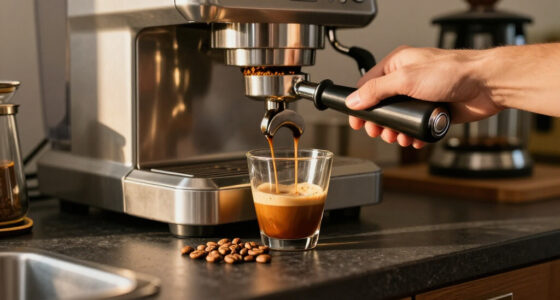
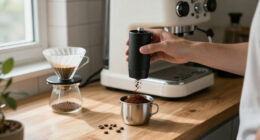
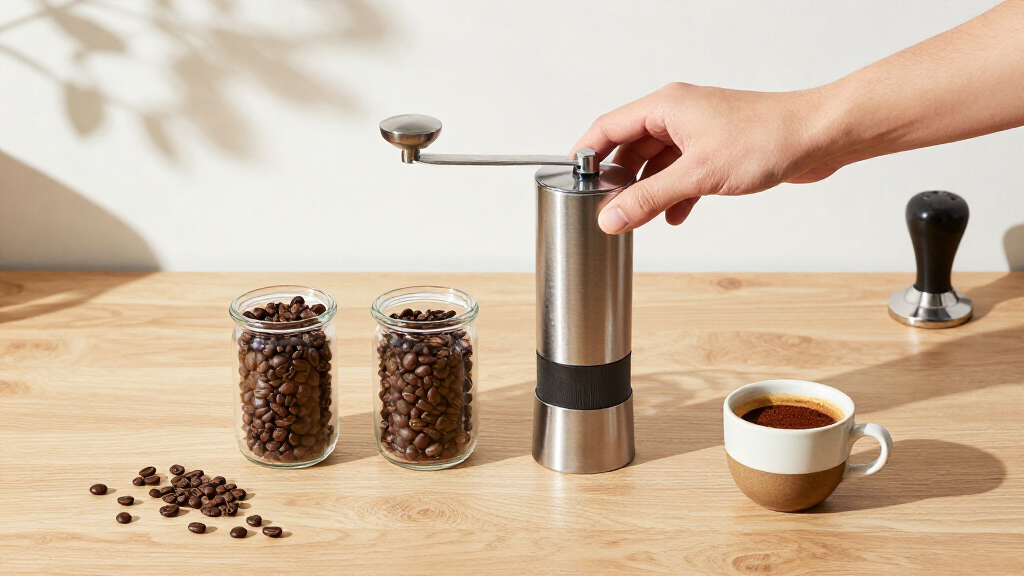
coffee grinder with adjustable grind settings for espresso and pour over
As an affiliate, we earn on qualifying purchases.
As an affiliate, we earn on qualifying purchases.
Why a Dense Coffee Can Feel Tougher to Grind
How bean density changes grinding depends on more than density: denser beans are often harder to fracture, but they can respond differently depending on roast level, bean condition, and the grinder’s burrs. Density and hardness are related ideas, not synonyms. A bean’s density measures mass per volume; hardness describes how much it resists deformation or breaking.
When a coffee feels resistant under the burrs, you may hear a firmer, more even crackle or notice the grinder working harder. That feeling can be more pronounced with a light roast, which often retains more of its original structure and tends to be less brittle than a darker roast. Roast changes the bean: moisture loss and increased porosity make it more brittle as roasting progresses.
For example, you might switch from a medium roast to a light roast and find that your hand grinder needs a little more effort. That does not prove the light roast is denser; roast development and bean structure both play a part. Burr geometry and grinder design matter too, and the same coffee may produce a different particle-size distribution in two grinders.
Same setting, different grounds is a realistic outcome when you change coffees. If the new coffee tastes sour or runs quickly, try a small grind adjustment and evaluate the cup. Don’t assume every dense bean automatically needs a finer setting; that’s a starting experiment, not a law.
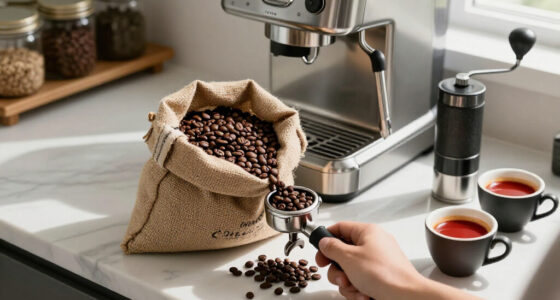
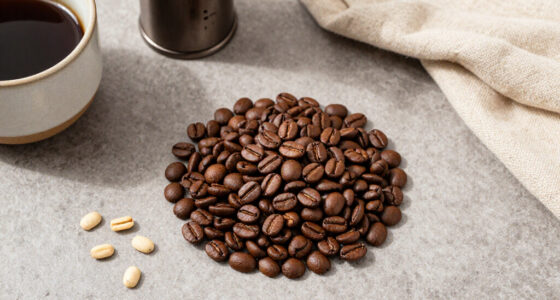
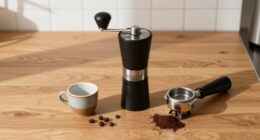
coffee bean density measurement kit green coffee beans
As an affiliate, we earn on qualifying purchases.
As an affiliate, we earn on qualifying purchases.
How Density Can Nudge Extraction Without Dictating It
How bean density changes grinding and extraction starts with how beans break into grounds and how water moves through those grounds. A bean’s structure may affect fracture and particle distribution. In some cases, that can make soluble compounds less accessible or change how quickly water passes through the coffee bed, but density alone cannot predict the cup.
Extraction also depends on grind size, roast development, water temperature, agitation, dose, and brew ratio. Those factors often have a more direct effect on what you taste. A dense coffee that seems slow to extract could also be responding to fine particles, a long contact time, or a pour that keeps disturbing the bed.
Suppose your new pour-over tastes sour and thin despite using the same recipe you enjoyed yesterday. A modestly finer grind or slightly hotter water within your recipe’s range could help. But if the drawdown is already slow, grinding finer may make the brew drag and turn harsh. Read the cup and the flow together.
There is no universal density recipe: dense coffee does not always need finer grinding, hotter water, or longer contact. Treat each as an experiment. Change one variable, brew again, and note whether the result becomes sweeter, clearer, or more balanced. The next useful clue may come from your brewing method rather than the bean label.
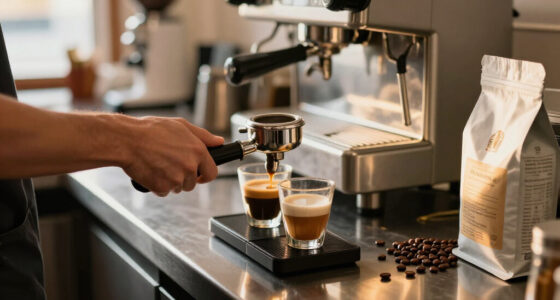
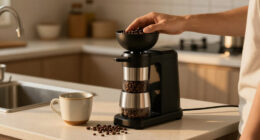
espresso scale with timer for dialing in coffee recipes
As an affiliate, we earn on qualifying purchases.
As an affiliate, we earn on qualifying purchases.
Adjust Your Recipe With These Four Simple Steps
Start with your usual recipe, then adjust one variable at a time using taste and flow as feedback. That gives you a better chance of finding what suits a new coffee than guessing from its density or origin alone. If you switch beans on a Monday morning, keep the dose and brew method familiar before changing several settings at once.
- Brew your normal recipe. Record your dose, grinder setting, water amount, and brew time. For espresso, note the shot time and how the stream looks.
- Taste before changing anything. Sour, thin, or underdeveloped flavors can suggest that you need more extraction. Bitter, harsh, or drying flavors can suggest too much extraction.
- Make one small adjustment. Try a slightly finer grind for a sour cup, or a coarser grind for a bitter one. For pour-over, a small change in water temperature or contact time can also help.
- Repeat and compare. Keep the same dose and water ratio, then note both flavor and flow. If the adjustment makes the coffee worse, return to your starting point and test another variable.
Picture a shot that tastes sharp and finishes quickly after you open a fresh bag. A small move finer may slow the flow and bring out sweetness. If it instead chokes the shot or tastes dry, go back a step. Your notes will help you tell a repeatable adjustment from a lucky one.
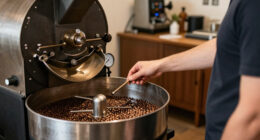
pour over coffee brewing kit with gooseneck kettle and dripper
As an affiliate, we earn on qualifying purchases.
As an affiliate, we earn on qualifying purchases.
Read Espresso Flow and Pour-Over Drawdown Separately
Use flow alongside flavor, because espresso and pour-over reveal different clues about a coffee. With espresso, you control a compact puck under pressure, so grind changes can shift shot flow noticeably. With pour-over, the brew bed, filter, pouring pattern, and fines all affect drawdown. A slow brew does not automatically mean a dense bean needs a coarser grind.
For espresso, start with your normal dose and recipe when changing beans. If the shot gushes and tastes sour, a modestly finer setting may slow it enough to improve balance. If it drips, tastes bitter, or leaves a drying sensation, try a coarser setting or shorten contact time. Watch the shot, but let taste decide whether the change helped.
For pour-over, note how long water takes to pass through the bed and how the coffee tastes. Imagine one cup that drains slowly and tastes muddy: a lot of fines or an uneven pour could be involved, even if the coffee is dense. A different coffee might drain quickly yet still taste clear and sweet, so matching a fixed drawdown time is not the whole goal.
Flow is evidence, not a verdict. If the cup tastes balanced, a slightly longer brew may suit the coffee. If it tastes sharp, thin, harsh, or hollow, use that result to guide your next test. A familiar recipe is a starting point each time you change beans.
Use Density Labels Carefully—and Keep Safety in View
Density is not a quality score, and it cannot tell you on its own whether a coffee was grown well, roasted well, or stored well. A dense bean can make a lovely cup, but so can a less dense one. Defects, freshness, roast profile, processing, and brewing all affect what you taste.
“Hard bean” and “high-grown” can be handy shorthand when a roaster is describing a lot, but neither label is a precise density measurement. If you read that a coffee is high altitude and assume it must be ground finer, you may end up with a bitter shot or a slow, muddy pour-over. Start with your usual recipe, then let your senses and brew behavior guide you.
There is also a practical limit to home measurements. Weighing a known volume of beans can give an estimate, but bean size, packing, moisture, and the measuring method change the result. Two readings taken with different procedures may not be directly comparable, so don’t let a decimal place overrule a good-tasting cup.
Store beans in a clean, dry, airtight container away from heat and direct sunlight, and follow any freshness guidance on the package. Coffee is not usually a major allergen concern, but flavored or specialty products may include added ingredients; check the label if you have a food allergy. A tidy storage routine protects the flavor clues you are trying to read.
Frequently Asked Questions
Does higher bean density mean better coffee?
No. Density is not a quality score. Growing conditions may affect density, but defects, processing, freshness, roasting, and brewing also shape the cup. A lower-density coffee can taste excellent, and a dense coffee can still be poorly roasted or brewed.
Does dense coffee always need a finer grind?
No. A finer grind can help if the coffee tastes sour or under-extracted, but it can also slow brewing too much or make the cup bitter and dry. Start with your usual setting, then make a small adjustment based on flavor and flow.
Are high-altitude beans always denser?
No. Altitude is one influence among several, and growing conditions vary across farms, regions, varieties, and seasons. High-grown is a rough clue, not a dependable measurement of density.
Why does a light roast often feel harder to grind?
Light roasts often retain more of the bean’s original structure and tend to be less brittle than darker roasts, so they may feel more resistant under the burrs. The effect varies with the coffee and roast profile. Grinding feel alone does not tell you its density.
Is bean density the same as hardness?
No. Density is mass per unit of volume; hardness describes resistance to deformation or fracture. The properties can be related, but measuring one does not directly measure the other.
Why did my grinder setting stop working after I changed beans?
Different coffees can fracture differently and produce different particle-size distributions at the same grinder setting. Roast level and your grinder’s burr design also matter. Re-dial in by taste and flow whenever you switch beans instead of assuming a setting will transfer perfectly.
Conclusion
Let density guide your curiosity, then let the cup guide your settings. When you change beans, begin with a familiar recipe, notice how the grinder and brew flow respond, and make one modest adjustment at a time. A density label can suggest what to watch for, but it cannot taste your espresso or tell you when your pour-over turns sweet.
Keep a few notes, trust your palate, and treat each new bag like a fresh conversation with your grinder. The best setting is the one that brings the coffee into focus.
Fall Picks
fall essentials
As an affiliate, we earn on qualifying purchases.