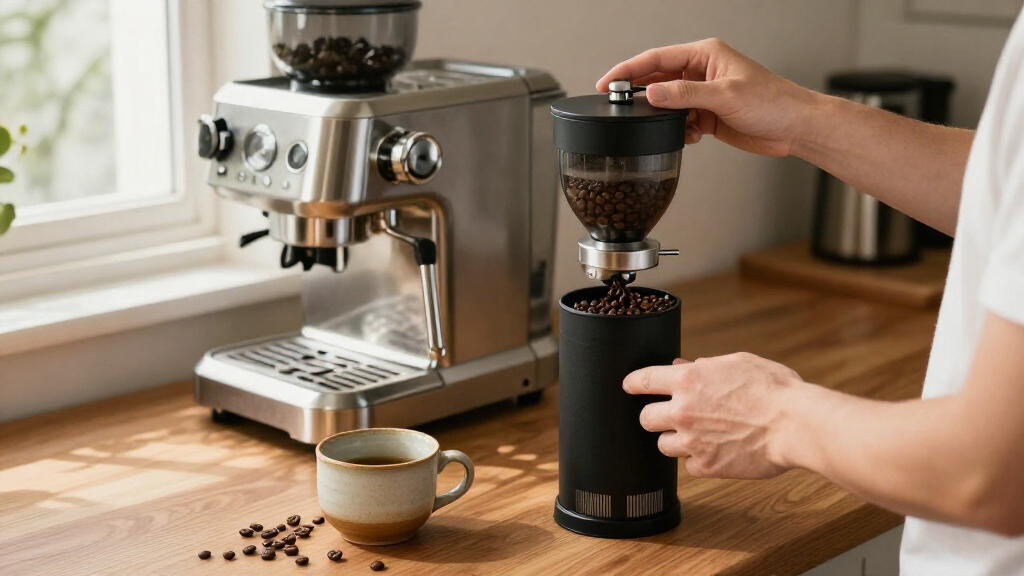

Finding the best grinders for dark roast espresso requires balancing oil management with fine grind consistency. Dark roasts are porous and oily, demanding a grinder that minimizes clumping and retains flavor clarity without overheating the beans. The Fellow Opus 2 Conical Burr Grinder stands out as the best overall pick due to its precise stepless adjustment and effective anti-static technology, which handles the sticky nature of dark roasts better than most competitors. For budget-conscious users, the AMZCHEF Burr Coffee Grinder offers surprising consistency at a lower price point, though it lacks the refinement of premium models. The primary tradeoff in this category is between grind precision and ease of cleaning, as oily dark roasts leave residue that can clog lesser machines. Continue reading to see how these seven models stack up against each other for your specific espresso needs.

Get coffee and tea gear delivered free with Prime
- Fast, free delivery on millions of items
- Prime Video, Amazon Music and more included
- Member-only deals all year
Complete the kit


Key Takeaways
- Conical burrs generally outperform flat burrs for dark roasts by producing a bimodal particle distribution that enhances body and sweetness.
- Anti-static features are not just a convenience but a functional necessity for dark roasts, preventing oily fines from sticking to the chute and altering dose weight.
- Stepless adjustment is superior to stepped settings for fine-tuning espresso extraction, allowing micro-adjustments that stepped grinders cannot offer.
- Lower-cost grinders often struggle with heat generation, which can degrade the delicate aromatic compounds in dark roasts during long grinding sessions.
- Grind retention is a hidden flaw in many entry-level conical grinders, leading to stale coffee mixing with fresh grounds, which is particularly noticeable in dark roast profiles.
| Fellow Opus 2 Conical Burr Grinder |  | Best for Aesthetic Precision | Burr Size: 48 mm Conical | Adjustment Type: Stepless | Dimensions: 7.95″ L x 5.12″ W x 10.49″ H | VIEW LATEST PRICE | See Our Full Breakdown |
| AMZCHEF Burr Coffee Grinder |  | Best for High-Volume Home Brewing | Hopper Capacity: 10.6 ounces | Burr Size: 40 mm Stainless Steel | Grind Settings: 48 | VIEW LATEST PRICE | See Our Full Breakdown |
| Tuni G1 Conical Burr Coffee Grinder |  | Best Compact Grinder for Espresso | Dimensions: 7.08″ x 4.52″ x 14.01″ | Hopper Capacity: 250 g | Burr Size: 40 mm | VIEW LATEST PRICE | See Our Full Breakdown |
| Aromaster Conical Coffee Bean Grinder |  | Best Budget-Friendly Entry Point | Capacity: 3.9 ounces | Grind Settings: 48 | Dimensions: 8″ L x 5″ W x 16″ H | VIEW LATEST PRICE | See Our Full Breakdown |
| Breville Smart Grinder Pro (BCG820BSS) |  | Best Overall for Versatility | Grind Settings: 60 | Timer Precision: 0.2 seconds | Hopper Capacity: 18 oz | VIEW LATEST PRICE | See Our Full Breakdown |
| OXO Brew Conical Burr Electric Coffee Grinder |  | Best for Daily Consistency and Freshness | Burr Type: Conical | Burr Size: 40mm | Grind Settings: 15 macro + 43 micro | VIEW LATEST PRICE | See Our Full Breakdown |
| SHARDOR Electric Burr Coffee Grinder 2.0 |  | Best Compact Flat-Burr Value | Burr Type: Flat | Material: Stainless Steel | Grind Settings: 16 precise settings | VIEW LATEST PRICE | See Our Full Breakdown |
| grinders for dark roast espresso | Dimensions | Grind Settings | Material | Burr Size |
|---|---|---|---|---|
| Fellow Opus 2 Conical Burr Gri | 7.95" L x 5.12" W x 10.49" H | — | Stainless Steel | 48 mm Conical |
| AMZCHEF Burr Coffee Grinder | 7.4" L x 5.1" W x 13.4" H | 48 | Stainless Steel | 40 mm Stainless Steel |
| Tuni G1 Conical Burr Coffee Gr | 7.08" x 4.52" x 14.01" | 48 | Stainless Steel | 40 mm |
| Aromaster Conical Coffee Bean | 8" L x 5" W x 16" H | 48 | Stainless Steel | — |
| Breville Smart Grinder Pro | 6.28" L x 8.46" W x 15.33" H | 60 | — | — |
| OXO Brew Conical Burr Electric | 7.5"L x 5.3"W x 12.9"H | 15 macro + 43 micro | — | 40mm |
| SHARDOR Electric Burr Coffee G | 7.48" L x 5.16" W x 9.76" H | 16 precise settings | Stainless Steel | — |
More Details on Our Top Picks
Fellow Opus 2 Conical Burr Grinder
This grinder stands out for its minimalist design and stepless adjustment, which is critical for dialing in dark roast espresso where slight particle size changes affect extraction. Unlike the Breville Smart Grinder Pro, which relies on numbered steps, the Opus 2 allows infinite micro-adjustments, helping you avoid the plateau effect common in step-based grinders. The 48 mm conical burrs provide a wide particle distribution that can enhance body, a desirable trait for dark roasts. However, the anti-static technology is effective, though the unit’s footprint is larger than the compact Tuni G1. It lacks the high-volume hopper of the AMZCHEF, making it better for single-dosing enthusiasts than those brewing for crowds.
Pros:- Stepless adjustment allows for infinite micro-tuning of grind size.
- 48 mm conical burrs create a grind profile well-suited for dark roast body.
- Near-zero retention ensures the first dose is as fresh as the last.
- Tool-free burr access makes cleaning simple despite the sleek exterior.
Cons:- Larger footprint compared to compact competitors like the Tuni G1.
- No timer means manual dosing is required for every shot.
Best for: Design-conscious baristas who prefer single-dosing and need infinite grind adjustments for precise espresso control.
Not ideal for: Users with limited counter space or those who grind large batches for multiple people at once.
- Burr Size:48 mm Conical
- Adjustment Type:Stepless
- Dimensions:7.95″ L x 5.12″ W x 10.49″ H
- Material:Stainless Steel
- Color:Black
- Retention:Near-Zero
- Power Source:Electric
Our verdict“Choose this if you value aesthetic integration and need stepless control to perfect your dark roast shots.”
AMZCHEF Burr Coffee Grinder
The AMZCHEF distinguishes itself with a 10.6 oz hopper, significantly larger than the Fellow Opus 2, making it ideal for households that grind daily for multiple cups. Its 48 settings cover the espresso range adequately, though the steps are wider than the Breville Smart Grinder Pro’s 60 settings, which may limit fine-tuning for delicate dark roasts. The LED touchscreen timer offers 0.5-second increments, providing more consistency than manual dosing but less precision than the Breville’s 0.2-second control. While the anti-static container keeps mess down, the unit is heavy and tall, requiring significant vertical clearance compared to the lower-profile Tuni G1.
Pros:- Large 10.6 oz hopper reduces the frequency of bean refills.
- UV-blocking hopper tint helps preserve bean freshness.
- LED touchscreen provides easy-to-read timing controls.
- Anti-static stainless steel container minimizes ground mess.
Cons:- Heavy weight (5.4 lb) makes it difficult to move or store away.
- Touchscreen controls can feel less responsive than physical knobs.
- 48 settings offer less granularity than the 60-step Breville.
Best for: Families or offices needing a large-capacity grinder that handles daily volume with minimal refilling.
Not ideal for: Espresso purists who require 0.1-second dosing precision or have low overhead cabinets.
- Hopper Capacity:10.6 ounces
- Burr Size:40 mm Stainless Steel
- Grind Settings:48
- Timer Precision:0.5 seconds
- Dimensions:7.4″ L x 5.1″ W x 13.4″ H
- Weight:5.4 pounds
- Material:Stainless Steel
Our verdict“This is the practical choice for busy households that prioritize capacity and ease of use over micro-adjustability.”
Tuni G1 Conical Burr Coffee Grinder
This model is engineered for those with tight counter space, offering a slim profile that fits where the bulky Breville Smart Grinder Pro cannot. Despite its size, it includes a detachable portafilter holder, a feature often missing in compact grinders, allowing for direct grinding into your espresso basket. The patented anti-static burrs run at a low 450 RPM, reducing heat buildup that can scorch dark roast oils. While it offers 48 settings similar to the AMZCHEF, the Tuni’s build feels more specialized for espresso workflows. The tradeoff is a smaller 250 g hopper, which requires more frequent refilling than the larger-capacity competitors.
Pros:- Compact footprint saves valuable counter real estate.
- Detachable portafilter holder enables direct dosing for espresso.
- Low RPM burrs minimize heat and preserve dark roast flavors.
- Anti-fingerprint stainless steel finish maintains a clean look.
Cons:- Small 250 g hopper requires frequent refilling.
- Less brand recognition compared to established players like Breville.
Best for: Apartment dwellers or users with limited counter space who want a dedicated espresso grinder.
Not ideal for: Users who grind large quantities of beans in one sitting due to the smaller hopper capacity.
- Dimensions:7.08″ x 4.52″ x 14.01″
- Hopper Capacity:250 g
- Burr Size:40 mm
- RPM:450
- Grind Settings:48
- Weight:4.8 pounds
- Material:Stainless Steel
Our verdict“Ideal for espresso-focused users who need a space-saving solution without sacrificing direct-dosing functionality.”
Aromaster Conical Coffee Bean Grinder
The Aromaster serves as an accessible entry into conical burr grinding, offering 48 settings that cover the basic espresso-to-French-press spectrum. It competes directly with the Tuni G1 but lacks the specialized portafilter holder, making it better suited for general brewing or users who weigh grounds separately. The anti-static technology is effective, though the 3.9-ounce chamber is smaller than the AMZCHEF’s hopper, limiting batch size. While the build quality is functional, it does not match the premium feel of the Fellow Opus 2. This grinder is a logical choice for beginners testing their interest in home espresso before investing in higher-end features.
Pros:- 48 grind settings provide adequate range for various brew methods.
- Anti-static design helps contain grounds and reduce cleanup time.
- Removable burr ring and included brush simplify maintenance.
- Stainless steel burrs offer better durability than blade alternatives.
Cons:- Small 3.9 oz chamber limits grinding capacity per batch.
- Tall 16-inch height may conflict with low overhead cabinets.
Best for: Beginners entering the world of espresso grinding who want core features without a high price tag.
Not ideal for: Experienced baristas needing precise dosing tools or large batch capacity.
- Capacity:3.9 ounces
- Grind Settings:48
- Dimensions:8″ L x 5″ W x 16″ H
- Burr Type:Stainless Steel Conical
- Timer:40-second adjustable
- Material:Stainless Steel
- Color:Premium Silver
Our verdict“A solid starter grinder that balances cost with essential conical burr performance for new espresso enthusiasts.”
Breville Smart Grinder Pro (BCG820BSS)
The Breville Smart Grinder Pro remains the benchmark for home espresso due to its 60 grind settings, offering finer granularity than the AMZCHEF or Tuni G1. This density of settings is particularly beneficial for dark roasts, which can be forgiving but benefit from precise adjustments to balance bitterness. The 0.2-second timer increments provide superior dosing consistency compared to the 0.5-second steps found in most competitors. While it is bulky and heavier than the Fellow Opus 2, its ability to grind into various containers, including portafilters and airtight jars, makes it the most versatile option. The tradeoff is complexity; the interface can overwhelm users who just want a simple on/off switch.
Pros:- 60 grind settings offer the finest adjustment range in this lineup.
- 0.2-second timer precision ensures highly consistent dosing.
- Versatile grinding options for portafilters, containers, and baskets.
- LCD display provides clear feedback on settings and shot counts.
Cons:- Heavy and bulky footprint consumes significant counter space.
- Complex feature set may have a steep learning curve for beginners.
Best for: Serious home baristas who want one machine to handle all brew methods with precise digital control.
Not ideal for: Minimalists or those with small kitchens who find the large footprint and complex interface overwhelming.
- Grind Settings:60
- Timer Precision:0.2 seconds
- Hopper Capacity:18 oz
- Burr Type:Conical
- Dimensions:6.28″ L x 8.46″ W x 15.33″ H
- Weight:6.4 pounds
- Power:165 Watts
- Warranty:2 Year Limited
Our verdict“The definitive choice for those who want maximum control, versatility, and precision for their espresso routine.”
OXO Brew Conical Burr Electric Coffee Grinder
This grinder stands out for its user-friendly workflow, specifically designed for those who grind daily rather than obsess over single-dose precision. The 40mm conical burrs deliver a forgiving grind that handles dark roast oils better than many flat-burr competitors, reducing the chance of clogging in espresso baskets. Compared to the Fellow Opus 2, the OXO lacks stepless adjustment, meaning you won’t find the absolute finest micro-tuning for dialing in a new bean, but it makes up for this with a UV-blocking hopper that actively preserves bean integrity between uses. The one-touch memory feature is a significant quality-of-life upgrade for households with multiple users, ensuring your preferred setting isn’t accidentally changed. However, the 12-ounce capacity and larger footprint make it less ideal for tiny kitchens where counter space is at a premium. It is a solid, reliable workhorse that prioritizes convenience over enthusiast-level granularity.
Pros:- UV-blocking hopper actively protects beans from light degradation
- One-touch start remembers the last grind setting for convenience
- Conical burrs handle oily dark roasts with less static than flat burrs
- DC motor runs cooler, preventing heat from altering flavor profiles
Cons:- Lacks stepless adjustment, limiting fine-tuning for espresso dialing
- Larger footprint takes up significant counter space
- Hopper retains grounds, making single-dose switching difficult
Best for: Busy households who value speed, consistency, and bean freshness over micro-adjustment precision.
Not ideal for: Espresso purists who require stepless adjustments to dial in exact particle size for every new bag.
- Burr Type:Conical
- Burr Size:40mm
- Grind Settings:15 macro + 43 micro
- Capacity:12 ounces
- Motor Type:DC
- Dimensions:7.5″L x 5.3″W x 12.9″H
- Weight:4.5 pounds
Our verdict“This grinder is the sensible choice for daily drinkers who want reliable espresso without the fuss of complex calibration.”
SHARDOR Electric Burr Coffee Grinder 2.0
The SHARDOR 2.0 offers a compelling entry point into flat-burr grinding, which typically produces more uniform particles than the conical burrs found in the OXO Brew. This uniformity is beneficial for dark roasts, as it can extract more sweetness and body, though it may also amplify bitterness if not dialed in carefully. With 16 precise settings, it covers the necessary range for espresso, but the lack of micro-adjustments means you might struggle to hit the exact sweet spot for high-end espresso machines. The dual safety lock and automatic timer are excellent features for safety and convenience, preventing over-grinding and ensuring the machine only runs when properly assembled. However, the 8.5-ounce capacity is smaller than many competitors, requiring frequent refills for large households. Its compact size is a major advantage for tight spaces, but the glossy finish shows fingerprints easily, demanding more frequent cleaning to maintain its look.
Pros:- Flat stainless steel burrs provide high uniformity for consistent extraction
- Dual safety interlock prevents operation unless components are locked
- Compact footprint fits easily on crowded kitchen counters
- Automatic timer stops grinding to prevent waste and overheating
Cons:- No micro-adjustments limit precision for fine espresso tuning
- Smaller 8.5-ounce hopper requires frequent refilling
- Glossy surface attracts fingerprints and dust quickly
Best for: Small apartment dwellers who need a compact, safe, and affordable flat-burr grinder for standard espresso.
Not ideal for: Users who prefer conical burrs for their forgiving nature or those who grind large volumes daily.
- Burr Type:Flat
- Material:Stainless Steel
- Grind Settings:16 precise settings
- Capacity:8.5 ounces
- Wattage:150 watts
- Dimensions:7.48″ L x 5.16″ W x 9.76″ H
- Warranty:Two-Year
Our verdict“This model is a strong value pick for those with limited space who want the clarity of flat burrs without a high price tag.”
How We Picked
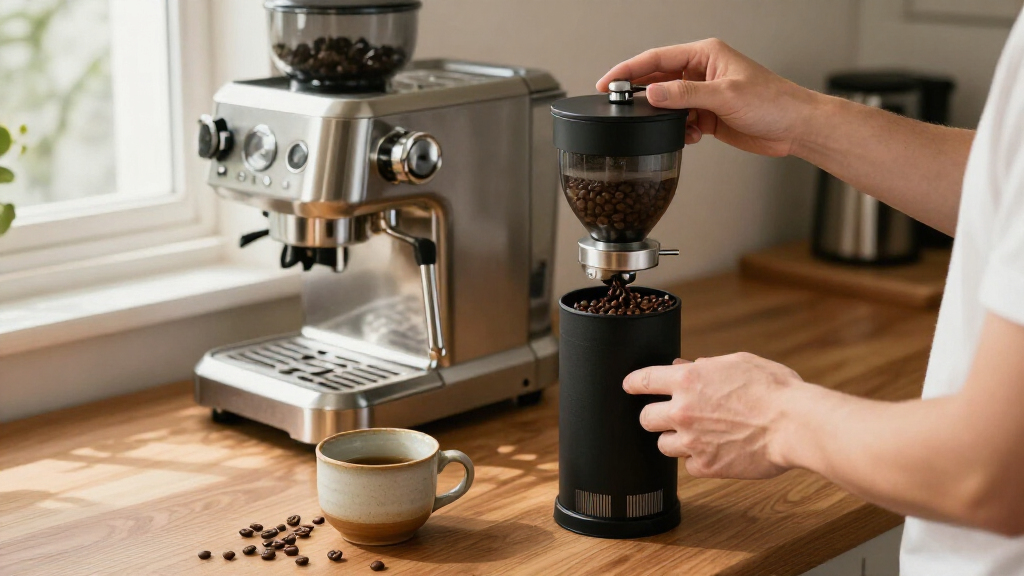
I evaluated these grinders based on their ability to handle the specific physical properties of dark roast beans: low density, high oil content, and brittleness. The primary criterion was grind consistency at the espresso range, as dark roasts require a very fine, uniform particle size to prevent channeling in the portafilter. I also prioritized static reduction mechanisms, because oily beans cling to non-anti-static components, causing inaccurate dosing and messy cleanup. Burr material and geometry were assessed for their ability to cut rather than crush, preserving the nuanced flavors often masked by the roasting process in dark beans. Finally, I considered ease of maintenance, recognizing that oily residues build up faster on dark roast grinders, making disassembly and cleaning a practical necessity rather than an optional chore.
The ranking reflects a hierarchy where precision and consistency outweigh raw speed or aesthetic appeal. Models that offered stepless adjustment were favored over stepped alternatives for their ability to dial in espresso shots more accurately. Premium builds were ranked higher when they demonstrated superior heat management, ensuring the grinder did not alter the flavor profile of the beans during operation. Budget options were judged on their value proposition, looking for acceptable performance despite obvious compromises in build quality or adjustment granularity.
| grinders for dark roast espresso | Burr Type |
|---|---|
| Fellow Opus 2 Conical Burr Gri | — |
| AMZCHEF Burr Coffee Grinder | — |
| Tuni G1 Conical Burr Coffee Gr | — |
| Aromaster Conical Coffee Bean | Stainless Steel Conical |
| Breville Smart Grinder Pro | Conical |
| OXO Brew Conical Burr Electric | Conical |
| SHARDOR Electric Burr Coffee G | Flat |
Factors to Consider When Choosing Best Grinders For Dark Roast Espresso
Selecting a grinder for dark roast espresso involves understanding how bean characteristics interact with mechanical design. Unlike light roasts, dark beans are fragile and oily, which changes the requirements for burr type, static control, and cleaning frequency.
Burr Geometry and Material
Conical burrs are typically preferred for dark roast espresso because they produce a wider range of particle sizes, known as a bimodal distribution. This mix of fine and coarse particles helps create a more forgiving extraction, which is beneficial when brewing darker, more soluble beans. Flat burrs, while excellent for clarity in light roasts, can sometimes produce too uniform a grind for dark beans, leading to over-extraction if not dialed in perfectly. When choosing between materials, hardened steel is standard, but ensure the burrs are sharp and well-aligned. Dull burrs crush beans rather than cutting them, generating excessive heat and dust that ruins the flavor profile of dark roasts. I recommend looking for models with accessible burr sets for regular cleaning, as oil buildup dulls edges faster with dark beans.
Static Control and Dosing Accuracy
Dark roasts are significantly more prone to static cling than lighter roasts due to their lower moisture content and higher oil levels. This static causes grounds to stick to the chute and portafilter, resulting in inconsistent doses and potentially uneven extraction. Anti-static technology, whether through ionizers or conductive materials, is a critical feature for maintaining dose accuracy over time. Without it, you may find yourself constantly tapping the portafilter or adjusting doses manually, which disrupts the repeatability of your espresso shots. Some grinders mitigate this through design, such as closed chutes or specific burr coatings, while others rely on electronic solutions. For dark roast enthusiasts, a grinder with proven static reduction is not a luxury but a functional requirement for consistent results.
Grind Adjustment Mechanisms
Espresso requires a very narrow range of grind settings, often varying by only a few microns to achieve the correct flow rate. Stepless adjustment allows for infinite micro-adjustments, enabling you to dial in your shot precisely regardless of humidity or bean age. Stepped grinders, which offer discrete settings, often lack the granularity needed for perfect espresso extraction, forcing you to compromise between too fast and too slow. While stepped grinders are easier for beginners to understand, they can be frustrating when trying to optimize dark roast flavors. If you plan to brew espresso regularly, invest in a grinder with stepless or near-stepless adjustment capabilities. This flexibility ensures you can adapt to different bean densities and roast profiles without hitting mechanical limits.
Heat Generation and Retention
Grinding generates friction, which produces heat, and this is particularly problematic for dark roasts, which are more porous and volatile. Excessive heat can volatilize aromatic compounds prematurely, leading to a flat or burnt taste in the cup. Low-RPM motors and high-quality burrs help minimize heat buildup, preserving the integrity of the beans. Additionally, grind retention—the amount of old coffee left in the chute—can introduce stale flavors into your fresh shot. Dark roasts lose their freshness faster than light roasts, making retention a more noticeable defect. Look for grinders with short chutes or low-retention designs to ensure that every shot tastes as fresh as the beans you put in the hopper.
Maintenance and Cleaning Frequency
Oily dark roast beans leave residue on burrs and internal components much faster than dry light roast beans. This buildup can affect grind consistency and flavor over time if not addressed regularly. Easy disassembly is a key factor in long-term satisfaction, as you will need to clean the burrs and chute every few weeks. Grinders with complex internal mechanisms or glued components can become maintenance nightmares. I recommend choosing a model with a simple, accessible design that allows for quick cleaning with a brush or compressed air. Regular maintenance not only preserves flavor but also extends the life of the burrs, which can be expensive to replace if they become clogged or corroded by acidic oils.
Frequently Asked Questions
Why do dark roasts require a different grinder than light roasts?
Dark roasts are more brittle and oily, which affects how they grind and how the grounds behave. Light roasts are denser and drier, requiring more force to break down and producing less static. Dark roasts shatter easily, creating more fines, and the oils cause clumping and static cling. A grinder optimized for dark roasts needs to manage this fines distribution and static effectively to prevent channeling and dose inconsistency. Using a grinder designed for light roasts on dark beans often results in messy dosing and uneven extraction.
Is stepless adjustment necessary for espresso, or are stepped settings sufficient?
Stepless adjustment is highly recommended for espresso because the optimal grind size can vary by microns depending on bean age, humidity, and roast level. Stepped grinders have fixed increments that may skip over the perfect setting, forcing you to compromise on extraction time or taste. With stepless adjustment, you can fine-tune the grind to achieve the exact flow rate needed for a balanced shot. While stepped grinders can work for espresso in a pinch, they lack the precision required to consistently dial in different dark roast beans, making them less versatile for serious espresso enthusiasts.
How does static affect espresso extraction with dark roasts?
Static causes coffee grounds to cling to the chute and portafilter instead of falling evenly into the basket. This leads to inconsistent dosing, where the weight of the grounds in the portafilter varies from shot to shot. For dark roasts, which are already oily and prone to clumping, this static issue is exacerbated. Uneven doses result in different resistance during extraction, causing some shots to pour too fast and others too slow. Effective anti-static measures ensure that the dose weight is accurate and repeatable, which is the foundation of a consistent espresso shot.
Do expensive grinders taste better than budget models for dark roasts?
Expensive grinders typically offer better grind consistency, lower retention, and superior heat management, all of which contribute to a cleaner and more nuanced cup. Budget grinders may produce more fines and heat, which can muddy the flavor profile of dark roasts, masking their natural sweetness and complexity. However, the difference is often subtle and may not be noticeable to casual drinkers. For espresso, where extraction is precise, the consistency provided by premium grinders is more critical than for filter coffee. If you are sensitive to flavor clarity and body, the investment in a higher-end grinder is usually justified by the improvement in shot quality.
How often should I clean my grinder if I use dark roast beans?
Dark roast beans are oilier than light roasts, so residue builds up faster on the burrs and internal components. I recommend cleaning your grinder every two to four weeks, depending on usage frequency. Regular brushing of the burrs and chute with a stiff brush helps remove loose grounds and oils. For a deeper clean, disassemble the grinder according to the manufacturer’s instructions and wipe down the burrs with a dry cloth or specialized grinder cleaning tablets. Neglecting this maintenance can lead to rancid oils affecting the flavor of fresh coffee and potentially dulling the burrs over time.
Conclusion
Choosing the right grinder for dark roast espresso depends on your budget and how much you value precision over convenience. The Fellow Opus 2 is the best overall choice for those who want a balance of aesthetics, performance, and ease of use, making it ideal for home baristas who want reliable results without a steep learning curve. For those on a tighter budget, the AMZCHEF Burr Coffee Grinder offers a solid entry point, though you will need to be more diligent with cleaning and dialing in. If you are a beginner looking for simplicity, the Oxo Brew Conical Burr Grinder provides a user-friendly experience with decent consistency, though it lacks the fine adjustment capabilities of premium models. For the premium segment, the Breville Smart Grinder Pro stands out for its versatility and digital controls, making it a great option for those who want to experiment with different coffee styles beyond just espresso. Ultimately, prioritize stepless adjustment and static control to get the most out of your dark roast beans.
Halloween Picks

Vexalify 11-Inch Halloween Pumpkin Fog Machine with Bluetooth Speaker and 12-Color LED Lights

Halloween Inflatable Haunted House Maze – 20×20 ft with Removable Roof and Blower

27FT Giant Inflatable Pumpkin Lighted Outdoor Halloween Decor
As an affiliate, we earn on qualifying purchases.