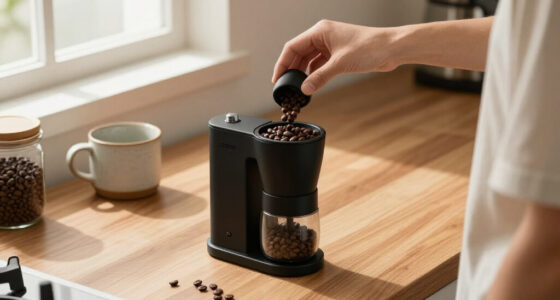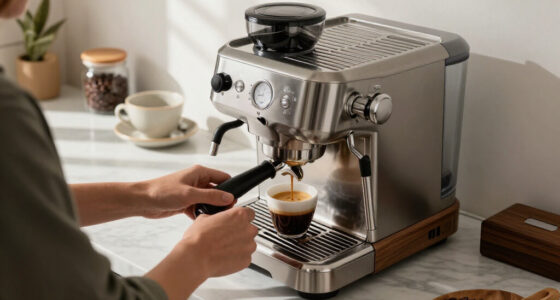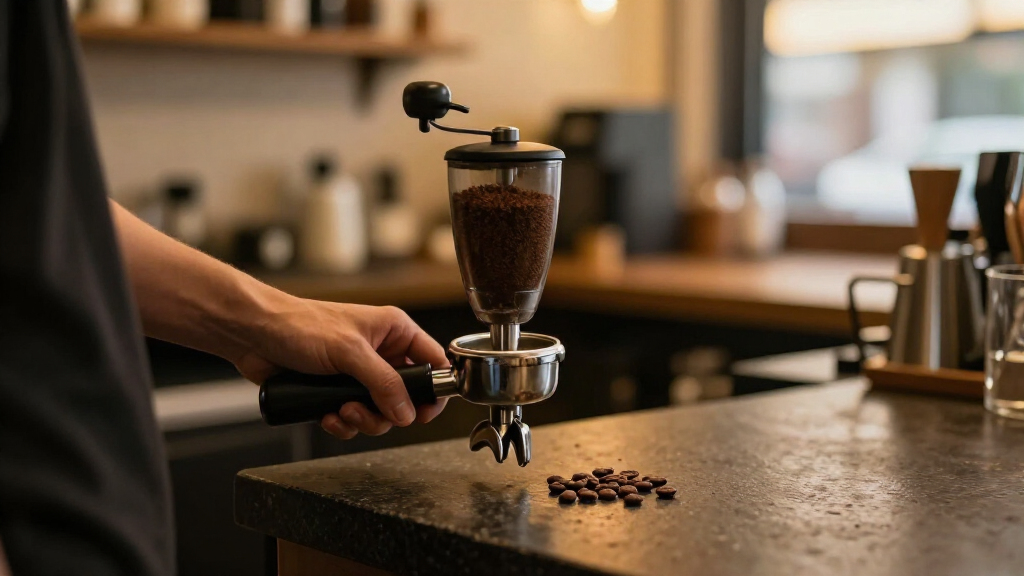
For the best low-retention espresso grinders, I’d start with the Eureka Mignon Zero: its single-dose design puts minimizing leftover grounds at the center of the workflow. The AMZCHEF Single Dose is another fit for buyers who want a broad adjustment range, while the MOKKOM 64mm Flat Burr offers a larger flat-burr format and many grind settings. The main tradeoff is between single-dose convenience and the speed of a hopper grinder, alongside differences in adjustment style, size, and versatility. Low retention is also influenced by routine and cleaning, not just a product label. Read on for how the eight options compare and which one fits your espresso habits.

Get coffee and tea gear delivered free with Prime
- Fast, free delivery on millions of items
- Prime Video, Amazon Music and more included
- Member-only deals all year
Complete the kit


Key Takeaways
- The Eureka Mignon Zero is the clearest single-dose-focused pick in this lineup, making it the natural starting point for buyers who change beans often and want a dose-by-dose workflow.
- Low retention and hopper convenience are different priorities: the Breville Smart Grinder Pro is a more conventional everyday option, while single-dose models better suit weighing each dose separately.
- Adjustment range does not tell the whole story. The MOKKOM’s 100 settings and AMZCHEF’s 75 settings sound precise, but espresso dialing also depends on repeatable adjustments and the grinder’s performance with the chosen beans.
- The lineup spans distinct burr formats and sizes. MOKKOM’s 64mm flat burrs, Wirsh’s 63mm conical burrs, and the Fellow Opus 2’s 48mm burrs signal different design choices, not a simple ranking of cup quality.
- Multi-brew flexibility is a real dividing line: the Fellow Opus 2 and Geimori T38 Plus are positioned for espresso and other brew methods, while the Eureka Mignon Zero centers on single-dose espresso use.
| MOKKOM 64mm Flat Burr Coffee Grinder, Espresso Grinder, 100 Grind Settings |  | Best for Broad Grind-Size Range | Burr size: 64mm flat burrs | Grind settings: 100 | Body material: Stainless steel | VIEW LATEST PRICE | See Our Full Breakdown |
| Breville BCG820BSS Smart Grinder Pro, Brushed Stainless Steel |  | Best for Programmable Dosing | Model: BCG820BSS | Grind settings: 60 | Bean hopper capacity: 18 oz | VIEW LATEST PRICE | See Our Full Breakdown |
| Wirsh Geimori GU63 Electric Coffee Grinder with 63mm Conical Burrs |  | Best for Stepless Espresso Tuning | Burr type and size: 63mm conical | Motor speed: 80 RPM | Adjustment: Stepless micro-adjustment | VIEW LATEST PRICE | See Our Full Breakdown |
| Fellow Opus 2 Conical Burr Grinder – Electric Coffee Grinder for Home Use, 48 mm Burrs, Stepless Grind Adjustment, Espresso to Cold Brew, Anti-Static, Auto Stop, Black |  | Best Overall for Low-Retention Home Use | Burr size: 48mm conical | Adjustment: Stepless | Retention and mess feature: Anti-static technology | VIEW LATEST PRICE | See Our Full Breakdown |
| Geimori T38 Plus Burr Coffee Grinder for Espresso and Drip |  | Best Compact Travel Pick | Burr type and size: 38mm conical | Adjustment: Stepless micro-adjustment | Capacity: 30g | VIEW LATEST PRICE | See Our Full Breakdown |
| Eureka Mignon Zero Single Dose Espresso Grinder, Black |  | Best for Quiet, Espresso-Focused Single Dosing | Burr size: 55mm | Capacity: 46g | Weight: 15 pounds | VIEW LATEST PRICE | See Our Full Breakdown |
| Geimori GU38 Coffee Grinder for Espresso & Drip, Conical Burr, Stepless Control |  | Best Compact Low-Retention Grinder for Multiple Brew Styles | Burr type and size: 38mm conical, six-core | Adjustment: Stepless, 0.02mm micro-adjustments | Capacity: 30g | VIEW LATEST PRICE | See Our Full Breakdown |
| AMZCHEF Single Dose Coffee Grinder, Low Retention, 75 Settings, Rose Gold |  | Best Feature-Rich Grinder for Timer-Based Dosing | Model: 8306A | Burr: 40mm six-star conical | Grind settings: 75 | VIEW LATEST PRICE | See Our Full Breakdown |
| low retention espresso grinder | Dimensions | Weight | Adjustment | Capacity |
|---|---|---|---|---|
| MOKKOM 64mm Flat Burr Coffee G | — | — | — | — |
| Breville BCG820BSS Smart Grind | 6.28 × 8.46 × 15.33 inches | 6.4 pounds | — | — |
| Wirsh Geimori GU63 Electric Co | — | 6 pounds | Stepless micro-adjustment | 60g |
| Fellow Opus 2 Conical Burr Gri | 7.95 × 5.12 × 10.49 inches | — | Stepless | — |
| Geimori T38 Plus Burr Coffee G | 3.9 × 2.7 × 9.2 inches | 2.7 pounds | Stepless micro-adjustment | 30g |
| Eureka Mignon Zero Single Dose | 6.75 x 4.75 x 13.75 inches | 15 pounds | Stepless micrometric | 46g |
| Geimori GU38 Coffee Grinder fo | 3.5 x 6.3 x 12 inches | 5.5 pounds | Stepless, 0.02mm micro-adjustments | 30g |
| AMZCHEF Single Dose Coffee Gri | 8.85 x 6.14 x 11.93 inches | — | — | 120g |
More Details on Our Top Picks
MOKKOM 64mm Flat Burr Coffee Grinder, Espresso Grinder, 100 Grind Settings
The MOKKOM pairs 64mm stainless steel flat burrs with 100 grind settings, giving home users a wide adjustment range for espresso and other brew methods. Its single-dose silicone bellow and anti-static design speak directly to low-retention priorities: the bellow can help clear grounds after grinding, while reduced static may mean less residue clinging around the chute. Compared with the Breville Smart Grinder Pro, it offers more stated settings and a single-dose accessory, but the Breville provides a display and more clearly documented portafilter and container workflows. The MOKKOM’s 350g hopper supports batch grinding, though that capacity is less useful to buyers who primarily dose one serving at a time. Multiple parts may also make cleaning more involved, and dimensions are not provided, so counter fit is harder to judge.
Pros:- 64mm flat burrs provide a substantial burr size for home espresso grinding.
- 100 settings give more stated adjustment steps than the Breville Smart Grinder Pro’s 60.
- Single-dose silicone bellow is designed to help clear retained grounds.
- Full-metal construction and an electronic timer support durable, repeatable use.
Cons:- Several components may make cleaning more involved.
- Dimensions and weight are not provided, making counter-space planning difficult.
- The large hopper is less aligned with strict single-dose use than its bellow accessory suggests.
Best for: Home espresso drinkers who want a broad adjustment range, a single-dose bellow, and the option to keep beans in a larger hopper.
Not ideal for: Buyers who need a clearly documented footprint or a simple, minimal-parts cleaning routine.
- Burr size:64mm flat burrs
- Grind settings:100
- Body material:Stainless steel
- Hopper capacity:350g / 12.35oz
- Additional hopper:Single-dose silicone bellow with lid
- Power:260 watts
- Voltage:120 volts
Our verdict“Choose the MOKKOM if you want a 64mm flat-burr grinder with many adjustment steps and a bellow, and can accept uncertainty around its footprint and cleaning routine.”
Breville BCG820BSS Smart Grinder Pro, Brushed Stainless Steel
The Breville Smart Grinder Pro is the most workflow-focused option here: programmable grind times, an LCD display, and direct grinding into a portafilter or container make it easier to repeat a routine without relying on a separate scale for every dose. Its 60 settings cover espresso through coarser brewing, though the numbered steps are less granular than the MOKKOM’s 100 settings or the Wirsh GU63’s stepless adjustment. For a low-retention roundup, its limitation is clear: the supplied details describe timed grinding and multiple output options, not a dedicated single-dose bellow or a specific retention-clearing system. The 18-ounce hopper suits users who keep beans loaded, but single-dose buyers may prefer the Fellow Opus 2’s magnetic catch cups and stated retention-focused design. Its comparatively tall, broad footprint also needs counter space.
Pros:- Programmable grind times help repeat doses with less manual timing.
- LCD display makes settings and operation easier to monitor.
- Can grind directly into a portafilter or a container.
- 60 settings accommodate espresso and several coarser brew methods.
Cons:- No dedicated single-dose bellow or specific retention-clearing feature is listed.
- The 18-ounce hopper favors loaded-bean use over frequent bean changes.
- Its 15.33-inch height and broad footprint may not suit compact counters.
Best for: Espresso beginners and multi-brew households who want guided, programmable dosing and the option to grind straight into a portafilter.
Not ideal for: Single-dose espresso drinkers prioritizing a dedicated retention-clearing setup, or anyone with limited counter space.
- Model:BCG820BSS
- Grind settings:60
- Bean hopper capacity:18 oz
- Power:165 watts
- Voltage:110–120 volts
- Dimensions:6.28 × 8.46 × 15.33 inches
- Weight:6.4 pounds
- Material:Stainless steel
Our verdict“Pick the Breville for an approachable, programmable grinder that serves several brew styles, but choose a more explicitly single-dose design if minimizing retained grounds is your main goal.”
Wirsh Geimori GU63 Electric Coffee Grinder with 63mm Conical Burrs
The Wirsh Geimori GU63 suits espresso drinkers who prefer continuous adjustment over fixed steps. Its stepless micro-adjustment allows small grind changes as beans age or shots run differently, while the stated 80 RPM motor speed is aimed at limiting heat during grinding. A magnetic dosing cup supports a tidier transfer and a compact 60g capacity fits a single-dose routine better than the Breville Smart Grinder Pro’s 18-ounce hopper. Compared with the MOKKOM, the GU63 trades a larger 64mm flat-burr set and 100 numbered settings for 63mm conical burrs and stepless control; neither specification alone proves lower retention, so the magnetic cup and easy disassembly are more relevant practical details. The drawbacks are its small capacity for larger batches and six-pound weight, which makes it less convenient to move than the Geimori T38 Plus.
Pros:- Stepless adjustment allows fine changes without being limited to preset clicks.
- 80 RPM operation is designed to reduce heat during grinding.
- Magnetic dosing cup supports controlled transfer and less mess.
- All-metal construction and easy disassembly support cleaning access.
Cons:- 60g capacity may require repeated grinding for larger batches.
- At six pounds, it is heavier than the travel-oriented Geimori T38 Plus.
- The listed features do not quantify retained-ground volume.
Best for: Espresso-focused users who adjust grind size in small increments and want a compact-dose workflow with a magnetic cup.
Not ideal for: Households grinding large batches or buyers who need a lightweight grinder to pack or move often.
- Burr type and size:63mm conical
- Motor speed:80 RPM
- Adjustment:Stepless micro-adjustment
- Capacity:60g
- Weight:6 pounds
- Material:Metal and stainless steel
- Color:Black
Our verdict“Choose the GU63 for stepless espresso adjustment and a small-dose magnetic-cup workflow, provided its weight and 60g capacity fit your routine.”
Fellow Opus 2 Conical Burr Grinder – Electric Coffee Grinder for Home Use, 48 mm Burrs, Stepless Grind Adjustment, Espresso to Cold Brew, Anti-Static, Auto Stop, Black
The Fellow Opus 2 earns the strongest low-retention fit in this group because its feature set directly addresses mess and leftover grounds: anti-static technology, magnetic catch cups, and tool-free burr access are all aimed at a cleaner, easier-to-clear routine. Stepless adjustment lets espresso users make small grind changes, while the stated range from espresso to cold brew makes it more adaptable than a narrowly espresso-focused grinder. Compared with the Breville Smart Grinder Pro, the Opus 2 gives more explicit attention to static and cleanup, though the Breville offers a larger hopper and programmable grind-time controls. Its 48mm conical burrs are smaller than the MOKKOM’s 64mm flat burrs, and the available product data does not quantify retention, so buyers should not treat the low-retention claim as a measured guarantee. The two-year warranty and auto-stop add convenience, but its counter footprint may challenge small kitchens.
Pros:- Anti-static design and magnetic catch cups target cleaner grounds handling.
- Tool-free burr access makes routine cleaning more accessible.
- Stepless adjustment supports incremental espresso tuning.
- Auto-stop simplifies operation across the stated espresso-to-cold-brew range.
Cons:- 48mm burrs are smaller than the MOKKOM’s 64mm flat burrs.
- No numerical retention measurement is provided.
- Its listed dimensions may take up valuable counter space.
Best for: Home users who switch between espresso and other brew methods and place clean dosing, anti-static operation, and accessible cleaning ahead of a large hopper.
Not ideal for: Buyers seeking a quantified retention figure, a large bean hopper, or the largest burr set in this selection.
- Burr size:48mm conical
- Adjustment:Stepless
- Retention and mess feature:Anti-static technology
- Included components:Magnetic catch cups and user guide
- Dimensions:7.95 × 5.12 × 10.49 inches
- Material:Stainless steel
- Color:Black
- Warranty:2 years
Our verdict“The Opus 2 is my leading pick for buyers who want low-mess, low-retention-oriented features and easy cleanup in a versatile home grinder.”
Geimori T38 Plus Burr Coffee Grinder for Espresso and Drip
The Geimori T38 Plus is the easiest fit for a small kitchen or travel kit: its 2.7-pound weight and slim 3.9 × 2.7-inch footprint make it far more portable than the six-pound Wirsh GU63. The 38mm conical burr and stepless micro-adjustment give espresso users control over grind size, while anti-static technology is intended to limit mess around dosing. That makes it relevant to low-retention buying, though the supplied details do not state a retention measurement or describe a bellow system like the MOKKOM’s. Its 30g capacity is well matched to one or two small doses, not a morning batch for several people. The 80-watt motor and lack of preset or display controls also point toward a compact, hands-on tool rather than a high-throughput countertop grinder. Buyers needing larger capacity or a more feature-rich workflow should look to the GU63 or Fellow Opus 2.
Pros:- Compact dimensions and 2.7-pound weight suit travel and tight counters.
- Stepless micro-adjustment gives control over espresso grind size.
- Anti-static technology is designed to limit grounds mess.
- All-metal body and 100–240V input support portable use.
Cons:- 30g capacity limits each grinding session.
- 38mm burrs are smaller than the 48mm Fellow Opus 2 and 63mm Wirsh GU63.
- No digital display or preset options are listed.
Best for: Traveling espresso drinkers and apartment users who grind small doses and need a lightweight, narrow grinder.
Not ideal for: Multi-person households, frequent batch grinding, or buyers who want digital controls and a larger burr set.
- Burr type and size:38mm conical
- Adjustment:Stepless micro-adjustment
- Capacity:30g
- Weight:2.7 pounds
- Dimensions:3.9 × 2.7 × 9.2 inches
- Body material:All-metal
- Power:80 watts
- Voltage:100–240 volts
Our verdict“Pick the T38 Plus when portability and small-dose grinding matter more than capacity, larger burrs, or automated controls.”
Eureka Mignon Zero Single Dose Espresso Grinder, Black
The Eureka Mignon Zero is the strongest fit here for espresso drinkers who want a focused single-dose workflow without adding much grinder noise. Its low-retention chamber and included blow-up cleaning tool help clear grounds between doses, while the 55mm burrs and stepless adjustment give fine control over espresso dialing. Compared with the more brew-flexible Geimori GU38, this model is more purpose-built for espresso and has a larger stated bean capacity, but it is also substantially heavier and takes more counter space. Silent Technology is a practical advantage in shared homes; the tradeoff is that its espresso-first setup is less appealing if you regularly switch to coarser brewing. I’d choose it for a stable home espresso station, not a compact all-purpose grinder.
Pros:- Low-retention design and included blow-up cleaning tool support fresher dose-to-dose changes
- 55mm burrs and stepless adjustment allow fine espresso dialing
- Silent Technology suits early-morning or shared-space use
- Adjustable fork and included single-dose hopper support a dedicated workflow
Cons:- At 15 pounds, it is heavy and needs a stable counter position
- Its espresso-focused design is less suited to buyers seeking one grinder for many brew styles
Best for: Home espresso drinkers who single-dose, value quieter operation, and have room for a substantial grinder on the counter
Not ideal for: Small-kitchen buyers or people who frequently alternate between espresso and coarser brew methods
- Burr size:55mm
- Capacity:46g
- Weight:15 pounds
- Dimensions:6.75 x 4.75 x 13.75 inches
- Adjustment:Stepless micrometric
- Features:Low retention, Silent Technology, single-dose design
- Included components:45g dosing cup, 45g single-dose hopper, blow-up cleaning tool
Our verdict“Choose the Mignon Zero for quiet, precise espresso single dosing if counter space and weight are not concerns.”
Geimori GU38 Coffee Grinder for Espresso & Drip, Conical Burr, Stepless Control
The Geimori GU38 earns its place as the compact, multi-method option: its low-retention design is paired with stepless control and a stated range covering espresso through French press. That flexibility makes it a more natural choice than the espresso-centered Eureka Mignon Zero for someone who changes brew methods during the week. Its 38mm conical burr, 30g capacity, and 5.5-pound weight keep the footprint and handling modest, though the smaller dose limit may mean grinding in batches for larger brews. The 0.02mm micro-adjustments give espresso users useful control, but the product data does not list a timer or digital display. I’d favor it for a space-conscious home setup that values manual adjustment over automated conveniences.
Pros:- Low-retention design supports fresh dosing across changing brew methods
- Stepless 0.02mm micro-adjustments provide fine control for espresso
- Compact 5.5-pound build is easier to fit and reposition than the Eureka Mignon Zero
- All-metal construction and quiet operation suit everyday home use
Cons:- 30g capacity can require multiple grinding rounds for larger brews
- No digital display or timer is listed, leaving fewer automated workflow aids
Best for: Apartment coffee drinkers who want one relatively compact grinder for espresso and occasional drip or French press
Not ideal for: Households that grind large batches at once or buyers who want a timer or digital display
- Burr type and size:38mm conical, six-core
- Adjustment:Stepless, 0.02mm micro-adjustments
- Capacity:30g
- Weight:5.5 pounds
- Dimensions:3.5 x 6.3 x 12 inches
- Power:80W
- Construction:Aluminum, stainless steel, and wood
- Warranty:1 year
Our verdict“Pick the GU38 if you need a compact low-retention grinder for espresso and coarser brews and can work with its 30g dose capacity.”
AMZCHEF Single Dose Coffee Grinder, Low Retention, 75 Settings, Rose Gold
The AMZCHEF Single Dose Coffee Grinder is the most automation-oriented pick in this group, pairing low-retention features with a 5–60 second timer, LED light, magnetic chute, and vacuum cup. Those additions may appeal to buyers who want a repeatable routine and easy access for cleanup; the 75 settings also cover a wider stated range of brewing styles than the espresso-first Eureka Mignon Zero. However, the listing describes a 40mm six-star conical burr and plastic construction, so I would not rank it ahead of the GU38 for buyers prioritizing an all-metal build. Its 120g capacity is listed, but it is not a reason by itself to expect a larger single espresso dose. This is a feature-heavy choice, with more controls to learn and a durability tradeoff.
Pros:- 75 grind settings offer range across multiple brewing methods
- Low-retention design, magnetic chute, and anti-static outlet support cleaner changes and cleanup
- Adjustable 5–60 second timer can help repeat a timed grinding routine
- LED light and vacuum cup add practical workflow features
Cons:- Plastic construction may be less reassuring for long-term durability than the GU38’s metal build
- Multiple features and settings may take time for new users to learn
- The 40mm conical burr specification provides less basis for expecting espresso performance comparable to the Eureka’s 55mm burrs
Best for: Home brewers who want timer-based dosing, easy-cleaning features, and adjustment options for espresso through coarser methods
Not ideal for: Buyers who prioritize an all-metal grinder body, a simpler control setup, or clearly specified espresso-focused performance
- Model:8306A
- Burr:40mm six-star conical
- Grind settings:75
- Capacity:120g
- Dimensions:8.85 x 6.14 x 11.93 inches
- Material:Plastic
- Features:Low retention, anti-static outlet, magnetic chute, LED light, vacuum cup
- Timer:5–60 seconds
Our verdict“Choose the AMZCHEF if timer-driven convenience and broad grind adjustment matter more to you than an all-metal build or an espresso-first design.”

How We Picked
I ranked these grinders around the needs behind the phrase low retention: a dose-by-dose workflow, manageable leftover grounds, practical adjustment for espresso, and a design that suits the way a buyer prepares coffee. I also weighed the stated burr format, adjustment approach, brew-method range, and ease of fitting the grinder into a home setup. A large number of settings or a low-retention claim alone does not establish how consistently a grinder performs, so I treated those claims as part of the comparison rather than proof of superior results.
The Eureka Mignon Zero ranks first because its single-dose identity aligns most directly with the roundup’s purpose. The AMZCHEF and Geimori options offer alternative single-dose or adjustment-focused approaches, while the Breville is a better match for buyers who favor a familiar, hopper-style routine over minimizing retained grounds. Versatile options such as the Fellow Opus 2 and T38 Plus make more sense for households brewing beyond espresso. Where the available product details do not establish a specific retention figure or maintenance advantage, I avoid treating that point as a proven distinction.
| low retention espresso grinder | Material | Adjustment |
|---|---|---|
| MOKKOM 64mm Flat Burr Coffee G | — | — |
| Breville BCG820BSS Smart Grind | Stainless steel | — |
| Wirsh Geimori GU63 Electric Co | Metal and stainless steel | Stepless micro-adjustment |
| Fellow Opus 2 Conical Burr Gri | Stainless steel | Stepless |
| Geimori T38 Plus Burr Coffee G | — | Stepless micro-adjustment |
| Eureka Mignon Zero Single Dose | — | Stepless micrometric |
| Geimori GU38 Coffee Grinder fo | — | Stepless, 0.02mm micro-adjustments |
| AMZCHEF Single Dose Coffee Gri | Plastic | — |
Factors to Consider When Choosing Best Low Retention Espresso Grinders
Choosing a grinder for low retention involves more than picking the model with “single dose” or “low retention” in its name. I’d match the grinder to how often I switch coffee, how precisely I want to adjust espresso, and whether I also brew filter coffee. These broader checks can prevent a common mismatch: buying for a feature label while overlooking the daily routine around it.
Match the grinder to your dosing routine
Single dosing means measuring the beans for each drink rather than keeping a large amount in a hopper. That can make bean changes and dose tracking easier, but it asks for a little more attention each time you make coffee. A hopper-style grinder can feel quicker for a household that uses the same beans repeatedly, even if it is not the strongest match for a strict low-retention goal. Think about whether you make one carefully measured espresso at a time or several drinks in a row. The right workflow is the one you will follow consistently, not the one that sounds most precise on paper.
Treat retention claims as one part of the design
“Low retention” is not a standardized measurement across all grinder listings, so a label alone may not tell you how much coffee remains after a dose. Look for a design and routine that make dosing, clearing, and cleaning straightforward. Bellows or other clearing aids can reduce the effort of moving leftover grounds, but they can also add a step to every session. Avoid assuming that a grinder with a single-dose name needs no purging or cleaning. If exact dose consistency matters, plan to weigh both the beans going in and the grounds coming out during your own setup.
Choose adjustment control for espresso dialing
Espresso often needs small grind changes as beans age or conditions shift, so the way a grinder adjusts matters as much as its number of settings. A stepped dial can make it easier to return to a previous position, while stepless control can offer finer changes but may take more care to track. A high setting count does not guarantee that each step is useful for espresso. Before choosing, ask whether you prefer repeatable marked positions or fine, continuous adjustment. Keep a simple note of bean, dose, and setting so a successful recipe is easier to recover.
Decide whether one grinder must cover every brew method
Some home setups need espresso alone; others share a grinder between espresso, pour-over, and cold brew. A wider range of brew methods can reduce the need for separate equipment, but changing between coarse and fine settings may complicate a routine built around espresso. Consider how often you will actually switch methods rather than paying for theoretical flexibility. If espresso is the daily priority, favor a workflow that makes fine adjustments manageable. If several people in the home brew differently, versatility may matter more than a narrowly focused single-dose design.
Plan for space, noise, and cleaning
Grinder dimensions and daily upkeep affect whether a low-retention setup remains pleasant to use. Measure the counter space, including room to access the hopper or remove a dosing cup, before choosing a model. A compact body may suit a crowded kitchen, while a larger grinder may ask for a dedicated spot. Cleaning access also matters: oils and fine grounds build up over time, and a design that is awkward to maintain can discourage regular care. Check the manufacturer’s cleaning guidance and decide how much routine work you are willing to do.
Pay for the workflow you will use
A premium grinder is most compelling when its design solves a daily problem, such as weighing each dose, making frequent bean changes, or serving several brew methods. If you keep one coffee in the hopper and rarely alter the setting, those conveniences may matter less than a simple, familiar routine. Conversely, frequent switching can make dose-by-dose control feel worth the extra steps. Compare practical needs before focusing on burr diameter or setting counts alone. The best value is the model whose advantages you will use regularly without asking you to accept unwanted complexity.
Frequently Asked Questions
Does a single-dose grinder guarantee that no coffee stays inside?
No. Single-dose design supports weighing one serving at a time, but it does not mean every particle exits the grinder after each run. Grinder geometry, static, bean type, and cleaning habits can affect what remains. If minimizing carryover between coffees matters, check how the grinder is cleared and whether its cleaning steps fit your routine. I would treat a low-retention label as a design goal, not a promise of zero leftover grounds.
Should I choose the Eureka Mignon Zero or the Breville Smart Grinder Pro for daily espresso?
The choice comes down to workflow: the Eureka Mignon Zero is the more direct match if you want to weigh individual doses and prioritize a single-dose approach. The Breville Smart Grinder Pro is a better fit if a more conventional hopper routine suits your household. Switching beans often tends to favor dose-by-dose handling, while repeated drinks from the same coffee can make hopper convenience attractive. Compare the adjustment style and counter fit too, since those affect daily use as much as the retention goal. Neither choice is a universal winner for every espresso routine.
Are more grind settings better for dialing in espresso?
Not necessarily. A larger setting count can offer more marked positions, but the size and usefulness of each adjustment matter more than the headline number. A grinder with stepless control may allow finer changes without a high numbered count, though it can be harder to record and repeat a setting. Espresso dialing also depends on the beans, dose, and machine, so more settings cannot compensate for a poor fit with your workflow. Choose the adjustment style you can use and reproduce reliably.
Can one grinder handle espresso and pour-over without making low retention harder?
It can, but changing between fine espresso and coarser filter settings adds another part to the workflow. Grounds retained inside the grinder may affect a later dose when you switch coffees or grind sizes, so clearing and cleaning habits matter. Models positioned for multiple brew methods, such as the Fellow Opus 2 and Geimori T38 Plus, suit buyers who value that range. If espresso is your only method, a more focused workflow may be simpler. Decide how often you will switch before prioritizing versatility.
What should I check before choosing a low-retention grinder for a small kitchen?
Measure the available counter area and leave room for the parts you need to use, such as a dosing cup, hopper lid, or cleaning access. Check the grinder’s overall footprint and how its dosing workflow fits beneath your cabinets. A compact body is not automatically the easiest to use if it is awkward to access or maintain. Also consider whether the grinder’s routine requires extra tools or steps that need storage. The best fit is a model that can stay set up and be cleaned without disrupting the rest of the kitchen.
Conclusion
For the strongest match to this roundup’s focus, I’d choose the Eureka Mignon Zero as the best overall, especially for espresso drinkers who weigh doses individually. The AMZCHEF Single Dose is a value-minded option for shoppers drawn to a wide adjustment range and single-dose positioning, while buyers seeking a more premium, espresso-centered single-dose setup should compare the Eureka’s workflow and build priorities before deciding. For beginners who want a more familiar everyday routine, the Breville Smart Grinder Pro is the straightforward starting point, though it is less aligned with a strict low-retention workflow. Choose the Fellow Opus 2 or Geimori T38 Plus if one grinder needs to cover espresso and other brew methods; consider the MOKKOM or Wirsh if their stated burr formats better match your preferences. The right pick depends on whether you value dose-by-dose control, routine simplicity, or brew-method range most.
Fall Picks
fall essentials
As an affiliate, we earn on qualifying purchases.