TL;DR

Get coffee and tea gear delivered free with Prime
- Fast, free delivery on millions of items
- Prime Video, Amazon Music and more included
- Member-only deals all year
Knock out the puck, rinse the basket with hot water, and wipe it dry after each brew. For oily residue, remove a detachable basket and soak compatible metal parts in espresso equipment cleaner as directed, then rinse thoroughly; keep cleaners away from vulnerable handles and never scrape or force open the holes.
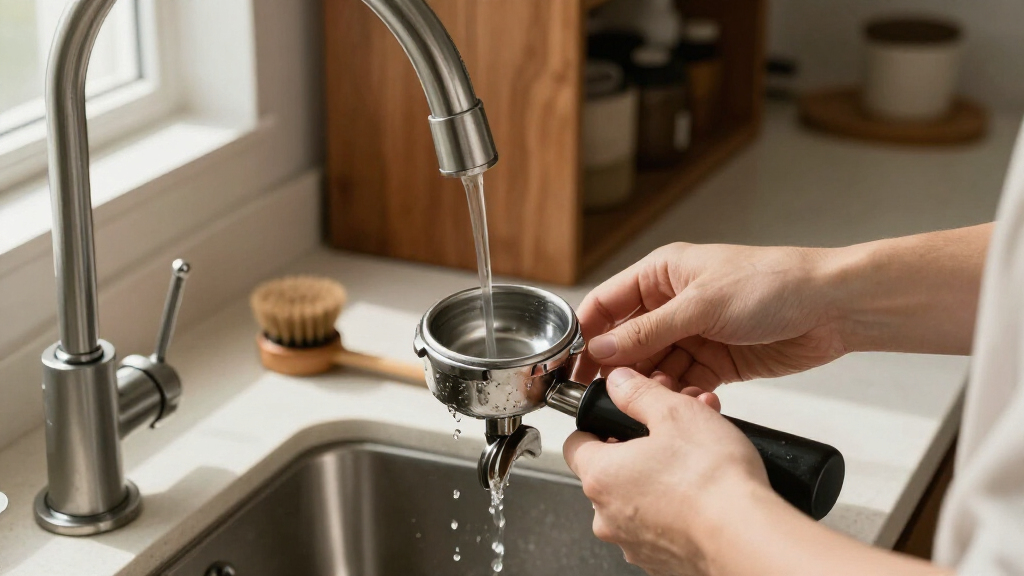
Knock out the puck, rinse the basket with hot water, and wipe it dry after each brew.
Use espresso equipment cleaner at its labeled concentration and duration; rinse the basket thoroughly afterward.
Keep wooden, glued, or uncertain handles out of cleaning solutions unless their maker says they are compatible.
Brush first when a hole clogs; use a fine tool gently only if needed, and never force or enlarge the opening.
Backflushing cleans the group head, not the basket; replace baskets that are bent, cracked, corroded, or have damaged holes.
Clean the portafilter without harming the basket
A gentle rinse clears grounds, while periodic equipment-safe cleaning lifts oily residue. Protect the basket’s fine holes and keep vulnerable handles out of cleaning solutions.
After every shot
Clean promptly so coffee oils and grounds do not dry into a stubborn film.
Tap the portafilter against a knock box to release the coffee grounds.
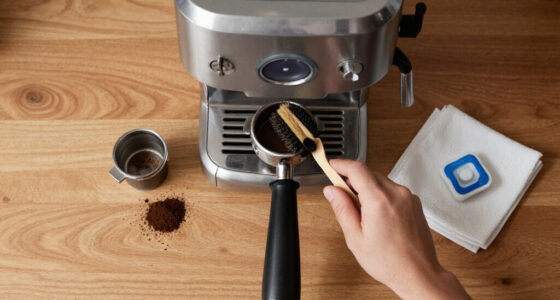
Rinse with hot water, brush gently if needed, then wipe the basket dry.
When water leaves an oily film
Deep-clean removable parts using instructions suited to the cleaner and basket.
Clear a clog gently
Fine holes are part of the basket’s design; force can damage them and alter water flow.
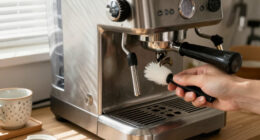
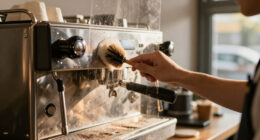
- Rinse and brush with a soft nylon brush or cloth.
- Check for a remaining blockage.
- If needed, use a suitable fine tool gently on that hole.
- Knives, abrasive pads, and hard scraping.
- Forcing a pin or enlarging an opening.
- Clearing every hole with a pin as routine care.
Basket care is separate
Backflushing cleans the machine’s group head and water path, while the basket handles grounds directly.
| Task | What it cleans | What to do |
|---|---|---|
| Backflushing | Group head and water path | Follow machine care instructions |
| Basket cleaning | Grounds, holes, and coffee oils | Rinse after use; detergent-clean regularly |
Know when to replace it
Keep your basket safe with a quick rinse after every shot
A portafilter basket is thin, perforated steel, so routine cleaning should lift away coffee oils and grounds without scratching the surface, bending the steel, or enlarging its holes. Knock out the puck, rinse the basket with hot water, and wipe it dry; doing this promptly keeps residue from drying into a stubborn film. A basket is more like a fine sieve than a saucepan: the small openings do precise work and need a light touch. After pulling a shot, tap the portafilter firmly against a knock box to release the puck. Hold the basket under hot running water and use a soft cloth or nylon brush to dislodge loose grounds. A quick wipe around the rim helps remove damp coffee before it dries. If you’re making drinks for guests, this simple reset between shots keeps yesterday’s oils from joining the next espresso. Most routine cleaning takes less than a minute. You do not need to scrub hard or polish the steel until it shines. If a patch of coffee sticks, let hot water soften it, then brush gently. A hard scrape may seem faster, but it can leave scratches or catch on a hole. Clean promptly, rinse thoroughly, and dry the basket before storage.Products Worth Considering

Breville Barista Express Espresso Machine with Built-In Grinder, Brushed Stainless Steel

De'Longhi COM630BK All-in-One Coffee and Espresso Machine

De'Longhi COM530M All-in-One Coffee and Espresso Machine, 47 oz
As an affiliate, we earn on qualifying purchases.
Use a detergent soak when rinsing leaves an oily film
To remove oil that hot water leaves behind, take out a detachable basket and soak it with compatible metal portafilter parts in cleaner made for espresso equipment, following that cleaner’s directions exactly. Rinse every part thoroughly afterward. The right concentration and soak time depend on the product and the basket’s material or finish, so there is no universal recipe or safe duration.- Check whether your basket lifts out of the portafilter and read the maker’s care instructions.
- Prepare espresso equipment cleaner at the labeled concentration and temperature.
- Soak only compatible metal parts for the labeled time; keep the handle out.
- Rinse the basket and metal parts thoroughly under clean water, then dry them.
Choose soft tools and handle clogs with a light touch
Use a soft nylon brush or cloth for stuck coffee, and reserve a fine pin or similar tool for an individual blocked hole that remains clogged after brushing and rinsing. Never scrape the basket with a knife, needle, or abrasive pad, and never force a tool through an opening. A hole is a measured passage for water; enlarging it can change how water flows through the coffee. Start by rinsing the basket from both sides if you can reach them, then brush the surface gently. If one hole still appears blocked, hold the basket up to the light to confirm the obstruction. Use a suitable fine tool with just enough pressure to clear visible debris. If it resists, stop and soak the basket with compatible espresso cleaner before trying again. Think of it like clearing lint from a delicate screen: patience works better than force. A home barista using a precision basket and a fine grind may notice one slow or uneven stream and suspect a clog. Fine grounds can make a blockage more visible, but uneven flow can have other causes too, such as puck preparation. Clean the basket gently before drawing conclusions. Don’t run a pin through every hole as routine maintenance; it adds risk without replacing proper rinsing and periodic detergent cleaning.Clean the basket separately from the machine’s group head
Backflushing cleans the machine’s group head and water path; it does not replace cleaning the portafilter basket. The basket handles coffee grounds directly, so its holes and surfaces need their own rinse and, periodically, an equipment-safe detergent clean. A spotless group head can sit above a basket that still carries old coffee oils. For instance, you might backflush after a busy weekend and assume the whole brewing path is fresh. Then the next shot tastes stale because the basket still holds a thin oily coating. Rinsing after each use and detergent-cleaning on a regular schedule addresses that separate source of residue. How often you need the deeper clean depends on your brewing frequency and how oily your coffee is; a café-style routine at home will build residue faster than one shot a day. A simple habit keeps the two jobs clear: rinse the basket after every shot, clean the group head according to your machine’s care instructions, and use espresso detergent on the basket as needed. Don’t use backflushing as a reason to skip basket care, and don’t assume a clean appearance proves the oils are gone. Water can remove loose grounds while leaving the film behind.Match your cleaning routine to the basket and its handle
The safest cleaning method depends on what your basket and portafilter are made from and how the basket attaches. Standard and precision baskets can have different hole patterns and tolerances, and manufacturers may give specific care instructions. Check those instructions before using a dishwasher, strong cleaner, or long soak.| Part or situation | Safer approach | Watch out for |
|---|---|---|
| Loose coffee after brewing | Knock out, rinse with hot water, wipe dry | Letting grounds dry in the holes |
| Oily film on a removable basket | Use espresso equipment cleaner as labeled | Guessing at concentration or soak time |
| Wooden or uncertain handle | Keep it out of the cleaning solution | Heat, detergent, and damage to attachments |
| One blocked hole | Brush and rinse, then clear gently if needed | Forcing or enlarging the opening |