TL;DR
A plumbed office coffee machine connects to a building’s cold-water supply, so staff do not have to refill a reservoir. Before installation, confirm compatible pressure and fittings, local plumbing requirements, and the right filter for both the site’s water and the machine. Put filter changes, cleaning, leak response, repair costs, and removal responsibilities in writing.
The coffee queue is already out the door when someone spots the empty reservoir. A plumbed machine can remove that particular office ritual: it connects directly to the building’s water supply, so staff can make drinks without carrying a pitcher back and forth.

Get coffee and tea gear delivered free with Prime
- Fast, free delivery on millions of items
- Prime Video, Amazon Music and more included
- Member-only deals all year
That convenience comes with a real connection to your workplace plumbing. You need a suitable cold-water line, compatible fittings and pressure, and a clear plan for filters, cleaning, leaks, and repairs. A machine that makes a hundred cups a day needs more than a nearby tap; it needs someone who knows what to check and when.
This guide walks you through the practical decisions before and after installation. You’ll learn what “direct-connect” means, how to think about water treatment, what to put in a service agreement, and how to make shared equipment easier to care for. The details matter most when the machine is busy, tucked into a kitchenette, or installed in leased space.
Confirm the machine’s required pressure, fittings, filter, and drain before choosing its location.
Ask facilities or the landlord about approval, and use an installer qualified for the site and local rules.
Choose filtration for the actual water issue; a taste filter may not control hardness or prevent scale.
Track filter changes and cleaning in a simple log, including the date and the person who did the work.
Write down who handles leaks, plumbing, machine repairs, service costs, and disconnection before the machine arrives.
Plumbed Coffee Machines Water Lines, Filters, and Responsibility
A direct water connection removes reservoir refills, but adds installation checks and ongoing care. Plan the connection, filter, and responsibilities before the machine arrives.
What changes for the office
Steady service comes with a real connection to building plumbing.
- No reservoir refills
- Suitable line, fittings, and shutoff needed
- Leaks become a facilities concern
- Staff refill the tank
- Lower setup burden
- Can suit small or temporary offices
Check before installation
A nearby tap does not guarantee a compatible, serviceable connection.
Confirm pressure, fittings, and any required filter or regulator.
Verify access, distance, and whether the machine needs a drain.
Check lease, facilities policy, local rules, and installer qualifications.
Have the installer check for leaks and show staff how to shut off the supply.
Choose treatment for the water
Match the filter to local water conditions and the machine maker’s requirements.
Chlorine
A suitable filter may reduce chlorine taste.
Sediment
Choose a filter that addresses the site’s sediment needs.
Hardness and scale
Taste filtration does not automatically control hardness or prevent scale.
Make care visible
A permanent water connection does not make the machine maintenance-free.
- Clean brewing parts and sanitize surfaces.
- Empty grounds and drip trays.
- Replace filters on schedule and record the work.
- Descale when needed, following manufacturer instructions.
Put ownership in writing
Agree who handles routine machine work and who handles building plumbing.
| Responsibility | What to clarify |
|---|---|
| Costs | Installation, filters, repairs, and water damage |
| Response | Who checks leaks and responds to plumbing issues |
| Routine care | Who cleans, replaces filters, and records the work |
| Service changes | Who contacts facilities or the landlord, and who disconnects the machine |
What a Plumbed Coffee Machine Changes in Your Office
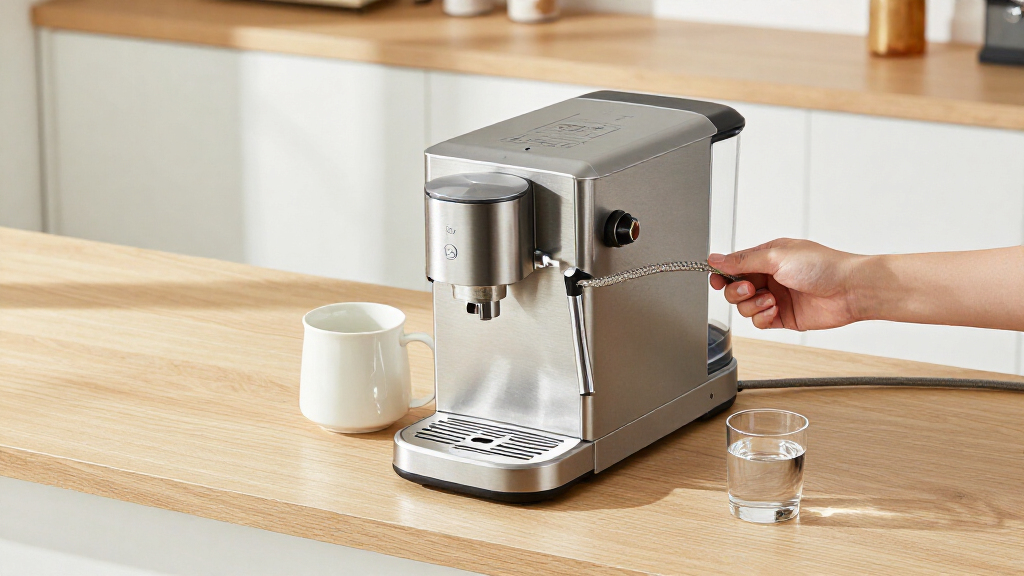
A plumbed office coffee machine connects to a building’s water supply instead of relying on a tank that someone must refill. The connection can support steady service in a busy break room, but it also makes the machine part of your workplace’s plumbing setup. You trade repeated refills for installation checks, water-quality decisions, and clear maintenance ownership.
That trade matters because refilling is a small task repeated at the moment people want coffee, while plumbing and maintenance are less frequent but carry greater consequences if neglected. In a 40-person office where the reservoir runs dry before half the team has poured a cup, a direct connection removes a predictable bottleneck. But it also means the machine can keep drawing water when nobody is watching. A leak or failed fitting can therefore become a facilities issue, not just an interruption to the coffee routine.
A reservoir model can still make more sense for a small team, a temporary office, or a kitchenette where plumbing changes are restricted. The lower setup burden can outweigh refill inconvenience when demand is modest or the office may move soon. A plumbed model is most useful when drink demand is steady and a suitable supply line is close by. Check whether the machine also needs a drain; some units need one for rinse water or wastewater, while others collect it in a tray. Drain access can constrain placement and add installation work, so it belongs in the comparison from the start.
Before choosing, ask how the machine behaves during an interruption to the water supply and whether it can be safely shut off for service. The phrase “machines connect directly to a building’s water supply” sounds simple, but the precise installation depends on the equipment and site. A connection that works in one office may need different fittings, pressure control, or approvals in another. Those details affect not just whether the machine works on day one, but whether it can be serviced without disrupting other users of the building’s water.
Products Worth Considering

Instant Pot Rio 6-Quart 7-in-1 Electric Pressure Cooker, Black

KitchenAid 5.5-Qt Bowl-Lift Stand Mixer, Porcelain White

Instant Pot Pro 8-Quart 10-in-1 Electric Pressure Cooker, Black
As an affiliate, we earn on qualifying purchases.
Check These Five Things Before Connecting a Water Line
A plumbed coffee machine needs a compatible cold-water supply, an accessible shutoff, and fittings that match the machine’s specifications. Before you book installation, confirm the line’s pressure, connection size, distance from the machine, and any drain requirement. Local plumbing rules, a lease, or facilities policy may also determine who can make the connection. These checks help distinguish a machine that merely fits on the counter from one that can be installed, isolated, and serviced safely.
- Read the machine requirements. Check the connection size, pressure range, and whether a filter or pressure regulator is required. Pressure outside the specified range can cause poor operation or put undue strain on components, so a nearby line is not automatically a suitable one.
- Locate the supply and shutoff. Make sure the installer can reach the cold-water line and staff can reach the shutoff in an emergency. A shutoff that is hidden behind cabinetry may technically exist but be too slow to use when water is spreading.
- Check the route and drain. Measure the distance and confirm whether the machine needs a drain or can use a drip tray. A longer route or unavailable drain may affect cost, placement, and the amount of building work required.
- Confirm permission and qualifications. Ask facilities or the landlord about alterations, and check whether local rules or the manufacturer call for a licensed plumber. Resolving this before booking avoids a cancelled visit or unauthorized changes to leased property.
- Test the completed connection. Have the installer check for leaks and explain how to shut off the supply before they leave. A handover makes the installation usable by the people who will respond to problems, rather than leaving that knowledge with the installer.
For example, a machine may fit neatly beside the office sink but sit several metres from the nearest suitable cold-water line. That could change installation cost or placement. Moving it closer may be simpler than extending plumbing, especially in leased premises where alterations need approval. Comparing both options early helps avoid paying for a layout that creates ongoing access or approval problems.
A qualified installer should make the connection and verify that it does not leak. Depending on the machine and local rules, installation may also call for backflow prevention or another safeguard against water flowing back into the building supply. Ask who is authorized to disconnect the machine too; a unit that needs service or must be moved should not leave staff guessing at a valve. Knowing the shutoff and disconnection procedure limits the time water can run during a fault and clarifies who can safely work on the connection.
Choose a Filter That Matches Your Water and Your Machine
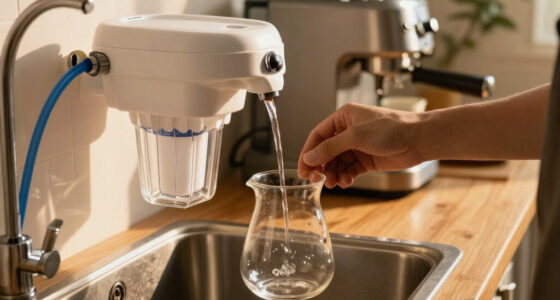
The right water filter addresses a specific issue in your local water while meeting the coffee machine maker’s requirements. Filters can reduce chlorine taste, sediment, or hardness, but one product does not necessarily handle every problem. A label that says “filtered” is not proof that the water suits your machine or will prevent scale. That distinction matters because a cup can taste better even while minerals continue to accumulate inside the machine.
Start with the water information available for your site, then check the machine manual and filter specifications. If the water is hard, scale control may be needed alongside filtration for taste; the right setup depends on the water conditions and equipment. A filter that leaves hardness untreated could make coffee taste fine while scale still builds up inside the machine. Over time, that buildup can affect heating and water flow, so the apparent success of the taste treatment may hide a maintenance problem.
Think of an office kitchen where tap water has a noticeable chlorine note. A filter chosen to reduce that taste may improve the cup, but it may not solve mineral buildup. Conversely, a scale-focused treatment may protect internal components without removing every taste or sediment concern. Your choices should follow the actual problem, not a vague promise that one cartridge does everything. The tradeoff is between selecting a treatment that solves the site’s priority and paying for features that do not address your water or machine.
Filters have a rated capacity and a replacement schedule. As water passes through, a neglected cartridge may lose effectiveness or restrict flow. Record the installation date and, when relevant, the cartridge capacity so the next change is based on use and manufacturer guidance, not on someone noticing a slow pour weeks later. A replacement schedule also turns filtration into a predictable operating cost, which helps compare service plans fairly. For a practical buying checklist, see this guide to plumbed coffee machine filtration kits, then match any option to your own water and machine specifications.
A filter is a treatment choice, not a maintenance plan. It can help with the issues it is designed to address, but it still needs timely replacement and may not remove the need for scale control or descaling.
Keep a Direct-Connect Machine Clean and Flowing
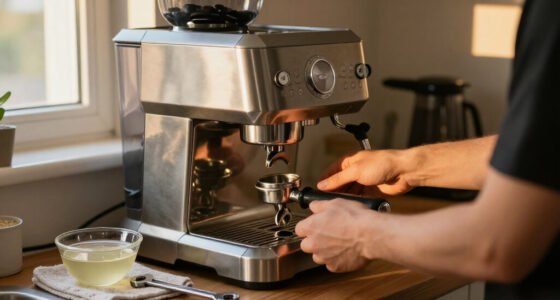
A permanent water connection does not make an office coffee machine maintenance-free. You still need to clean brewing parts, empty grounds and drip trays, sanitize shared touchpoints, replace filters on schedule, and descale when the manufacturer or water conditions call for it. How often depends on daily use, water quality, and the machine’s instructions. The connection removes the refill task, but it does not remove the residues and mineral deposits created by brewing; neglect can affect drink quality, flow, and reliability.
Start with tasks people can see. If the drip tray is full by lunchtime or coffee grounds are packed around the brew area, the next person may get a mess along with their drink. Emptying those parts at a regular time, such as the end of each workday, gives staff a simple routine. Use the cleaning products and method specified for the machine rather than assuming a household cleaner belongs inside the brewing path. Clear, short tasks are more likely to be completed than a broad instruction to “keep it clean,” and the routine prevents small daily messes from becoming harder service work.
For a busy team, a short log beats a vague promise to “keep an eye on it.” Write down the date, task, and person responsible for filter changes and scheduled cleaning. If the machine slows down, that record can help facilities staff see whether a filter is overdue or a recent service visit already addressed the issue. It also shows whether a schedule fits actual usage: repeated missed tasks may mean the assigned time or owner is unrealistic, while recurring faults after timely care may point to a service issue.
Some newer equipment includes programmable menus, cleaning prompts, or usage tracking. Those alerts can help an operator remember a task, but they do not confirm it was completed or replace the maker’s schedule. If a prompt appears during a meeting rush, assign someone to handle it and mark the work done; otherwise, the reminder can disappear into the background like an unread message. Treating alerts as prompts in an owned routine gives them practical value without assuming the machine can manage its own care.
Put Leak Response, Filters, and Repairs in Writing
Before installation, name the person or team responsible for every recurring task and plumbing issue. A vendor might install and service the machine, while facilities staff handle building plumbing; another office might arrange filter changes itself. Written responsibilities stop a small leak from turning into a round of “I thought they were handling it.” They also prevent gaps between contracts: a machine vendor may cover the appliance but not the building line, while facilities may assume the vendor owns everything attached to the machine.
Walk through a realistic example: on Monday morning, a staff member sees water under the machine. Who closes the shutoff, who calls the service provider, and who contacts the landlord if the building line is involved? If nobody knows, the machine may keep running while water reaches the cabinet or floor. A reachable shutoff and a posted contact route make the first response faster. Specify who is allowed to operate the valve and what to do if it cannot be reached, so the response does not depend on staff improvising under pressure.
Your service agreement should spell out what the vendor includes and where building work begins. Ask whether installation, preventive visits, filter cartridges, replacement parts, repairs, and emergency response carry separate charges. Also establish who pays for water damage, who records filter and cleaning work, and what happens when the contract ends or the machine is removed. These terms affect the real cost of ownership: a low monthly service price can be less attractive if filters, after-hours calls, or plumbing repairs are billed separately.
Removal deserves its own sentence in the agreement. Disconnecting a machine may leave a line that needs to be capped or restored, especially in leased space. Clarify who is authorized to do that work and who arranges landlord or facilities approval. If your office owns the equipment but hires a third party for plumbing, list those contacts together so the next facilities lead can find them without reconstructing the story. A clear end-of-contract handoff prevents the final move from leaving an unsafe connection or an unexpected restoration bill.
Weigh the Daily Convenience Against the Site’s Constraints
A plumbed machine is a strong fit when your office makes many drinks, has a suitable nearby water line, and can assign maintenance clearly. A reservoir model may be simpler when the team is small, the office is temporary, or plumbing changes are difficult to approve. The better choice depends on both coffee demand and the realities of your space. In effect, you are comparing frequent, low-effort refills with less frequent but more consequential installation and service responsibilities.
| Question | Plumbed machine | Reservoir machine |
|---|---|---|
| Water routine | Draws from a connected supply; no routine tank refill | Someone must refill the reservoir |
| Setup | Needs compatible plumbing and installation checks | Usually needs a suitable outlet and counter space |
| Ongoing care | Filter, cleaning, and plumbing responsibilities need tracking | Cleaning and water changes still need an owner |
| Best fit | Steady or high-volume office use with a suitable connection | Low-volume, flexible, or plumbing-restricted locations |
Picture a small studio with six employees: refilling a reservoir may take less effort than arranging plumbing work and a service contract. Now picture a shared floor with several teams and a long queue every morning. There, avoiding refills can save repeated interruptions, provided facilities can manage the connection and maintenance. The same machine can therefore be a sensible investment in one location and needless complexity in another; demand and site readiness determine which burden is smaller.
Do not compare purchase prices alone. Add installation, filters, service visits, repairs, cleaning supplies, and any costs involved in removal. Then ask what happens if the building’s water supply is interrupted. A direct connection changes the office routine, but the value comes from whether that routine suits your actual usage and site. Including these recurring and end-of-life costs gives you a more realistic comparison than the equipment price alone.
Frequently Asked Questions
Can a plumbed coffee machine use a regular office water line?
It may use a suitable cold-water supply, but the machine’s connection size and pressure range must match the line. Check the manufacturer’s specifications and have a qualified installer assess the site before connecting it.
Does installation require a plumber?
That depends on the machine, local plumbing rules, and your building’s policies. Some installations may require a licensed plumber, backflow prevention, or landlord approval; ask facilities who can authorize the work.
Does a direct-connect machine need a drain?
Some machines need a drain for rinse or wastewater, while others collect liquid in a drip tray. Check the specific machine instructions before choosing a counter location.
How often should we replace the water filter?
Follow the filter and machine makers’ schedules, and consider the cartridge’s rated capacity where applicable. Record each installation date; a neglected filter can lose effectiveness or restrict water flow.
Will a water filter prevent limescale?
Not necessarily. Filters address different water concerns, and a cartridge for taste or sediment may not reduce hardness enough to control scale. Match treatment to local water conditions and the machine’s requirements, and descale as directed.
Who is responsible if the connection leaks?
Agree on that before installation. Your written plan should say who can shut off the supply, who calls the machine vendor, who contacts facilities or the landlord, and how repair and water-damage costs are handled.
Conclusion
Choose a plumbed machine when steady coffee demand makes refilling a real burden and your site can support a proper connection. Before installation, confirm the line, filter, service schedule, shutoff access, and the names of the people responsible for maintenance and leaks.
Then keep one clear log near the machine or in your facilities system. The best office coffee setup is the one that keeps cups flowing on Monday morning—and leaves no one wondering who should turn the water off.