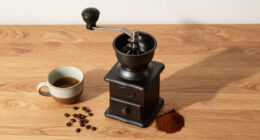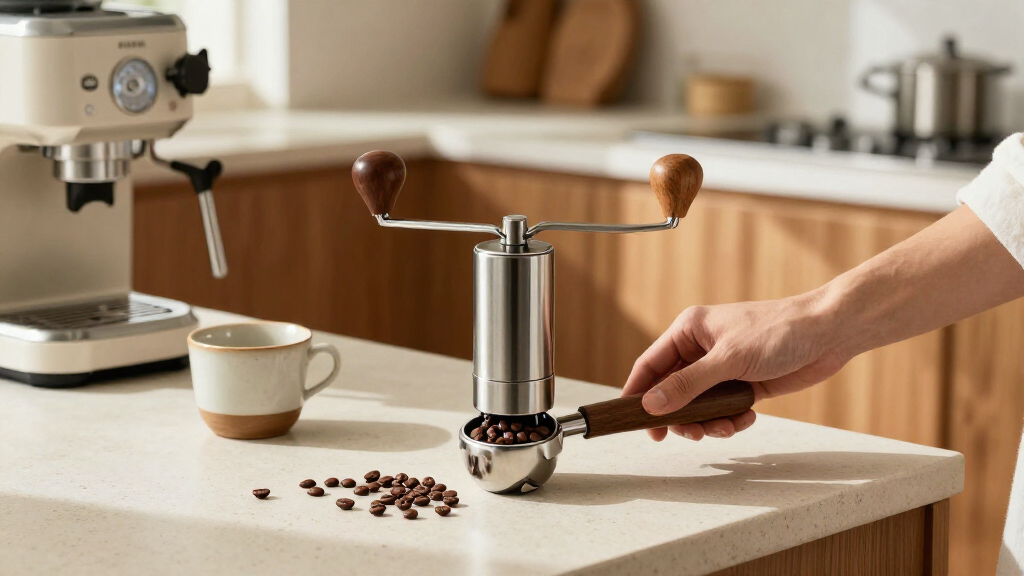
For espresso-focused grinding, I’d make the 1Zpresso J-Ultra my best overall pick for its fine adjustment range and espresso-oriented design. The TIMEMORE C5 ESP Pro is a compelling alternative for buyers who want a grinder aimed specifically at espresso, while the KINGrinder K6 stands out for balancing broad versatility with a capable burr set. The main tradeoffs are adjustment precision, grinding effort, portability, and whether you also want to brew pour-over or other styles. A premium hand grinder can deliver precise, fresh grounds, but it still asks you to grind by hand for every dose. Read on for the full comparison and help choosing the right model for your routine.

Get coffee and tea gear delivered free with Prime
- Fast, free delivery on millions of items
- Prime Video, Amazon Music and more included
- Member-only deals all year
Complete the kit


Key Takeaways
- The J-Ultra leads for espresso-first dialing: its fine adjustment approach makes small grind changes easier to manage than a grinder aimed mainly at general brewing.
- The C5 ESP Pro is the focused alternative: its espresso-specific positioning makes it a natural shortlist pick for buyers who do not need broad brew-style versatility.
- The K6 and K-Ultra suit mixed brewing better: both offer a wider-use case than the most espresso-focused options, so they make more sense when one grinder must cover multiple methods.
- Not every premium grinder is an upgrade for every buyer: the Chestnut C3S and NewlukPro M6 may suit simpler needs, but buyers should compare their adjustment systems and stated espresso suitability closely before choosing them for fine dialing.
- Handle and workflow details matter as much as burr claims: the MAVO Phantox Pro’s 45mm burr is a distinct spec, but burr size alone does not establish espresso precision, ease of adjustment, or the effort required per dose.
| TIMEMORE Chestnut S3 Manual Coffee Grinder, Black |  | Best Overall for Versatility | Burrs: S2C890 steel | Adjustment: External; 0.015 mm per grid | Capacity: 30 g | VIEW LATEST PRICE | See Our Full Breakdown |
| TIMEMORE Chestnut C3S Manual Coffee Grinder with S2C Stainless Steel Burr |  | Best Lightweight Everyday Pick | Burr: S2C stainless steel conical burr | Adjustment: Stepless | Capacity: 25 g | VIEW LATEST PRICE | See Our Full Breakdown |
| MAVO Phantox Pro Manual Coffee Grinder with 45mm Stainless Steel Burr |  | Best for Fine-Step Adjustment | Burr size: 45 mm | Burr material: Stainless steel | Adjustment: 120 clicks per loop | VIEW LATEST PRICE | See Our Full Breakdown |
| KINGrinder K6 Manual Coffee Grinder with Straight Handle, Champagne Silver |  | Best for Measured External Adjustments | Burr material: Stainless steel | Body material: Aluminum | Adjustment: 16 microns per click; 60 clicks per rotation; up to 4 rotations | VIEW LATEST PRICE | See Our Full Breakdown |
| TIMEMORE C5 ESP Pro Manual Coffee Grinder, Black |  | Best Compact Espresso Specialist | Burr type: S2C-042-III stainless steel conical burrs | Burr size: 42 mm | Adjustment: Approximately 50 levels; 0.015 mm per click | VIEW LATEST PRICE | See Our Full Breakdown |
| 1Zpresso J-Ultra Manual Coffee Grinder, Iron Gray |  | Best for Fine Espresso Adjustment | Brand: 1Zpresso | Model: J-Ultra Iron Gray | Grinder type: Manual conical burr | VIEW LATEST PRICE | See Our Full Breakdown |
| 1Zpresso K-Ultra Manual Coffee Grinder with Carrying Case, Iron Gray |  | Best for Espresso and Brew-Method Flexibility | Brand: 1Zpresso | Model: K-Ultra | Burr material: Stainless steel | VIEW LATEST PRICE | See Our Full Breakdown |
| NewlukPro M6 Manual Coffee Grinder |  | Best Simple Multi-Brew Option | Brand: NewlukPro | Model: M6 | Burr: 38 mm SUS 420 hexagonal conical burr | VIEW LATEST PRICE | See Our Full Breakdown |
| premium hand grinders for espresso | Adjustment | Weight | Included components | Capacity |
|---|---|---|---|---|
| TIMEMORE Chestnut S3 Manual Co | External; 0.015 mm per grid | 1 kg | — | 30 g |
| TIMEMORE Chestnut C3S Manual C | Stepless | 530 g | — | 25 g |
| MAVO Phantox Pro Manual Coffee | 120 clicks per loop | 1.02 kg | Brush, nonslip ring, pocket, stainless steel bowl | 30 g |
| KINGrinder K6 Manual Coffee Gr | 16 microns per click; 60 clicks per rotation; up to 4 rotations | 630 g | Lid, straight handle | — |
| TIMEMORE C5 ESP Pro Manual Cof | Approximately 50 levels; 0.015 mm per click | 0.8 kg | — | 25 g |
| 1Zpresso J-Ultra Manual Coffee | External; 8-micron steps | — | Lid, travel case, cleaning brush, air blower | — |
| 1Zpresso K-Ultra Manual Coffee | — | 1.5 lb | Lid, carrying case, cleaning brush, air blower | — |
| NewlukPro M6 Manual Coffee Gri | — | — | Coffee grinder, cleaning brush, manual | — |
More Details on Our Top Picks
TIMEMORE Chestnut S3 Manual Coffee Grinder, Black
The Chestnut S3 is my most versatile pick for someone who wants one hand grinder to cover espresso and other brew styles. Its external adjustment changes settings in fine 0.015 mm increments, making adjustments accessible without taking the grinder apart. Compared with the lighter Chestnut C3S, the S3 has a larger 30 g capacity and a foldable, spring-assisted handle, but weighs nearly twice as much. That added mass favors a more substantial countertop tool over a packable travel grinder. Its S2C890 steel burrs are designed for uniform grinding, while the broad brew range suits households that switch between espresso, moka, pour-over, and French press. The tradeoff is still manual effort, and its 30 g chamber may not cover larger batches in one go.
Pros:- External adjustment with 0.015 mm increments supports fine grind changes.
- 30 g capacity is larger than the Chestnut C3S’s 25 g capacity.
- Foldable, spring-assisted handle makes storage more convenient.
- Listed for espresso, moka, pour-over, and French press.
Cons:- At 1 kg, it is substantially heavier than the 530 g Chestnut C3S.
- Manual grinding takes physical effort, particularly for espresso-fine settings.
- A 30 g capacity can still require multiple batches for larger brews.
Best for: Home espresso drinkers who also brew other methods and want external adjustment with room for a larger single dose.
Not ideal for: Travel-focused buyers who prioritize low weight, or anyone who wants an electric grinder to avoid hand grinding.
- Burrs:S2C890 steel
- Adjustment:External; 0.015 mm per grid
- Capacity:30 g
- Weight:1 kg
- Materials:Aluminum, plastic, stainless steel
- Handle:Foldable, spring-assisted
- Suitable brew methods:Espresso, moka, pour-over, French press
Our verdict“Choose the Chestnut S3 if you want a capable espresso grinder that also handles several other brew styles and can accept the extra weight.”
TIMEMORE Chestnut C3S Manual Coffee Grinder with S2C Stainless Steel Burr
For espresso drinkers who carry their grinder or want a lighter daily tool, the Chestnut C3S makes a stronger case than the heavier Chestnut S3. At 530 g, it is the lightest option in this group, and its aluminum alloy body keeps the design compact without giving up a metal exterior. The S2C conical burr and dual bearings are intended to support consistent grinding; its stepless adjustment also lets you make gradual changes between espresso, pour-over, and French press settings. That flexibility is appealing, though the product information gives no increment size, so buyers seeking a clearly specified adjustment scale may prefer the S3 or KINGrinder K6. The 25 g capacity suits a single dose, not larger batches. Cleaning also calls for a brush rather than water.
Pros:- At 530 g, it is lighter than the other listed grinders.
- Stepless adjustment allows gradual changes across brewing methods.
- Aluminum alloy body and S2C stainless steel conical burr.
- Compact 25 g capacity fits single-dose use.
Cons:- The 25 g capacity may mean grinding separate doses for larger brews.
- Cleaning instructions rule out washing it with water.
- No adjustment increment is provided, making its fine-setting scale harder to compare with the S3 or KINGrinder K6.
Best for: Espresso drinkers who want a lightweight, portable hand grinder for single doses and occasional use across brew styles.
Not ideal for: Buyers who want a larger hopper, a stated adjustment increment, or a grinder they can rinse under water.
- Burr:S2C stainless steel conical burr
- Adjustment:Stepless
- Capacity:25 g
- Weight:530 g
- Body material:Aluminum alloy
- Recommended uses:Espresso, pour-over, French press
- Cleaning:Use included brush; do not wash with water
Our verdict“Pick the Chestnut C3S for portable, single-dose espresso grinding if low weight matters more than hopper capacity or a specified adjustment increment.”
MAVO Phantox Pro Manual Coffee Grinder with 45mm Stainless Steel Burr
The MAVO Phantox Pro is the choice here for buyers who want many discrete settings to explore while dialing in espresso. Its 120 clicks per loop offer a detailed adjustment scheme, while the 45 mm spiked stainless steel burr is described as reducing fines and improving grinding efficiency. Those details set it apart from the TIMEMORE Chestnut C3S, which has stepless adjustment but no stated increment size. The MAVO also includes a storage bag and brush, giving it a more travel-ready accessory package than the KINGrinder K6, though at 1.02 kg it is not a lightweight carry. A 30 g capacity accommodates more than the C3S’s 25 g chamber. The tradeoffs are hand-powered effort and dry-only cleaning, so it suits owners comfortable with careful brush maintenance.
Pros:- 120 clicks per loop provide many adjustment steps.
- 45 mm spiked stainless steel burr is designed to reduce fines and improve grinding efficiency.
- 30 g capacity exceeds the Chestnut C3S’s 25 g capacity.
- Includes a storage bag, brush, nonslip ring, and stainless steel bowl.
Cons:- At 1.02 kg, it is the heaviest listed option and less appealing for weight-conscious travel.
- Manual grinding requires physical effort.
- Cleaning is limited to dry brushing rather than washing with water.
Best for: Espresso hobbyists who like making fine, repeatable setting changes and want a 30 g grinder with a travel bag.
Not ideal for: Buyers seeking the lightest travel grinder, water-friendly cleaning, or an electric workflow.
- Burr size:45 mm
- Burr material:Stainless steel
- Adjustment:120 clicks per loop
- Capacity:30 g
- Weight:1.02 kg
- Materials:Aluminum, stainless steel
- Included components:Brush, nonslip ring, pocket, stainless steel bowl
Our verdict“Choose the Phantox Pro if you value many adjustment steps and a larger dose capacity more than low weight or easy wet cleaning.”
KINGrinder K6 Manual Coffee Grinder with Straight Handle, Champagne Silver
The KINGrinder K6 suits espresso buyers who want a clearly documented adjustment system rather than an unspecified stepless dial. Its external mechanism moves in 16-micron steps, with 60 clicks per rotation across up to four rotations, giving a defined range for moving between espresso and coarser settings. That makes its adjustment details easier to interpret than the Chestnut C3S’s stepless system, while the K6’s 630 g weight sits between that lightweight grinder and the heavier Chestnut S3. Stainless steel burrs, dual bearings, and an aluminum body are intended to support steady grinding in a portable format. The 25–35 g hopper range offers some flexibility, but the straight handle and manual operation still require effort; it is a poor fit for anyone seeking a powered workflow.
Pros:- External adjustment uses specified 16-micron steps.
- 60 clicks per rotation and up to four rotations provide a broad adjustment range.
- At 630 g, it is lighter than the Chestnut S3 and MAVO Phantox Pro.
- Can be dismantled by hand for brush cleaning.
Cons:- Manual operation demands effort for espresso-fine grinding.
- The 25–35 g hopper may not suit larger batch grinding.
- The listed components include a lid and straight handle, but no carrying case.
Best for: Espresso users who want external adjustment with a specified step size and a grinder light enough to carry between home and travel.
Not ideal for: Buyers who want an included travel case, a folding handle, or a powered grinder for frequent high-volume use.
- Burr material:Stainless steel
- Body material:Aluminum
- Adjustment:16 microns per click; 60 clicks per rotation; up to 4 rotations
- Hopper capacity:25–35 g
- Weight:630 g
- Dimensions:2.48 × 2.17 × 6.89 in
- Included components:Lid, straight handle
Our verdict“Pick the K6 if you want an external espresso adjustment system with a stated step size in a moderately lightweight grinder.”
TIMEMORE C5 ESP Pro Manual Coffee Grinder, Black
The TIMEMORE C5 ESP Pro is the compact espresso-focused pick for buyers who want a folding handle and fine adjustment in a smaller single-dose format. Its 42 mm S2C-042-III burrs and roughly 50 settings with 0.015 mm increments give useful detail for dialing in; the Chestnut S3 offers the same stated increment size but holds 30 g, compared with the C5 ESP Pro’s 25 g. That makes this model better suited to individual espresso doses than switching repeatedly between espresso and larger brews. A bearing-supported mechanism and all-metal body are intended to support smoother grinding, while disassembly allows brush cleaning. The tradeoff is straightforward: it remains a hand-wound grinder, and the smaller capacity limits how much can be ground at once.
Pros:- 0.015 mm adjustment increments support fine changes for espresso dialing.
- 42 mm stainless steel conical burrs and a double-bearing axis are designed for uniform grinding.
- Folding handle and compact body help with storage and carrying.
- Disassembles for brush cleaning.
Cons:- The 25 g capacity is smaller than the Chestnut S3’s 30 g chamber.
- Manual winding takes physical effort.
- The listed included component is the grinder only, with no carrying case specified.
Best for: Espresso drinkers who want a compact, foldable-handled grinder for single doses and precise incremental adjustments.
Not ideal for: People grinding larger quantities at once or buyers who want to avoid manual effort.
- Burr type:S2C-042-III stainless steel conical burrs
- Burr size:42 mm
- Adjustment:Approximately 50 levels; 0.015 mm per click
- Capacity:25 g
- Weight:0.8 kg
- Dimensions:6.26 × 2.09 × 6.44 in
- Materials:Aluminum body; stainless steel burrs
Our verdict“Choose the C5 ESP Pro for compact, single-dose espresso grinding with fine adjustment, but choose the Chestnut S3 if you need more capacity.”
1Zpresso J-Ultra Manual Coffee Grinder, Iron Gray
The J-Ultra is the strongest fit here for espresso drinkers who want especially fine control: its external dial moves in 8-micron steps, tighter than the K-Ultra’s 20-micron increments. That can make small grind changes easier when dialing in a shot. The magnetic 35–40 g catch cup and foldable handle also make it practical to pack, while tool-free dismantling and included cleaning tools simplify routine maintenance. Compared with the broader-use K-Ultra, this model gives espresso adjustment priority rather than emphasizing a wide range of grind settings. The tradeoff is still manual work, and its batch capacity may mean a second round of grinding for larger needs. I’d choose it over the NewlukPro M6 when espresso-focused adjustment matters more than a simpler set of 40 settings.
Pros:- External adjustment in 8-micron steps offers particularly fine control for espresso.
- Magnetic catch cup holds 35–40 g and snaps into place.
- Foldable handle and included travel case support portable use.
- Tool-free dismantling, cleaning brush, and air blower make maintenance more convenient.
Cons:- Manual grinding takes physical effort for every dose.
- The 35–40 g catch cup may require multiple batches for larger amounts.
Best for: Espresso drinkers who regularly make small grind adjustments and want a portable, tool-free-cleaning hand grinder.
Not ideal for: People who grind for several people at once or want electric convenience; its 35–40 g catch cup limits each batch and every dose takes hand effort.
- Brand:1Zpresso
- Model:J-Ultra Iron Gray
- Grinder type:Manual conical burr
- Adjustment:External; 8-micron steps
- Catch cup capacity:35–40 g
- Material:Aluminum
- Dimensions:7.2 × 2.2 × 7.5 in
- Included components:Lid, travel case, cleaning brush, air blower
Our verdict“Choose the J-Ultra if precise espresso adjustment matters more to you than avoiding manual grinding or increasing batch capacity.”
1Zpresso K-Ultra Manual Coffee Grinder with Carrying Case, Iron Gray
The K-Ultra suits buyers who want one premium hand grinder for espresso and other brewing styles. Its external dial offers over 100 settings in 20-micron increments, giving it broader stated range than the J-Ultra’s espresso-focused 8-micron steps, though less fine adjustment between settings. That makes the K-Ultra the more versatile pick if your routine moves between espresso and coarser methods. A stainless steel conical burr, magnetic 35–40 g catch cup, foldable handle, and carrying case round out a travel-friendly setup. Like the J-Ultra, it requires hand grinding and has a modest batch capacity. I’d favor the K-Ultra over the NewlukPro M6 for its external adjustment and included carrying case, but choose the J-Ultra if tighter espresso adjustment is your priority.
Pros:- External dial provides over 100 settings across a broad grind range.
- Stainless steel conical burr and aluminum body.
- Magnetic catch cup holds 35–40 g.
- Foldable handle, carrying case, and tool-free disassembly support travel and cleaning.
Cons:- Its 20-micron increments are less fine than the J-Ultra’s 8-micron adjustment steps.
- Manual operation adds effort to daily grinding.
- The 35–40 g catch cup limits each batch.
Best for: Home espresso drinkers who also brew other styles and want an external dial with a broad range of settings.
Not ideal for: Espresso-focused buyers who want the smallest adjustment increments, or anyone who needs larger batches without repeated hand grinding.
- Brand:1Zpresso
- Model:K-Ultra
- Burr material:Stainless steel
- Grind settings:Over 100
- Adjustment increment:20 microns
- Catch cup capacity:35–40 g
- Weight:1.5 lb
- Dimensions:7.28 × 2.36 × 7.68 in
- Included components:Lid, carrying case, cleaning brush, air blower
Our verdict“Pick the K-Ultra if you want one portable grinder for espresso and varied brew methods, rather than the J-Ultra’s finer espresso adjustment.”
NewlukPro M6 Manual Coffee Grinder
The NewlukPro M6 takes a simpler approach to a portable manual grinder: it pairs a 38 mm SUS 420 stainless steel conical burr with 40 adjustable settings and lists espresso among its supported brewing methods. Unlike the J-Ultra and K-Ultra, the supplied details don’t specify external adjustment increments or a magnetic catch cup, so I’d be more cautious about choosing it for frequent, precise espresso dialing. Its aluminum alloy body and tool-free disassembly make it a practical travel or outdoor option, while the included brush supports cleaning. Compared with the more adjustment-focused J-Ultra, the M6 makes more sense for someone who wants one grinder for several brew styles and straightforward maintenance. The tradeoffs are manual effort and a reassembly learning curve: small parts need to go back in the correct order.
Pros:- 38 mm SUS 420 stainless steel conical burr.
- 40 adjustable settings cover several stated brewing methods.
- Aluminum alloy body is suited to portable use.
- Detachable design allows tool-free cleaning.
Cons:- Manual grinding requires physical effort.
- Small parts must be reassembled in the correct order after cleaning.
- The supplied product details do not specify adjustment increments or catch-cup capacity, making espresso setup less clearly defined than on the J-Ultra.
Best for: Travelers and multi-method coffee drinkers seeking a compact manual grinder for occasional espresso alongside pour-over, drip, cold brew, or French press.
Not ideal for: Espresso enthusiasts who make frequent fine grind changes and want specified adjustment increments or a stated catch-cup capacity.
- Brand:NewlukPro
- Model:M6
- Burr:38 mm SUS 420 hexagonal conical burr
- Grind settings:40 adjustable settings
- Body material:Aluminum alloy
- Power source:Manual
- Included components:Coffee grinder, cleaning brush, manual
- Warranty:1 year
Our verdict“Choose the M6 for portable, multi-method grinding with straightforward tool-free cleaning, but favor the J-Ultra if fine espresso adjustment is your main concern.”
How We Picked
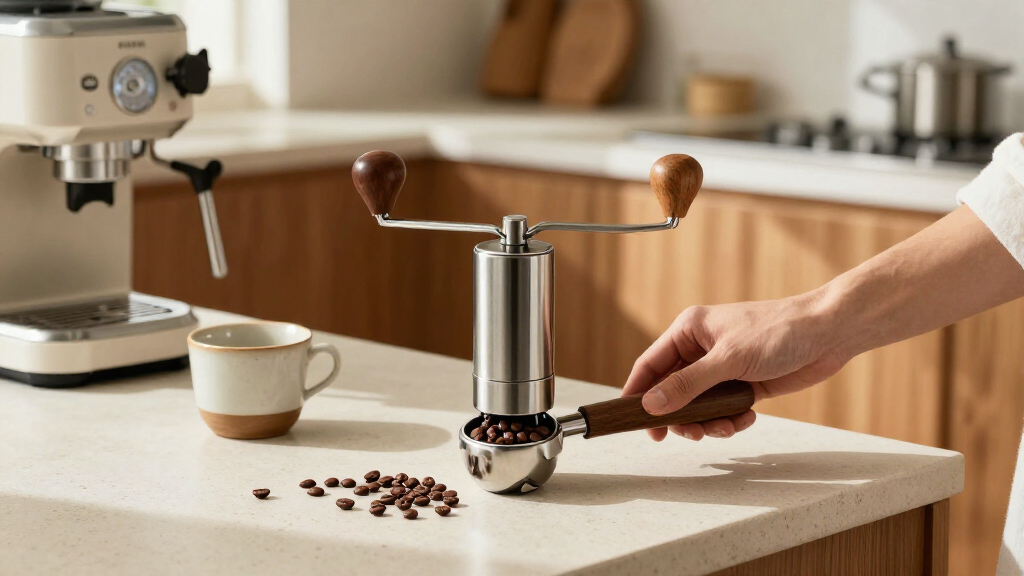
I ranked these grinders around the needs of espresso preparation: fine, repeatable adjustment, a design suited to grinding at espresso-fine settings, and a workflow that makes small recipe changes practical. I also weighed build and handling, portability, versatility across brew methods, and how clearly each model’s features support its intended role. Burr diameter and material matter, but I did not treat a larger burr or a premium-sounding specification as proof of better espresso performance on its own.
The ranking favors grinders with the clearest espresso use case and the most useful adjustment control, then accounts for buyers who want one tool for espresso and other brewing styles. This puts the J-Ultra first for espresso-led dialing, with the C5 ESP Pro close behind as a focused alternative. The K6 and K-Ultra earn consideration for versatility, while the remaining models are differentiated by their stated burr designs, form factors, and likely fit for buyers prioritizing a simpler or more specific workflow. Buyers should confirm current adjustment details and compatibility with their espresso setup before purchase.
| premium hand grinders for espresso | Included components |
|---|---|
| TIMEMORE Chestnut S3 Manual Co | — |
| TIMEMORE Chestnut C3S Manual C | — |
| MAVO Phantox Pro Manual Coffee | Brush, nonslip ring, pocket, stainless steel bowl |
| KINGrinder K6 Manual Coffee Gr | Lid, straight handle |
| TIMEMORE C5 ESP Pro Manual Cof | — |
| 1Zpresso J-Ultra Manual Coffee | Lid, travel case, cleaning brush, air blower |
| 1Zpresso K-Ultra Manual Coffee | Lid, carrying case, cleaning brush, air blower |
| NewlukPro M6 Manual Coffee Gri | Coffee grinder, cleaning brush, manual |
Factors to Consider When Choosing Best Premium Hand Grinders For Espresso
Choosing a hand grinder for espresso is less about picking the most impressive specification and more about matching its adjustment and workflow to your machine, routine, and patience. I’d use these broader checks to avoid paying for features you will not use—or buying a grinder that makes dialing in harder than it needs to be.
Prioritize adjustment resolution over burr size
Espresso recipes can respond to small changes in grind size, so the useful question is how easily a grinder lets you make and repeat those changes. Look for clearly described adjustment steps and a system that can move in fine increments at the espresso end of its range. A large burr may support faster grinding, but it does not tell you how much each click changes extraction. One common mistake is comparing grinders by diameter alone while overlooking the adjustment mechanism. If you often change beans or chase a narrow shot time, prioritize control and repeatability over a headline burr measurement.
Match the grinder to your espresso machine
A grinder can be suitable for espresso without fitting every machine or basket equally well. Pressurized baskets are generally more forgiving, while unpressurized baskets tend to reward more precise grind control and consistent dialing. Before buying, check whether the grinder’s adjustment range is described for espresso and whether its steps fit the level of control you want. Also account for your machine’s dose and workflow: grinding directly into a portafilter may call for a different setup than grinding into a dosing cup. Avoid assuming that a model labeled versatile will be equally convenient for every espresso configuration.
Think through daily grinding effort
Manual grinding adds a physical step to every espresso, and fine settings can make that step more demanding than coarser brew grinding. The effort depends on more than burr size: bean density, roast level, dose, handle leverage, and grinder stability all affect the routine. If you make several drinks back-to-back, consider whether you are comfortable repeating the process for each dose. A longer handle or a secure grip can matter more to comfort than a small difference in listed capacity. Buyers who value quiet and portability may accept more effort, while those who prioritize speed may prefer an electric grinder.
Decide whether versatility is worth a compromise
A grinder used for espresso and filter coffee can simplify a home setup, but switching between brew styles may mean resetting the adjustment each time. That is manageable if you keep notes or use a grinder with clear, repeatable settings; it is less appealing if you change methods several times a day. Espresso-focused models are the better fit when most of your grinding happens at fine settings. Multi-purpose models make more sense when you want one grinder for varied brewing and can tolerate the added adjustment routine. Do not pay extra for broad range if your use is almost entirely espresso.
Check portability, capacity, and maintenance together
A travel-friendly form does not automatically make a grinder convenient for regular home use. Consider how much coffee the chamber holds, whether the handle or accessories pack neatly, and how easy it is to brush out retained grounds. Smaller capacity can mean multiple grinding rounds for larger doses, while a carrying case adds protection but also takes space. Cleaning access matters because coffee oils and fines build up over time, particularly when a grinder serves multiple brew styles. Before choosing, picture your actual storage and cleaning routine rather than treating portability as an isolated benefit.
Pay more only for benefits you will use
A higher-end grinder is most worthwhile when its adjustment precision, construction, or workflow solves a real problem in your current setup. If you are still learning espresso, a clear adjustment system may help more than a premium finish or an unusually large burr. If you already dial in confidently and want finer control, paying for an espresso-oriented mechanism can be easier to justify. Compare what each model adds against your current bottleneck: inconsistent shots, tiring grinding, frequent travel, or the need to switch brew methods. Treat brand reputation and material claims as supporting details, not substitutes for a feature that fits your routine.
Frequently Asked Questions
Which grinder in this roundup makes the most sense for a dedicated espresso setup?
I’d start with the 1Zpresso J-Ultra because its espresso-focused adjustment is the clearest fit for frequent fine dialing. The TIMEMORE C5 ESP Pro is another strong candidate if you want a model positioned specifically around espresso. Your machine and basket still matter: the degree of adjustment control you need depends on how sensitive your setup is to grind changes. Check the current product specifications for adjustment details before ordering. If you also brew filter coffee often, compare the more versatile K6 or K-Ultra instead.
Is a hand grinder practical if I make espresso every day?
It can be practical if you usually make one or two doses and do not mind adding a manual step to your routine. Fine grinding may take more effort than grinding for pour-over, and making several drinks means repeating that work. A hand grinder can suit someone who values a quieter, more compact setup, but it is less convenient for rushed mornings or multiple consecutive shots. Consider the dose you use and how often you change beans, since frequent dialing can add extra grinding. If speed is your main priority, compare manual and electric workflows before deciding.
Should I choose an espresso-focused grinder or one that handles multiple brew methods?
Choose an espresso-focused model if espresso is your main use and you want the adjustment experience centered on fine settings. A more versatile grinder makes sense if it will also serve pour-over, French press, or other methods. The tradeoff is the work of moving between grind settings and returning accurately to your espresso range. If you switch methods only occasionally, that may be a small inconvenience; if you switch throughout the day, it can shape your whole routine. The J-Ultra and C5 ESP Pro stand out for espresso-led use, while the K6 and K-Ultra are more natural candidates for mixed brewing.
Does a 45mm burr mean the MAVO Phantox Pro will be better for espresso?
Not by itself. Burr diameter is one part of grinder design, but espresso results also depend on burr geometry, alignment, adjustment resolution, and how consistently the grinder performs at fine settings. The MAVO Phantox Pro’s 45mm stainless steel burr is a clear specification, but buyers should check its adjustment details and espresso guidance before treating that number as a performance guarantee. If precise shot dialing is your main concern, compare its control system directly with the J-Ultra and C5 ESP Pro. Choose on the full design and workflow, not the largest figure on the specification sheet.
What should I check before buying a premium hand grinder for a specific espresso machine?
Confirm that the grinder can reach the fine range your machine and basket require, then check how small and repeatable its adjustment changes are. Review how grounds are collected and whether the grinder works comfortably with your portafilter or dosing cup. If you use a pressurized basket, you may have less need for very fine adjustment than someone using an unpressurized basket. Also check dose capacity, cleaning access, and whether the grinder’s size suits your counter or travel kit. When product details leave a compatibility question unanswered, verify it with the manufacturer before purchase.
Conclusion
For most espresso-first buyers, I’d choose the 1Zpresso J-Ultra as best overall, with the TIMEMORE C5 ESP Pro as the best focused alternative for an espresso-centered workflow. The KINGrinder K6 is my best value-oriented pick for someone who wants a capable grinder that can also cover other brew styles, while the 1Zpresso K-Ultra is the best premium versatility pick for mixed brewing and portability. Beginners should favor whichever model offers the clearest adjustment instructions and a comfortable routine, rather than paying for specifications they cannot yet use; the J-Ultra is the strongest starting point for espresso-led dialing. For a particular need, the MAVO Phantox Pro merits a look if its 45mm burr and design appeal, while the Chestnut S3, C3S, and NewlukPro M6 are better shortlisted after confirming their espresso adjustment details. Choose based on how often you pull shots, how much control you want, and whether one grinder must handle more than espresso.