TL;DR

Get coffee and tea gear delivered free with Prime
- Fast, free delivery on millions of items
- Prime Video, Amazon Music and more included
- Member-only deals all year
Stepped grinders offer fixed, repeatable settings ideal for convenience, while stepless grinders provide continuous, fine-tune control perfect for espresso. Your choice depends on your brewing needs and workflow.
If you’ve ever tried to dial in the perfect shot of espresso or the ideal pour-over grind, you’ve likely encountered the adjustment mechanism of your grinder. It’s a small detail, but it makes a big difference in your brewing precision and ease of use. The debate between stepped versus stepless grinders isn’t just about mechanics—it’s about control, consistency, and how much effort you want to put into perfecting each cup.
In this guide, you’ll learn how each type works, what benefits they offer, and which one aligns with your coffee habits. Whether you’re a casual brewer or a dedicated espresso enthusiast, understanding these differences helps you make smarter choices—and brew better coffee every time.
A well-designed stepped grinder with many small steps can match the precision of a stepless grinder for most home brewing needs.
Stepless grinders excel at fine-tuning espresso but require more careful notes and adjustments to reproduce settings.
For routine switching between brew methods, a stepped grinder offers quick, repeatable settings, reducing the guesswork.
Tiny adjustments in grind size can drastically change shot quality—especially in espresso—making control a key factor.
Choosing between stepped and stepless depends on your brewing style, how often you adjust, and how precise you want to be.
Stepped vs Stepless Grinders: The Adjustment Difference That Matters
Fixed clicks or a seamless dial? The way your grinder adjusts burr distance shapes your brewing precision, repeatability, and workflow. This guide breaks down the mechanics, the tradeoffs, and which type fits your cup.
What exactly are stepped and stepless grinders?
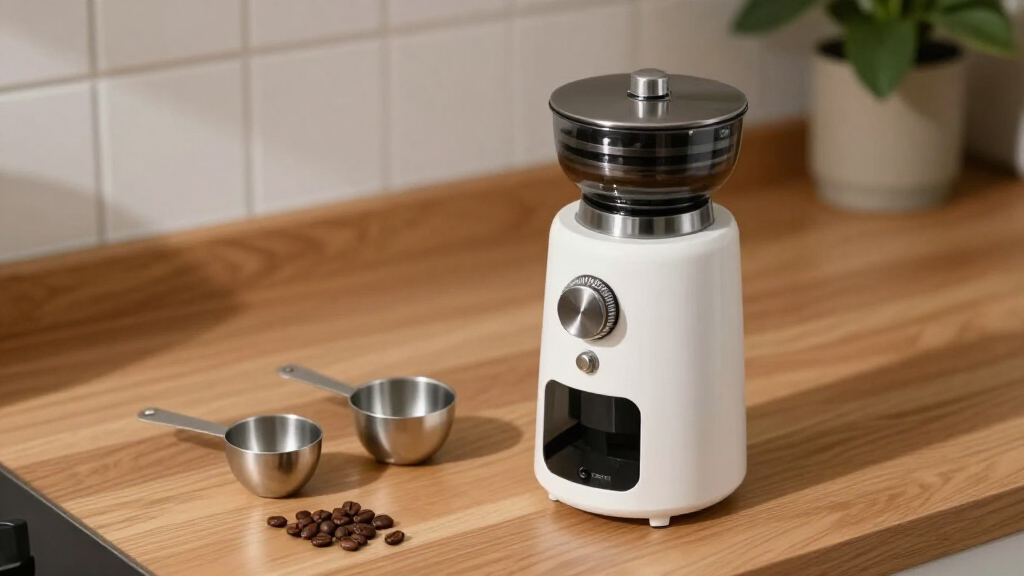
Stepped grinders lock the burrs into fixed, preset positions—like clicking into gear. Stepless grinders turn smoothly through a continuous range, with no clicks or stops. The core mechanism differs: detents and notches versus friction or worm-gear adjustment.
Stepped
Fixed positions physically lock the burrs in place at each setting—like a staircase. Each step is easy to find, easy to record, and easy to return to. The limitation: your ideal grind size may fall between two clicks.
Stepless
A dial or knob adjusts the burrs in tiny, continuous increments—fractions of a millimetre. No fixed stops, just a seamless range. Total control, but reproducing an exact setting may require notes or reference marks.
How do they compare in everyday use?
| Feature | Stepped | Stepless |
|---|---|---|
| Adjustment | Fixed clicks or preset positions | Continuous, smooth range |
| Ease of use | Simple, repeatable, quick to dial in | More precise control, requires finesse |
| Reproducing settings | Easy — just select the same step again | Requires notes or careful adjustment |
| Switching brew methods | Fast and predictable — record the number | Takes more effort and tracking |
| Best for | Convenience & routine switching | Fine-tuning espresso & specialty brews |
Sensitivity to grind-size changes, by brew method
Espresso extraction is highly sensitive: a nudge from 1.2 to 1.3 mm—or as little as 0.05 mm—can shave seconds off shot time and swing flavour from bitter to balanced. Pour-over and French press are more forgiving.
Key insight: A well-designed stepped grinder with finely spaced settings can match the precision of a stepless grinder for most home brewing needs—challenging the idea that only stepless models are truly adjustable.
Can a stepped grinder do the same job?
Yes—with caveats. The secret is step count and spacing: some grinders offer 20+ settings with increments as small as 0.1 mm. Match the mechanism to your workflow:
Know your brew method
Espresso demands fine control; pour-over and immersion methods tolerate stepped adjustment well.
Check step resolution
Many small, closely spaced steps ≈ stepless practicality. “Stepless” isn’t automatically more precise if the mechanism has play.
Consider your workflow
How often do you change beans or methods, and do you need to return to a known setting quickly?
Pick your tradeoff
Repeatable clicks and convenience, or continuous finesse with note-taking for exact espresso tuning.
If you switch methods often
Quick, repeatable settings with minimal guesswork. Record the step number for each recipe and return instantly. New fine-stepped and convertible systems blur the line further.
If you chase perfect espresso
Continuous micro-adjustment to dial in extraction—provided you accept careful tracking to reproduce settings. Many dedicated baristas find the control invaluable.
Five things to remember
A well-designed stepped grinder with many small steps can match a stepless grinder for most home brewing needs.
Stepless grinders excel at fine-tuning espresso but require more careful notes to reproduce settings.
For routine switching between brew methods, stepped settings reduce the guesswork.
Tiny grind changes drastically affect shot quality—especially in espresso—so control is a key factor.
Your brewing style, adjustment frequency, and precision goals should drive the choice—not the label.
What exactly are stepped and stepless grinders? Here’s the quick breakdown
Stepped grinders use fixed, preset positions—like clicking into gear—that lock the burrs into specific grind sizes. Think of it as a staircase: each step is a definite setting, easy to find and repeat. On the other hand, stepless grinders allow you to turn a dial or knob smoothly, adjusting the burrs in tiny, continuous increments. No clicks, no fixed stops—just a seamless range of options.
For example, a stepped grinder might have 20 distinct settings, each separated by a small jump. A stepless model, however, lets you fine-tune the grind in fractions of a millimeter—perfect for dialing in espresso with precision. The key is that stepless offers a ‘continuous’ adjustment, giving you total control, while stepped provides quick, consistent settings.
The core mechanical difference is that stepped grinders rely on detents or notches that physically lock the burrs in place at each setting, which can limit the granularity of control. Stepless models, however, use a friction or worm gear mechanism that permits infinitely variable adjustments. This distinction impacts how precisely you can set your grind size and how easy it is to replicate your settings, especially if you’re aiming for exact consistency over multiple brews.
As an affiliate, we earn on qualifying purchases.
How do stepped and stepless grinders compare in everyday use?
| Feature | Stepped | Stepless |
|---|---|---|
| Adjustment | Fixed clicks or preset positions | Continuous, smooth range |
| Ease of use | Simple, repeatable, quick to dial in | More precise control, requires finesse |
| Reproducing settings | Easy—just select the same step again | Requires notes or careful adjustment |
| Best for | Switching between brew methods, convenience | Fine-tuning espresso or specialty brews |
Imagine you’re switching from French press to pour-over. A stepped grinder lets you quickly select a coarse or medium setting—no guesswork. But if you’re chasing that perfect espresso shot, a stepless grinder’s tiny adjustments help you hit the exact grind size for perfect extraction. The choice hinges on your routine and how much precision you need.
In practical terms, the advantage of a stepped grinder is that it offers a reliable, repeatable setting that minimizes guesswork—ideal when you switch brewing methods frequently. Conversely, a stepless grinder excels when your brewing process requires fine-tuning, such as dialing in espresso shots where even a slight variation can dramatically alter flavor. The tradeoff is that stepless models demand more attention to detail and note-taking to achieve consistent results, but they provide a level of control that many dedicated baristas find invaluable.
As an affiliate, we earn on qualifying purchases.
Why small grind adjustments make a big difference in brewing
When you’re making espresso, tiny changes in grind size can alter shot times by seconds—sometimes more. A stepless grinder shines here because it allows you to nudge the burrs just a hair—say, from 1.2 to 1.3 millimeters—without missing a beat. This level of control is crucial because espresso extraction is highly sensitive to even minor variations in grind size. Slight adjustments can mean the difference between a shot that’s over-extracted and bitter or one that’s bright, balanced, and smooth. The ability to make such precise tweaks enables baristas and enthusiasts to optimize flavor, body, and clarity, especially when working with different beans or equipment inconsistencies.
For pour-over or French press, the difference might be less critical; a slightly coarser or finer grind usually doesn’t require such pinpoint accuracy. However, even in these methods, small adjustments can improve extraction and flavor clarity. The tradeoff is that fine control in a stepless grinder often requires more patience and careful notes, but it pays off when you want to push the boundaries of your brewing precision. The implications are clear: for those aiming for perfection, especially with espresso, the ability to adjust grind size in tiny increments is a powerful tool for achieving consistent, high-quality results.
For example, a barista tweaking their espresso shot might adjust the grind size by just 0.05 mm, which can shave seconds off extraction time and refine flavor profile. This meticulous control can elevate your brewing from good to exceptional, making the investment in a stepless grinder worthwhile if you’re serious about precision. The tradeoff, of course, is that it demands more skill and attention, but for many, the benefits in flavor and consistency are well worth it.
As an affiliate, we earn on qualifying purchases.
Can a stepped grinder do the same job as a stepless? Yes, with some caveats
Absolutely, a high-quality stepped grinder can match a stepless for many home brewing needs. The secret lies in the number of steps and how closely they’re spaced. Some grinders offer 20 or more settings, with tiny differences—sometimes as little as 0.1 mm—making them almost as precise as a stepless model. This high level of granularity allows dedicated home baristas to replicate their preferred settings reliably and with minimal variation, provided the steps are fine enough and the user takes notes.
For instance, a grinder with 20 steps across a range of grind sizes can allow you to find a near-perfect espresso grind. If you keep detailed notes of your preferred settings for different beans and brew methods, you can quickly return to your optimal setup without guesswork. The main limitation is that if the steps are coarse or widely spaced, your ability to fine-tune diminishes, and you might need to accept some compromises in precision. However, many well-made stepped grinders with small increments can serve the needs of most home users who desire consistency without the complexity of stepless adjustment.
Research and user experiences suggest that, with careful selection and proper use, a stepped grinder can deliver results comparable to a stepless model for everyday brewing. The key is understanding the tradeoffs—more settings mean more control, but also potentially more complexity in finding the perfect adjustment. The benefits include easier reproducibility and less fuss, making stepped grinders a practical choice for many home enthusiasts.
As an affiliate, we earn on qualifying purchases.
When should you pick a stepless grinder? The scenarios that demand it
If you’re chasing absolute precision—especially for espresso—stepless grinders deliver the control you need. When tiny adjustments make a noticeable difference in shot quality, a stepless setup allows you to finesse your grind size endlessly, which can be the difference between a good shot and a great one. This is particularly important in professional or high-volume home environments where consistency and flavor are paramount. The ability to make micro-adjustments—sometimes as small as 0.01 mm—means you can respond precisely to variables like bean age, humidity, or machine calibration, ultimately leading to more consistent and optimized results.
For example, an espresso enthusiast brewing multiple shots a day might tweak grind size by just 0.05 mm, refining the extraction process to achieve a perfect balance of flavor, body, and clarity. The flexibility of a stepless grinder allows for this level of control, which is difficult to replicate with coarse steps. Additionally, if you frequently switch between brewing methods—say, from espresso to Aeropress or pour-over—a stepless grinder offers the versatility to fine-tune each process without changing equipment.
However, this level of control comes with a learning curve and the need for careful note-taking. It’s best suited for those who enjoy experimenting and refining their technique or for professionals who demand the highest consistency and precision. The investment in a stepless grinder can be justified if your brewing routine prioritizes finesse and exactness over convenience, as it unlocks a new level of customization that can significantly elevate your coffee experience.
Practical tips for using each type effectively
Using a stepped grinder:
- Choose one with many closely spaced steps for more control. This allows you to approximate the fine adjustments of a stepless grinder, giving you better precision without sacrificing ease of use.
- Take notes of your favorite settings for quick recall, especially if you switch between brew methods or beans frequently. This habit helps maintain consistency and reduces frustration.
- Adjust with the burrs turned on when possible, as this can prevent trapped grounds and improve the accuracy of your settings. Be gentle to avoid damaging the mechanism.
Using a stepless grinder:
- Start with a baseline setting, then fine-tune in small increments—about 0.05 mm or less—to find your ideal grind size. Patience is key, as tiny adjustments can have a big impact on extraction.
- Keep detailed notes of your tweaks and results to help replicate successful settings. This is especially useful if you’re experimenting with different beans or brew methods.
- Be mindful of the potential for over-adjustment; small changes can drastically alter extraction, so proceed gradually and observe results carefully.
Remember: always follow the manufacturer’s recommended procedures for adjustments to avoid damaging your grinder or burrs. Developing a systematic approach to dialing in your grind will help you maximize the potential of your equipment and improve your overall brewing consistency and quality.
Frequently Asked Questions
Is a stepless grinder always better for espresso?
Not necessarily. While stepless grinders allow tiny adjustments that can improve espresso finesse, a high-quality stepped grinder with fine increments can also produce excellent results. It depends on how precisely you want to dial in your shot.Can I switch between brew methods with a stepped grinder?
Yes, many stepped grinders have enough settings to cover a range of brewing styles—from coarse French press to fine espresso. Just keep notes of your preferred settings for quick adjustments.Are stepless grinders harder to use?
They can be. Without set clicks or marked positions, you need to adjust gradually and keep track of your tweaks. But if you’re patient, they offer unmatched control—especially for espresso enthusiasts.Does a more precise adjustment make better coffee?
It can, especially for espresso. Tiny changes in grind size directly influence extraction and flavor. But other factors like burr quality, dose, and technique also matter just as much.What should I consider before choosing a grinder?
Think about how often you switch brew methods, how important exact repeatability is, and whether you’re comfortable making small adjustments. Match the adjustment system to your routine for best results.Conclusion
Understanding the difference between stepped and stepless grinders arms you with better control over your coffee. It’s about matching your brewing habits with the right adjustment system. The goal isn’t necessarily one or the other but finding what makes your mornings smoother and your coffee tastier.
So, next time you’re eyeing that grinder, ask: how much precision do I really need? Sometimes, a few clicks are enough. Sometimes, tiny tweaks unlock a whole new flavor profile. Your perfect cup is just a turn away—choose wisely, brew confidently.
Halloween Picks
halloween
As an affiliate, we earn on qualifying purchases.