TL;DR

Get coffee and tea gear delivered free with Prime
- Fast, free delivery on millions of items
- Prime Video, Amazon Music and more included
- Member-only deals all year
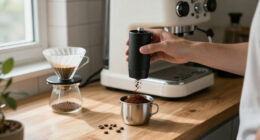
Coffee grinders create friction as they break beans into smaller pieces, and repeated or prolonged grinding can warm the beans and grounds. That warmth may affect aroma, but a slightly warm grinder does not automatically make coffee taste burnt; grind consistency, freshness, dose, and brewing method often matter more. Grind only what you need, follow the grinder’s duty-cycle guidance, and let it cool between large batches if it becomes warm.
Your first coffee of the morning can taste bright and sweet, while the cup you make for the next person tastes flatter, even though you used the same beans. If the grinder has been running repeatedly, heat could be part of the story—but it is only one part. Grinding creates friction, and repeated use can warm the grinder, beans, and grounds.
This guide explains when grinder heat may affect aroma, why it does not automatically make coffee bitter, and how you can handle a busy household’s back-to-back cups. You’ll also see what to check first when the flavor changes, so you can spend your attention on the cause that is most likely to matter.
Grinding creates friction, and several back-to-back batches can warm a grinder more than one brief dose.
A warm grinder does not prove that heat made your coffee taste burnt or bitter.
Grind consistency, freshness, dose, brew time, and water temperature can affect flavor alongside grinder warmth.
Grind only the dose you need, follow the manufacturer’s duty-cycle guidance, and pause between large batches if the grinder becomes warm.
Keep coffee beans dry and away from heat, and change one brewing variable at a time when you troubleshoot flavor.
Kitchen science · Household coffee
Grinder Heat: The Busy Household Problem That Changes Taste
Back-to-back batches can warm a grinder, beans, and grounds. Heat may influence aroma, but a warmer grinder does not automatically explain a bitter cup. Start with the whole brewing picture.
01 · Understand the pattern
Why a busy morning can warm the grinder
Burrs or blades break beans into smaller particles, creating friction. Grind one dose, then several more with little rest, and the motor and grinding surfaces may feel warmer. That observation does not measure the coffee’s temperature or prove that heat caused a flavor change.
Workload
More grinding, less rest
Several household doses in succession may warm equipment more than one brief grind. The amount ground and the operating pattern both shape the conditions.
Flavor
Warm does not mean burnt
A warm grinder alone cannot tell you why a cup tastes harsh. Heat is one possible influence on aroma, alongside beans, grind, dose, water, and brew time.
Design
Type is only one detail
Burrs crush beans; blades chop them. Speed, motor, burr geometry, material, and ventilation also matter. Grinder type alone cannot predict taste or warmth.
Household example: If the third cup tastes flatter than the first, note how many batches ran, the grind setting, dose, and brew time before blaming heat alone.
02 · Troubleshoot flavor
Check the likely variables together
These are practical factors to review, not measured percentages or a universal ranking. Uneven particles can extract at different rates, while a changed setting or unsuitable grind can shift a cup even when the grinder feels cool.
QUALITATIVE CHECKLIST · BAR LENGTHS GUIDE ATTENTION; THEY DO NOT REPRESENT MEASURED EFFECT SIZE.
03 · A simple routine
Make each household cup with less guesswork
Grind only the dose you need, avoid unnecessary running, and follow the manufacturer’s duty-cycle guidance. If the grinder becomes warm during large batches, pause and let it rest.
Grind one dose
Prepare only the amount needed for the coffee you are making.
Stop when done
Avoid long idle runs between cups; grind only as long as needed.
Pause for warmth
For repeated or larger batches, follow the manual and allow a break if warm.
Change one thing
Keep settings steady, then adjust a single variable and note the result.
Protect the beans: Keep them dry and at room temperature. Do not put hot or damp beans in the grinder.
Match the brew: Espresso, drip, and pour-over need different grind sizes. A setting change can matter more than slight equipment warmth.
04 · Trace the cup
Follow the clues from grinder to flavor
When a later cup tastes different, use a repeatable chain of observations. It helps distinguish workload from extraction changes without assuming one cause explains everything.
Why several back-to-back cups can warm your grinder
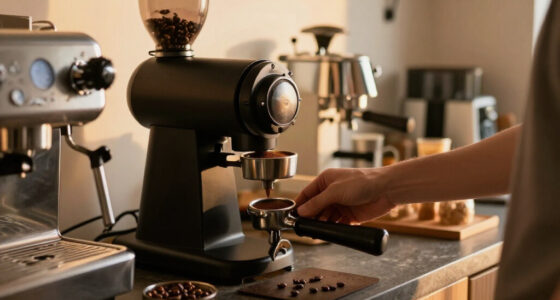
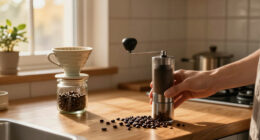
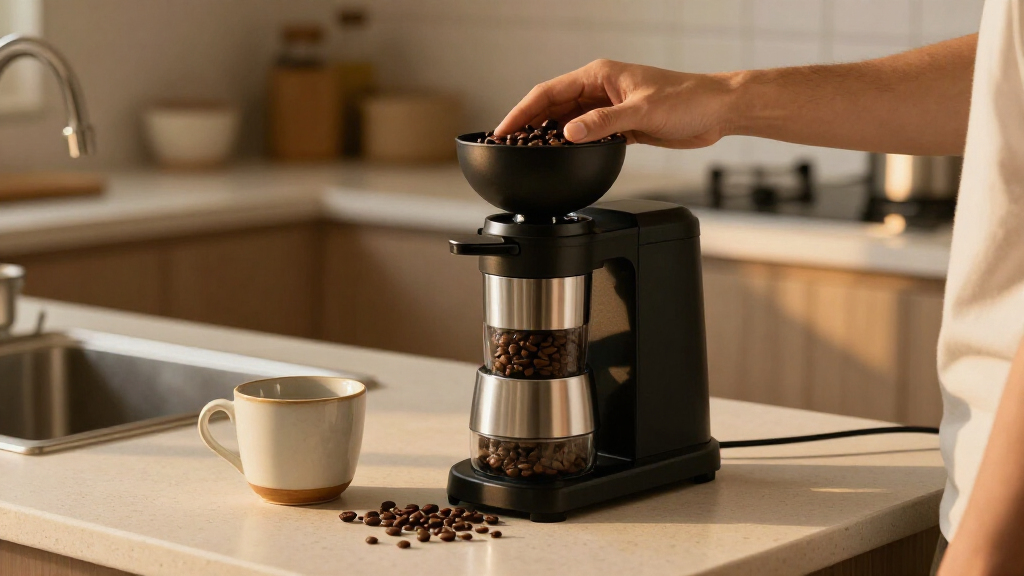
Grinder heat comes from friction as burrs or blades break beans into smaller particles. One short grind for a single cup is different from running multiple doses in succession: a busy morning can leave the grinder warmer simply because it has been working longer, with less time to rest. The amount ground and the operating pattern both matter.
Imagine making coffee for three people before anyone leaves for work. You grind one dose, tap the grounds into a basket, and immediately grind two more. The motor and grinding surfaces may feel warmer after the last batch than they did before the first. That observation is useful, but it does not tell you exactly how warm the coffee became or prove that heat changed its taste.
Grinder warmth is not the same as a burnt cup. The taste also depends on the beans, grind size, dose, water temperature, and brewing time. Heat is one possible influence on aroma and flavor, not an automatic flavor switch. A warm grinder may matter more during prolonged or repeated grinding than during a brief household dose.
Try tracking what changed when a later cup tastes different: number of batches, grind setting, dose, and brew time. If the first cup tastes lively and the third tastes harsh, check those details together before blaming heat alone. The next useful question is how the grinder’s design shapes that routine.
burr coffee grinder single dose low retention
As an affiliate, we earn on qualifying purchases.
As an affiliate, we earn on qualifying purchases.
What burrs, blades, and speed mean for your cup
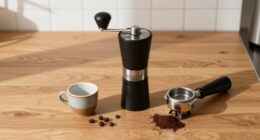
Grinder design affects how beans are broken down and how heat builds, but the grinder type alone cannot predict taste. Burr grinders crush beans between grinding surfaces, while blade grinders chop them. Motor power, burr shape and material, speed, and ventilation also influence how a particular grinder behaves during use.
For example, a household that grinds a small filter-coffee dose each morning may use its grinder for only a short burst. Another household might grind several espresso doses in a row, then make more coffee later in the day. Even if both use burr grinders, their workloads differ. A label such as “burr” does not say how warm the grinder will get in either routine.
Slower grinding does not guarantee better-tasting coffee. Lower speed is one design approach that may reduce the rate at which heat builds, but burr geometry and particle consistency matter too. A grinder that produces uneven particles can create uneven extraction: fine pieces may release flavor quickly while larger pieces need more time. The resulting cup can taste unbalanced even if the grinder never feels warm.
If noise matters in a crowded kitchen, you may also want a grinder that fits your morning routine and household space. Espressoguide’s guide to quiet espresso grinders is a relevant place to compare that factor. Keep separate questions separate: quieter operation, consistent grinding, and lower heat are related to grinder choice, but none guarantees the others.
coffee grinder with recommended duty cycle for multiple batches
As an affiliate, we earn on qualifying purchases.
As an affiliate, we earn on qualifying purchases.
Check grind consistency before you blame heat
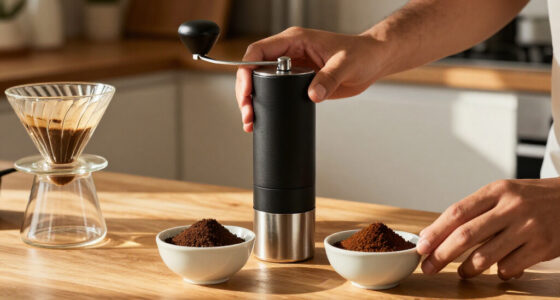
Uneven grind size can make extraction uneven, so check consistency before assuming grinder heat caused a disappointing cup. Coffee particles do not all give up their flavor at the same rate: finer pieces extract faster than larger ones. When the grind contains a wide mix of sizes, the finished cup may taste both sharp and bitter, even when the beans and grinder are not especially warm.
Consider a drip coffee pot shared by two people. One person changes the grinder setting to make tomorrow’s espresso, then forgets to return it before brewing the household filter coffee. That simple change may affect the next pot more than a grinder that feels a little warm after two short runs. A familiar routine makes it easier to notice the problem that changes the cup.
Freshly ground coffee is not automatically better if the grind does not suit the brewing method. A very fine grind in a slow pour-over can make water pass through differently than intended; a coarse grind in espresso will behave differently from the fine setting that method calls for. Dose, brew time, water temperature, and freshness all work together.
When a cup tastes off, write down the settings and the result for two or three brews. Keep the beans and dose steady, then change one variable, such as the grind setting. If the taste improves while the grinder’s use pattern stays the same, that points toward extraction or consistency rather than heat. If the equipment has become very warm after repeated batches, though, adjust the routine as well.
airtight coffee bean storage container opaque
As an affiliate, we earn on qualifying purchases.
As an affiliate, we earn on qualifying purchases.
Use this simple routine for a run of household coffees
A short routine can limit unnecessary heat while keeping each cup fresh: grind only the dose you need, avoid long idle runs, and let the grinder rest between large batches if it becomes warm. Check the manufacturer’s duty-cycle guidance, since grinders vary in how long they are meant to run before a pause. These steps help you manage use without treating ordinary warmth as an emergency.
- Measure the dose for the coffee you are making, rather than grinding a large pile by default.
- Run the grinder only as long as needed to grind that dose; do not keep it running between cups.
- Notice the workload if you are making several batches back to back, and pause if the grinder becomes warm or its manual recommends a rest.
- Keep beans dry and at room temperature. Do not put hot or damp beans into the grinder.
- Repeat your usual brew settings for each cup so you can compare taste without changing several things at once.
For example, a parent making two espresso drinks before school and one decaf after lunch can grind each dose when needed, instead of running the grinder continuously while filling cups and searching for milk. That keeps the beans fresh for each brew and avoids needless operating time. If your grinder warms during a string of larger batches, give it a break and let its own guidance determine the timing.
Grinding ahead may suit a hectic household, but ground coffee loses freshness faster than whole beans. If you need to prepare in advance, keep the amount modest and store it in a clean, dry, airtight container. For the freshest flavor, grind close to brewing time.
coffee scale with 0.1 gram precision timer
As an affiliate, we earn on qualifying purchases.
As an affiliate, we earn on qualifying purchases.
Tell ordinary warmth from a brewing problem
A warm grinder after repeated use does not by itself show that the coffee has overheated or that the machine is failing. Feel is a rough observation, not a measurement of bean or grounds temperature. A grinder that has run for several doses may feel different from one used briefly, but taste depends on the whole path from bean to brew.
Suppose the last cup tastes more bitter than the first. Ask whether the grind setting changed, whether that dose was larger, and whether the brew ran longer. If the grinder was used repeatedly, note that too. If it has become warm, stop and follow the maker’s instructions; if the taste difference persists when you keep the grind, dose, and brew time steady, you have a better basis for investigating the equipment.
Do not put hot or damp beans in the hopper. Moisture can affect grinding and storage, while heat may affect the beans before they even reach the burrs. Store beans dry and away from heat sources, and avoid leaving a grinder next to a steaming kettle or on a sunny windowsill if the counter gives you another option.
Use your senses as clues, not proof: note changes in aroma, the grinder’s operating pattern, and the taste across comparable brews. If the grinder becomes unusually hot or behaves differently from its instructions, stop using it and consult the manufacturer’s guidance. A little warmth after work can be ordinary; a persistent change in operation deserves attention.
Choose the right fix when the later cup tastes different
The best fix depends on what changed: repeated grinding calls for a sensible pause, while an uneven or unsuitable grind calls for a setting check. A fresh cup can taste different for many reasons, so changing several parts of the routine at once makes it hard to learn which one mattered. Keep the beans and brewing method steady while you investigate.
Try a simple comparison on a weekend morning. Make one cup after a short grind, then another after your normal sequence of household batches. Use the same coffee dose and brew method, and note the grind setting and brew time. You will not get a laboratory temperature reading from this exercise, but you can see whether your routine reliably coincides with a noticeable taste difference.
Heat may contribute, but it rarely explains every flavor change. A later cup can taste flatter because the coffee sat ground for longer, harsher because extraction changed, or simply different because the dose or water temperature varied. For espresso in particular, small changes to grind size and dose can affect how the coffee brews. For drip coffee, grind consistency and contact time still count.
Use the comparison as a guide, not a verdict about every grinder. If a pause improves the routine, build one in after large batches. If changing the grind setting helps more, focus there. The useful result is a repeatable cup and a clear sense of which adjustment made the difference.
Frequently Asked Questions
Does a warm grinder make coffee taste burnt or bitter?
Not automatically. A grinder that feels warm does not prove that the beans or grounds reached a temperature that changed the flavor. Bitter or burnt-tasting coffee can also result from the grind, dose, brew time, or other brewing conditions.
Should I pause between batches?
Pause if the grinder becomes warm during large or repeated batches, and follow the manufacturer’s duty-cycle guidance for your model. A brief household dose may not need the same routine as several batches ground one after another.
Are burr grinders cooler than blade grinders?
Grinder type alone does not determine heat. Burrs crush beans and blades chop them, but motor power, speed, burr design, ventilation, and how long you grind all shape how a grinder behaves. Compare the actual design and intended use rather than relying on the label alone.
Can I grind coffee in advance for a busy household?
You can grind ahead when convenience matters, but ground coffee loses freshness faster than whole beans. Prepare only the amount you need, and store it in a clean, dry, airtight container until brewing. For the freshest cup, grind close to brew time.
What should I check first when the third cup tastes different?
Check whether the grind setting, dose, and brew time stayed the same, then consider how long the coffee sat after grinding and how many batches the grinder ran. Change one variable at a time so you can tell what improved the cup. Grinder warmth is one clue, not a complete diagnosis.
Conclusion
Grind only what you need and judge the cup, not the grinder’s warmth alone. If you make several coffees in a row, follow the grinder’s usage guidance and give it a rest when it becomes warm. Keep your dose and brew settings steady while you check what changed.
Good coffee should bring a clear aroma into the kitchen, not leave you guessing at every cup. Make one small adjustment, taste the difference, and let that tell you what to do next.
Halloween Picks
halloween
As an affiliate, we earn on qualifying purchases.