
TL;DR

Get coffee and tea gear delivered free with Prime
- Fast, free delivery on millions of items
- Prime Video, Amazon Music and more included
- Member-only deals all year
Purging briefly runs a grinder to clear loose grounds from its exit path; it can reduce carryover from older coffee and make a dose more predictable. It uses beans, does not remove oily buildup, and has no universal dose or timing rule. Check your grinder’s guidance and measure its behavior before making purging part of your routine.
Your grinder can serve yesterday’s coffee in today’s cup. A few grounds left in its chute may carry over after you switch beans, and the first shot can taste different from the coffee you just weighed. That does not mean every grinder needs a purge before every brew; it means retained grounds can add a small, variable ingredient to your routine.
This guide explains what purging does, why retention and exchange matter, and when a brief run may be useful. You’ll also learn how to assess your own grinder without assuming that a fixed number of grams or seconds works for every model.
The tradeoff is practical: purging uses coffee and time, while skipping it can leave you guessing about flavor and dose. A little observation can help you choose a routine that fits your grinder, whether you pull several shots a day or brew one cup before work.
Purging briefly clears loose grounds from the exit path; it does not deep-clean burrs or internal surfaces.
Retention means coffee stays inside the grinder, while exchange means older grounds come out later.
A purge may help after changing beans or switching to decaf, but a blanket purge before every brew is not necessary for everyone.
There is no universal purge quantity; follow the grinder maker’s guidance and observe your own setup.
Use repeated dose and taste observations to decide whether purging saves more time and frustration than it costs in beans.
Coffee workflow / A practical field guide
The Hidden Cost of Not Purging Your Grinder
Your grinder can serve yesterday’s coffee in today’s cup. A brief purge can clear loose grounds from the exit path and make a dose more predictable, but it uses beans and cannot deep-clean the grinder.
Retention is what stays inside. Exchange is what comes out later.
What a purge clears—and what it leaves behind
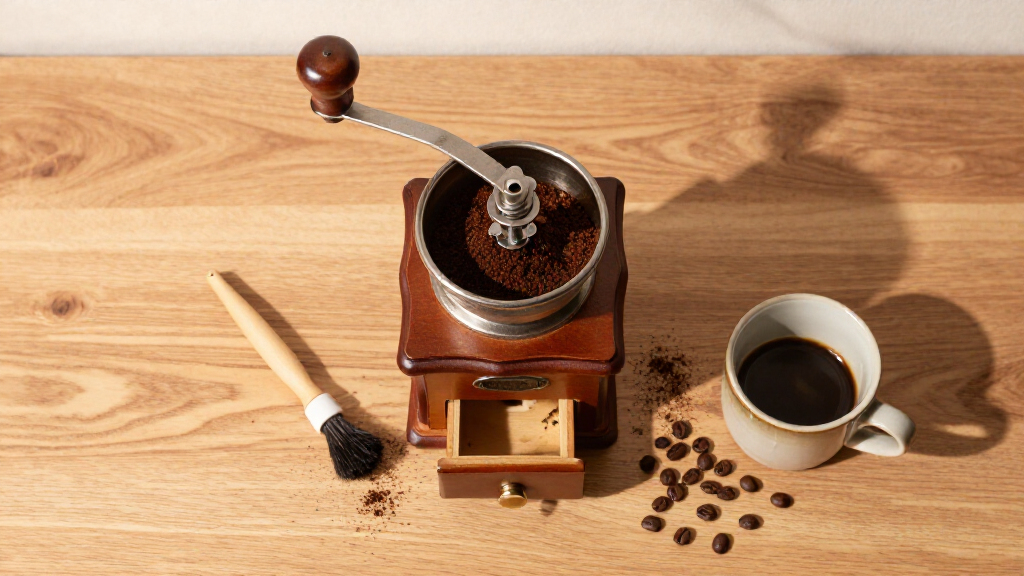
Purging means running the grinder briefly to push loose grounds out of the burr chamber or exit chute. It can reduce loose carryover, but it does not scrape away oily deposits or particles stuck to internal surfaces.
Flush the path
A brief run can send grounds sitting near the chute toward the cup before you prepare a fresh dose.
Purge actionBuildup stays put
Oils and particles clinging to burrs or inner surfaces require periodic cleaning as directed by the maker.
Maintenance actionRetention varies
Burr geometry, chute shape, static, dose size, coffee, humidity, grind setting, and technique all influence results.
Setup dependentRetention and exchange are different
Coffee can remain inside a grinder without all of it appearing in the next dose. One input-output measurement shows what you collected; it cannot reveal precisely how much older coffee exchanged into that dose.
Two related behaviors
Think of retention as coffee waiting inside the grinder, and exchange as some of that coffee appearing later.
Why a shot can mislead
A surprising yield may come from dosing variation rather than a change in grind behavior or beans.
When yesterday’s grounds matter
Old residue may add stale or unwanted notes to a later coffee. How noticeable that is depends on the amount of carryover, the coffees involved, and how sensitive your recipe and palate are to small changes.
Different flavors
Switching from a dark roast to a bright coffee may make carryover easier to notice. A purge can reduce loose residue, not guarantee a perfect reset.
Keep the switch clear
A targeted purge may help when you want to reduce older coffee moving into the next dose.
May add little value
Between cups from the same coffee, purging can add waste without a noticeable benefit for your setup.
Try a simple taste check: Compare two similar brews, one after your normal start-up and one after a brief purge. Keep beans and recipe steady. If you cannot taste a useful difference, routine purging may not earn its place.
Measure your grinder’s behavior
Repeat the same grind and collection method to see whether the dose variation or flavor carryover matters in your kitchen. Use the maker’s guidance; there is no universal evidence-based purge quantity.
Weigh the beans
Use the same dose, coffee, setting, and collection cup for each comparison.
Check the basket
Note collected dose and any grounds left behind. Repeat to spot a pattern.
Taste the change
Try comparable brews with and without a brief purge, especially after a bean switch.
Keep what helps
Purge only when the observed benefit is worth the beans and added time.
Match the action to the job
Purging, cleaning, and seasoning serve different purposes. Low-retention features and bellows may help in some setups, but they do not eliminate retention in every grinder.
| Action | What it does | What it cannot promise | When to consider it |
|---|---|---|---|
| Brief purge | ✓ Moves loose grounds from the exit path | ✗ Does not remove stuck oils or all residue | After a bean change or when carryover affects your workflow |
| Periodic cleaning | ✓ Addresses buildup on internal surfaces | ✗ Does not replace consistent dosing habits | On the maker’s recommended schedule and method |
| Bellows / low-retention design | ~ May dislodge or reduce grounds left behind | ✗ “Zero retention” is not a guaranteed result | If compatible and useful for your grinder and routine |
| Burr seasoning | ✓ Runs coffee through new burrs to stabilize performance | ✗ Is not a purge or cleaning step | When the maker recommends it for new burrs |
Count the practical costs
The cost is more than beans. Possible tradeoffs include extra time troubleshooting, less predictable doses, and cleaning effort. These are possibilities, not guaranteed outcomes for every grinder.
When carryover matters
You switch to decaf, move between very different coffees, or repeatedly notice an inconsistent first dose after the grinder sits idle.
When your cup is consistent
If same-coffee brews taste and dose consistently, purging before every brew may consume beans without improving your routine.
Set expectations: A purge is a brief flush, not a deep clean or a guarantee that every trace of the previous coffee is gone. Follow grinder guidance and clean separately when needed.
What Purging Clears—and What It Leaves Behind
Purging a coffee grinder means running it briefly to push loose grounds out of the burr chamber or exit chute. It can clear coffee sitting in the path to your basket, but it does not scrape away oily deposits or particles stuck to internal surfaces. Put simply: a purge moves loose grounds; cleaning removes buildup.
Imagine you grind a medium roast for espresso, then leave the grinder idle overnight. The next morning, a short run may send a few older particles out before you grind fresh beans. If you open the grinder after weeks of use, though, that quick run will not lift every old fragment or oily film clinging around the burrs.
Those are different jobs, so treat them separately. Purge when loose carryover matters to your workflow; clean on the schedule and with the method recommended by the grinder maker. For example, if your grinder’s instructions call for brushing the chute during periodic maintenance, a daily purge does not replace that step.
A purge is a brief flush, not a deep clean. It can move loose residue toward the cup, but it cannot promise a spotless burr chamber.
Using the words precisely helps set realistic expectations. A grinder may retain coffee, and some of that coffee may later exchange into a new dose. Neither fact proves that every particle will appear in the next shot—or that your machine is dirty just because a small amount remains inside.
As an affiliate, we earn on qualifying purchases.
How Yesterday’s Grounds Can Change Today’s Cup
The Hidden Cost of Not Purging Your Grinder can show up as a flavor that does not match the beans you just ground. Coffee exposed to air loses freshness over time, and residue from an earlier coffee can add older or unwanted notes to a later dose. How much you notice depends on the amount of carryover, the coffee, and how sensitive your recipe is to small changes.
Consider a home setup where you grind a dark roast for milk drinks at night, then switch to a bright, lightly roasted coffee for a straight espresso the next morning. A little dark-roast residue might soften the cleaner flavors you expect from the new beans. It may be subtle; a purge can reduce loose carryover, but it cannot guarantee that every trace is gone.
Bean changes make the question easier to notice. You may care more about carryover when moving from regular coffee to decaf, or between coffees with very different flavors, than when making two cups from the same bag. The practical question is not whether old grounds are always harmful. It is whether the possible flavor difference matters enough to you to spend a small amount of coffee clearing the path.
For a consistent morning routine, try tasting two comparable brews: one after your usual start-up and one after a brief purge. Keep the recipe and beans steady. If you cannot detect a useful difference, purging every time may offer little value for that setup; if the first cup regularly tastes muddier after a bean change, a targeted purge could be worth keeping.
Flavor carryover is possible, not guaranteed. Grinder design, the coffee, and the amount of loose residue all shape what reaches your cup. Treat your own taste as useful evidence, and avoid assuming that one grinder’s behavior predicts another’s.
As an affiliate, we earn on qualifying purchases.
Why Retention Can Make Your Dose Less Predictable
Retention makes a dose less predictable when some of the coffee you grind stays inside the grinder and later comes out at an uncertain time. That means the amount landing in your basket may not match the amount you put in, especially in workflows where you weigh beans before grinding. The effect varies: a grinder can retain grounds without releasing all of them into the very next dose.
Here’s a simple example. You weigh 18 grams of beans for espresso, but the grinder’s chute holds onto a small amount. The basket receives less than you expect; some grounds may appear on a later run, while others remain inside. If you adjust your recipe based only on one dose, you may mistake grinder behavior for a change in the beans or your technique.
Retention describes coffee remaining inside the grinder. Exchange describes older grounds coming out later. The difference matters because weighing input and output tells you about the dose you collected, but one reading does not reveal exactly how much of that dose came from older coffee. Collection mess, scale precision, and grounds left in a cup can also affect the numbers.
For example, if your first shot of the day runs short, you might change the grind setting to slow it down. But if the basket simply received a smaller dose because some grounds stayed behind, that adjustment could make the next shot too slow. Checking the dose in the basket before changing settings can help you spot a dosing issue first.
A brief purge may help when loose grounds are sitting in the exit path, but it does not make every grinder deliver identical output. Keep your recipe and weighing method steady, and watch whether the difference repeats. That gives you a better reason to change your routine than one surprising shot.
As an affiliate, we earn on qualifying purchases.
When a Purge Is Worth the Beans
A purge is most useful when loose carryover could affect the next coffee or your workflow. It costs beans and adds a small step, so there is little reason to do it automatically if your grinder’s behavior and your cup do not call for it. Start with the manufacturer’s guidance, then pay attention to changes that matter in your kitchen.
A switch from a flavored coffee to an unflavored one gives you a clear real-world case. You might briefly purge before grinding the unflavored beans because leftover flavored grounds could change what you taste. By contrast, if you are making two cups from the same bag a few minutes apart, purging between them may add waste without a noticeable benefit.
Use these situations as a starting point, not a universal rule. The grinder’s chute, burr geometry, static, dose size, grind setting, and coffee characteristics can all affect how much stays behind. Humidity and your technique can shift the result too, so a routine that works in one setup may not work in another.
- Consider a purge when changing beans, moving between regular and decaf, or troubleshooting repeated carryover.
- Skip a routine purge when you are using the same coffee and see no meaningful flavor or dosing problem.
- Use the smallest effective amount that clears loose grounds for your grinder, following its maker’s advice.
There is no universal evidence-based number of grams or seconds that fits every grinder. A short run may be enough for one design and too little for another. If you use a bellows, know that it may dislodge grounds in some grinders, but results vary and the accessory is not necessary for every model.
As an affiliate, we earn on qualifying purchases.
A Simple Way to Check Your Grinder’s Carryover
You can learn whether purging helps by repeating the same grind and watching what comes out. A scale and a clean collection cup are enough for a basic check. This will not measure every particle inside the grinder, but it can reveal patterns that help you make a sensible choice.
- Check the manual. Follow any manufacturer guidance on purging, bellows, or cleaning before trying a new routine.
- Keep the setup steady. Use the same beans, grind setting, and dose size for several runs. Record the bean input and collected grounds output.
- Look for delayed grounds. After a run, let the grinder sit as you normally would, then check whether grounds appear during the next grind or a brief run.
- Repeat before drawing a conclusion. Small amounts can be hard to weigh accurately, and grounds spilled during collection can make one reading misleading.
- Compare taste and dose. Note whether your basket dose or cup changes when you purge, especially after switching beans.
For instance, you might weigh 18 grams of beans for each of three morning shots and collect the grounds in the same cup. If one output weighs slightly less, that alone does not prove the grinder will release that exact amount later; a few particles may stick to the cup or scatter on the counter.
Repeatable patterns matter more than a single number. If the first grind after a long pause often produces extra grounds, or a bean switch creates a flavor you dislike, a targeted purge may fit your routine. If readings bounce around within your scale’s precision and the coffee tastes as expected, you may not gain much from chasing tiny differences.
What Purging Costs—and Why “Zero Retention” Has Limits
Purging trades a small amount of coffee for a chance to reduce carryover. The cost is not just the beans: you may spend time purging, cleaning up loose grounds, and troubleshooting doses that seem inconsistent. Skipping a purge can also cost time if you keep adjusting a recipe to compensate for a dose that changed unexpectedly.
Suppose you make one espresso a day and discard a little coffee before each shot. That repeated loss can feel wasteful, especially if your beans are expensive. But if you only purge after a bean change and it keeps your decaf from tasting like the previous coffee, the occasional cost may feel worthwhile. Your own schedule and taste determine the balance.
Home grinders increasingly use low-retention designs, redesigned chutes, bellows, and anti-static features to reduce grounds left inside. These features can help, but “zero retention” is best treated as a design goal or shorthand, not a guarantee that no coffee remains in every setup. Coffee, humidity, grind setting, dose size, and technique can all change the result.
| Choice | Possible benefit | Possible cost |
|---|---|---|
| Brief targeted purge | Less loose carryover after a pause or bean change | Uses some beans and adds a step |
| No routine purge | Saves coffee and time during a steady workflow | May leave you with more flavor or dose uncertainty |
| Periodic cleaning | Addresses buildup on internal surfaces | Takes more time and must follow grinder guidance |
These options solve different problems. A purge can move loose grounds; cleaning handles deposits; a low-retention design can reduce what remains but cannot promise identical results for every coffee and setting. Think in terms of what your grinder does on your counter, not a label on a product page.
How to Keep a Grinder Routine Simple and Useful
A useful grinder routine matches the problem you can actually observe. If your coffee tastes consistent and your doses land where you expect, you may not need to purge before every brew. If you regularly change beans or see grounds appear after a pause, add a brief purge at the point where it helps.
Think of a small kitchen that serves regular espresso in the morning and decaf after dinner. The owner could purge when switching between the two coffees, then skip the extra run for a second morning shot from the same bag. That routine targets the moments where carryover is most likely to matter, while keeping daily waste down.
Keep the steps clear. Weigh the dose you intend to grind, collect and weigh the result if dosing seems inconsistent, and note when you switch coffees. If you choose to purge, use the maker’s instructions and only as much coffee as your grinder needs to clear loose residue. A grinder can retain grounds differently at different settings, so revisit the routine if your workflow changes.
- Separate purging from cleaning. A purge does not remove oily buildup; follow the maintenance schedule in the manual.
- Change one thing at a time. If a shot tastes off, check dose and carryover before changing several recipe variables.
- Keep notes brief. “First shot after decaf switch tasted dull” is more useful than a guess about what happened inside.
Small amounts of retained coffee are not automatically harmful to the grinder. Buildup can accumulate over time, so regular cleaning still matters. If you use new burrs, seasoning them is a separate practice: it runs coffee through new burrs to help stabilize performance, while purging clears loose grounds during normal use.
Frequently Asked Questions
Do I need to purge before every espresso shot?
No single rule fits every grinder. If you use the same beans and your doses and flavor stay consistent, purging before every shot may waste coffee without helping. Consider a brief purge after changing beans or when you have observed carryover.
How much coffee should I use to purge a grinder?
There is no universal amount. Follow your grinder maker’s guidance, then use only what your setup needs to clear loose grounds. A fixed dose that suits one chute may be excessive or insufficient for another.
Should I purge when I change coffee beans?
A purge can reduce loose carryover when you switch coffees, especially if you are moving between regular and decaf or between very different flavor profiles. Some residue may remain, so a purge does not guarantee that the next dose contains only the new beans.
Does purging clean the grinder?
No. Purging moves loose grounds through the exit path; it does not remove oily deposits or particles stuck to internal surfaces. Clean your grinder periodically according to the maker’s instructions.
How can I tell if my grinder retains coffee?
Compare input and output over several consistent grinds. Use the same beans and settings, collect grounds carefully, and check whether older grounds appear after the grinder has been idle. Scale precision and mess can affect each reading, so look for a repeated pattern rather than relying on one measurement.
Does a bellows remove all retained grounds?
No accessory can be assumed to remove every particle. A bellows may help dislodge grounds in some grinder designs, but results vary. Check the grinder’s guidance and judge its effect in your own workflow.
Conclusion
Let your grinder’s behavior set your purge routine. Pay attention to bean changes, delayed grounds, and doses that repeatedly miss your target; purge briefly when those signs matter, and clean the grinder separately on its recommended schedule.
A few grounds can hide in a chute like crumbs in a toaster, but you do not need to chase every crumb before making coffee. Keep the routine small, make the cup you want, and let your own results guide the next step.
Halloween Picks
halloween
As an affiliate, we earn on qualifying purchases.