TL;DR

Get coffee and tea gear delivered free with Prime
- Fast, free delivery on millions of items
- Prime Video, Amazon Music and more included
- Member-only deals all year
A digital timer grinder runs its burrs for a set time; it does not usually measure the weight of the coffee it dispenses. Calibrate the timer by weighing a target dose, grinding, weighing the output, and adjusting the seconds, then recheck whenever you change beans or grind settings.
Your grinder can run for exactly five seconds and still give you a different amount of coffee tomorrow. That’s because a digital timer measures run time, not the weight of the grounds landing in your portafilter. The difference is easy to miss when a neat display makes the dose feel exact.
Once you know what the timer controls, timed dosing becomes a useful shortcut rather than a guessing game. You’ll learn how timed dosing works in real life, how to set a repeatable dose, why it can drift, and when weighing beans or grounds makes more sense. Think of the timer as a reliable kitchen timer for your burrs: handy, but it cannot tell you how much coffee passed through them.
That distinction matters most when you make espresso, where a small change in dose can affect how your shot flows. It also helps when you’re choosing between timed and weight-based dosing. The practical goal isn’t to distrust the button; it’s to know what the button can—and cannot—promise.
A timer controls motor run time, not dose weight; use grams per second × seconds only as a working estimate.
Calibrate with a target dose, then grind, weigh the output, and adjust the timer in small steps.
Recheck the dose after changing beans, grind settings, or other conditions that can alter how coffee feeds through the burrs.
Weighing beans controls what enters the grinder; weighing grounds checks what reaches your portafilter.
Timed dosing favors speed and routine, while weight-based dosing measures the target mass more directly.
What a digital timer grinder measures—and what it doesn’t
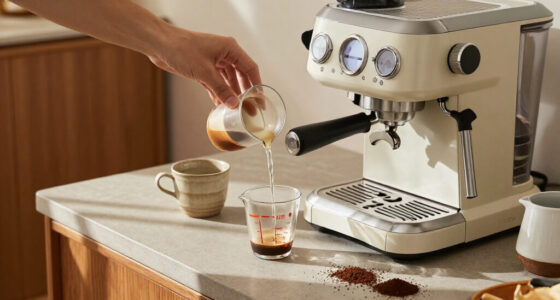
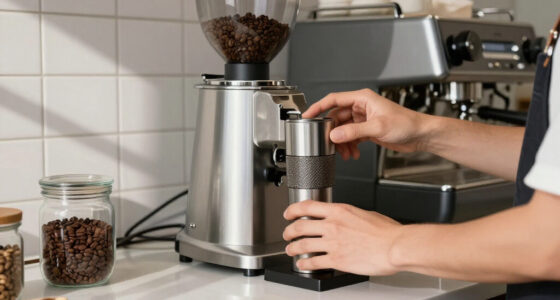
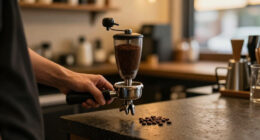
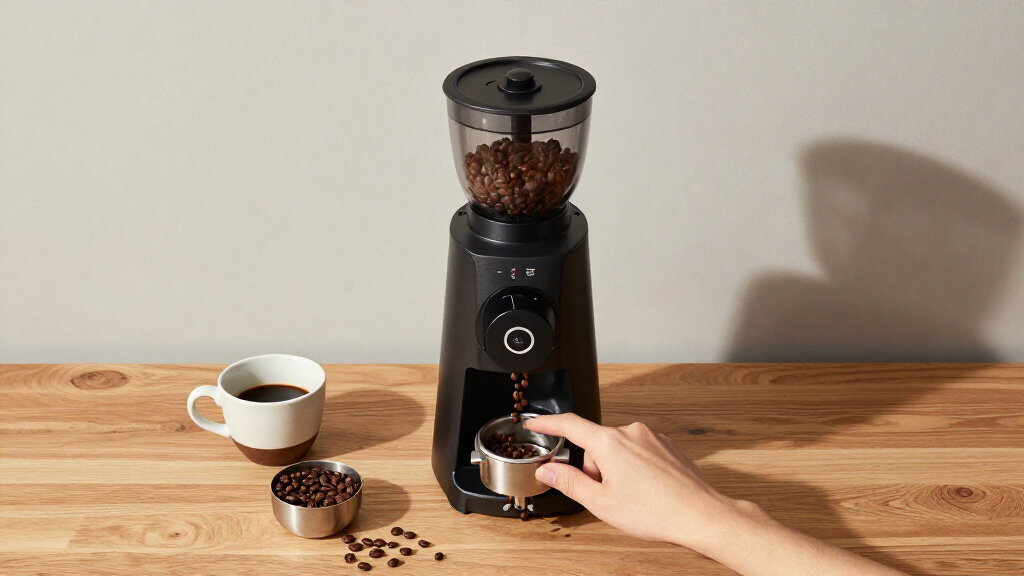
A digital timer grinder measures how long its motor runs; it does not usually measure the weight of the coffee it dispenses. You choose a time, such as five seconds, and the motor turns the burrs for that interval. The beans fall from the hopper, get ground, and pass into your portafilter or a grounds container.
The output depends on grinding speed. A simple way to think about it is dose in grams = grams ground per second × seconds. If your grinder produces roughly 3.6 grams per second, five seconds yields about 18 grams. But that rate isn’t fixed like the speed of a metronome.
For example, a timer set to five seconds might give you 18 grams with one coffee and 17 grams after you switch to a different roast. The display still says five seconds because the grinder ran for five seconds; the new beans may simply feed or grind at a different rate. This is how timed dosing works in real life: it uses a measured time to estimate a dose.
That estimate can be useful when your beans, settings, and grinder stay stable. If you change your grind setting to make an espresso shot finer, the grounds may move through the burrs at a different pace. The timer can’t see that change. It only knows when to stop.
A timer controls the grinder’s run time, not the coffee’s weight. Treat its programmed dose as a starting point you can check, not a guaranteed number of grams.
As an affiliate, we earn on qualifying purchases.
How to set a timer that gives you a repeatable dose
To set a timer, weigh a target dose, grind, weigh what comes out, and adjust the run time until the output is close. This short calibration gives you a practical baseline for a particular coffee and grind setting. You can do it with a basic kitchen scale that reads in one-gram increments, though a scale that reads tenths of a gram makes small changes easier to see.
- Choose a target. For example, pick 18 grams for your usual double espresso.
- Grind and collect. Start with a reasonable timer setting, then catch the grounds in a cup or portafilter.
- Weigh the output. If you get 16 grams, the grinder needs to run longer; if you get 20 grams, it needs less time.
- Adjust in small steps. Add or subtract a fraction of a second, grind again, and compare the result.
- Record the setup. Note the coffee, grind setting, timer, and output so you can repeat the test.
Imagine your first run gives 16 grams in five seconds. You adjust to five and a half seconds and collect about 18 grams. That’s a useful setting for those beans and that grind—not a permanent promise for every coffee you’ll buy.
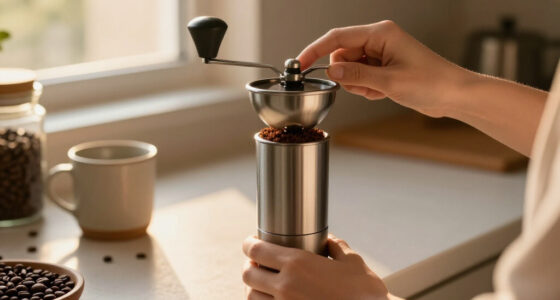
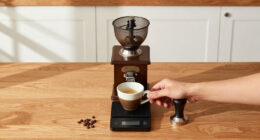
For the clearest check, weigh the grounds after grinding. Weighing beans before grinding is another reliable way to control the dose, especially with a single-dose workflow, because you start with a known amount. If you weigh 18 grams of beans and only 17.5 grams reach the portafilter, some coffee may remain inside the grinder or cling to the chute.
As an affiliate, we earn on qualifying purchases.
Why the same timer can give you a different dose
The same timer can give you a different dose because coffee doesn’t flow through every grinder at one constant rate. Bean type, grind setting, hopper fill, burr condition, and retention can all change how many grams reach your cup during a set number of seconds. The timer repeats the duration; it cannot make those other conditions repeat.
Picture a busy weekday morning. Your hopper is nearly full on Monday, but almost empty by Friday. Beans may feed into the burrs differently at those fill levels, so a five-second run can produce slightly different amounts. Then you change to a darker roast, which may behave differently in the grinder, and the old setting is even less dependable.
Grind setting matters too. When you move the burrs finer, coffee may pass through at a different rate than it did at a coarser setting. Burr wear and maintenance can alter performance over time, while retention—grounds left inside the grinder—can affect how much reaches the portafilter on a particular run. Small changes become easier to notice when you’re making a small dose or chasing a precise espresso recipe.
That doesn’t mean timed dosing is useless. It means you should recalibrate after a meaningful change, then check the output now and again while you use that setup. If the shot suddenly runs faster or slower, check the dose and grind setting before blaming the timer. A two-second adjustment made blindly might solve one problem while creating another.
- Changing coffee? Weigh the first dose from the new bag.
- Changing grind size? Recheck the output, especially for espresso.
- Switching between coffees? Allow for retained grounds and purge a small amount if your workflow calls for it.
As an affiliate, we earn on qualifying purchases.
When timed dosing makes your daily coffee easier
Timed dosing helps when you repeat the same coffee routine and want the grinder to stop automatically after a familiar interval. Once calibrated, you can press a button, distribute the grounds, and tamp instead of watching the grinder and stopping it by hand. That saves attention and repeated effort, even if it doesn’t remove the need to check your dose.
Say you make two espressos every morning with the same beans and recipe. You calibrate one button to produce close to your usual dose, then use it each day. The grinder runs while you get your cup ready, and your hands are free for the next part of the routine. In a small café, that repeatable button can also help staff follow a shared workflow during a rush.
Some models offer separate buttons or saved times for different doses. A short setting might suit a single espresso and a longer one a double, but don’t assume the labels guarantee a specific weight. Test each setting with the coffee you actually use. If a button gives 9 grams for one recipe and 18 grams for another, those results come from calibration, not from the timer recognizing the drink.
Digital timer grinders can also reduce the stop-start routine of manual operation. That convenience has a tradeoff: you may trust the button too much and miss a dose that has drifted. A quick scale check when you open a new bag can catch the problem before it shows up as a watery shot or an overflowing basket.
As an affiliate, we earn on qualifying purchases.
Timed dosing versus weighing: choose the control you need
Timed dosing is usually quicker to repeat, while weighing gives you a more direct check of how much coffee you’re using. A timer stops the motor after a programmed duration; a scale measures mass. Neither method removes every source of variation, but weighing makes the dose itself visible instead of estimating it from grinding time.
| Method | What it controls | What you gain | What to watch |
|---|---|---|---|
| Timed dosing | How long the grinder runs | Fast, repeatable operation after calibration | Output can shift when beans or settings change |
| Weigh beans before grinding | How much whole coffee enters the grinder | A known starting dose for each coffee | Some grounds may stay inside the grinder |
| Weigh grounds after grinding | How much ground coffee reaches the scale | A direct check of the output | It adds a weighing step to your routine |
| Weight-based grinder dosing | A target mass, measured by an integrated scale | The grinder aims to stop at a chosen weight | Calibration and retention can still affect the delivered dose |
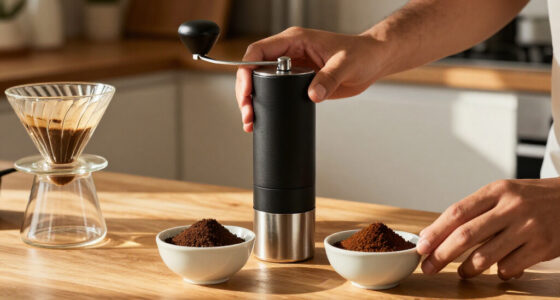
For a relaxed weekend pour-over, a timer may be plenty: you can adjust the brew to taste and don’t need to match a narrow espresso dose. For a tightly controlled espresso recipe, weighing the beans or grounds can make it easier to repeat the same starting amount each morning.
Weight-based models measure the dose more directly than a timer, but the grinder still has to move grounds to the scale or basket. If coffee sticks in the chute, the amount that arrives may not equal the amount you intended to grind. The choice depends on what you value most: speed, direct measurement, or a balance of both.
How to spot drift before it ruins your shot
You can spot timer drift by checking whether the output weight or espresso flow changes even though you haven’t touched the button. A programmed time is only useful while it produces a dose that suits your recipe. Check the grams and the shot, rather than assuming a familiar setting guarantees a familiar result.
For example, you’ve been getting close to 18 grams from a five-second run, and your espresso usually finishes in around 28 seconds. One morning the grounds weigh 16.5 grams, and the shot gushes into the cup. A scale check gives you a concrete clue: the dose changed. You can correct the amount, then judge whether the grind setting also needs attention.
Use a simple routine when you start a new bag, adjust the burrs, or notice a surprising shot. First, weigh the output. Next, compare it with your target and adjust the timer only if the dose is off. Then pull the shot and note how it flows. Changing one thing at a time helps you understand what caused the difference.
If you use a timer for several coffees, keep a short note beside the grinder: bean name, grind setting, timer duration, and dose. It doesn’t need to become a laboratory notebook. A few words—“house blend, setting 12, 5.2 sec, 18 g”—can save you from guessing when the next bag behaves differently. Make sure your grinder is used and cleaned according to its manual, and keep the scale and portafilter dry and clean between doses.
Where digital timers fit in a practical grinder setup
A digital timer suits a grinder setup where you want repeatable operation without weighing every dose, but it works best alongside a scale and a simple calibration habit. Programmable buttons are workflow tools, not proof that a grinder measures coffee mass. Some grinders let you save multiple run times; others use a display to set a duration directly.
If you’re comparing features, look for a clear distinction between timed and weight-based dosing. The first stops when time runs out; the second aims to stop when a target weight is reached. Both can be convenient, and both can benefit from calibration. If you’re researching options, a guide to espresso grinders with digital timers can help you compare the kinds of controls available without confusing a timer with a scale.
Consider a home setup where you make one coffee before work and several drinks on weekends. A timer can make the weekday routine quick, while a scale helps when you change beans or fine-tune your espresso. In a busier setting, separate dose buttons may help different people follow a consistent routine, but staff still need a quick check after a new bag goes into the hopper.
Choose based on your habits rather than the size of the display. If you enjoy weighing beans and adjusting one variable at a time, a basic timer may be enough. If speed matters more and you repeat the same recipe, timed dosing can make your routine smoother. Either way, the best setup is the one you can use consistently—and verify when the coffee changes.
Frequently Asked Questions
Does a digital timer grinder measure the dose?
Usually, no. It measures how long the motor runs, then dispenses whatever amount the grinder produces during that time. Weigh the output if you need to know the dose in grams.
How do I set the timer for an 18-gram espresso dose?
Start with a reasonable timer setting, grind into a container or portafilter, and weigh the grounds. Increase or decrease the run time in small steps until the output is close to 18 grams, then recheck after changing beans or grind settings.
Why does my grinder give a different dose at the same time setting?
The amount dispensed can change with bean type, grind size, hopper fill, burr condition, and retained grounds. The timer still runs for the same duration, but the beans may move through the burrs at a different rate.
Should I weigh coffee before or after grinding?
Weighing beans before grinding gives you a known amount going into the grinder. Weighing grounds afterward tells you how much reached the portafilter; a difference can point to coffee retained inside the grinder.
Are timed grinders accurate enough for espresso?
A calibrated timer can make espresso preparation faster and repeatable when your coffee and settings stay stable. For tighter dose control, check the grounds on a scale, especially after switching beans or changing the grind setting.
What is the difference between timed and weight-based dosing?
Timed dosing stops the grinder after a set duration. Weight-based dosing uses a scale or load cell to aim for a target mass, so it measures the dose more directly; retention and calibration can still affect what reaches the portafilter.
Conclusion
Remember the simplest rule: a digital timer tells your grinder when to stop, not how many grams it has ground. Calibrate your setting with a scale, and check again when you change coffee or grind size. That small habit keeps convenience from turning into guesswork.
Let the timer handle the seconds; let the scale settle the question of weight. Then you can focus on the good part: the warm, sweet smell of fresh grounds and a shot that tastes the way you meant it to.
Fall Picks
fall essentials
As an affiliate, we earn on qualifying purchases.