
TL;DR

Get coffee and tea gear delivered free with Prime
- Fast, free delivery on millions of items
- Prime Video, Amazon Music and more included
- Member-only deals all year
A grind-by-weight grinder measures coffee as it dispenses and stops at a selected dose, reducing the need to weigh every dose by hand. It can make an espresso routine more repeatable, but retention, grounds settling, calibration, and grind adjustments still matter; a separate scale remains useful for checking dose and espresso yield.
Your grinder can stop at 18 grams and still leave you wondering whether 18 grams reached the portafilter. That small gap captures both the promise and the limit of grind-by-weight: it measures coffee as it leaves the grinder, then helps you start each brew with a more repeatable dose.
This guide explains how the weighing system works, what can shift the final dose, and how it fits into an espresso routine. You’ll see when this feature saves useful time, when a separate scale is still the better tool, and why accurate dosing doesn’t automatically make a shot taste better.
Grind-by-weight measures dose mass as coffee is dispensed and stops at a selected target.
Retention, settling after shutoff, calibration, and vessel position can make the collected dose differ slightly from the target.
The feature can reduce dose variation, but burrs, grind setting, distribution, water, and extraction still shape espresso flavor.
A separate scale helps verify grounds and weigh espresso output, especially while dialing in or changing beans.
Frequent espresso makers may value the streamlined routine; occasional brewers may prefer a simpler grinder and separate scale.
Espresso equipment · A practical guide
Grind-By-Weight Grinders: Less Guesswork
A grinder that weighs coffee as it dispenses can make your daily dose more repeatable. Learn what the display measures, why the basket can still differ, and where a separate scale earns its place.
01 / What the feature does
A measured starting point, built into the grind
A built-in scale or load cell tracks weight while coffee is dispensed. Set a target dose and the grinder stops when its measurement reaches that point. This can reduce hand-weighing and help keep the starting quantity steady when bean density or grind flow changes.
Measure
Mass in motion
The system responds to measured weight rather than relying only on a preset number of grinding seconds.
Streamline
One less repeated step
Weighing and grinding happen together. You still distribute and tamp the grounds, then adjust the grind as needed.
Remember
Dose is not flavor
The display measures dose mass. It does not measure grind size, brew ratio, extraction, or taste.
02 / Where the grams go
The reading and the basket are two points in a small process
A repeatable target is useful, but coffee can remain inside the grinder or continue falling after shutoff. The receiving vessel and calibration also affect the result.
Example: Set 18 g, then find 17.8 g in the basket. Compare the target with a separate scale over several doses, keep the vessel positioned consistently, and follow the maker’s calibration instructions.
03 / What changes—and what does not
Consistency helps you diagnose a shot
If dose stays near 18 g but the espresso runs too quickly, you can focus on grind setting, beans, and extraction. A steady dose makes comparisons clearer; it does not guarantee a delicious cup.
| Variable | Grind-by-weight role | Still needs attention |
|---|---|---|
| Dose mass | ✓ Measures and targets | Check collected grounds while learning |
| Grind quality | ✗ Does not improve burrs | Alignment, geometry, speed, setting |
| Puck preparation | ✗ Does not distribute or tamp | Even grounds and consistent tamping |
| Extraction & flavor | ~ Helps isolate one variable | Beans, water, ratio, flow, and taste |
04 / A reliable everyday routine
Use the grinder for speed; keep the scale for perspective
A brief setup check shows how closely the selected target matches the dose you actually collect. Weigh espresso output separately when your recipe calls for a particular coffee-to-water ratio.
Set the dose
Choose a recipe target, such as 18 g for a double espresso.
Place the vessel
Follow the grinder directions for the portafilter or dosing cup.
Check a few doses
Compare the collected grounds with a separate scale over several sessions.
Dial in the grind
Keep dose steady while adjusting for shot flow and taste.
Weigh the espresso
Use the brewing scale to measure output in the cup, then refine.
05 / Is it worth it?
Convenience matters most when espresso is a frequent ritual
The value is fewer repeated weighing steps and a more consistent starting point. More electronics and a higher price make the tradeoff personal: consider how often you brew and how much you value a streamlined routine.
Qualitative guide based on the workflow tradeoffs described here, not product test scores. For occasional brewing, a simpler grinder plus a separate scale may be more economical and flexible.
How grind-by-weight takes one guess out of your espresso routine
Grind-by-weight grinders measure coffee as it is dispensed and stop when the measured dose reaches a target you select. A built-in scale or load cell tracks the changing weight during grinding, so you can ask for a set mass instead of estimating a grind time or weighing each dose by hand.
Imagine preparing two morning shots with the same beans and an 18-gram recipe. With a timed grinder, changes in bean density or grind setting can change how much coffee comes through in the same number of seconds. A weight-based grinder responds to mass, giving you a more consistent starting point even when flow rate shifts.
That measurement applies to the dose mass; it doesn’t measure grind size, brew ratio, or flavor. You still need to choose a grind that lets your espresso run at a useful pace. Think of the feature as a kitchen measuring cup built into the grinder: it handles one job, while the recipe still depends on everything else.
The workflow often sends grounds directly into the portafilter or a receiving cup. Some grinders stop when the target appears on the display, though the amount actually collected can vary a little. The feature promises less hand-weighing, not a perfectly self-running espresso station.
As an affiliate, we earn on qualifying purchases.
Why the selected dose and the grounds in your basket can differ
A displayed target is not always the exact mass in your portafilter, because coffee can stay inside the grinder or fall out after the motor stops. Retention, settling, calibration, and how the receiving cup sits on the scale all affect the final dose. These small effects explain why a grinder can be repeatable without delivering precisely the same amount every time.
Say you set the grinder to 18 grams and find 17.8 grams in the basket. Some grounds may still be held in the chute, or a few may drop after the grinder’s reading has triggered shutoff. Vibration or a slightly tilted cup can also influence a measurement. That difference is small, but espresso recipes use dose mass as one part of a close balance between coffee and water.
The receiving vessel matters too. If the grinder measures the cup or portafilter as grounds enter, its reading depends on that vessel being positioned consistently. A loose holder or a portafilter that shifts can complicate readings. Following the manufacturer’s directions for setup and calibration helps the system work as intended.
Use the built-in measurement as a repeatable starting point, then check it with a separate scale while learning your grinder. For instance, you might compare the grinder’s target with what lands in your basket over several morning doses. If the same small gap keeps appearing, you’ll know what to expect and can adjust your routine accordingly.
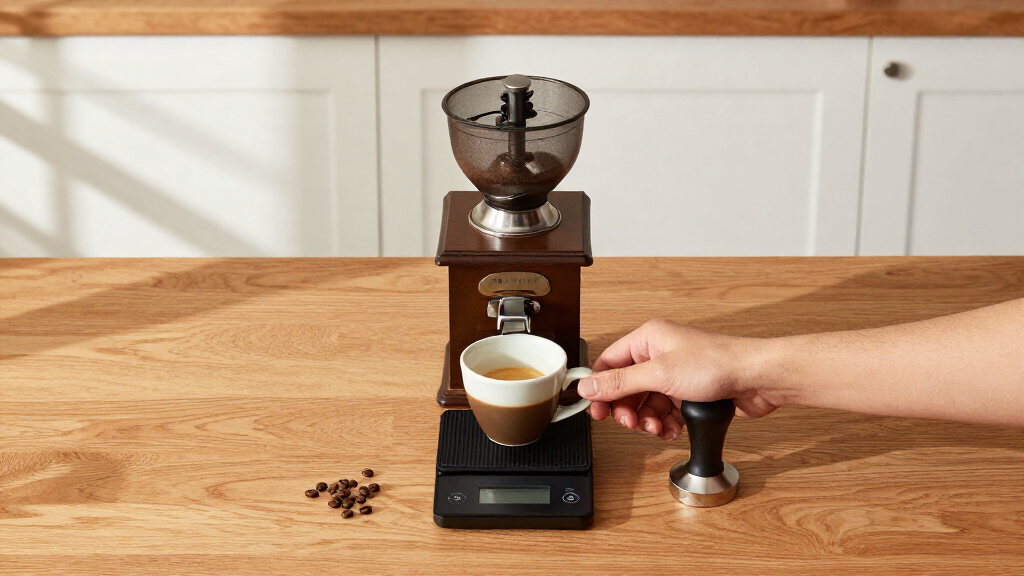
coffee grinder with built-in scale
As an affiliate, we earn on qualifying purchases.
As an affiliate, we earn on qualifying purchases.
What grind-by-weight changes—and what still shapes flavor
Grind-by-weight controls the mass dispensed, not the quality of the grind or the extraction. It can reduce dose variation, which gives you one less moving part when comparing espresso shots, but it cannot align burrs, select a grind setting, or make water and coffee interact differently.
Consider a new bag of beans. You set a familiar 18-gram dose and the grinder delivers it consistently, yet the shot runs too quickly. The dose stayed steady; the beans or grind setting may have changed. You’ll still need to adjust the grind and taste the espresso, then check the brew ratio and extraction as needed.
Grind quality depends on the grinder’s burr geometry, alignment, speed, and setting. Distribution and tamping also matter because uneven coffee in the basket can encourage water to flow unevenly. A weight display can’t correct a lumpy puck. It simply makes the quantity of coffee more consistent while you work through those other variables.
That separation is useful when dialing in. If your dose remains near 18 grams from shot to shot but the espresso tastes sour, you can focus on grind and extraction rather than wondering whether one basket held substantially more coffee. Repeatable dosing makes comparisons clearer; it doesn’t guarantee a delicious cup by itself.
As an affiliate, we earn on qualifying purchases.
How to use a grind-by-weight grinder without losing the scale
A simple check during setup shows how closely the grinder’s target matches your actual dose. You can use the grinder for everyday convenience while keeping a separate scale nearby to verify the dose and weigh the espresso in the cup. That quick routine is especially useful when you first install the grinder, change beans, or adjust the grind.
- Choose a target dose that matches your recipe, such as 18 grams for a double espresso.
- Position the receiving vessel as the grinder’s instructions specify, whether that is a portafilter or dosing cup.
- Grind and check the dose on a separate scale for a few sessions, noting whether the collected amount matches the target.
- Adjust the grind setting based on how the espresso flows and tastes; keep the dose steady while you make that change.
- Weigh espresso output if your recipe calls for a particular coffee-to-water ratio, then taste and refine.
For example, if the grinder targets 18 grams but your scale repeatedly shows 17.8 grams in the basket, you can account for that pattern or revisit calibration. The espresso scale also helps with output: the grinder measures grounds, while your brewing scale can measure liquid espresso as it collects in the cup.
This process keeps the convenience without treating the display as the only source of truth. After you understand how your setup behaves, you may not need to check every dose. Keep the scale handy when a shot tastes different or you open a new bag.
As an affiliate, we earn on qualifying purchases.
When the extra convenience is worth paying for
Grind-by-weight tends to suit people who make espresso often and value a faster, more repeatable dose routine. It can combine weighing and grinding into one step, reducing repeated adjustments and the small ritual of placing coffee on a scale before brewing. Whether that convenience is worth the added cost depends on how often you use it and what you enjoy about your workflow.
If you pull several shots each day, weighing every dose can feel like one more interruption between a sleepy morning and the first sip. A grinder that dispenses a chosen mass can make that routine smoother. Someone who makes coffee only on weekends, by contrast, may find that a separate scale is affordable, flexible, and easy to use across different brewing methods.
These grinders generally cost more and include more electronics than timed or manual models. More controls can bring useful options such as programmable doses, digital displays, or app-connected settings, but they also add components that may need care. Features differ by model and change over time, so compare current manufacturer specifications and independent testing before choosing a grinder.
For a closer look at current options, consult a guide to best grind by weight espresso grinders. Treat any feature list as a starting point: the practical questions are whether the grinder fits your portafilter, how its dosing behaves, and whether its added convenience fits your budget and daily habits.
What to check before you trust a target reading
Check calibration, receiving-vessel fit, and the final collected dose before relying on a grinder’s display. Weight systems need a stable setup to provide useful readings, and a target number alone can’t reveal whether grounds are retained or still falling into the basket after shutoff.
Start with the manufacturer’s setup guidance and confirm that your portafilter or dosing cup fits the holder securely. If it wobbles, the measurement may not behave as expected. Then compare the target against a separate scale over several doses. A single reading can be misleading; a handful of results shows whether the grinder delivers a steady pattern.
Pay attention to what happens immediately after the motor stops. Some grounds may settle or drop into the receiving vessel, so weigh after the flow has finished. If you tap or move the portafilter, use the same routine each time. Consistency in your handling makes it easier to tell whether a discrepancy comes from the grinder or from how you collect the coffee.
Suppose your target is 18 grams and you see readings that range from 17.7 to 18.2 grams. That spread suggests you should review setup and repeat the check before changing your espresso recipe. The grinder’s measurement helps reduce guesswork, while a scale helps you spot the limits of that measurement.
A separate scale still helps you make better comparisons
A separate coffee scale remains useful because the grinder measures the dose, while brewing often asks you to measure more. You may want to check the coffee in your basket, weigh the espresso as it pours, or track the ratio between grounds and liquid. The grinder’s built-in system may not cover those steps.
For instance, you’re trying to compare two grind settings with an 18-gram dose. Keeping the dose steady helps isolate the effect of grind size, and weighing the espresso output helps you repeat the same recipe. If you rely only on the grinder display, you know what it aimed to dispense but may not know what actually entered the basket or cup.
A scale is also handy when conditions change. A new roast may grind differently, and beans lose freshness over time. You might keep the same dose but need to adjust the grind or the amount of liquid espresso to get the taste you want. Measuring both ends of the recipe makes that process easier to follow.
That doesn’t mean you need to weigh every dose forever. Once you know how your grinder behaves and your routine feels steady, you can use its programmed target for daily shots and bring out the separate scale when troubleshooting. Use the grinder for convenience and the scale for verification when precision matters.
Frequently Asked Questions
How does a grind-by-weight grinder work?
A built-in scale or load cell measures coffee as it leaves the grinder and stops grinding when it reaches a programmed dose. It gives you a measured target for the grounds, while you still handle distribution, tamping, and brewing.
Is grind-by-weight more accurate than grind-by-time?
It can deliver a more consistent dose when bean density, roast, or grind setting changes, because it responds to measured mass rather than elapsed time. Actual accuracy depends on calibration, retention, how grounds settle, and the grinder’s dispensing design.
Will grind-by-weight make my espresso taste better?
Not by itself. It helps make the dose more repeatable, which can make it easier to compare shots, but flavor still depends on the beans, grind setting, distribution, brew ratio, water, and extraction.
Do I still need a separate coffee scale?
Often, yes. A separate scale can check how much coffee reaches the basket and weigh espresso output in the cup, tasks the grinder’s built-in measurement may not cover.
Why can the final dose differ from the target?
Some grounds may stay inside the grinder, fall into the receiving vessel after the motor stops, or settle before you weigh them. Calibration, vibration, and vessel placement can also affect the reading.
Does grind-by-weight eliminate dialing in?
No. It controls dose mass, not grind size or extraction. You may still need to adjust grind setting and recipe when you change beans or when your espresso starts flowing or tasting differently.
Conclusion
Use grind-by-weight to make your dose more repeatable, then keep adjusting the rest of the espresso recipe by taste. Check how much coffee actually reaches your basket, especially when you first set up the grinder or switch beans, and keep a separate scale available for espresso output.
The grinder can take one guess out of your morning. The final call still belongs to you, listening to the hiss of the shot and tasting what lands in the cup.
Fall Picks
fall essentials
As an affiliate, we earn on qualifying purchases.