TL;DR

Get coffee and tea gear delivered free with Prime
- Fast, free delivery on millions of items
- Prime Video, Amazon Music and more included
- Member-only deals all year
Anti-static grinder technology reduces the tendency of grounds to cling to the grinder or scatter across your counter, though its method and results vary by design and conditions. It can be a real workflow upgrade if static repeatedly slows your routine, but you should judge it alongside burr quality, retention, adjustment, maintenance, and price.
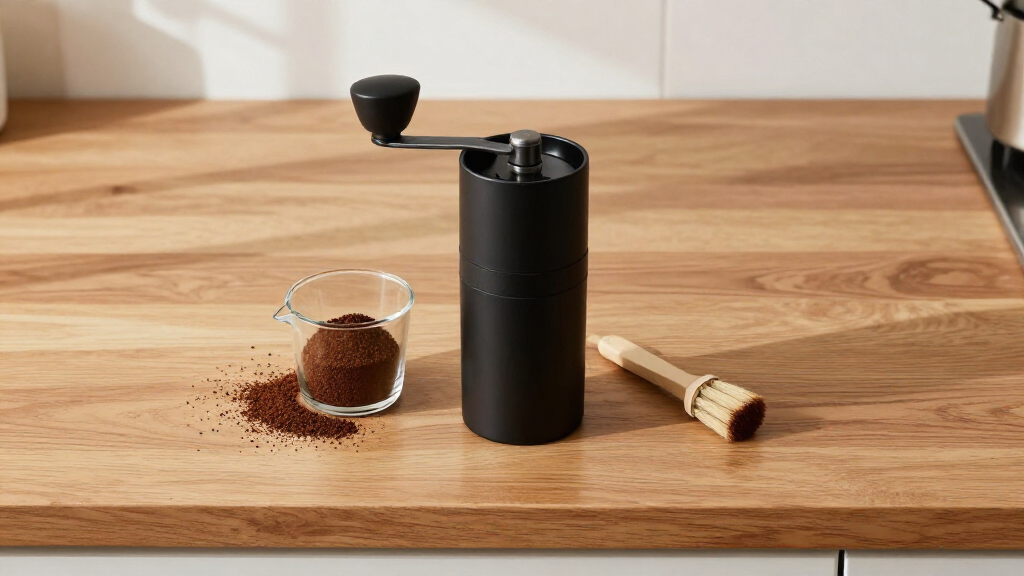
A single espresso dose can leave a surprisingly wide trail: a few grounds on the scale, a dark dusting under the grinder, and some coffee clinging stubbornly inside the cup. Anti-static grinder tech tries to tame that mess, but a cleaner counter does not automatically mean a better cup.
This guide explains what the feature does, why results change from one coffee or kitchen to another, and how to tell whether it would make your routine easier. You’ll also see how to compare the feature with the grinder fundamentals that affect every shot, so you can decide whether it earns a place on your counter—or in your budget.
Anti-static technology reduces grounds clinging or scattering; the label does not describe one standardized mechanism.
Static control and low retention are related but different, so look for evidence about both visible mess and grounds left inside the grinder.
The feature is most useful if you single-dose, switch coffees often, or clean up grounds repeatedly.
Grind quality, adjustment, retention, build, and cleaning access still matter more to the overall grinder decision.
A clean grinder, a fitting dosing cup, and a manufacturer-approved, tiny amount of water may help before you buy new equipment.
Coffee gear / workflow guide
Anti-Static Grinder Tech: Cleaner Counter or Real Workflow Upgrade?
Anti-static features can reduce clinging and scattered grounds, but the method and results vary. Here’s how to decide whether tidier dosing solves a recurring problem in your routine—and how to weigh it against the grinder fundamentals that shape every brew.
01 / What changes
A tidier transfer, not a new grind
As beans break into small particles, grounds can pick up electrical charge. They may cling to the chute or dosing cup, or scatter on the way out. Anti-static design aims to make those particles easier to transfer and clean up.
The nuisance
Grounds cling and scatter
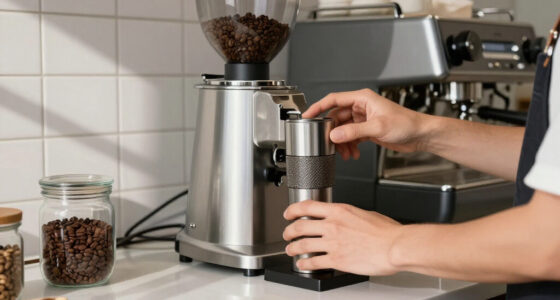
A dose can leave a ring of coffee on the cup, dust under the grinder, or grounds stuck to the chute.
The approaches
Different designs, same goal
Some grinders use ionizers, conductive materials, grounding, or a redesigned chute and grounds container.
The limit
Cleaner is not automatically better tasting
Less clinging may make dosing more predictable. It does not guarantee more uniform particles, better extraction, or better flavor.
Think of a crackling sweater—at coffee scale.
Static can make ordinary particles behave like clingy guests. A design that reduces it may help an 18-gram espresso dose fall into the portafilter with fewer taps. That is a workflow benefit; the cup still depends on the grind and the rest of your brewing setup.
02 / Workflow impact
When does a cleaner counter become an upgrade?
The value grows when static interrupts a repeated routine. A few saved taps or wipes can matter over several doses a day, while occasional grinding may make the same feature barely noticeable.
Track the nuisance
For a week, note whether grounds cling, spray, or make you stop to wipe.
Check your routine
Single dosing, frequent coffee changes, and dry rooms can make the issue more visible.
Look for useful evidence
Favor demonstrations with similar beans, dose, grind setting, and transfer method.
Weigh the whole grinder
Compare grind performance, adjustment, retention, cleaning, noise, size, and price.
These are practical clues, not guarantees: roast, bean age, dose, grind setting, humidity, and grinder design all influence results.
03 / Before you pay more
Five checks for an anti-static claim
Product copy is a starting point. The useful question is what happens to the grounds in a workflow like yours—and what stays inside the grinder afterward.
Find the mechanism
Look for a clear description of ionizing, grounding, conductive parts, or a chute redesign. “Less mess” alone gives little to compare.
Match the demonstration
A video using a different roast, dose, or setting may not predict your results. Look for grinding, transfer, and cleanup in one clear comparison.
Separate visible spray from retention
Counter mess is easy to see; grounds left in the chute or burr chamber are not. Ask whether testing measures retained coffee or only shows a tidy surface.
Check upkeep
Find out whether the feature needs cleaning, replacement parts, or special care over time.
Compare the trade-offs
Assess price, noise, size, adjustment, build, and grind quality with the anti-static claim set aside.
04 / What shapes the result
One grinder can behave differently from day to day
Static has no fixed “mess level.” Coffee and kitchen conditions change how strongly grounds cling or scatter, so demonstrations need context and independent comparisons need matched conditions.
Coffee
Roast and bean age
Different coffees can behave differently. Older, dark-roast beans may make static easier to notice in some setups.
Environment
Humidity and season
A cold, dry morning may produce a different result from a humid afternoon. The room is part of the test.
Workflow
Dose and grind setting
A small espresso dose transferred to a portafilter is a different job from a larger batch caught in a drip brewer’s bin.
Ask whether the test resembles your kitchen.
A tidy countertop video shows what happened in that setup; it cannot establish the same result for every roast or room. Comparable tests use the same beans and conditions, though independent testing remains limited.
05 / Put it in perspective
Judge the grinder by the work it does every day
Anti-static performance can help with dosing and cleanup. It is one part of a larger purchase decision, and it does not directly promise a better-tasting cup.
| Factor | What it affects | How to weigh it |
|---|---|---|
| Anti-static design | Clinging, visible spray, and transfer cleanup | Useful when the nuisance repeats |
| Retention | Grounds left inside the chute or burr chamber | Check separately; tidy counters do not prove low retention |
| Burrs and grind quality | Particle distribution and brewing results | Core performance across every dose |
| Adjustment and usability | How easily you set and repeat a grind | Match to your brewing and daily workflow |
| Build and maintenance | Durability, cleaning access, and ongoing care | Consider over time, alongside price and size |
Does anti-static tech make coffee taste better?
Not directly. It may make dosing and cleanup more predictable. Flavor depends more on grind quality, freshness, and the rest of your brewing process.
Does “anti-static” mean one specific mechanism?
No. The label can describe ionizing, grounding, conductive materials, or changes to the chute or container. Check what the maker actually means.
Can simple habits help first?
Keep the grinder clean and use a well-fitting dosing cup. Some users add a tiny amount of water to beans before grinding; follow the manufacturer’s guidance and avoid excess moisture.
What anti-static grinder tech changes after you grind
Anti-static grinder tech reduces the tendency of fresh grounds to cling to surfaces or fly away from the grinder after grinding. The feature may use an ionizer, conductive materials, grounding, or changes to the chute and grounds container; “anti-static” describes a goal, not one standard mechanism.
When beans break into small particles, the grounds can pick up an electrical charge. That charge can make them cling to the chute, cling to the dosing cup, or scatter as they leave the grinder. Think of a sweater crackling when you pull it off in winter: the scale is different, but static can make ordinary particles behave like tiny, clingy guests.
For example, you might grind 18 grams for espresso and find a thin ring of coffee stuck to the dosing cup. A design that limits clinging may help those grounds fall into the portafilter with fewer taps. The benefit is a tidier transfer, not a promise that the grinder now produces more uniform particles or extracts better coffee.
That distinction matters because manufacturers can use similar language for different designs. Before you judge a claim, look for a description of the mechanism and a demonstration of what happens to the grounds. The visible mess tells only part of the story; the next question is whether the feature changes your whole workflow or just the counter.
Products Worth Considering
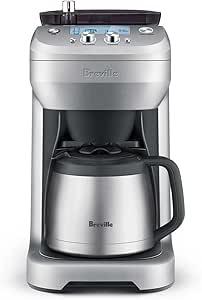
Breville Grind Control Coffee Maker with Thermal Carafe, Brushed Stainless Steel

De'Longhi TrueBrew Drip Coffee Maker with Built-In Grinder, Thermal Carafe, and Iced Coffee Settings

DeLonghi Rivelia Automatic Espresso Machine Bundle with Grinder and Frother, Beige
As an affiliate, we earn on qualifying purchases.
When a cleaner counter becomes a real workflow upgrade
Anti-static technology becomes a real workflow upgrade when static creates a repeated nuisance in your routine, such as grounds clinging during dosing or scattering across the counter. The more often you grind, the more those small interruptions can add up, especially if you single-dose or switch coffees throughout the day.
Picture a morning routine with two espresso drinks before work. You weigh each dose, grind into a cup, brush grounds into the portafilter, wipe the counter, and finally start brewing. If the grinder leaves less coffee stuck to the cup and chute, you may skip a few taps and one quick cleanup. That is a modest gain, but you feel it every morning.
For someone who uses a hopper, grinds one batch at a time, and catches the output in a larger bin, the same feature may have less impact. A grounds bin can hide visible spray, and a humid kitchen may produce less static than a dry one. Your kitchen habits matter as much as the mechanism: a grinder used once on weekends has fewer chances to save time than one used for several doses each day.
Use this simple check before paying extra: notice whether static interrupts your current routine for a week. If you regularly brush, tap, or wipe grounds away, cleaner transfer may improve your day. If you barely notice the mess, that benefit may stay on the spec sheet while burr quality and adjustment affect every brew.
How to judge the feature before you pay more
To judge an anti-static claim, check how the grinder works, how it behaves with coffee like yours, and whether it reduces retained grounds as well as visible mess. A product description is a starting point; the practical question is what comes out of the chute and what stays behind after grinding.
- Find the mechanism. Look for a clear explanation of ionizing, grounding, conductive parts, or a chute redesign. If the listing only says “less mess,” you have less information to compare.
- Match the demonstration to your routine. A video using a different dose, roast, or grind setting may not predict your results. A useful comparison shows coffee being ground, transferred, and cleaned up.
- Separate spray from retention. Grounds that land on the counter are visible; grounds left inside the grinder may not be. Ask whether testing weighs the dose before and after grinding or simply shows a tidy counter.
- Check upkeep and trade-offs. Find out whether the feature needs cleaning or replacement parts, then weigh the grinder’s price, size, noise, and adjustment against its overall performance.
For instance, if you usually grind light-roast beans for filter coffee, a demo using dark espresso beans may tell you little about your kitchen. An anti-static feature is most convincing when the evidence uses similar coffee, dose, and workflow. A clear mechanism plus repeatable demonstrations makes a claim easier to assess than a polished countertop shot alone.
Why coffee and kitchen conditions change the results
Anti-static results vary because coffee and kitchen conditions influence how grounds cling and scatter. Roast level, bean age, humidity, dose, grind setting, and grinder design all play a part, so a feature can look impressive for one user and barely noticeable for another.
Imagine grinding a small dose of older, dark-roast beans on a cold, dry winter morning. The grounds may cling more than they do during a humid summer afternoon, making a reduction in static easier to spot. Change the coffee or setting and the same grinder may behave differently. Your grinder does not have a single, fixed “mess level.”
This variability also explains why demonstrations need context. A tidy video can show that a design performs well in that particular setup, but it cannot establish that the result will carry over to every roast, dose, or room. Independent comparisons using the same beans and conditions are more useful, though comparable testing remains limited.
If you are comparing options, read or watch demonstrations that resemble your real use. Someone brewing one espresso dose at a time may care about clean cup-to-portafilter transfer; someone grinding a larger batch for a drip brewer may care more about speed and easy cleanup. The right result depends on the job you ask the grinder to do.
What anti-static can—and cannot—do for your coffee
Anti-static technology can make dosing and cleanup more predictable, but it does not directly guarantee better-tasting coffee. Flavor depends on a chain of factors, including grind quality, coffee freshness, dose, water, and brewing method; static control addresses what happens to grounds around the grinder.
Fewer grounds clinging to a chute or dosing cup may help you transfer more of the intended dose. That can be useful if you weigh 18 grams and want those grounds to reach the portafilter rather than remain stuck behind. Still, a tidy transfer does not prove that the grinder has lower retention throughout its burr chamber, or that it creates a more even particle distribution.
Think of it like a clean funnel in the kitchen. A funnel that pours neatly makes the job less messy, but it does not improve the ingredients inside it. If your espresso tastes sour or your filter coffee tastes flat, review grind setting, dose, water, and brew time before blaming static or expecting an anti-static feature to fix the cup.
For a broader buying decision, compare anti-static design with the features that shape daily brewing: burr alignment and quality, adjustment range, retention, build, and cleaning access. You can browse a guide to best coffee grinders with anti static technology for examples of how these features are presented, then verify each claim against your priorities. The useful question is not whether the grinder is mess-free in a photo, but whether it grinds and doses well for you.
Try these low-cost ways to reduce static first
You can often reduce static without replacing your grinder by keeping it clean and, if the manufacturer allows it, trying a very small amount of water on the beans. These steps can help with clinging, though they do not turn a high-retention grinder into a low-retention one or replace good maintenance.
- Keep the chute and cup clean. A buildup of old grounds can make a small mess harder to spot and clean. Follow the maker’s cleaning directions and use the brush or tools intended for your grinder.
- Try the Ross Droplet Technique sparingly. Some coffee users add a tiny amount of water to the beans before grinding. Start with very little, and check your grinder’s care instructions first.
- Grind into a cup that suits the workflow. A well-fitting dosing cup can catch grounds and make transfer easier, even if it does not remove static itself.
For example, if grounds cling to your dosing cup each morning, a very small droplet on the beans may reduce the static enough to make transfer easier. Too much water can create buildup or equipment-care concerns, so more is not better. Follow the grinder maker’s guidance and stop if you see residue or moisture collecting where it should not.
A few days of careful observation can tell you whether the annoyance is manageable or persistent. If cleaning, a suitable cup, or a permitted tiny water addition solves it, the real workflow upgrade may cost little. If static still interrupts several doses a day, that evidence gives you a better reason to value a grinder’s anti-static design.
Frequently Asked Questions
What does anti-static technology do in a coffee grinder?
It reduces the tendency of grounds to cling to grinder surfaces or scatter after grinding. The method varies by design and may involve ionizing, grounding, conductive materials, or a redesigned chute.
Does an anti-static grinder make coffee taste better?
Not directly. It may make dosing and cleanup more predictable, but flavor depends more on grind quality, freshness, dose, water, and brew method.
Is anti-static the same as low retention?
No. Static describes electrical charge and clinging, while retention describes grounds left inside the grinder. A grinder may reduce visible spray without eliminating retained coffee.
Can I reduce grinder static without buying a new grinder?
Often, yes. Keep the grinder clean, use a dosing cup that fits your workflow, and check whether the manufacturer permits the Ross Droplet Technique, which uses a tiny amount of water on the beans.
Is the Ross Droplet Technique safe for every grinder?
No single method suits every grinder. Use water sparingly and follow the manufacturer’s care instructions, since excess moisture may cause buildup or other equipment concerns.
Is an anti-static grinder worth paying more for?
It depends on how often static disrupts your routine and how much the feature adds to the cost. Treat it as a convenience benefit, then compare the grinder’s burrs, adjustment, retention, cleaning, and overall usability.
Conclusion
Judge anti-static grinder tech by the annoyance it removes from your actual routine. If grounds cling and scatter every day, cleaner dosing can be a worthwhile convenience; if the mess barely registers, put your money toward the grinder’s burrs, adjustment, and ease of care.
Watch what happens to your next few doses: if coffee stops painting the counter, the upgrade is real. If not, the feature was only a clean-looking promise.