
TL;DR

Get coffee and tea gear delivered free with Prime
- Fast, free delivery on millions of items
- Prime Video, Amazon Music and more included
- Member-only deals all year
Grind uniformity is how consistently a grinder sizes coffee particles, and it affects how evenly they extract. Fines can extract quickly while coarse pieces lag behind, so one brew may taste harsh and sour at once. Keep your recipe steady, change one variable at a time, and use side-by-side tasting to find out whether grind distribution is contributing.
Your coffee can taste bitter and sour in the same sip, even when you measured carefully. One reason is that a grinder set to one position still makes a range of particle sizes: powdery fines sit beside visibly larger pieces, and hot water moves through them at different speeds.
Grind uniformity describes how closely those particle sizes cluster together. It is one of the less visible factors that can change how coffee tastes, because most people adjust a grinder by its average setting and never inspect the whole range. Think of the coffee bed as a crowd: if some particles are tiny and others are chunky, water cannot give everyone the same extraction.
This guide explains why that mismatch can mute perceived sweetness or bring out harshness, how the effect differs among brewing methods, and how to test your grinder without changing five things at once. You will also learn why “more uniform” does not mean “always sweeter,” and why burr labels alone cannot predict the cup.
A grinder setting gives you an average, while grind uniformity describes the spread of particle sizes.
Fines can extract quickly as coarse particles lag, so the same cup can show bitter or dry notes alongside sour or thin ones.
Grind effects differ by method: espresso responds in flow and shot time, pour-over in bed flow, and French press in sediment and texture.
Test one small change at a time and compare cups side by side before blaming a grinder or burr style.
Coffee, water, roast, ratio, temperature, and technique also shape sweetness and harshness.
Coffee science · Extraction guide
How Grind Uniformity Changes Sweetness and Harshness
A grinder setting describes an average. The particle range inside the coffee bed helps determine whether water extracts each part at a similar pace—and whether sweetness stays clear or shares the cup with sourness and a rough finish.
What setting shows
An average
It does not reveal the full particle-size spread.
Small particles
Extract faster
More surface area relative to their volume.
Large particles
Extract slower
They may contribute sour or thin notes.
Best first test
One change
Hold the rest of the recipe steady.
01 / The particle mix
Why an even grind can make sweetness easier to taste
Grind uniformity describes how closely coffee particles cluster in size. A narrower spread can help water extract the bed more consistently. When sharp or bitter sensations are less prominent, round caramel-like or ripe-fruit notes may register more clearly. Coffee sweetness is usually a flavor impression, not added sugar.
Fast extraction
Fines
Small particles expose more surface area for their size. They can contribute intense flavors and, in some conditions, bitterness or astringency.
Slow extraction
Coarse pieces
Larger particles tend to release soluble material more slowly. They may remain underextracted, adding sour, thin, or undeveloped notes.
More consistent pace
A tighter spread
Particles closer in size can extract more evenly. That may help sweetness and clarity come through, but it cannot guarantee a sweeter cup.
Different particles, different pace
Illustrative extraction tendency, not a measured data set. Finer particles generally give up soluble compounds faster; a more consistent bed can narrow the mismatch.
02 / Read the cup
How one brew can taste both sour and bitter
A wide particle range can put fast-extracting fines and slower larger pieces in the same brew. This can create a cup that feels bright at first, then dry or rough on the finish—though grind distribution is only one possible cause.
Track the flavor sequence
Could point to underextraction. A slightly finer grind or more contact time may help.
Could reflect excessive extraction or other factors. Try slightly coarser or shorter.
Uneven extraction may contribute, but the flavor alone cannot diagnose the grinder.
Other factors shape harshness
Water that is too hot or a brew that runs too long can leave a rough finish.
Stale coffee, roast character, water, ratio, and technique also affect flavor.
Notice whether the cup starts sharp, ends dry, feels weak, or grows bitter as it cools.
Keep the model in perspective
A more uniform grind does not automatically mean more sweetness. Coffee, roast, freshness, water, temperature, ratio, and technique all influence what reaches the cup.
03 / By brew method
Where grind distribution shows up
The same particle mix can affect each brew differently because water meets the coffee in different ways.
Pressure · flow
Espresso
Small changes in fines can affect puck resistance and shot time. Taste alongside dose, distribution, tamping, and the coffee itself.
Bed · drawdown
Pour-over
Fines can influence water flow through the bed, while larger pieces may lag in extraction. Pouring and filter choice matter too.
Steep · texture
French press
Immersion can make flow differences less immediate, while fines may increase sediment and change mouthfeel.
04 / A controlled tasting
Test whether your grind is contributing
Two controlled brews can give you a useful clue. Keep the coffee, dose, water, ratio, and technique steady; adjust one small variable and compare the cups side by side.
Step 01
Hold steady
Use the same coffee, dose, water, and recipe.
Step 02
Change one thing
Try one small grind step, or adjust one brew variable.
Step 03
Taste side by side
Compare sweetness, sourness, dryness, and finish.
Step 04
Repeat if useful
Look for a consistent result before drawing a conclusion.
05 / Practical takeaway
Five reminders for a better tasting test
A setting gives an average; uniformity describes the particle-size spread.
Fines can extract quickly as larger particles lag behind.
Espresso, pour-over, and French press reveal different effects.
Test one change at a time and compare cups directly.
Burr labels and price alone cannot predict a sweet cup.
Why a More Even Grind Can Make Sweetness Easier to Taste
Grind uniformity is how closely the coffee particles from a grinder match in size, and more consistent sizes can help water extract the bed more evenly. Smaller particles expose more surface area relative to their volume, so they give up soluble compounds faster; larger particles usually extract more slowly. When both extremes share one brew, the flavors they contribute can pull in different directions. [1]
That matters for sweetness because coffee sweetness is usually a flavor impression, not sugar added to the cup. A well-balanced brew can let round, caramel-like or ripe-fruit notes register clearly, while sharp or bitter sensations can crowd them out. For instance, if your morning pour-over tastes both lemony and dry, the issue may not be a single “wrong” flavor note. It may be a mixture of underextracted large pieces and quickly extracting fines.
Imagine a pan of diced carrots with a few pieces cut into tiny shreds and others left nearly whole. The shreds soften first; the big pieces lag behind. Coffee particles behave differently from vegetables, but the kitchen example captures the basic problem: one setting does not promise one particle size. A narrower distribution may make the cup feel more coherent, though it cannot make an over-roasted coffee taste like a sweet light roast.
Grind size and grind uniformity work together. The average setting sets the general extraction pace; the spread of sizes affects how consistently particles reach that pace. If you move the grinder finer to rescue a thin cup, the fines may become even faster-extracting. That can help in some recipes, but it can also increase dryness or bitterness before the coarse pieces contribute much more sweetness. [1]
Try this with the same coffee and dose: brew your usual recipe, then shift one small grinder step and taste both cups side by side. Keep the water, timing, and ratio fixed. A sweeter impression in the second cup tells you something useful about your setup, but it does not prove uniformity alone caused the change. The flavor result is a clue; next, look at how the uneven particles produce it.
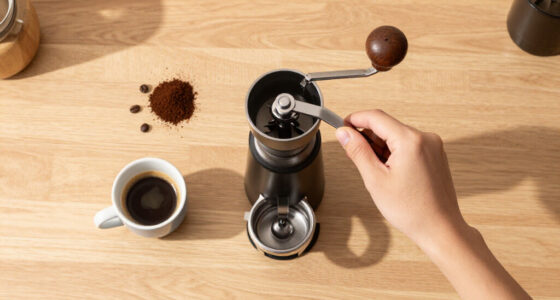
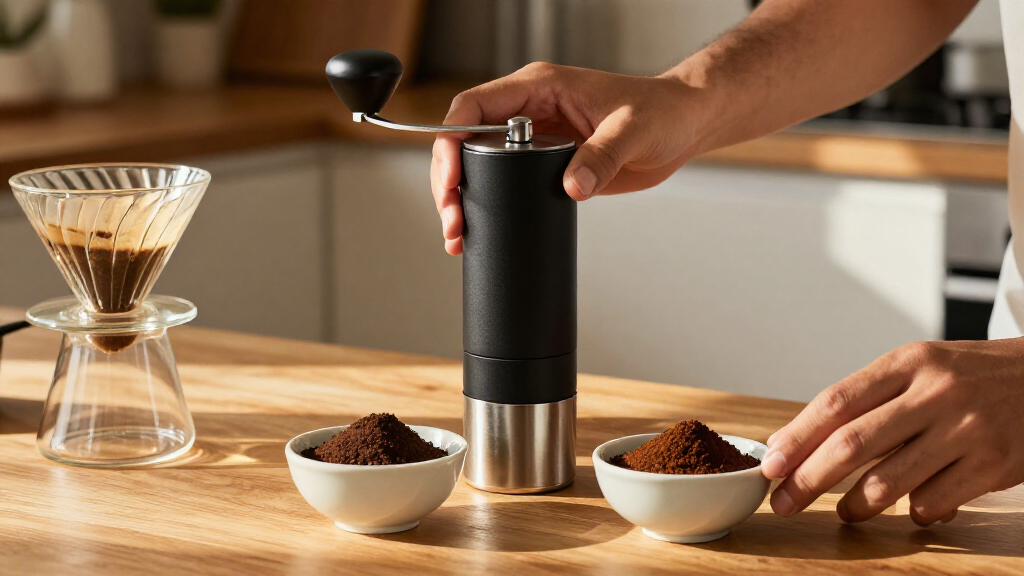
coffee grinder with uniform particle size
As an affiliate, we earn on qualifying purchases.
As an affiliate, we earn on qualifying purchases.
How One Brew Can Taste Both Sour and Bitter
An uneven grind can taste sour and bitter at once because coarse particles and fines extract at different rates in the same brew. Fines have more surface area for their size and tend to release soluble material quickly. Coarser pieces have less surface area and can remain underextracted while the fines are already contributing intense flavors. [1]
Imagine a pour-over where the stream slows near the end and your cup finishes with a dry, sharp edge. A mixed grind could play a part: fines may settle into spaces between larger particles, affecting water flow, while the bigger pieces lag in extraction. The result can feel muddled instead of simply “too bitter” or “too sour.” You might notice brightness at the front of your tongue and a lingering roughness after you swallow.
Harshness is a broad tasting word. You might use it for bitterness, a drying or puckering sensation, or a finish that feels overly intense. Uneven grinding can contribute, especially when fast-extracting fines and slow-extracting coarse particles share a brew. But it is not a diagnosis on its own. Water that is too hot, a long brew, stale coffee, or a naturally bitter roast can also leave a harsh impression. [1]
For example, a French press that sits longer than usual may taste heavier and rougher even if the grind looks unchanged. In another cup, a coarse grind may taste thin and sour because the water had too little contact with the coffee. Those scenarios call for different adjustments. Calling both results “bad grind” can send you turning the grinder in the wrong direction.
Pay attention to the whole cup: does it start sour, finish dry, feel weak throughout, or grow bitter as it cools? Those details help you choose a test. If the cup is harsh but otherwise balanced, try slightly coarser or use a shorter brew. If it is sour and thin, consider a slightly finer grind or more contact time. Change just one variable, because a recipe is a set of interacting pieces rather than a single dial.
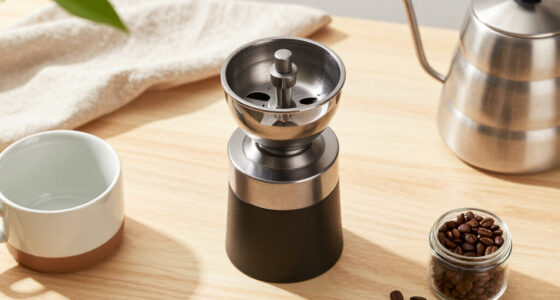
burr coffee grinder for consistent grind
As an affiliate, we earn on qualifying purchases.
As an affiliate, we earn on qualifying purchases.
What Grind Uniformity Changes in Espresso, Pour-Over, and French Press
Grind uniformity matters in every brew method, but the way you notice it depends on how water meets the coffee. Espresso responds sharply to small changes in grind and puck preparation, pour-over depends on water moving through a bed, and French press leaves the grounds immersed. The same particle mix can create different flow and texture in each method. [1]
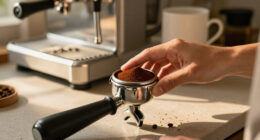
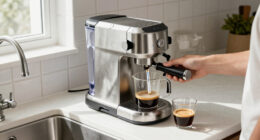
With espresso, a few changes in fines can affect resistance and shot time. If your shot suddenly runs slowly and tastes heavy or dry, the grind distribution may be one factor, alongside dose, distribution, tamping, and the coffee itself. For instance, a shot that usually takes about 28 seconds might stretch much longer after you change beans; that timing is a prompt to taste and adjust, not a universal target or proof that the burrs are at fault.
Pour-over often makes unevenness easier to spot because water passes through a bed of grounds. Fines can influence flow, while larger particles may not extract as quickly. If your dripper stalls near the end, then produces a cup with both bright sourness and a drying finish, note the grind and pouring pattern before making a change. A more even bed may improve consistency, but pouring technique and filter choice also shape the drawdown.
French press can be more forgiving because the coffee steeps rather than relying on water flowing through a thin bed. Yet fines can add sediment and a powdery mouthfeel, while large chunks may extract slowly. Picture the last sip in a press: if it feels gritty, the cup may have carried more fines into your mug. If it tastes thin despite the sediment, changing brew time or grind may help more than straining every particle out.
| Method | What uneven particles may change | What to check first |
|---|---|---|
| Espresso | Flow, shot time, intensity | Dose, puck preparation, and taste |
| Pour-over | Drawdown, clarity, mixed sour and dry notes | Grind, pouring, and brew time |
| French press | Sediment, body, extraction pace | Steep time and grounds in the cup |
The table gives you a starting point, not a verdict. Keep your recipe consistent while you compare. If a change improves one method but not another, that is useful: it shows that particle distribution interacts with how that method brews.
As an affiliate, we earn on qualifying purchases.
How to Test Whether Your Grind Is Making Coffee Harsh
You can test a grind problem with two controlled brews: hold the recipe steady, adjust one variable, and compare the cups. This makes it easier to tell whether a slightly coarser setting, shorter brew, or different water temperature actually improves the flavor. Keep the coffee, dose, water amount, and brew method the same while you test.
- Write down your baseline. Note the coffee, dose, water, grinder setting, and brew time. If your usual cup is a 20-gram dose with 320 grams of water, record those numbers instead of relying on memory.
- Taste and describe the cup. Use plain words: sour, thin, bitter, dry, sweet, clear, or muddy. If your coffee tastes lemony first and dries your mouth afterward, note both sensations rather than picking one label.
- Change one thing slightly. For harshness, try a coarser setting or a shorter brew. For a sour, thin cup, try a finer setting or longer contact time. Choose one adjustment, not all four.
- Compare the brews side by side. Taste them at similar temperatures. Ask which one tastes sweeter, cleaner, or less drying, and whether the improvement lasts as the coffee cools.
- Repeat before deciding. Brew the better version again. A small difference in pouring, water temperature, or timing can fool you once.
A practical example: your pour-over tastes sharp and drying, and the drawdown runs longer than usual. First try one small step coarser while keeping dose and pouring pattern steady. If the cup loses its dry finish but remains pleasantly bright, that setting may suit your coffee. If it becomes thin and sour, move back and test a shorter brew instead.
These steps do not measure particle sizes directly, but they help you make a reliable brewing decision. Looking at grounds can reveal an obvious mix of powder and chunks, yet appearance only gives you a rough clue. A controlled tasting is more useful than guessing from the grinder’s price or its burr label. [1]
As an affiliate, we earn on qualifying purchases.
Why Burr Type and Fines Are Not Simple Sweetness Shortcuts
Flat burrs and conical burrs do not guarantee a particular flavor, because the burr label alone does not tell you the grinder’s full particle-size distribution. Burr geometry can affect the particles a grinder produces, and people often report different flavor tendencies. But designs vary, and burr alignment, calibration, motor speed, coffee, and brewing method also matter. [1]
That is why a claim such as “this burr style always makes sweeter coffee” is too broad to guide your purchase or recipe. Imagine two grinders with the same broad burr category: their alignment and design differ, and one may produce a particle mix that works better for your preferred espresso while the other suits your pour-over. The cup you enjoy is evidence of your preference, not a universal rule for everyone.
Fines are small particles, not automatic defects. Too many can slow flow or make some brews feel muddy, but fines can also add body and intensity. If you sift them out of a pour-over and the cup tastes cleaner, you may prefer that result. If you try the same trick with a French press and lose the richer texture you like, the extra step has not improved your coffee for you.
Try a side-by-side comparison before treating sifting as a fix. Brew one cup with your usual grounds and another after separating some of the powdery particles, while holding the recipe steady as much as possible. Notice flow time, body, clarity, and the finish. Sifting changes what goes into the cup, so a cleaner taste does not prove the original grind was unusable.
In everyday buying decisions, a grinder’s price and burr type are clues, not guarantees of sweetness. A consistent routine with a grinder you already own may give you a more useful answer than chasing a label. If your coffee tastes harsh, start with the recipe and taste a controlled adjustment before deciding that new hardware will solve the problem.
Which Other Brewing Choices Can Shift Sweetness and Harshness
Grind uniformity is only one part of the cup: roast level, freshness, water, brew ratio, temperature, and technique all affect flavor. A more consistent particle size can help extraction feel more even, but it cannot make every coffee taste sweet or remove harshness caused by a recipe. [1]
For example, a dark roast may bring a stronger bitter impression than a light roast even when you use the same grinder and recipe. Coffee that has been open for weeks can taste flat, which makes subtle sweetness harder to notice. If you switch beans and keep every other setting fixed, the new coffee may need its own grind adjustment. Your previous “perfect” number is a starting point, not a promise.
Water temperature and contact time can shift extraction too. If a cup tastes rough and overly intense, lowering the temperature slightly or shortening the brew may help; if it tastes weak and sour, a small increase in contact time may suit it. These are tests, not rules for every coffee. Change one at a time and keep a note, because a 10-second difference in a pour-over can matter less than a change in grind, or more, depending on the setup.
Sweetness is a perception shaped by balance. A cup with clear fruit acidity can seem juicy and sweet, while an equally bright cup with a harsh, drying finish can seem sharp. This is why a recipe may need a small adjustment even when the grounds look fairly uniform. Think of uniformity as a steady road for extraction, while temperature, ratio, and brewing technique set the destination.
When you troubleshoot, ask two questions: what changed, and what did the cup do? If you changed the coffee, return to the recipe you know and adjust gradually. If the coffee stayed the same but the brew turned harsher, inspect grind, time, temperature, and technique in a controlled order. You will learn more from one clean comparison than from changing the grinder, kettle, and dose together.
Frequently Asked Questions
Does a more uniform grind always make coffee sweeter?
No. A more consistent particle size can make extraction more even, which may help you perceive sweetness and clarity. Roast, freshness, water, and recipe still shape the result; a carefully ground cup can remain bitter if the coffee or brew is a poor fit for your taste.
Can uneven grounds make one cup both sour and bitter?
Yes. Coarse pieces may extract slowly and contribute sour or thin notes, while fines extract faster and can add intense, bitter, or drying sensations. Whether you taste both depends on the coffee and brewing conditions.
Are fines always bad for coffee?
No. Fines can add body and affect flow, though too many may slow some brews or increase sediment. If a French press tastes rich rather than gritty to you, removing fines may take away texture you enjoy.
Should I grind finer to make coffee sweeter?
Not automatically. Finer grounds usually extract faster, which can help a thin, underextracted cup. If your coffee already tastes dry or bitter, a finer setting may make that impression stronger; adjust in small steps and compare.
Which matters more: grind size or grind uniformity?
They interact. Grind size sets the general extraction pace, while uniformity affects how consistently particles extract. A good average setting can still produce a mixed cup if the distribution is broad.
Are flat burr grinders sweeter than conical burr grinders?
There is no dependable universal rule. Burr designs can produce different particle distributions and flavor preferences, but alignment, grinder construction, coffee, and brewing method also matter. Taste a controlled comparison before treating burr type as a flavor guarantee.
Conclusion
Keep your recipe steady and change one variable at a time. If your cup tastes harsh, test a slightly coarser grind or shorter brew; if it tastes sour and thin, test a finer grind or longer contact. Taste both versions side by side and trust the cup you prefer over a burr label or a theory.
Grind uniformity is a useful clue, not a magic switch. Aim for a cup that tastes balanced to you: sweetness clear in the middle, brightness alive at the edges, and no rough finish hanging on after the last sip.
Fall Picks
fall essentials
As an affiliate, we earn on qualifying purchases.