TL;DR

Get coffee and tea gear delivered free with Prime
- Fast, free delivery on millions of items
- Prime Video, Amazon Music and more included
- Member-only deals all year
Freezing espresso beans can slow quality loss when you have more coffee than you can use in the next few weeks. Let freshly roasted beans rest until they extract well, seal surplus in small airtight portions, and thaw each portion while still sealed before opening; for your current supply, a cool, dark cupboard is often simpler.
Your espresso tastes bright on Monday, then oddly flat three weeks later—and the unopened bag in the cupboard is still waiting its turn. Freezing beans can help with that timing problem, but it also brings a practical risk: open a cold bag too soon and warm, damp air can leave condensation on the beans.
The freezer debate for espresso beans comes down to what you are trying to preserve and how you handle the coffee. Oxygen, heat, light, and moisture all speed quality loss, while freezing slows many aging reactions. It does not restore aroma that has already faded, and it is not automatically the best storage method for every home.
Here you will learn when freezing is useful, how to portion and thaw beans, and why espresso needs a little more attention to roast age than a casual cup of drip coffee. You will also see when a sealed bag in a dark cupboard is the easier choice.
Keep beans you will use within a few weeks sealed in a cool, dark cupboard.
Freeze surplus coffee in small airtight portions after it has rested and extracts well.
Let each frozen portion reach room temperature while sealed before opening it.
Avoid repeatedly thawing and refreezing a large, partly used bag.
The refrigerator adds moisture and odors; it is generally a poor storage alternative.
Coffee storage • A practical guide
The Freezer Storage Debate for Espresso Beans
Freeze the surplus, keep this month’s coffee close. Let freshly roasted beans rest until they extract well, portion what you will not use soon, and thaw each portion while sealed. For your current supply, a cool, dark cupboard is often simpler.
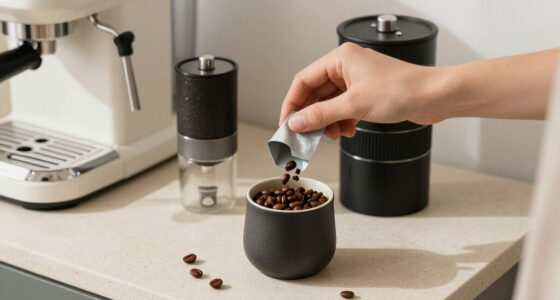
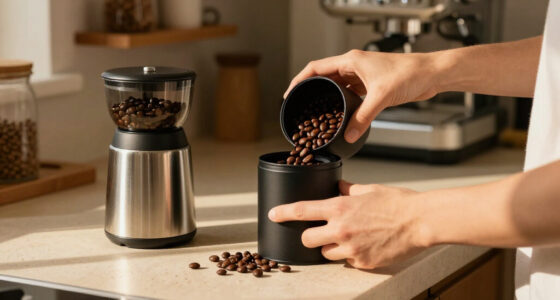
One-use portions make freezer storage easier to handle—and help keep damp air away from cold beans.
Seal · Freeze once · Thaw sealed01 / Choose your storage
Match the method to your timeline
Freezing can slow quality loss when beans would otherwise sit for weeks or months. It cannot bring back aroma that has already faded.
| Storage choice | Works well when | Watch for |
|---|---|---|
| Cool, dark cupboard | ✓ Good for this month’s espresso Use an airtight container or well-sealed original bag. | Keep away from heat, light, and frequent exposure to air. |
| Freezer portions | ✓ Useful for longer storage Freeze surplus you will not use soon. | ~ Condensation and repeated temperature changes. |
| Refrigerator | ✗ Generally not recommended It is a poor middle ground for coffee. | Beans can pick up food odors and moisture. |
02 / Why freshness changes
Protect what is still there
Roasted coffee releases carbon dioxide and gradually loses aromatic compounds. Storage slows some changes; it does not reverse them.
Four everyday exposures
Oxygen, heat, light, and moisture all speed the decline of coffee’s aroma and flavor. Store beans sealed, cool, and out of the light.
Slower aging
Freezing slows many aging reactions, which can help preserve good beans for later when room-temperature storage would be too long.
Rest before freezing
Freshly roasted beans need time to release carbon dioxide. Let them rest until they extract well for your espresso setup, then freeze surplus.
03 / Freezer workflow
Portion once. Open once.
Small, predictable portions avoid the daily thaw-and-refreeze cycle that exposes a large bag to air and humid kitchen conditions.
Rest
Wait until the coffee extracts well for your setup.
Portion
Choose single-use or small, convenient amounts.
Seal & label
Remove practical excess air; add the roast date.
Freeze once
Keep each portion sealed until you need it.
Thaw sealed
Let it reach room temperature before opening.
The moisture rule
Cold beans meet warm air. Condensation can follow.
Take one portion out and leave it unopened until it no longer feels cold. The exact time depends on package size and shape, so use temperature rather than a universal minute count. Opening a cold bag lets warm, humid air reach the beans, which can affect flavor and make grinding less predictable.
Warm the sealed portion to room temperature, then open it.
Pouring cold beans straight into an open grinder hopper.
04 / A useful home setup
Keep the working supply simple
The freezer’s value rises as the gap between buying and brewing grows. Packaging and handling still matter.
Cupboard for the near term
Keep the bag you are using in a cool, dark cupboard. Avoid the stove, sunny windowsill, steamy kettle, or a jar beside the espresso machine. Use an opaque airtight container or reseal the original bag with its valve.
Freezer for the surplus
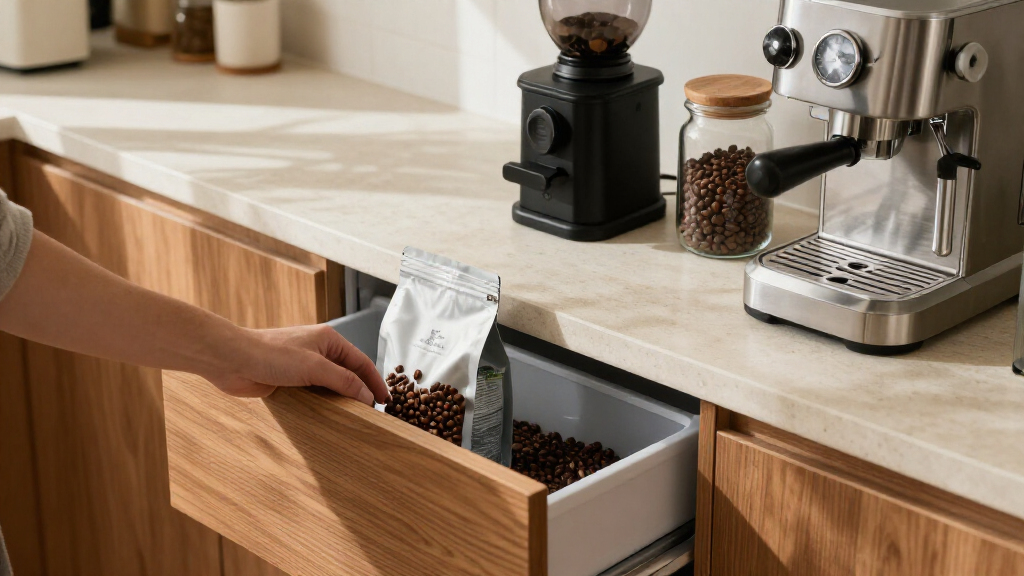
If you buy several bags at once, keep one accessible and seal the unopened extras in separate portions before the first bag becomes your daily routine. A partly used retail bag is less suited to long storage because each opening brings in fresh air and moisture.
05 / Keep expectations grounded
Storage is one part of the brew
There is no single freezer protocol or guaranteed storage life for every coffee. Roast, packaging, freezer conditions, and exposure to air all count.
Preserve, don’t restore
Freezing can help retain the quality beans have when frozen. It cannot undo oxidation or restore aroma already lost.
A separate technique
Some baristas grind very cold beans to explore particle distribution or extraction. Results vary by coffee and grinder; it is not required for storage.
Context matters
Claims that freezing “locks in freshness” for a specific number of months are not universal promises. Treat storage life as dependent on your conditions.
A simple decision path
From roast date to espresso
Build a routine around how quickly you use the coffee and how carefully you can seal it.
Freezing helps when you have more beans than you can use soon
Freezing espresso beans can slow quality loss when you will not use them for weeks or months, especially compared with leaving the same beans at room temperature for that time. It does this by slowing many of the changes that gradually dull a coffee’s aroma. The freezer cannot reverse staling, though, so beans need to taste good before they go in.
After roasting, coffee releases carbon dioxide and slowly loses aromatic compounds. Oxygen, heat, light, and moisture speed that decline. Think of a bag of roasted coffee like a loaf of bread: cool storage slows some changes, but it cannot make an old loaf springy again. Coffee has its own timetable, shaped by the roast, packaging, and how often the bag gets opened.
Say you buy a kilogram of beans but pull only two shots a day. You might finish the bag long after the first portion has lost its most lively notes. Freezing some of the supply can help preserve its quality for later, while a smaller working portion stays ready beside the grinder. That is a more useful plan than freezing a bag simply because someone online says every espresso bean belongs in the freezer.
The tradeoff is handling. A freezer protects the beans from room heat, but poor packaging or repeated opening can expose them to air and moisture. A tightly sealed, single-use portion is far easier to manage than a large bag you open every morning.
airtight coffee storage containers for espresso beans
As an affiliate, we earn on qualifying purchases.
As an affiliate, we earn on qualifying purchases.
Use a cupboard for this month’s espresso and freeze the surplus
For beans you expect to use within a few weeks, store them in a cool, dark place in an airtight container or a well-sealed original bag with its valve. The cupboard keeps the routine simple and avoids the condensation risk that comes with taking cold coffee into warm air. Freeze the surplus if it would otherwise sit unused for weeks or months.
A useful comparison is your weekly coffee delivery. If you receive one 250-gram bag and finish it in about two weeks, a sealed cupboard may be enough. If you order several bags at once, keep the one you are using accessible and freeze the unopened extras in portions. The freezer’s value rises as the gap between buying and brewing grows.
Keep coffee away from the stove, sunny windowsill, and steamy kettle. A jar near the espresso machine may look tidy, but heat and light can reach it throughout the day. Use an opaque airtight container, or tuck the original bag into a cupboard and squeeze out excess air before resealing.
| Storage choice | Works well when | Watch for |
|---|---|---|
| Cool, dark cupboard | You will use the beans in a few weeks | Heat, light, and frequent exposure to air |
| Freezer in small sealed portions | You have surplus for longer storage | Condensation and repeated temperature changes |
| Refrigerator | Generally not recommended | Food odors and moisture |
The fridge is usually a poor middle ground. It contains food odors and moisture, and it does not keep coffee as cold as a freezer. For a busy kitchen, a small sealed cupboard portion plus carefully frozen backup is a straightforward setup.
As an affiliate, we earn on qualifying purchases.
Portion beans before freezing to avoid the daily thaw-and-refreeze cycle
Before freezing espresso beans, divide the surplus into airtight portions you can use in one go, label each portion with its roast date, and freeze it once. Small portions reduce the need to open and close one large bag, where the remaining beans repeatedly meet warm, humid air. That simple change makes freezing easier to use consistently.
Think of each portion like a packed lunch: prepare it before you need it, so you are not reopening the whole supply at the kitchen counter. If you usually use 18 grams per double shot and make two shots a day, a portion for one day may be convenient. If you prefer less packaging, divide the supply into a few days’ worth and open a new portion only when the previous one is gone.
Follow these steps when you have beans you will not use soon:
- Let the coffee rest first. Wait until the beans extract well for your espresso setup.
- Divide the surplus. Choose single-use or small, predictable portions.
- Seal tightly. Remove as much air as practical, and use a container or bag that closes securely.
- Label the portions. Write down the roast date so you can identify the coffee later.
- Freeze once. Avoid opening and refreezing the same portion repeatedly.
- Thaw it sealed. Let the portion reach room temperature before you open it.
A valve bag may work well for a working supply, but do not assume that a partly used retail bag is ideal for long-term freezing. Every time you open it, you introduce fresh air and moisture. If you came home with four bags from a roaster, seal three separately before the first bag becomes your daily routine.
coffee portioning bags for freezing
As an affiliate, we earn on qualifying purchases.
As an affiliate, we earn on qualifying purchases.
Thaw each portion while sealed to keep condensation off the beans
Let frozen espresso beans reach room temperature while the package is still sealed, then open the package. This keeps most humid room air away from the cold beans while they warm. Moisture is one of the main practical risks in the freezer routine, and avoiding condensation makes grinding and extraction more predictable.
Here is the kitchen-counter version: take one portion from the freezer before breakfast, leave it unopened on the counter, and open it when it no longer feels cold. The exact time depends on the size and shape of the package, so judge by temperature rather than relying on a universal minute count. The key is simple: do not pour cold beans into an open hopper right away.
When a cold surface meets warm, humid air, water can condense on it, just as droplets form on a chilled glass on a summer afternoon. Beans are not a glass, but moisture on their surfaces can affect flavor and make grinding less predictable. A bag that has been opened while cold can also expose the remaining coffee to changing temperatures and damp air.
If your espresso routine starts before you have time to thaw a portion, plan ahead and move the next one to the cupboard the night before, still sealed. For example, a Saturday morning coffee routine can begin with Friday night’s sealed portion placed on the counter. Keep the daily amount small enough that you do not need to return an opened portion to the freezer.
As an affiliate, we earn on qualifying purchases.
Let espresso beans rest after roasting before you freeze them
Freshly roasted espresso beans often need a resting period before they extract well, so do not freeze them immediately just to capture them at their freshest. Roasting leaves beans releasing carbon dioxide; if you brew them before they have rested enough, excess gas can affect extraction. Let the coffee reach the point where it performs well on your machine, then freeze portions you will not use during their best drinking window.
This is where espresso differs from a simple storage question. A bag can smell wonderfully fragrant on the day it arrives and still produce an uneven shot. You might see a fast, foamy pour one morning, then a more balanced shot after several days of rest. The right timing depends on the coffee and your setup, so your grinder and shot taste are better guides than a single fixed number of days.
For example, if a roaster delivers beans on Tuesday and your shots settle into a sweeter, steadier taste over the following days, keep the working amount in its sealed bag and wait before freezing the rest. Once you know the coffee is extracting well, divide the extra beans into portions. You are preserving a useful stage of the coffee’s life, not trying to stop its development before it is ready.
Freshness is not a switch that flips on roast day. Beans continue to change, and espresso recipes can respond to those changes. If you freeze a coffee before it works well in your basket, it may still need resting after thawing; freezing will not make an under-rested espresso taste settled.
Freezing cannot rescue stale beans, and grinding frozen beans is a separate choice
Freezing can help retain the quality beans have when frozen, but it cannot restore lost aroma or undo oxidation. If a bag already smells flat or tastes papery, putting it in the freezer will preserve little of the bright flavor you wanted. Freeze good coffee before it sits around too long, not after you notice it has gone dull.
Suppose you discover an old open bag at the back of a cupboard. It may still make a drinkable shot, especially with a small adjustment to your recipe, but freezing it now will not turn it back into the fragrant coffee you remember. By contrast, a sealed extra bag stored soon after its useful resting period has a better chance of tasting lively when you open it later.
Some baristas also grind beans while frozen, aiming for a different particle distribution and sometimes improved espresso extraction. That is a separate technique from freezing for storage, and the result can depend on the grinder, the coffee, and the workflow. You do not need to grind cold beans to benefit from freezing portions for later use.
If you want to experiment, use a small amount and compare the shots with your usual room-temperature method. Keep the rest of the frozen supply sealed. For a home barista working through a changing dial-in, ordinary thawed beans offer a steadier baseline; frozen grinding can wait until you have a repeatable recipe and want to test one variable at a time.
Choose a freezer routine that fits your buying and brewing habits
The freezer debate for espresso beans has no single universal protocol or guaranteed storage life, because packaging, freezer conditions, roast level, and air exposure all matter. Use freezing when you have a clear timing problem—such as buying several bags at once—and keep the routine simple enough that you will follow it. Treat claims that coffee stays perfectly fresh for an exact number of months as context-dependent.
For one person who buys a 250-gram bag every two weeks, a cool cupboard and a good seal may be all the storage needed. For a household that orders a kilo from a favorite roaster, small frozen portions can help preserve the extra coffee while the current portion stays easy to reach. The same habit may save a special limited coffee for later, but it does not make every bean taste identical after storage.
Dark and light roasts can both be frozen. Dark roasts may taste stale sooner at room temperature because they are more porous and expose more surface oil, but airtight packaging and careful handling still matter for either roast. A light roast might keep its crisp, bright profile longer in a good package; that is not a reason to ignore storage conditions.
- Freeze surplus when you will not use it soon.
- Keep the working supply sealed in a cool, dark cupboard.
- Avoid the fridge because of moisture and food odors.
- Judge by taste and extraction rather than a promised freezer deadline.
The sensible routine for your home is the one that fits your purchase size and your daily shots. If you only need one bag at a time, a cupboard is simpler. If you have more beans than you can drink in their best window, portioning can make the freezer useful.
Frequently Asked Questions
Does freezing coffee beans keep them fresh?
Freezing slows many changes that reduce coffee quality, so it can help preserve beans you will not use for a while. It works best when the beans are fresh, sealed in airtight portions, and handled without repeated warming and cooling.
Should I freeze espresso beans as soon as they are roasted?
Usually, let them rest until they extract well on your espresso setup. Freshly roasted beans release carbon dioxide, which can affect the shot, and freezing does not replace that resting period.
Can I put a partly used bag back in the freezer?
You can, but opening it exposes the remaining beans to air and humid room conditions, and repeated temperature changes make quality less predictable. Portion the beans before freezing so you open only what you plan to use.
Should I grind espresso beans while they are still frozen?
You do not need to grind frozen beans to store them well. Some baristas experiment with grinding them cold to change particle distribution or extraction, but results depend on the grinder, coffee, and workflow.
How long can espresso beans stay in the freezer?
There is no universal cutoff that promises the same flavor for every coffee and freezer. Sealed portions can retain useful quality for an extended period, but judge the beans by aroma and shot performance rather than a fixed date.
Is the refrigerator a good place to store coffee beans?
Generally, no. Refrigerators expose coffee to food odors and moisture without keeping it as cold as a freezer, so a cool, dark cupboard is usually better for the beans you are using soon.
Conclusion
Use the cupboard for the beans you are drinking now, and freeze surplus only when you have more coffee than you can use soon. Let espresso beans rest until they extract well, seal them in small portions, and thaw each portion unopened before brewing.
That routine gives the freezer a practical job: holding tomorrow’s coffee steady while today’s beans stay close to the grinder. Keep it simple, and your next shot is less likely to taste like it has been waiting in the wings too long.
Fall Picks
fall essentials
As an affiliate, we earn on qualifying purchases.