
TL;DR

Get coffee and tea gear delivered free with Prime
- Fast, free delivery on millions of items
- Prime Video, Amazon Music and more included
- Member-only deals all year
Dosing espresso by volume makes shots harder to repeat because the same scoop can hold different amounts of coffee, while crema and cup shape make a shot’s apparent volume misleading. Weighing dry coffee and espresso yield gives you a clearer recipe, such as 18 grams in and 36 grams out, though grind, distribution, temperature, and taste still matter.
The same scoop can make two espresso shots start with different amounts of coffee, even when you level it carefully. Then a thick cap of crema can make one shot look larger than another, though the cups hold different amounts of liquid espresso. Volume can mislead at both ends: when you measure coffee going in and when you judge espresso coming out.
This guide explains why coffee grounds don’t pack into a scoop consistently, how crema and cup shape blur shot measurements, and what changes when you use a scale. You’ll get a practical workflow for weighing dose and yield, plus a way to keep using volume when speed matters. A scale won’t make a shot delicious by itself, but it can help you repeat the one you liked.
A scoop measures space, so different beans, roast levels, freshness, and grind settings can change the mass of coffee it holds.
Crema changes the apparent volume of espresso; weighing the yield avoids treating a foam line as a fixed liquid amount.
An 18-gram dose yielding 36 grams of espresso is a 1:2 brew ratio by mass, giving you a recipe you can repeat and share.
For clearer troubleshooting, weigh the grounds in the basket and the espresso in the cup, then adjust one variable at a time.
A scale improves repeatability, not flavor by itself; use volume when convenience matters and you can accept more variation.
Espresso method · A practical guide
Why Dosing by Volume Makes Espresso Harder
A scoop measures space, and crema changes what you see in the cup. Weighing the dry coffee and the espresso yield makes a clearer recipe you can repeat—while grind, distribution, temperature, and taste still shape the result.
Measure the shot.
Mass makes both ends of the recipe visible, even when the grounds settle differently or crema rises and falls.
01 / A repeatable routine
Four steps to compare shots
Keep the dose and yield steady first. Then taste, adjust one variable, and record what changed.
Measure the coffee placed in the basket; this is the dose.
Keep distribution and tamping as steady as your workflow allows.
Tare the cup, then stop at your chosen espresso mass.
Change grind or yield one at a time. Let flavor guide the next shot.
02 / The hidden variables
One scoop can start two different shots
A level scoop can look unchanged while its coffee mass shifts. Grounds do not settle into a fixed volume.
Beans & roast
Different coffees and roast levels can differ in density and how their grounds fill the scoop.
Rest & release
Freshness can change how grounds behave and how much crema a shot develops.
Setting & particles
Grind size and particle shape affect how the coffee settles. A scoop cannot reveal the resulting mass.
03 / What the cup shows
Crema can disguise the liquid yield
Foam changes the apparent fill level. Cup shape, viewing angle, and when you read the mark add more variation.
A moving surface
A crema cap may briefly lift the level, then settle. Two shots at the same line can contain different masses of liquid espresso.
- Crema thickness changes with coffee and extraction
- Wide and narrow cups show different levels
- Angle and timing influence the reading
A defined yield
A scale tracks espresso as it lands in the cup, so a foam line does not stand in for the recipe’s output.
- Tare the cup before brewing
- Stop at the target mass
- Compare shots with the same yield
04 / Where uncertainty builds
Volume adds guesswork at both ends
This graphic maps the kinds of variation described in the guide. It is explanatory, not a measured consumer survey.
Illustrative relative uncertainty—not measured percentages or product performance data.
05 / A recipe you can share
Write down what went in and came out
Dose is dry coffee in the basket. Yield is espresso in the cup. Brew ratio compares the two by mass.
18 g in, 36 g out describes a 1:2 brew ratio by mass. It gives another person a clearer starting point than “fill the little glass” or “make a double.” It is a recipe to adjust, not a promise of perfect flavor.
1 : 206 / Keep the right perspective
Repeatability is not the same as flavor
A scale helps you see what changed. The cup still decides whether the shot tastes right to you.
Use weight to troubleshoot
Start with a steady dose and yield. If a shot tastes too sharp or otherwise off, adjust grind or yield while keeping other variables steady. Distribution, tamping, water, temperature, and coffee still matter.
Use volume when speed matters
A scoop or marked cup can work for quick, informal brewing when you accept more variation. Weigh grounds in the basket for the most direct dose check; weighing beans first works when retention and spillage are negligible.
A scoop can change your coffee dose without looking different
Dosing by volume makes espresso harder because a scoop measures space, not the mass of coffee inside it. The same scoop can hold different amounts when the beans, roast, freshness, grind setting, or particle shapes change. A level scoop may look identical on your counter while sending a different dose into the basket.
Think about filling a measuring cup with flour: sifted flour settles differently from flour you packed down. Coffee grounds behave in their own way, too. A fluffy grind can take up more space than a dense one, and a small shift in grind setting can alter how particles settle. Freshly roasted coffee may also behave differently from beans that have rested longer. The scoop has no way to tell you what those changes add up to in grams.
A small difference matters because the dry dose affects the coffee-to-water ratio and the room left in the basket. If you aim for about 18 grams and your scoop gives you a lighter dose one morning, the same shot volume no longer represents the same recipe. The basket may have more headroom; water can meet a thinner or thicker bed of coffee. One scoop, two mornings, two starting points.
For example, imagine you switch from one coffee to another and keep using your usual scoop. The new grounds settle more densely, so your basket receives more coffee than before. Your espresso may run differently, even though you haven’t touched the grinder. Weighing the grounds in the basket makes that dose visible and gives you one less mystery to solve.
As an affiliate, we earn on qualifying purchases.
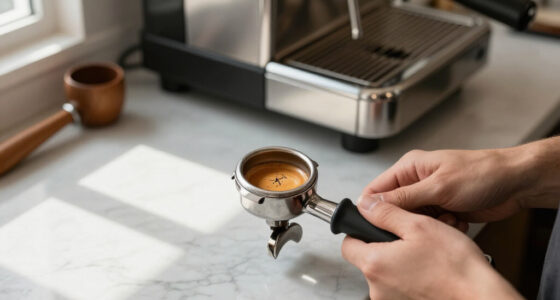
Crema makes a full-looking shot hard to measure
Espresso by volume is hard to judge because crema adds a layer of foam that changes the drink’s apparent level. Crema amount and persistence vary with coffee freshness, roast, and extraction. Two shots can look equally full in a glass while containing different masses of liquid espresso underneath the foam.
Crema is part of espresso’s familiar look: a tawny cap with tiny bubbles that cling to the glass before slowly fading. But it behaves more like foam on a cappuccino than a fixed amount of liquid. It can rise high, then settle as you watch. If you stop the machine when the crema reaches a mark, you are measuring a moving surface, not a dependable amount of espresso.
Suppose your first shot forms a thick, persistent crema, while the next has a thinner layer. Both may briefly reach the same line on a marked cup. Give them a moment and their levels change at different rates. The cup hasn’t changed, but the foam has shifted the apparent result. That makes a volume target especially awkward when you’re trying to compare a shot before and after adjusting the grinder.
Weight avoids reading the foam line as the finished yield. Place the cup on a scale, tare it, and stop the shot at your chosen mass. If the recipe calls for 36 grams out, the scale tracks the espresso as it lands in the cup, regardless of how tall its crema looks. The crema still affects how the shot presents, but it no longer hides the yield measurement.
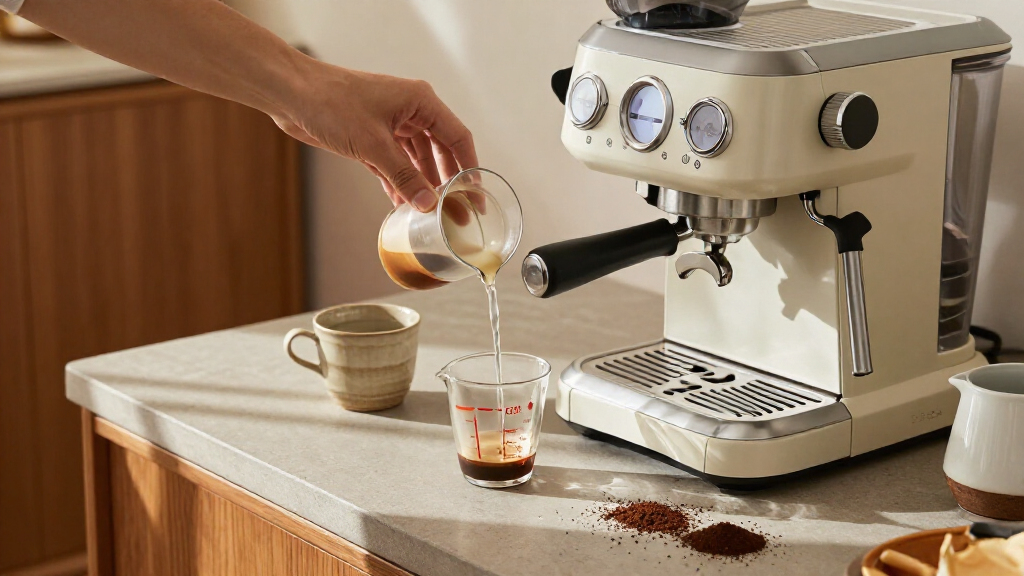
espresso shot glass with measurement
As an affiliate, we earn on qualifying purchases.
As an affiliate, we earn on qualifying purchases.
A scale gives you a recipe another person can repeat
Weighing both ends of the shot turns an impression into a recipe: record the dry coffee dose and the espresso yield by mass. For instance, 18 grams of coffee in and 36 grams of espresso out is a 1:2 brew ratio. You can make that instruction on another morning, another machine, or in a friend’s kitchen, and both people know what the numbers mean.
Words like “single,” “double,” and “one ounce” can leave room for interpretation. Basket sizes differ, machines vary, and coffee changes how a shot behaves. Even the phrase “double shot” may describe a serving convention rather than a precise dose and yield. A recipe written in grams tells you exactly what went in and what came out.
That clarity helps when you learn from someone else’s recipe. Say a guide suggests 18 grams in, 36 grams out, in about 28 seconds. You can match those quantities, taste the result, then adjust one variable at a time. If it tastes too sharp, you have a known starting point for changing the yield or grind. If your usual target is simply “fill the little glass,” it’s much harder to tell what the other person actually did.
A brew ratio is a starting point, not a flavor guarantee. A 1:2 ratio is common, but it isn’t right for every coffee, roast, basket, or preference. A darker roast might taste better with a different yield; a particular coffee may invite a longer shot. The useful part is that mass-based numbers make those choices easier to describe and repeat. Your palate still gets the final say.
As an affiliate, we earn on qualifying purchases.
A marked glass adds small errors that build up
Measuring by volume introduces uncertainty at the cup as well as at the basket. The vessel’s shape, your viewing angle, and the moment you take the reading can change the result. A narrow shot glass and a wide cup don’t display the same liquid level for the same amount, and a foam-topped surface can make either one tricky to read.
Imagine stopping a shot when it reaches a line on a glass. From directly above, the surface may look aligned; from the side, the meniscus or a band of crema may put the level somewhere else. If you check while the shot is still flowing, the reading keeps changing. If you wait for the crema to settle, you’re now measuring a later moment. Small choices become part of the recipe without being written down.
Now combine cup-reading variation with a scoop that changes its mass from one grind to the next. You might adjust your grinder to fix a sour shot, when the actual issue was a different dose or a different yield. That’s why dosing by volume makes troubleshooting harder: several hidden changes can produce the same visible symptom. A scale doesn’t remove every variable, but it makes dose and output easier to check.
If your machine has shot-by-weight control or an integrated scale, it may help you stop at a chosen yield without watching the cup fill. The workflow and accuracy vary by machine, so read the result as a useful measuring aid rather than a promise of perfect extraction. A small independent scale can serve the same basic purpose if it fits under your cup.
As an affiliate, we earn on qualifying purchases.
Follow these four steps to make your shots easier to compare
A repeatable espresso routine starts with one steady dose, one measured yield, and one change at a time. A small digital scale with gram-level resolution, a timer, and a platform that fits under the cup is usually enough for home use. Weighing the grounds placed in the basket is the direct way to control the dose; weighing beans before grinding can work if your grinder retains very little coffee and you avoid spills.
- Choose a dose. Pick a starting amount that suits your basket, such as 18 grams, and weigh the ground coffee going into it.
- Prepare the puck consistently. Distribute the grounds and tamp the same way each time so the comparison doesn’t also change your preparation.
- Weigh the espresso yield. Tare the cup on the scale before brewing, then stop the shot at a chosen target, such as 36 grams.
- Taste and adjust one thing. Keep dose steady while you adjust the grind, timing, or yield to move toward a taste you prefer.
Here’s a kitchen-table example: your 18-gram dose reaches 36 grams out quickly and tastes thin. Keep the dose fixed and make the grind a little finer, then pull another shot to the same yield. Now you can compare the taste without wondering whether the scoop added more coffee or the crema made you stop early.
Write down the numbers and what you tasted. A note such as “18 g in, 36 g out, 27 seconds; pleasant sweetness, finish slightly sharp” gives tomorrow-you something useful to repeat or improve. A scale supports consistency, but grind distribution, tamping, water, temperature, and coffee freshness still shape the cup.
Keep volume for quick brews, and use weight when precision matters
Volume remains useful when convenience matters more than close comparisons. You don’t need to weigh every shot to enjoy espresso, and a familiar scoop can be a perfectly practical shortcut on a rushed morning. The tradeoff is that your results may shift when you change coffee, grind, basket, cup, or machine.
For example, suppose you make a quick espresso before heading out, using the same beans, grinder setting, scoop, and cup as yesterday. A rough volume target may get you a drink you like, and the few seconds saved may be worth more to you than precise notes. But if you open a new bag and the shot suddenly tastes sour or runs fast, weighing the dose and yield helps you see what changed.
Use weight for dialing in, recipe sharing, and troubleshooting. Those are the moments when you need to compare one shot with another or follow a brew ratio. Use volume as an informal cue when you already like the result and can tolerate some variation. That approach keeps measurement practical instead of turning every coffee into a lab exercise.
Neither a scale nor a volume mark can tell you whether a shot tastes good. They only help you describe what you made. If your machine has no built-in scale, a small one can often be added without replacing the machine; if you have no scale at all, keep your setup as steady as possible and treat the fill line as an approximation. Convenience is fine; hidden variation is the cost.
Frequently Asked Questions
Why can’t I use the same scoop every time?
A scoop measures volume, and coffee grounds can occupy that space differently depending on the beans, roast, freshness, and grind. You may use the same scoop and still put a different mass into the basket. Weighing the grounds makes the dose explicit.
Does crema really make volume unreliable?
Yes. Crema is foam, and its amount and persistence vary with coffee freshness, roast, and extraction. A crema-topped shot can look as large as another while holding a different amount of liquid espresso.
Should I weigh the beans or the grounds?
Weighing the grounds you put in the basket is the most direct way to control the dose. Weighing beans before grinding can also work if your grinder retains little coffee and you avoid spills; otherwise, some of the weighed amount may not reach the basket.
What does a 1:2 espresso ratio mean?
It means the espresso yield weighs about twice as much as the dry coffee dose. For example, 18 grams of coffee in and 36 grams of espresso out is a 1:2 ratio. It’s a common starting point, not a rule for every coffee or taste.
Do I need a scale to make good espresso?
No. A scale won’t make a shot taste good on its own, and you can enjoy espresso with a scoop and a marked cup. Weighing dose and yield makes it easier to repeat a shot you like and understand what changed when the next one tastes different.
Conclusion
When you want to repeat or troubleshoot a shot, measure coffee and espresso by weight. A dose and yield such as 18 grams in and 36 grams out give you a clear place to start, while a scoop and a crema line leave room for hidden changes. Keep a scoop for quick mornings if it serves you well; reach for the scale when a new bag or a strange-tasting shot leaves you guessing.
Espresso will still be its lively, changeable self. But with the dose and yield on the scale, at least two of its mysteries sit in plain view.
Columbus Day / Indigenous Peoples' Day Picks
long weekend sales
As an affiliate, we earn on qualifying purchases.