TL;DR

Get coffee and tea gear delivered free with Prime
- Fast, free delivery on millions of items
- Prime Video, Amazon Music and more included
- Member-only deals all year
Grinding coffee can create electrical charge that makes fine grounds cling to the grinder, dosing cup, and counter. Dry air and dry beans can make the mess more noticeable, while a tiny amount of water, better grounds handling, or a quick brush may help. Less scatter can make dosing tidier, but it does not guarantee better espresso; dose, grind distribution, and puck preparation still matter.
Your espresso dose can look tidy in the grinder and end up sprinkled across the counter seconds later. Fine grounds cling to the chute, jump from the dosing cup, and catch on your fingers. That little mess has a name: static, an electrical charge that can make coffee particles stick to surfaces or scatter.
Espresso makes the problem easy to spot because you grind a small, carefully measured dose to a fine texture. A few grounds left behind may change how much coffee reaches the portafilter, and a cloud of dark flecks means extra cleanup. But static is only one piece of the workflow, and a cleaner counter does not automatically mean a sweeter shot.
Here, you’ll learn why grinding coffee can create static, how to tell it apart from clumping or retention, and which simple fixes are worth trying. You’ll also see where the evidence has limits, so you can make your setup tidier without expecting a magic flavor upgrade.
Static is electrical charge that can make fine grounds cling to a grinder, dosing cup, or counter.
Dry air, dry beans, coffee choice, roast, grinder, and grind setting can change how noticeable static feels.
Static may complicate dose transfer, but it is different from grinder retention, clumping, and uneven grind distribution.
A dosing cup, funnel, gentle brushing, or sparing RDT trial can reduce mess; follow grinder guidance when using water.
A tidier workflow does not guarantee better-tasting espresso because dose, grind distribution, and puck preparation still matter.
The Static Problem That Makes Espresso Messier Than It Should Be
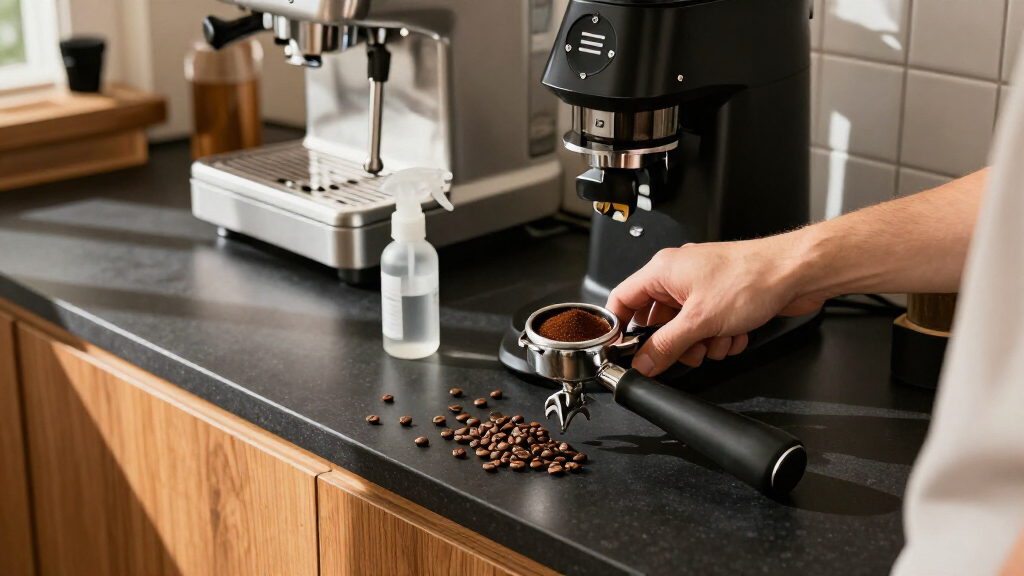
Fine grounds cling to the grinder, leap from the dosing cup, and sprinkle the counter. Static can make dosing less tidy, but a cleaner transfer does not promise a better-tasting shot.
Static is charge. Retention is coffee left inside the grinder.
They can happen together, but each points to a different part of the workflow.Why espresso grounds cling instead of falling neatly
Grinding can transfer electrical charge to coffee particles. Charged grounds cling to surfaces or scatter during transfer.
Grinding creates friction and separates particles, which can transfer charge. Dry air and dry beans may make the effect more noticeable. Grinder, coffee, roast, humidity, and grind setting all influence what you see.
Cling & scatter
Grounds stick to the chute, cup, fingers, or counter instead of dropping straight into the portafilter.
Fine grind, small dose
A few stray particles stand out when the dose is carefully measured and the grounds are fine.
Watch the weather
If the mess changes with humidity, that pattern may be a clue. It does not prove that every other variable stayed the same.
Static, retention, clumps, and distribution are different
More than one issue can appear in the same grind. Naming what you observe helps you make a useful change.
| What you notice | Likely description | What to look for |
|---|---|---|
| Grounds cling or jump | ~ Static may be involved | Particles sticking to the cup, chute, fingers, or nearby surfaces |
| Coffee stays inside grinder | ✓ Retention | Ground coffee left in the grinder after grinding |
| Grounds emerge in bundles | ~ Clumping | Small masses of grounds; static may contribute, but is not the only possibility |
| Puck looks uneven | ✗ Not proof of static | Distribution or puck preparation may be involved |
A tidy dose is useful on its own
If grounds stick to the cup or grinder exit, the amount reaching the portafilter may differ from the amount you started with. Weighing after grinding can help reveal a transfer difference, but cannot identify static as the cause by itself.
Less scatter can make your routine cleaner and easier to repeat. It does not automatically make espresso taste better.
Shot consistency has several inputs
Dose, grind distribution, and puck preparation also matter. A messy transfer can still lead to a consistent puck; a clean transfer can still be followed by uneven preparation.
Try low-fuss ways to reduce static
Start with one change you can repeat. The right approach depends on your grinder and the amount of mess.
Try RDT sparingly
The Ross Droplet Technique uses a very small amount of water on beans before grinding. Distribute it lightly and follow grinder guidance.
Use a cup or funnel
A dosing cup or funnel can keep stray grounds contained as you move coffee into the portafilter.
Brush or tap gently
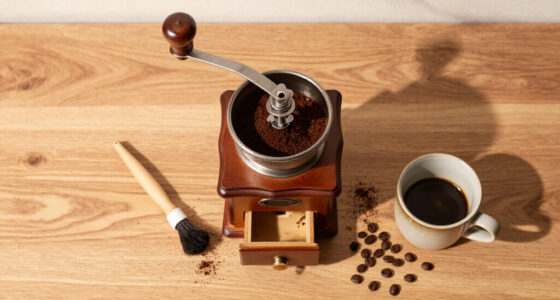
Free grounds from the cup or chute with a quick brush or gentle tap as your grinder allows.
Check anti-static design
Some grinders include anti-static features. Their practical effect varies by setup; treat taste claims cautiously.
A simple check: Grind as usual and note where grounds cling. Change one thing at a time, then compare the transfer over a few shots. Too much water can create other problems, so keep any RDT trial conservative.
Observe → adjust → compareTrace the grounds from grinder to basket
Simple observations can point you toward the right part of the workflow without changing everything at once.
Less mess, clearer feedback
Static is an observable nuisance that can make grounds cling, scatter, and complicate dose transfer. A cup, funnel, gentle brush, or cautious RDT trial may help. Keep the claim in proportion: reducing scatter can tidy your routine, while good espresso still depends on dose, grind distribution, and puck preparation.
Why Your Espresso Grounds Cling Instead of Falling Neatly
Static is an electrical charge on coffee grounds that makes particles cling to the grinder, dosing cup, or nearby surfaces. Grinding creates friction and separates coffee particles, processes that can transfer charge. Instead of falling neatly into the portafilter, some grounds stick to the chute or flick onto the counter. Dry air and dry beans can make the effect more noticeable, though the result varies with your grinder, coffee, roast, humidity, and grind setting. [1]
Think of the grounds as tiny bits of paper after you rub a balloon on a sweater: they can cling where you expected them to drop. Coffee is not behaving exactly like paper, but the image helps explain why a tidy-looking grind can turn into a speckled counter. You may notice it most when you tap the dosing cup and grounds still hang from its sides.
Espresso exposes static because the grind is fine and the dose is small. Imagine grinding 18 grams into a cup before transferring it to a portafilter. A few clinging grounds may be a small fraction of that dose, yet they can make the transfer look uneven and give you more to wipe away. The mess is real; whether it changes the shot in a meaningful way depends on your setup and routine.
Static also changes from day to day. You might get a clean transfer on a humid afternoon, then find grounds sticking to the chute when your kitchen air turns dry. If the mess comes and goes with the weather, that pattern is a useful clue—not proof that every variable in your espresso has changed.
espresso grinder static reduction tools
As an affiliate, we earn on qualifying purchases.
As an affiliate, we earn on qualifying purchases.
How Static Can Affect Dosing Without Ruining Every Shot
Static can scatter grounds, leave some behind, and make your dose less repeatable, but it does not automatically make espresso taste worse. If coffee sticks in the cup or on the grinder exit, the amount that reaches your portafilter can differ from the amount you weighed. The size of that difference depends on how much coffee clings and whether your routine measures the dose before or after grinding. [1]
For example, say your routine starts with 18 grams of beans. You grind them, tap the cup, and notice a fine layer still stuck around its rim. If you transfer the grounds without clearing the cup, the portafilter receives less than the amount you started with. Weighing the coffee after grinding can help reveal this kind of loss, although it will not tell you by itself whether static caused it.
A dose change can affect the puck and the shot, but static does not work alone. Grind distribution, dose, and puck preparation all contribute to espresso consistency. If your shots vary, a stray patch of grounds on the counter is only one possible clue. A tamping change, inconsistent distribution, or a grind adjustment can also make the coffee behave differently.
It helps to separate mess reduction from flavor improvement. Less scattering may make your routine cleaner and easier to repeat; that is useful on its own. Claims that any anti-static feature or trick will improve taste deserve caution unless a controlled comparison supports them. If your shots taste good and your doses are steady, you may have a cleanup nuisance rather than a brewing emergency.
coffee dosing cup with anti-static coating
As an affiliate, we earn on qualifying purchases.
As an affiliate, we earn on qualifying purchases.
Tell Static Apart From Clumps, Retention, and Uneven Grind
Static makes grounds cling or scatter; retention means coffee remains inside the grinder, and clumps are small masses of grounds stuck together. These problems can appear during the same grind, but they describe different things. Naming the symptom helps you choose a useful fix instead of changing several parts of your workflow at once. [1]
Try this kitchen-counter check. If grounds cling to the dosing cup or jump when you tap it, static may be part of the mess. If coffee remains inside the grinder after grinding, you may be seeing retention. If the grounds come out in little bundles, you are seeing clumps; static may contribute, but clumps can also relate to the coffee and grinder. One observation alone cannot identify every cause.
Uneven grind distribution is another separate issue. A mound of grounds in the portafilter may look lumpy even if static is not the main cause, and grounds that stick to the chute do not necessarily mean the grinder has poor grind distribution. For instance, you could have a messy transfer but still prepare the puck consistently once the coffee is in the basket. You could also have a clean transfer and a poorly distributed puck.
Keep your observations simple for a few shots: note whether grounds stuck to the cup, stayed inside the grinder, or formed visible clumps. If you change one thing at a time, such as adding a tiny amount of water before grinding, you’ll get a clearer read on what helped. That is more useful than chasing every symptom with a different tool on the same morning.
coffee grinder brush for static removal
As an affiliate, we earn on qualifying purchases.
As an affiliate, we earn on qualifying purchases.
Try These Low-Fuss Ways to Reduce Static
You can reduce static by using a very small amount of water before grinding, improving the transfer setup, or brushing and tapping grounds free. The right option depends on your grinder and how much mess you see. Start with the simplest change you can repeat, and follow the grinder maker’s guidance where it applies. [1]
- Check your existing routine. Grind a dose as usual and watch where grounds cling. A dosing cup or funnel may keep stray coffee contained during transfer.
- Try RDT sparingly. The Ross Droplet Technique uses a very small amount of water on the beans before grinding. Mix or shake the beans so the moisture is lightly distributed, then grind as usual. Start conservatively; too much water can create other problems, and grinder guidance matters.
- Tap or brush the right spots. A gentle tap or brush can clear visible grounds from a cup or chute. Don’t force tools into areas your grinder instructions say to keep clear.
- Repeat the same dose and transfer. See whether fewer grounds cling or scatter. Change one part of the routine at a time so you can tell what made a difference.
Picture a rushed weekday shot: you grind directly into a portafilter and end up wiping grounds from the counter before you can tamp. A dosing cup can contain that transfer mess. If grounds still cling to the cup in dry weather, a cautious RDT trial may help; if only a few flecks remain, a quick brush may be all your routine needs.
None of these steps promises a better-tasting espresso. Their clearest purpose is to make handling cleaner and possibly support more repeatable dosing. If a change causes trouble, stop and return to the grinder maker’s recommended handling. Small adjustments beat soaking your beans.
water spray for reducing static in coffee grounds
As an affiliate, we earn on qualifying purchases.
As an affiliate, we earn on qualifying purchases.
Choose a Fix That Fits Your Grinder and Your Morning
There is no single static fix that suits every grinder, so choose by effort, cost, and how much mess you actually have. A dosing cup or funnel can contain scatter without changing the beans. RDT may reduce static for some setups, but it adds a preparation step and should be used sparingly. A brush or gentle tap is quick, while an anti-static grinder design may help manage grounds handling but should not be treated as a guarantee of zero mess. [1]
| Option | Effort | What it can help with | Tradeoff |
|---|---|---|---|
| Dosing cup or funnel | Low | Contains grounds during transfer | Adds a piece to handle and clean |
| Very light RDT | Low to moderate | May reduce static on beans and grounds | Requires care and grinder guidance |
| Brush or gentle tap | Low | Clears visible grounds from accessible surfaces | Can become a repeated cleanup step |
| Anti-static grinder features | No extra step once set up | May help manage grounds discharge | Results depend on design and conditions |
Consider a home barista who makes one cappuccino before work. A dosing cup may provide the easiest improvement: fewer grounds land beside the machine, and the cup can be emptied over the basket. Someone who weighs every dose and sees grounds cling badly during dry winter mornings may find a careful RDT trial worth testing.
Your beans and room conditions matter, too. Static can feel worse in dry air, and different coffees or grind settings may behave differently in the same grinder. If a method works with one bag but not another, that does not mean you did something wrong. Judge the fix by your own transfer and dose routine, not by a promise that it works identically for every coffee.
Use RDT Carefully Around Your Grinder
RDT means applying a very small amount of water to coffee beans before grinding to reduce static. The key is restraint: the goal is a light touch, not wet beans. How much water works can depend on your beans, grinder, and maker’s guidance, so a fixed drop count cannot be promised for every setup. [1]
For a practical trial, you might lightly wet the end of a clean utensil, stir the beans, and check that they do not look damp before grinding. That example is a cautious starting point, not a universal recipe. If your grinder maker advises against adding water or recommends a specific procedure, follow those instructions. Avoid pouring water into the grinder or onto its burrs.
Think of RDT as seasoning a pan with a few grains of salt: a little may do the job, while more is not automatically better. Too much water can create its own problems, and changing the routine without checking the grinder guidance may not be wise. If you are unsure, use a dosing cup, funnel, tap, or brush instead; these options can manage the mess without adding moisture to the beans.
After trying RDT, look for a concrete change: do fewer grounds cling to the cup, and does the transfer leave less coffee on the counter? Keep the dose and grind setting steady while you observe. If the mess stays the same, the method may not suit your grinder or coffee. If it improves handling, you have a useful workflow adjustment—even if the espresso tastes exactly as it did before.
Check Your Dose Before Blaming Static for Every Shot
To find out whether static is disrupting your routine, watch the grounds transfer and weigh the coffee at the point that matters to you. A scattered dose suggests handling trouble, but it does not prove that static caused a flavor change. Keep the rest of your process steady while you inspect where the coffee goes. [1]
For example, weigh 18 grams of beans, grind them into your usual cup, then look for grounds on the cup wall, chute, and counter. Tap or brush only as you normally would, and weigh the grounds in the portafilter if that fits your routine. If the dose varies after grinding, note that. A scale can show a difference, but it cannot identify whether static, retention, or another step caused it.
Then make one small change, such as adding a dosing funnel or trying a careful RDT routine that fits the grinder guidance. Repeat the same dose and transfer. If the amount reaching the basket becomes steadier and fewer grounds scatter, the adjustment helped your handling. If the dose stays consistent and your shots vary, inspect other parts of your process, including grind setting and puck preparation.
Use evidence from your own counter, not a dramatic promise. Static is an observable nuisance, but its practical effect differs from one setup to another. A cleaner transfer may make espresso preparation calmer and easier to repeat. It cannot, by itself, diagnose every uneven shot or guarantee a change in taste.
Frequently Asked Questions
Why do my coffee grounds stick to the grinder or dosing cup?
Grinding creates friction and separates particles, which can transfer electrical charge to coffee grounds. The charged grounds may cling to the grinder, dosing cup, or nearby surfaces instead of dropping cleanly. Dry air and dry beans can make this more noticeable, and the effect varies by grinder and coffee. [1]
Does static make espresso taste worse?
Static can make dosing less tidy or repeatable, but it does not automatically make espresso taste worse. Grounds left behind may change the amount that reaches the basket, while grind distribution and puck preparation also affect the shot. Less mess is a useful improvement, but it is not proof of a flavor change.
What is RDT, and how much water should I use?
RDT, or the Ross Droplet Technique, applies a very small amount of water to beans before grinding to reduce static. There is no single drop count that fits every grinder and coffee. Start sparingly and follow the grinder maker’s guidance; beans should not be soaked. [1]
Is it safe to put water near my grinder’s burrs?
Do not pour water into the grinder or directly onto its burrs. RDT applies a very small amount to the beans before grinding, and grinder instructions may give specific limits or advice. If your maker advises against RDT or you are unsure, use a dosing cup, funnel, brush, or gentle tap to manage grounds instead. [1]
Does RDT work with every grinder and coffee?
No single RDT result applies to every setup. Static varies with the grinder, coffee, roast, humidity, and grind setting, so a method that helps one bag may have little effect on another. Try it cautiously only if your grinder guidance allows it, then judge whether your own transfer improves. [1]
Is static the same as grinder retention or clumping?
No: static is electrical charge, retention is coffee left inside the grinder, and clumping is grounds sticking together. These problems can overlap, but each describes a different symptom. Notice whether grounds cling to surfaces, remain inside the grinder, or emerge in bundles before choosing a fix. [1]
Conclusion
When your espresso grounds cling and scatter, treat static as a grounds-handling problem first. Watch where the coffee sticks, try one modest fix, and check whether your transfer becomes cleaner or your dose more repeatable. A dosing cup may be enough; a cautious RDT trial may help in a dry kitchen if your grinder guidance allows it.
Remember the distinction: tidy grounds make a calmer counter, not an automatic flavor upgrade. Make one small change, keep the rest of your routine steady, and let the coffee settle neatly into the portafilter.
Columbus Day / Indigenous Peoples' Day Picks
long weekend sales
As an affiliate, we earn on qualifying purchases.