TL;DR

Get coffee and tea gear delivered free with Prime
- Fast, free delivery on millions of items
- Prime Video, Amazon Music and more included
- Member-only deals all year
Premium hand grinders can cost more than entry-level electric grinders because they pack carefully aligned burrs, precise adjustment, durable parts, and ergonomic design into a compact body, often in smaller production runs. They can grind for espresso, but fine adjustment and build quality do not guarantee a perfect shot, and manual grinding takes time and effort. Compare espresso performance, comfort, serviceability, and workflow alongside price.
A quiet hand grinder can cost more than the electric grinder humming beside it on the shop shelf. That price can seem backward until you turn the handle: fine espresso grounds put the burrs, adjustment mechanism, bearings, and your forearm to work in a very small space.
This guide explains what you pay for in a premium hand grinder, why espresso makes those parts matter, and where manual grinding asks you to trade convenience for control. You’ll also get a practical way to compare grinders, whether you make one morning shot at home or pack coffee for a weekend trip.
A premium hand grinder’s price can reflect burr alignment, repeatable adjustment, durable construction, ergonomics, compact engineering, smaller production run…
Burr material alone does not determine espresso quality; geometry, alignment, manufacturing, and adjustment all matter.
“Espresso capable” is not a universal guarantee of compatibility with your machine, coffee, or preferred shot.
Manual grinding gives you quiet operation and portability, but fine grinding shifts the power, time, and effort to you.
Compare actual espresso performance, comfort, grind time, maintenance, parts, and warranty alongside price.
Why premium hand grinders cost more for espresso
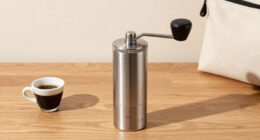
A compact hand grinder packs precision parts into a small body. Its price can reflect control and durability, while the daily trade is time and effort.
What the price pays for
Careful engineering helps keep fine grinding consistent and manageable by hand.
Aligned burrs
Burr geometry, alignment, and manufacturing quality shape the grind; material alone does not determine results.
Repeatable adjustment
Small, consistent changes help you respond when a coffee or shot flow changes.
Durable compact parts
The shaft, bearings, adjustment system, handle, and grounds catch must fit together while keeping the burrs aligned.
Comfort and support
Ergonomics, serviceable parts, warranty support, and smaller production runs can add value and cost.
The espresso fit
“Espresso capable” is not a universal guarantee: the grinder must suit your coffee, machine, and preferred shot.
- Quiet and portable, with no outlet needed.
- Fine grinding takes your time and physical effort.
- Can reduce effort when preparing several drinks.
- Usually needs power and more counter space.
Compare the whole workflow
Price alone cannot tell you whether a grinder will make your routine easier.
- Check espresso performance with your coffee and machine.
- Consider grind time, comfort, and how many drinks you make.
- Review cleaning, disassembly, replacement parts, and warranty.
- Check current specifications and independent testing for model claims.
Why a Premium Hand Grinder Can Cost More Than an Electric One
A premium hand grinder can cost more than an entry-level electric grinder because it combines precise burr alignment, controlled adjustment, durable parts, and ergonomic design in a compact body. The price pays for careful engineering and manufacture, not simply for a motor; a hand grinder leaves the motor out and puts the grinding power in your hand.
Espresso calls for a fine grind and small adjustments. If the grind is too coarse, water may rush through the coffee; if it is too fine, the shot can crawl or stall. A sturdy axle and well-supported bearings help the burrs stay aligned as you turn the handle, while repeatable adjustment steps help you change the grind without guessing. Those tolerances can be expensive to produce, even when the machine itself is small.
Consider a home setup where a shot runs noticeably faster than it did yesterday. With a repeatable adjustment, you can move a small step finer, pull another shot, and keep track of what changed. That useful feedback depends on the grinder’s mechanical parts behaving consistently. A cheap motorized grinder may cost less upfront because it is made at larger scale, but a low price alone tells you little about espresso control.
Manufacturing scale matters, too. Premium grinders may be produced in smaller batches than mass-market electric appliances, spreading design work and quality checks across fewer units. Replacement parts and warranty support can add to the retail price. If you’re comparing current models, the guide to premium hand grinders for espresso can help you identify options to investigate; check current specifications and independent testing before relying on any model claim.
Products Worth Considering

Breville Smart Grinder Pro Conical Burr Coffee Grinder, Brushed Stainless Steel

Breville Barista Express Espresso Machine with Built-In Grinder, Brushed Stainless Steel

De'Longhi COM630BK All-in-One Coffee and Espresso Machine
As an affiliate, we earn on qualifying purchases.
What Espresso Grinding Demands From Burrs and Adjustments
Premium hand grinders for espresso need burrs that can make a fine grind and an adjustment system that lets you make small, repeatable changes. “Espresso capable” has no universal standard, so the label means little unless the grinder can suit your machine, coffee, and preferred shot flow.
Burr material is only one part of the story. Steel burrs may be common in premium designs, but material alone does not determine cup quality; burr geometry, alignment, manufacturing quality, and how the adjustment mechanism holds its setting all play a role. Think of burrs like the blades in a pair of scissors: the material matters, but misaligned edges can still make a poor cut.
Fine adjustment helps when a new bag of beans behaves differently from the last one. You might dial in a medium roast on Tuesday, then find a denser, lighter roast pours slowly with the same setting on Friday. A small, repeatable change gives you a way to respond. More adjustment steps do not automatically mean better coffee, though; the steps need to be useful and consistent rather than numerous on a spec sheet.
A grinder can produce consistent grounds and still fail to make the shot you want. Bean freshness, dose, roast level, basket, machine pressure, and technique all affect the result. Treat the grinder as one part of a brewing system: it gives you control over particle size, while the coffee and machine shape how that control tastes in the cup.
The Compact Design Features You’re Paying For
Premium hand grinders cost more in part because their designers must fit the burrs, shaft, bearings, adjustment system, handle, and grounds catch into a compact body while keeping the burrs aligned. A small footprint looks simple on a counter, but packing precision parts into less space can make design and manufacturing harder.
Stronger axles, metal bodies, and quality bearings can add durability, while a balanced shape and comfortable handle make dense, fine beans easier to grind. Ergonomics are easy to miss in product photos. In your hand, a handle that turns smoothly and a body that stays steady can make the difference between a pleasant morning routine and a workout you resent.
Imagine grinding a dose before work while someone else is still asleep. A stable grip, smooth rotation, and quiet operation may matter more to you than raw speed. Pack that same grinder for a cabin trip, and the compact shape becomes useful again: no outlet, little counter space, and no electric motor to wake the room. The human-powered part of the tool supplies its own charm, and its own limits.
Premium designs also increasingly pay attention to workflow, including easier adjustment, lower grounds retention, and simpler disassembly for cleaning. These features can save small amounts of time and reduce stale grounds hanging around between brews. Still, verify cleaning instructions with the maker; brushing may be suitable, while washing burrs or internal parts may not be. The best design is the one you can use and maintain comfortably.
The Real Trade: Quiet, Portable Grinding Takes Your Time
A hand grinder trades electric convenience for portability, quiet operation, and a mechanical tool you can use without an outlet. Fine espresso grinding takes effort, and how long it takes depends on the grinder, dose, bean density, grind setting, and user; there is no single reliable time for every setup.
That trade can feel worthwhile when you make one shot in a small kitchen. You can store a compact grinder in a drawer, carry it in a travel bag, and grind early without the sharp buzz of a motor. But if you prepare several drinks back-to-back, the handle keeps asking for your time and energy while an electric grinder can keep dosing with less effort.
Use this comparison as a starting point, not a promise about every model. Actual performance varies, and “espresso capable” does not guarantee that a grinder will suit every machine or coffee.
| What you value | Hand grinder | Electric grinder |
|---|---|---|
| Portability | No outlet needed; compact models travel well | Usually needs power and more counter space |
| Noise | Quiet apart from the handle and beans | Motor noise varies by design |
| Physical effort | You turn the handle for each dose | Motor does the grinding |
| Espresso control | Depends on burrs and repeatable adjustment | Also depends on burrs and adjustment |
| Multiple drinks | Effort adds up across doses | Often easier to repeat quickly |
For a couple who each want an espresso before leaving home, the extra hand-grinding time may be a welcome ritual or an annoying bottleneck. Decide based on how you actually brew, not just the pleasure of holding a beautifully made tool.
How to Decide Whether the Higher Price Fits Your Routine
Decide whether a premium hand grinder is worth its price by comparing the work it does with the work you’re willing to do. A higher price may make sense if you value espresso-level control, durable construction, a small footprint, quiet use, or travel; it can be a poor match if you grind many doses every day and want the motor to handle the effort.
- Count your doses. Write down how many espresso servings you make on a typical day. One morning dose is different from preparing drinks for guests.
- Check espresso control. Look for useful, repeatable adjustment steps and evidence that the burr design can grind fine enough for your machine and coffee.
- Think about comfort. If you can, handle or try a grinder. A stable body and easy-turning handle matter more when grinding fine.
- Compare upkeep and support. Check capacity, disassembly, replacement parts, warranty terms, and current manufacturer guidance.
- Compare total value. Weigh current price against grind performance, effort, durability, portability, and service—not burr diameter or adjustment-step count alone.
For example, a frequent traveler who pulls one espresso at a time may accept the slower workflow because the grinder fits in a bag and works away from an outlet. Someone serving four coffees before breakfast may reach for an electric grinder regardless of how carefully the hand grinder is built. The better value depends on which inconvenience you’d rather live with.
Be cautious with broad promises. A premium price does not guarantee the ideal shot, and a grinder’s advertised features do not substitute for current independent testing. If a model’s fit depends on exact grind time, warranty coverage, or compatibility, check current manufacturer information and measured comparisons before buying.
What to Expect From a Hand Grinder Across Espresso and Pour-Over
One hand grinder may handle espresso and pour-over, but switching between them can take care, and a model optimized for one grind range may feel less convenient in the other. The practical question is whether the adjustment system makes it easy to find your way back to each setting.
Say you pull espresso on weekdays and make a slower pour-over on Saturday. If the grinder lets you record and return to both settings, one tool might suit your routine. If you need to count many turns, or the adjustment feels loose, changing back and forth can become a small but persistent chore. Keep a note of your settings and change them according to the maker’s directions.
Grind speed changes with the coffee as well as the grinder. Dense beans, a fine setting, and a larger dose can make the handle feel heavier than a coarser pour-over grind. That is why claims about a single grind time can mislead: a time measured with one coffee and dose does not tell you how your own morning will feel.
In recent years, more premium hand grinders have been designed with espresso in mind, and buyers can compare burr geometry, adjustment systems, speed, and user experience more easily through reviews and enthusiast communities. The category ranges from compact travel tools to larger, more ergonomic bodies. Treat market trends as context, not as proof about a specific current model; confirm specifications and performance with recent manufacturer details and independent testing.
Small Habits That Make Manual Espresso Easier to Live With
Manual espresso grinding becomes easier to repeat when you keep your dose, setting, and cleaning routine consistent. A little recordkeeping can save you from starting over each morning, especially when small grind changes affect shot flow.
- Start with the maker’s guidance. Set the grinder in its recommended range rather than forcing the adjustment past its stops.
- Measure your dose. Keep the coffee amount consistent so you can tell whether a grind change made the difference.
- Watch the shot. If flow is too fast or too slow, adjust in a small step and taste the result.
- Record the setting. Note the coffee, dose, setting, and a quick description of the shot, such as “fast, sour” or “slow, bitter.”
- Brush and maintain as directed. Routine brushing and occasional deeper cleaning can help with buildup; only wash parts when the manufacturer says it is safe.
For instance, if a fresh bag pours too quickly, keep the dose and tamp consistent, move slightly finer, then pull another shot. Changing several variables at once makes it hard to learn what helped. Your grinder won’t make every variable behave, but a repeatable adjustment lets you test one change at a time.
Maintenance also protects the experience you paid for. Coffee dust and oils can build up, but different grinders have different cleaning requirements. Follow the instructions for disassembly and avoid water on burrs or internal parts unless the maker approves it. If something feels stiff or misaligned, stop and consult the manual rather than forcing the handle.
Frequently Asked Questions
Why can a hand grinder cost more than an electric grinder?
Premium hand grinders can cost more because they use carefully aligned burrs, repeatable adjustment parts, durable materials, and ergonomic designs, often in smaller production runs. The absence of a motor does not remove the cost of precision engineering or support.
Can a hand grinder really grind coffee for espresso?
Many premium hand grinders can produce fine grounds with useful adjustment control, but “espresso capable” is not a universal standard. Check that the adjustment range and burr design suit your machine and coffee, then dial in by observing shot flow and taste.
Is grinding espresso by hand difficult?
Fine grinding takes more effort than grinding for coarser brewing, and the experience depends on the grinder, coffee, dose, and user. A comfortable handle and stable grip can help, but making several drinks in a row may feel tiring.
Do steel burrs make better coffee than ceramic burrs?
Not by themselves. Burr geometry, alignment, manufacturing quality, and the adjustment system all affect results alongside material, so compare how the whole grinder performs.
Can one hand grinder handle espresso and pour-over?
Some can, but changing between grind ranges may be less convenient if returning to a previous setting is difficult. Record your settings and check whether the grinder’s adjustment system suits the way you switch brewing methods.
How long does it take to grind an espresso dose by hand?
There is no single time that applies to every grinder and coffee. Dose size, bean density, grind setting, grinder design, and user effort all affect the time, so use measured tests with a dose and coffee similar to your own.
Conclusion
Pay for a premium hand grinder when its control, quiet operation, portability, and build suit the way you actually make espresso. Before buying, check adjustment quality, comfort, upkeep, current support, and how many doses you expect to grind by hand.
The grinder may be small enough to tuck in a bag, but each fine turn still comes from you. Choose the tool whose morning ritual you’ll want to repeat.