TL;DR

Get coffee and tea gear delivered free with Prime
- Fast, free delivery on millions of items
- Prime Video, Amazon Music and more included
- Member-only deals all year
The shower screen disperses water above your espresso puck, and coffee oils and fine particles can collect on it over time. Flush and wipe the group head after brewing, then follow your machine’s instructions for backflushing or removing the screen; this supports reliable water flow but cannot replace fresh coffee, sound puck preparation, and suitable settings.
A coffee puck can be perfectly prepared and still meet water from a screen dotted with yesterday’s coffee oils. The shower screen sits above the puck and spreads brewing water across it, so residue on this small metal part can become one more source of uneven flow.
A quick rinse after brewing takes seconds. Add a wipe once the group head has cooled enough to handle safely, and you have a simple cleaning habit that helps keep residue from accumulating. It can support steadier shots, though it cannot rescue stale beans or a lumpy puck.
Here, you’ll learn what the screen does, how to clean it without damaging it, when deeper maintenance makes sense, and what a clean machine can—and cannot—change in your cup. You’ll also see how to fit the routine into a real morning, when your espresso is already poured and the next thing on your mind is breakfast.
Flush the group head after brewing and wipe visible residue with a damp cloth once the area has cooled enough to handle safely.
Follow your machine’s manual before backflushing, using detergent, or removing the shower screen.
Do not remove the screen every day unless the manufacturer recommends it; reinstall it securely after any directed removal.
Avoid pins, abrasive scrubbers, and unapproved chemicals that could damage the screen or group head.
Use a clean screen as one part of dialing in; fresh coffee, grind, dose, puck preparation, and brew settings still matter.
A Cleaner Screen Supports Every Shot
The shower screen spreads water across the coffee puck. Routine cleaning helps reduce residue as one avoidable source of uneven flow.
What the screen changes
Oils and fine particles can build up on the screen or behind it, changing how water reaches the coffee bed.
- Helps water reach the puck as intended
- Removes one source of shot variation
- Can partly obstruct openings
- May contribute to uneven water flow
After your last shot
A brief rinse and wipe clears loose particles and visible residue without removing the screen.
Follow your machine’s normal operating instructions after brewing.
Wait until the area is safe to handle; metal parts can stay hot.
Use a damp cloth on the screen face and gasket area.
Choose deeper cleaning carefully
Backflushing, detergent, and screen removal depend on the machine and its instructions.
Check compatibility
Backflush only if your machine supports it and its manual explains how.
Use approved products
Use espresso-machine cleaner only when permitted, and rinse as directed.
Follow the manual
Remove the screen only as directed and reinstall it securely before brewing.
Keep dialing in
A clean screen supports reliable water flow, but coffee and brewing choices still shape the shot.
See How the Shower Screen Shapes Water Flow
A shower screen disperses water from the espresso machine’s group head across the coffee puck. Its job is to spread incoming water over the bed, so residue on its surface or behind it can partly obstruct openings and alter where water emerges. The practical consequence is that water may reach some parts of the puck differently from others, adding inconsistency before grind or tamping even enter the picture.
Think of it like a sprinkler head: when some openings are obstructed, the water pattern can change. The comparison is useful because it shows how a small obstruction can affect distribution, but espresso adds another layer: water passes through a compressed bed of coffee, which resists flow and changes as it extracts. A clean screen can help water arrive as intended; it cannot make the bed evenly prepared or control the pressure and temperature of the machine.
After a busy weekend, you might notice sticky brown residue around the screen or gasket area. Coffee oils cling to metal, while fine particles can lodge around openings or the edge of the screen. A quick flush can carry away loose material, but it may not remove the film that sticks to the surface. A damp cloth can lift what is visible once the machine has cooled enough to touch safely. This distinction explains why a rinse and wipe are useful routine care, while persistent buildup may call for the deeper method in your manual.
In plain terms, the screen helps water reach the coffee bed; it does not make the puck preparation for you. If your espresso runs fast or tastes sour, a clean screen removes one possible source of uneven flow, making other adjustments easier to interpret. It is a sensible first check when residue is visible, but changing grind, dose, or distribution may still be necessary. Treat screen cleaning as basic upkeep that removes one avoidable variable from the process.
Products Worth Considering

Breville Barista Express Espresso Machine with Built-In Grinder, Brushed Stainless Steel

KitchenAid KES6503 Semi-Automatic Espresso Machine, Empire Red

De'Longhi COM630BK All-in-One Coffee and Espresso Machine
As an affiliate, we earn on qualifying purchases.
Use This 30-Second Routine After Your Last Shot
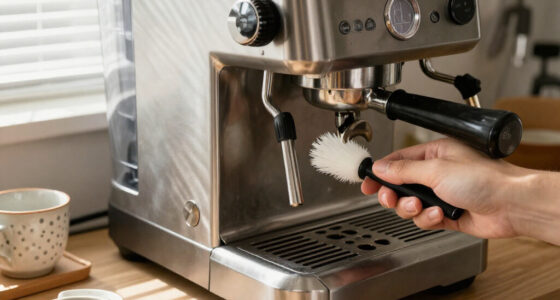
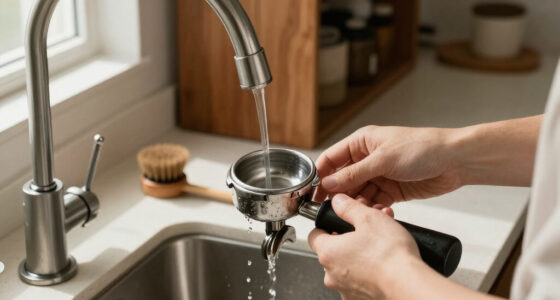
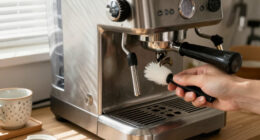
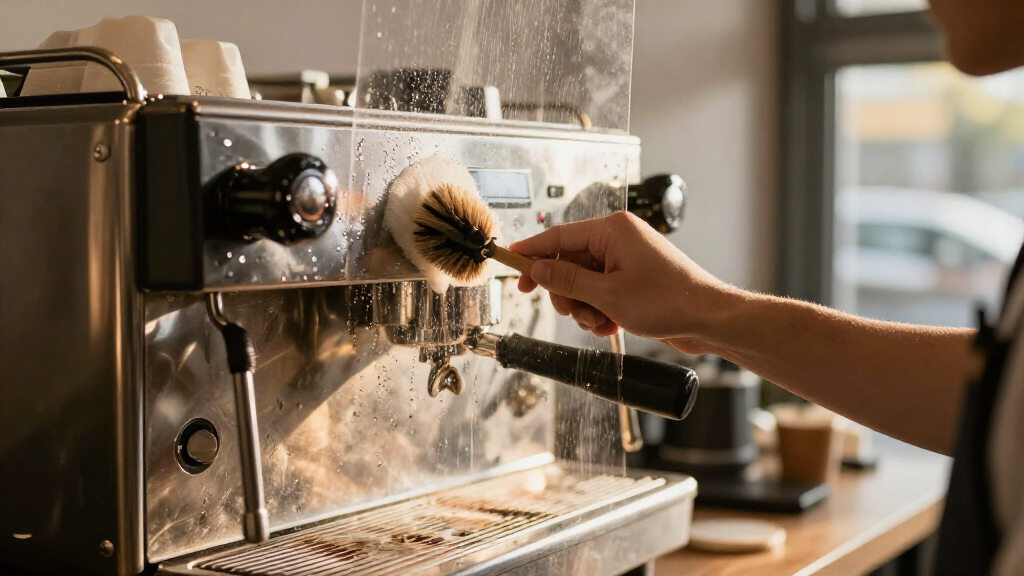
A post-brew rinse and wipe clears loose residue and visible coffee splashes from the group head without taking the screen apart. Flush water through the group head after brewing, then wipe the screen and gasket area with a damp cloth once the machine has cooled enough to handle safely. Flushing helps carry away particles before they dry; wiping addresses the oils and splashes that water alone can leave behind. Together, these small steps reduce everyday buildup while avoiding the extra handling involved in removing the screen.
- Flush the group head briefly after your last shot, following your machine’s normal operating instructions.
- Let the area cool enough to handle safely. Metal parts can stay hot after brewing, so don’t press your fingers or cloth against a hot group head.
- Wipe visible residue from the screen face and gasket area with a damp cloth.
- Check the result for obvious coffee specks or sticky patches, and leave deeper cleaning for the schedule in your manual.
For example, if you make a cappuccino before work, a brief flush and wipe after your last drink takes less time than rinsing the milk pitcher. The cloth should be damp, not dripping, and you should avoid reaching into hot or moving parts. If residue remains after this routine, that does not mean you should scrub harder: the design may require a different cleaning method, or buildup may be behind the screen. If the machine’s instructions give a different routine, follow those.
This is a cleaning habit that improves every shot only in the practical sense that it helps you start with a cleaner group head each time. It can reduce residue as a variable, which is useful when you are trying to understand why shots change. It cannot guarantee a sweeter espresso or compensate for stale beans, uneven distribution, or the wrong grind, so keeping the routine brief also prevents it from becoming a substitute for brewing adjustments.
Know When a Backflush or Deeper Clean Makes Sense
Backflushing is machine-specific: do it only if your espresso machine supports it and its manual explains how. Some machines use a three-way solenoid valve and a suitable blind basket for this process; other machines should not be backflushed. On a compatible machine, the blocked basket lets water pressure flush residue back through a path that a normal brew does not clean in the same way. That benefit depends on the machine’s design, so applying the method to an unsupported model can send water where it was not meant to go.
For instance, a home barista making two shots each morning may have a different maintenance schedule from someone pulling a dozen shots a day for a household or small office. More use generally means more coffee passes through the group head, but the best schedule also depends on the machine and the kind of cleaning it supports. A guessed weekly detergent routine can therefore be both too frequent and unsuitable. Start with the manual, which can specify whether your model supports backflushing, what basket to use, and whether detergent belongs in the process.
During deeper cleaning, use products made for espresso equipment only when the machine’s manufacturer permits them. Detergent can help break down oils that water leaves behind, but it also needs to be rinsed away thoroughly as directed so it does not linger in the brew path. Avoid abrasive scrubbers and harsh household chemicals; the short-term benefit of aggressive scrubbing is not worth risking scratches or damage to the screen or group head.
A backflush is not the same as removing the shower screen. It cleans through a particular water path on compatible machines, while removing the screen can expose residue behind it. These are separate maintenance choices, and neither automatically replaces the other. If you are unsure which applies, check your manual before reaching for detergent or tools; choosing the correct method protects the machine and avoids work that may not address the buildup you actually have.
Compare Routine Cleaning With Screen Removal
Routine cleaning means flushing water through the group head and wiping visible residue; screen removal means taking the part out for access behind it. Routine care fits after brewing, while removal should follow the machine’s directions and schedule. The difference is a tradeoff between convenience and access: a wipe is easy to repeat and handles surface mess, while removal reaches hidden residue but involves tools and careful reassembly. Comparing the jobs helps you avoid turning a simple wipe into unnecessary disassembly.
| Task | What it addresses | How to approach it |
|---|---|---|
| Flush after brewing | Loose residue in the group head area | Use the machine’s normal flush procedure |
| Wipe the screen and gasket area | Visible splashes, oils, and grounds | Use a damp cloth after the area cools enough to handle safely |
| Backflush | Maintenance through a supported group-head path | Only do this if the manual says your machine supports it |
| Remove the shower screen | Residue behind the screen | Use the specified method and schedule, then reinstall securely |
Imagine a screen that looks clean from the front but has an uneven water pattern during a flush. Visible buildup or restricted flow can be a reason to inspect further, but neither sign proves the screen is the cause; other machine issues may produce similar symptoms. Treat the pattern as a clue, not a diagnosis. Your manual can tell you whether to remove the screen and how to do it safely.
Daily removal is usually unnecessary unless your manufacturer recommends it. Repeatedly loosening and tightening parts without a need adds effort and may harm threads or seals if you do it carelessly. A quick wipe handles the everyday mess; removal is more useful when the manual calls for it or when inspection indicates that surface cleaning is not enough. That balance keeps routine maintenance simple while preserving access for the buildup a cloth cannot reach.
Spot Buildup Without Scratching the Screen
Visible residue, restricted flow, or an uneven water pattern can tell you it is time to inspect the group head and consult your machine’s manual. These clues call for a closer look, not a rushed repair: other causes can also affect water flow. A quick check after cleaning can help you notice changes before they become part of your daily routine.
For example, if water seems to emerge unevenly during a flush, first wipe away the coffee specks you can see and repeat the check according to your machine’s instructions. If the problem remains, look up the recommended inspection steps instead of poking holes with a pin. A pin or abrasive pad can scratch, deform, or enlarge the openings, changing the screen rather than cleaning it.
Use the cleaning method recommended for your particular screen. Some designs have different hole patterns or materials, so a method that suits one machine may not suit another. That is why a universal instruction like “scrub hard” is poor advice: it skips the part that matters most, the design in front of you.
If you remove the screen as directed, reinstall it securely before brewing. If it looks damaged or remains clogged despite the recommended cleaning, consult the manual or a qualified service provider about replacement. A clean surface is useful; a screen with damaged openings can create a different problem.
Set Realistic Expectations for What a Clean Screen Can Fix
A clean shower screen supports reliable water flow, but it cannot guarantee better-tasting espresso on its own. It removes one possible source of shot-to-shot variation: coffee residue in the group head area. Beans, grind, dose, puck preparation, and brew settings still shape the cup.
Suppose your shot tastes sharp and finishes in 18 seconds. Cleaning the screen is sensible if it has visible buildup, but it does not tell you whether the grind is too coarse or the dose is too low. Change one brewing variable at a time after basic cleaning, and you can learn more from each shot instead of hoping one maintenance step fixes everything.
The same goes for a slow, bitter shot. A screen with residue may contribute to restricted flow, but a fine grind or high dose can also slow extraction. Start with what you can observe: the screen’s condition, the shot time, and whether your coffee is fresh. Then make a measured adjustment and taste again.
Think of cleaning as resetting the stage, not writing the whole performance. A clean group head gives you fewer avoidable messes to account for, while good espresso still depends on the full setup. When a shot changes, use the screen check as one part of troubleshooting rather than the only answer.
Make the Habit Stick Even on Busy Mornings
Pair the rinse and wipe with your last shot so the task attaches to something you already do. A routine tied to an existing moment—putting away your cup, for example—is easier to remember than a vague plan to clean “later.” The key is a short, repeatable action, followed by deeper care on the schedule your manual gives.
Try this on a weekday: pull your final espresso, flush the group head, let the area cool enough to handle safely, and wipe away visible residue while you put the milk pitcher in the sink. Keep a dedicated clean cloth near the machine, but wash it regularly so you are not spreading old coffee oils back across the group head. Small details like that make the routine practical.
If you make coffee for several people, assign the wipe to whoever pulls the last shot. You do not need a complicated maintenance chart; a note beside the machine can remind everyone to check the manual for deeper cleaning and backflushing instructions. That small cue can prevent the familiar scene of a neglected machine and a drawer full of mysterious cleaning brushes.
Adapt the rhythm to your use. A person making one weekend latte may need a different deeper-cleaning schedule from someone pulling many shots every day. Keep the after-brew flush and wipe simple, then let the manufacturer’s guidance and the amount of use shape the rest.
Frequently Asked Questions
How often should I clean the espresso shower screen?
Flush the group head after brewing and wipe visible residue regularly, ideally after your last shot in a session. Follow your machine’s manual for deeper cleaning frequency, since the right schedule depends on your model and how often you brew.
Should I remove the shower screen every day?
Usually not, unless the manufacturer recommends daily removal. A flush and wipe handle routine visible residue; removing the screen can expose buildup behind it but should follow the machine’s specified method and schedule.
Can I backflush every espresso machine?
No. Backflushing is intended for machines that support it, such as certain models with a three-way solenoid valve and a suitable blind basket. Check the manual before trying it, because some machines should not be backflushed.
Do I need detergent to clean the shower screen?
A water flush is suitable for routine rinsing. Use an espresso-machine cleaning product for deeper cleaning only when your manufacturer permits it, and rinse as directed.
Will a clean shower screen make my espresso taste better?
It may help restore normal water flow if residue was affecting the screen, which can remove one avoidable source of variation. It cannot guarantee better flavor: coffee freshness, grind, dose, puck preparation, and brew settings all shape the result.
Conclusion
Make the habit small: flush after brewing, let the group head cool, and wipe away what you can see. Use the manual for deeper cleaning, backflushing, and screen removal, because the right method depends on your machine.
A clean shower screen gives the next shot a clearer path through the group head. Then the coffee, your puck preparation, and your settings get their say.