
TL;DR

Get coffee and tea gear delivered free with Prime
- Fast, free delivery on millions of items
- Prime Video, Amazon Music and more included
- Member-only deals all year
An espresso machine feels premium when it is well built, easy to use, produces repeatable results, and can be maintained and serviced over time. Price and features matter less than how well the machine fits your coffee routine, especially alongside a capable grinder, fresh beans, and suitable water.
A gleaming espresso machine can look like a professional tool and still annoy you every morning. Maybe its portafilter feels loose, its water tank is awkward to refill, or its shiny pressure gauge sits beside coffee that tastes sour and thin. Premium feel is not the same as premium price; you notice it in the machine’s behavior, not just its showroom shine.
Think of the machine as an instrument in a small kitchen orchestra. The grinder sets the rhythm, the beans bring the melody, and the machine has to keep time without fuss. When its controls, heating, steam, and upkeep work together, making coffee feels deliberate rather than like a daily wrestling match.
This guide shows you what to check before buying: materials and handling, temperature and steam, workflow, repairability, and the cost of the whole setup. You’ll also learn which features can help and which ones may simply decorate the spec sheet. A few hands-on tests can tell you more than a polished product photo.
Judge an espresso machine by stable construction and repeatable daily use, not price or weight alone.
Match the heating setup to your routine: single boiler, heat exchanger, and dual boiler designs handle brewing and steaming differently.
A pressure gauge does not prove a shot is extracting well; grind, dose, beans, water, and technique matter too.
Before buying, test tank access, cup clearance, portafilter fit, cleaning steps, and counter space.
Include a capable grinder, water care, cleaning supplies, warranty, and repair access in your total-cost calculation.
What Makes an Espresso Machine Feel Premium?
A premium machine earns its place through steady construction, predictable brewing, comfortable workflow, and support that lasts. The best choice fits your coffee routine—alongside a capable grinder, fresh beans, and suitable water.
Quality shows up in the small moves you repeat.
A secure portafilter, steady base, clear controls, and accessible tray make daily brewing feel deliberate. Premium is not a price tag or a heavy shell; it is a machine that behaves predictably and suits the way you make coffee.
Fit over flash
Look for tight joins, solid controls, and finishes that handle regular cleaning. Well-designed plastic can outperform loose, rattling metal.
Stable under pressure
Lock in the portafilter with normal force. A machine that stays put and a handle that feels comfortable reduce everyday friction.
Easy access matters
Check tank refills, drip-tray removal, cup clearance, and cleaning points. Awkward access can turn routine care into a chore.
Repeatable behavior
Stable brewing lets grind or dose changes produce understandable results. Consistency gives you room to learn and adjust.
Control the wand
For milk drinks, notice steam recovery, wand position, and how easily it cleans. Power helps only when it is manageable.
Service is a feature
Available parts, clear documentation, repair access, and a useful warranty build confidence long after showroom day.
Can you lock in, brew, lift the cup, and clean up without wrestling the machine?
Choose the heating design that fits your morning.
Boiler type shapes how a machine moves between brewing and steaming. Faster workflow may be valuable when making several milk drinks; a compact, simpler setup can make more sense for an occasional straight espresso.
| Heating design | Typical workflow | Potential trade-off | Best fit to consider |
|---|---|---|---|
| Single boiler | ● Brew and steam in sequence | ~ May need a temperature change and pause | Compact routines; mostly straight espresso |
| Heat exchanger | ● Can brew while steaming | ~ More capacity and complexity to manage | Regular milk drinks with a quicker rhythm |
| Dual boiler | ● Separate brew and steam boilers | ~ More space, cost, and care may be needed | Frequent milk drinks and independent control |
PID control can help manage brew temperature. It is one part of stability, not a guarantee of better espresso.
Five practical tests beat a polished product photo.
In a showroom, test gently. For an online purchase, inspect dimensions, tank and tray access, and the maker’s parts and service information.
Measure the footprint
Leave room for the machine, grinder, cups, and your normal counter routine.
Test the portafilter
Feel the fit and handle. Notice whether the base shifts during normal locking.
Reach the tank and tray
Check whether refilling and emptying are simple without moving the machine.
Check cup clearance
Bring your usual cup dimensions to mind; make sure it fits below the spout.
Can you clean it easily?
Find the cleaning steps and descale guidance. Water hardness and the manufacturer’s instructions determine the care schedule.
Can it be supported?
Look for replacement parts, service availability, clear documentation, and warranty terms for your region.
Do the features belong?
Useful controls and a sensible layout matter more than crowded panels or an impressive list of extras.
The machine is one link in the chain.
A capable machine cannot rescue stale beans, poor grinding, unsuitable water, or inconsistent technique. Build a setup whose parts work together, then spend where it improves your actual routine.
Consistent grinding gives you useful control over extraction.
Fresh coffee gives the machine something worth brewing.
Suitable water supports taste and responsible machine care.
Dose, grind, and preparation shape the shot in your cup.
Count the costs that keep coffee enjoyable.
The purchase price is only the start. Compare the complete setup and what it takes to use, maintain, and service it over time.
Machine + essentials
Include a capable grinder, suitable cups and tools, and enough counter space. Choose features for the drinks you actually make.
Care + support
Include water care, cleaning supplies, replacement parts, warranty coverage, and local repair access in the total-cost calculation.
Will this machine make your everyday coffee feel easy, steady, and worth repeating?
Judge construction by how it handles, performance by how predictably it behaves, and premium feel by how well the whole setup fits your kitchen and your coffee habits.
What makes an espresso machine feel premium in daily use?
What makes an espresso machine feel premium is the way solid construction, predictable performance, and comfortable controls work together every time you brew. It should feel steady on the counter, respond clearly when you operate it, and help you repeat a good shot without turning breakfast into troubleshooting. A high price or heavy body alone does not deliver that experience.
Think of premium feel as a chain: every link has to hold. A secure portafilter fit, a handle that sits comfortably in your hand, and a drip tray that slides out without catching all add up. These details matter because repeated friction changes how often you want to use the machine and how likely you are to maintain it. If one everyday interaction feels cheap or awkward, you notice it quickly. The machine could be clad in polished steel, but a rattling panel or confusing control can break the spell.
Try imagining a Tuesday morning. You lock in the portafilter, press the brew control, and hear a steady pump rather than a loose buzz. The espresso runs in a narrow, even stream, and you can lift the cup without bumping a low spout. That repeatable, unhurried routine is a more useful sign of quality than a long feature list. Repeatability does not mean every shot tastes identical regardless of your choices; it means the machine behaves predictably enough that changes in grind or dose produce understandable results instead of being masked by erratic operation.
Ask yourself what your coffee routine actually demands. If you make one straight espresso, fast warm-up and stable brewing may matter most. If you make two cappuccinos before work, you may care more about steam recovery and the ability to brew and steam without long pauses. Those priorities can conflict: a machine optimized for compact size or low cost may require more waiting, while a larger, more capable system takes up counter space and may need more care. Premium means the machine suits your life, not that it packs in every available feature.
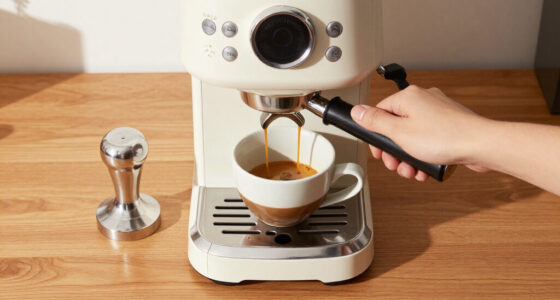
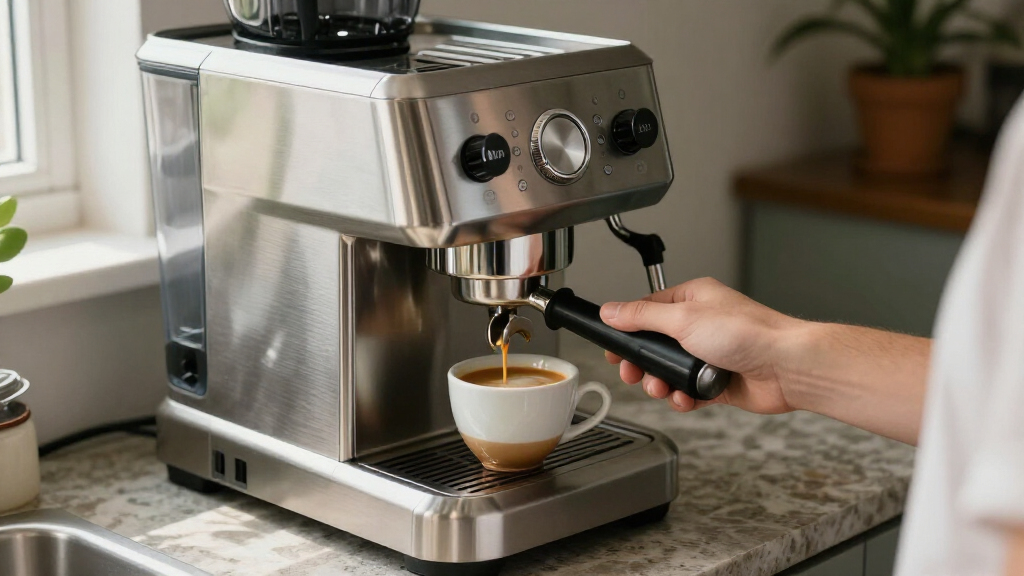
premium espresso machine with stable build
As an affiliate, we earn on qualifying purchases.
As an affiliate, we earn on qualifying purchases.
Which materials and small details feel reassuring?
Materials and fit make an espresso machine feel premium when its parts seem secure, well finished, and pleasant to handle. Look at the joins between panels, the way switches move, and whether the machine stays put as you lock in the portafilter. Metal can feel substantial, but a well-designed plastic part can outperform a thin, rattly metal panel. The material matters most where it affects durability, heat, cleaning, or the stability of a part you use often—not simply because it signals expense.
Use a simple comparison: a thick metal body with loose controls may feel less convincing than a lighter machine with tight joins and a stable base. The portafilter offers a practical test. Does it lock in smoothly, or does the machine slide backward? Do the buttons click with a clear response, or wobble under your fingertip? A machine that shifts when you lock in the portafilter can make dosing and tamping less comfortable, and that annoyance repeats every time you brew. These small moments tell you how carefully the machine handles its basic job.
Details around cleaning count too. A drip tray that lifts out without spilling, a water tank you can refill without moving the machine, and cup clearance that suits your favorite mug all ease daily use. Imagine wiping dried coffee from a narrow corner after a hurried latte: clever curves and accessible surfaces suddenly feel more valuable than a decorative badge. Easy access also has a longer-term payoff: when cleaning is less fiddly, you are more likely to do it regularly, which helps prevent old coffee residue from affecting taste and keeps routine care manageable.
- Check fit: Look for panels and handles that feel secure, not loose or tinny.
- Check stability: Apply normal portafilter pressure and see whether the machine shifts.
- Check access: Try to reach the tank, drip tray, and cleaning points.
In a showroom, test controls gently and ask how high the machine stands once you add your grinder and cups. For online buying, study the dimensions and photos of the tank and tray, then look for clear information about replacement parts. Good materials should support useful design, not merely catch the light. Also consider the tradeoff between a compact, tightly packed layout and easy access: a smaller footprint can save valuable counter space, but a tank or cleaning point that is difficult to reach may cost you time every day.
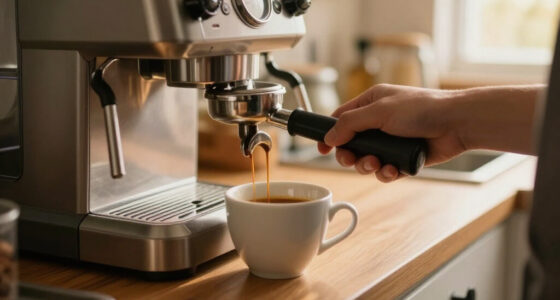
dual boiler espresso machine for home use
As an affiliate, we earn on qualifying purchases.
As an affiliate, we earn on qualifying purchases.
How can you tell if brewing and steaming will stay consistent?
Consistent brewing and steaming depend on how well the machine manages temperature, pressure, and recovery, not simply on whether it displays impressive numbers. Stable brew conditions help you repeat a shot; dependable steam helps you texture milk without a long wait. That consistency matters because it lets you make deliberate adjustments: if a shot changes when you alter the grind, you can learn from the result. A gauge can offer information, but it cannot judge the taste in your cup.
Heating design shapes the routine. A single-boiler machine uses one boiler for brewing and steaming, so you usually switch between tasks. A heat-exchanger design can brew and steam with one boiler system, while a dual-boiler machine keeps separate boilers for each job. A single boiler can be simpler and more compact, but switching temperatures takes time when you move from espresso to milk. Heat exchangers and dual boilers can reduce that pause, but their added capacity, complexity, and cost may be unnecessary if you rarely make milk drinks. Those setups affect workflow, space, warm-up, and care; they do not automatically rank a shot as better or worse.
A PID controller can help regulate brew temperature, but it is one part of the system. Boiler design, temperature recovery, and how the machine handles repeated shots also matter. Better regulation can make a machine’s behavior more predictable, but it cannot correct stale beans or an unsuitable grind. Pressure profiling gives you room to vary pressure during a shot, which may interest an experienced home brewer who wants to explore different recipes, but it adds little if you mainly want a dependable morning espresso. More adjustment is useful only if you want to learn what each adjustment does.
Picture making two flat whites back-to-back. If the first shot tastes balanced but the second turns watery after steaming, recovery and workflow deserve attention. If you mostly drink espresso, that same limitation may barely affect you. Match the heating system to your habits, and treat specifications as clues to verify rather than guarantees. Ask not only how quickly a machine can steam, but whether it can repeat the process at the pace you actually need.
Remember: A pressure gauge shows pressure at a point in the system. It does not, by itself, confirm that the shot is extracting well.
Espresso also depends on the grinder, beans, water, dose, and technique. A premium machine cannot rescue stale coffee or a grind that is too coarse. For example, if a shot gushes through in seconds, changing the grind may help more than chasing a machine setting. This is why a gauge is best treated as a diagnostic clue, not a quality score: it can show what the machine is doing at one location, but the taste and flow tell you how the whole setup is performing.
espresso machine with easy water tank access
As an affiliate, we earn on qualifying purchases.
As an affiliate, we earn on qualifying purchases.
How do you test whether the workflow suits your kitchen?
- Check the footprint. Measure counter width and depth, then leave room to open cabinets and move the grinder. Check how the water tank comes out; a machine that fits only if you pull it forward every day may become a nuisance. Remember to measure the space above the machine too, since cabinets can block a tank that lifts out vertically.
- Try the main controls. Find the brew switch, steam control, and hot-water function without studying a manual. Clear labeling matters when you are half awake and want coffee before the kettle boils. If controls are hidden or ambiguous, you may need to interrupt the routine to check settings, and that friction adds up over months of use.
- Test the cup space. Place your usual mug beneath the spouts. If it does not fit, see whether the drip tray lifts out easily to make room. Consider whether removing the tray creates a stable place for the cup, rather than solving clearance at the cost of spills.
- Walk through cleanup. Ask how to empty the tray, wipe the steam wand, clean the group area, and refill the reservoir. A satisfying machine makes these jobs simple enough to repeat. The easier the routine, the less likely you are to postpone care until buildup becomes harder to remove.
- Check the warm-up routine. Find out what the manufacturer recommends, and whether the machine fits your real morning schedule. A machine that needs more preparation may still suit you if you plan ahead, but it can feel inconvenient if you expect coffee immediately.
A premium workflow is a series of small tasks that feel clear, comfortable, and repeatable. You should not need a balancing act to refill the tank or a special tool to remove the drip tray. A compact machine can feel more refined than a larger one if it makes better use of the space you have. At the same time, compactness is not a win if tight clearances make refilling, cleaning, or steaming awkward.
Imagine the machine on a narrow apartment counter beside a kettle and a small grinder. You pull out the tank, bump the cabinet door, and knock a spoon into the sink. Each problem seems minor, yet together they make coffee feel like furniture rearrangement. Measuring before buying helps you avoid that daily shuffle. It can also reveal a tradeoff you might otherwise miss: a larger machine may simplify access and hold more water, but leave less room for the grinder and preparation area you need.
Also check the maintenance instructions for your water and machine design. Clean and descale as the manufacturer directs; the right schedule depends on water hardness and the machine. Regularly wipe the steam wand after use and empty the drip tray before it overflows. Good workflow is not about skipping care—it makes proper care easier to keep up. A machine’s convenience is therefore more than speed: it is how well its daily routine makes correct care realistic.
professional-grade espresso machine with pressure gauge
As an affiliate, we earn on qualifying purchases.
As an affiliate, we earn on qualifying purchases.
Which premium features are worth paying for?
A feature is worth paying for when it solves a problem you actually have, rather than adding another button to learn. Temperature control, faster heating, and separate brewing and steaming can make a real difference for some routines. Pressure profiling and connected controls may help specific users, but a feature does not improve espresso just by appearing in the specification. Think in terms of what changes: does it save time, make results easier to repeat, or give you a useful way to experiment?
Here’s how the choice can play out. If you mostly drink espresso and enjoy adjusting recipes, a PID may help you work more consistently, while pressure profiling gives you extra room to experiment. That extra control has a learning cost: you need time to understand which changes affect the shot, and too many adjustments can make it harder to identify what went wrong. If you make two milk drinks every morning and hate waiting between brewing and steaming, a dual-boiler design may better serve your routine. If you value straightforward coffee above experimentation, those extra controls may gather dust.
| Feature | What it can offer | Best fit |
|---|---|---|
| PID temperature control | More controlled brew-temperature management | People who value repeatability and adjustment |
| Dual boiler | Separate brew and steam boilers for simultaneous work | Frequent milk-drink makers |
| Pressure profiling | More control over pressure during a shot | Curious brewers who like experimenting |
| App or smart features | Possible scheduling or remote settings | Buyers who will use connected controls |
There is a tradeoff: more control can make the learning curve steeper and the machine more complex. Automation can make a busy morning easier, while manual controls can help you learn how grind and extraction interact. Connected features may be convenient, but they also depend on software and connectivity, so consider whether the machine remains practical if you never use the app. Neither approach is automatically more premium; the best one is the approach you will enjoy using.
Keep the rest of the setup in view. A machine with advanced controls cannot compensate for a grinder that cannot make fine, consistent adjustments. Fresh beans and suitable water matter too. Before paying for a feature, ask what it changes in your cup or routine, and whether you would notice that change after the novelty wears off. If the upgrade uses most of your budget and leaves too little for a capable grinder, it may make the overall setup less satisfying, not more.
Why repairability and total cost matter after the first shot
A machine feels premium over time when you can maintain it, find help, and replace parts instead of treating a small failure as the end of its useful life. The warranty, service options, documentation, and availability of common parts are less eye-catching than a steel finish, but they matter after years of daily use. Repairability affects more than the cost of a breakdown: accessible parts and clear guidance make it easier to keep the machine performing consistently. Ask about them before you buy.
Consider a steam wand that starts leaking or a gasket that wears down after regular brewing. If you can find clear instructions and a replacement part, the repair may be straightforward. If the machine has little service information and no local support, a small fault can turn into a costly headache. Before purchase, find out whether the machine is designed for owner maintenance, professional servicing, or both; these approaches have different costs and time demands. Lifespan varies with design, use, water, upkeep, and repair access, so one promised number rarely tells the whole story.
The purchase price also leaves out the rest of the coffee station. You may need a capable grinder, a tamper that fits the basket, water treatment suited to your supply, and cleaning products. A cheaper machine paired with a weak grinder may frustrate you more than a simpler machine supported by a good grinder. Plan for the complete setup, not just the central appliance. The relevant comparison is not just the price tag: it is what it costs to get the drinks you want, maintain the equipment, and keep it working.
Water care deserves special attention. Hard water can leave mineral scale, while the right treatment depends on your local supply and the maker’s guidance. Scale can affect heating and eventually require more involved service, but inappropriate treatment can also cause problems, so avoid assuming that one filter or bottled water works for every machine. Follow the machine’s instructions for cleaning and descaling rather than assuming one schedule works everywhere. For example, a home using hard water may need a different plan from a home with treated water.
Ask the seller where servicing is available, what the warranty covers, and whether the manufacturer lists replaceable parts. Check whether wear items such as gaskets and shower screens are easy to source, and whether servicing requires shipping the entire machine. A premium machine is not maintenance-free. It should, however, make routine care and reasonable repairs feel possible instead of mysterious. Strong support can be worth more than a small performance upgrade if it keeps the machine usable for years.
How to judge a premium machine before you buy
You can judge an espresso machine more clearly by testing the tasks you will repeat than by admiring its finish or counting features. A short checklist reveals whether the machine feels stable, its controls make sense, and its upkeep fits your kitchen. If you can handle it in person, try the parts you will touch every morning. The point is not to find a flawless machine, but to see whether its compromises fall in areas you can live with.
- Start with your drinks. Write down whether you make espresso, milk drinks, or both, and how many cups you make in a row.
- Check the grinder budget. Reserve money for a grinder that can make consistent, fine adjustments; the machine does not work alone.
- Inspect the physical details. Test the portafilter fit, switch response, tank access, cup clearance, and machine stability.
- Match the heating system to your pace. Consider whether switching between brewing and steaming fits your routine.
- Read the care and service information. Check cleaning guidance, warranty terms, repair options, and parts access.
For example, if you make one cappuccino on weekends, a compact machine with a manageable steam wand may make more sense than a larger dual-boiler system. If you serve four milk drinks in a row, faster recovery and simultaneous brewing and steaming could matter more than a smaller footprint. The larger system may reduce waiting, but it also costs more and uses more counter space. Choose for the coffee you make, not the coffee you imagine making once a year.
When buying online, treat clear dimensions, manuals, warranty details, and service information as part of the product description. If a listing celebrates a pressure gauge but says little about cleaning or repairs, keep asking questions. The best machine is not necessarily the one with the longest feature list. It is the one whose design, performance, and support line up with your everyday use—and whose compromises you understand before you bring it home.
Frequently Asked Questions
Does a more expensive espresso machine make better coffee?
A higher price can buy more consistency, control, faster workflow, or better service options, but it does not guarantee a better-tasting shot. Fresh beans, a capable grinder, suitable water, and good technique all shape espresso. Choose a pricier machine when its specific benefits fit how you brew.
Is stainless steel always better than plastic?
No. Steel can feel substantial, but thickness, fit, heat management, and repairability matter more than a simple metal-versus-plastic rule. A well-made plastic panel can feel more secure than a thin metal one that rattles.
Do I need PID temperature control or pressure profiling?
A PID can help regulate brew temperature and support repeatability, while pressure profiling gives you more room to experiment with a shot. Neither feature is essential for everyone. If you want straightforward espresso, a stable, easy-to-use machine may suit you better than extra controls.
Should I buy a single-boiler, heat-exchanger, or dual-boiler machine?
Choose based on how often you make milk drinks and whether you want to brew and steam at the same time. A single boiler usually requires you to switch between tasks; heat-exchanger and dual-boiler designs support different approaches to brewing and steaming. Compare workflow, space, warm-up, and care for the specific machine.
Is the grinder as important as the espresso machine?
Yes. A grinder that produces consistent grounds and adjusts finely helps you dial in espresso; a machine cannot make up for a grind that is too coarse or uneven. Include the grinder in your budget before choosing the machine.
How much maintenance does an espresso machine need?
Expect regular cleaning, including wiping the steam wand after use and emptying the drip tray. Descaling depends on the machine, your water hardness, and the manufacturer’s instructions, so follow the care guidance for your setup rather than using one schedule for every home.
Conclusion
Choose the espresso machine that makes your real coffee routine feel steady, comfortable, and repeatable. Check its fit, workflow, brewing needs, and repair support before you pay extra for features you may never use. A beautiful steel body is a welcome bonus, but it cannot replace a good grinder or a machine you enjoy caring for.
When each morning’s steps click into place—the portafilter locks, the espresso flows, the wand gives a soft hiss—your machine earns its premium feel one cup at a time.
Fall Picks
fall essentials
As an affiliate, we earn on qualifying purchases.