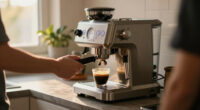
TL;DR

Get coffee and tea gear delivered free with Prime
- Fast, free delivery on millions of items
- Prime Video, Amazon Music and more included
- Member-only deals all year
Super-automatic espresso machines simplify coffee making with one-touch brewing and milk frothing. However, they require regular cleaning, can limit control, and involve higher costs. Knowing these tradeoffs helps you decide if they fit your lifestyle.
If you crave a perfect espresso with just a push of a button, a super-automatic machine might seem like your dream come true. It handles grinding, tamping, brewing, and even milk frothing, all automatically. But behind that convenience lurks a series of hidden compromises.
From daily cleaning routines to higher costs and reduced control, these machines aren’t as effortless as they appear. In this guide, you’ll learn what makes super-automatics tick, what to expect from their maintenance, and whether they truly fit your coffee habits. Ready to get real about these gadgets? Let’s dig in.
Super-automatic espresso machines provide quick, consistent drinks with minimal effort, but they still require regular cleaning—especially of milk systems—to m…
Costly upfront, these machines often limit your control over brewing parameters, making them less suitable for espresso enthusiasts who love tweaking shots.
Match your machine to your lifestyle: consider how many drinks you make daily, your cleaning willingness, and space constraints before choosing a model.
Latest features like app control, customizable profiles, and quieter grinders enhance convenience but don’t replace routine maintenance.
A good warranty and accessible repair options are just as important as features when evaluating longevity and value.
Super-Automatic Espresso Machines: Convenience, Cleaning, and Compromise
One button. Fresh beans in, a finished cappuccino out. Super-automatics grind, dose, tamp, brew, and froth milk automatically—but behind that convenience sit daily cleaning routines, higher costs, and limits on control. This guide breaks down what you gain, what you give up, and how to decide if one fits your kitchen.
Consistent Coffee Without the Barista Skills
Super-automatics replace years of practiced technique with a programmed pipeline. Each stage runs at fixed parameters—grind size, dose, tamp pressure, water temperature, and extraction pressure—so every shot repeats the last. That uniformity is the appeal; it is also why tinkerers find them restrictive.
Grind
Built-in grinder processes whole beans per drink; settings adjustable but not on-the-fly.
Dose & Tamp
Coffee is measured and compressed automatically at programmed pressure.
Brew
Water is heated and pushed through the puck at stable temperature and pressure.
Froth
Milk carafe or tube system textures milk and dispenses it into your cup.
Cleaning Is Not Optional—It’s Ongoing
“Automatic” describes drink preparation, not maintenance. Coffee oils, mineral scale, and milk residue build up inside brew groups, tubes, and water circuits. Neglect makes drinks bitter or sour, clogs frothing nozzles, invites bacteria—and shortens your machine’s life. Dried milk inside frothing tubes can force disassembly or professional service.
Grounds, Tray & Milk
Empty the used-grounds container and drip tray, and rinse the milk system after every milk drink. Dried milk is the top hygiene and blockage risk.
Brew Group & Tank
Clean the removable brew group per the manual and keep the water tank refilled and fresh. Accessible parts make this far easier.
Descaling Cycles
Descaling prompts appear based on water hardness and usage. Responding promptly protects the heating system and water circuit from scale damage.
What Convenience Actually Costs
Entry-level espresso gear is cheap; super-automatic engineering is not. And the sticker price is only the start—specialized parts like sealed grinders and milk systems make repairs costly too.
Repairability matters as much as features: check the warranty, parts availability, and whether the brew group is user-removable before you buy. Specialized repairs on sealed components can rival the cost of a new entry-level machine.
Super-Automatic vs. Semi-Automatic
The core trade is skill and time against control and texture quality. Here is how the two approaches compare on the factors that matter most.
| Factor | Super-Automatic | Semi-Automatic + Grinder |
|---|---|---|
| Skill required | Minimal — one-touch presets | Significant — technique-driven |
| Shot-to-shot consistency | High, once dialed in | Variable, depends on the user |
| Brew parameter control | Limited, via digital menus | Full — grind, dose, timing, pressure |
| Milk texture quality | Easy but less refined | Café-level with a skilled hand |
| Cleaning load | Frequent — milk systems & descaling | Regular but simpler components |
| Typical cost | $1,000–$3,000+ | $350–$1,500 |
| Best for | Speed, repeatable drinks, households | Enthusiasts who love the craft |
The Hidden Tradeoffs
Convenience is real, but it is purchased with flexibility, quiet, and sometimes bean choice.
Locked-Out Parameters
Fine-tuning shot timing or adjusting grind mid-brew is limited or buried in menus. Preset routines mean you live with the machine’s defaults.
Loud Built-In Grinders
Grinding noise can disrupt early mornings or offices, and milk pumps sputter and hiss during operation.
Oily Bean Restrictions
Many manufacturers discourage oily or flavored beans—they clog grinders, leave residue, and shorten machine lifespan.
Space & Refills
Compact models limit water and bean capacity, demanding frequent refills in busy households; large models eat counter space.
Is a Super-Automatic Right for You?
A machine serving several milk drinks daily has very different needs from one pulling the occasional espresso. Be honest about your routine before you buy.
You Value Speed & Repeatability
- Multiple drinks per day, especially lattes and cappuccinos
- You want consistent results with zero barista technique
- Household users who share custom drink profiles
- You’ll happily run automatic rinse and descale cycles on schedule
- Counter space for a larger, feature-rich unit
You Might Prefer Another Route
- You enjoy tweaking grind, dose, and shot timing
- Café-level microfoam texture is a priority
- Budget under ~$1,000 or you want low repair risk
- Quiet early mornings matter — grinders are loud
- Only occasional espresso; a simpler machine cleans easier
How Super-Automatic Machines Deliver Consistent Coffee Without the Barista Skills
Super-automatic espresso machines are designed to make your coffee experience predictable and quick. They automate critical steps such as grinding, dosing, tamping, and extraction, which are traditionally performed manually by baristas. This automation ensures that each shot has the same parameters—grind size, tamping pressure, water temperature, and pressure—resulting in consistent flavor and quality. Why does consistency matter? Because it removes the variability that often comes with manual brewing, giving you a reliable cup every time, regardless of your skill level.
However, this focus on automation also means you sacrifice some control. For example, fine-tuning shot timing or adjusting grind settings on the fly becomes more limited or requires navigating digital menus. The benefit is speed and ease—your machine handles the complex, precise tasks that can take years to master—thus making high-quality espresso accessible to novices. But the tradeoff is that if you desire a more nuanced, handcrafted shot, these machines may feel restrictive. Their design emphasizes uniformity and convenience over the artisanal control that manual or semi-automatic machines offer.
Ultimately, understanding how these machines automate core steps clarifies why they provide such consistent results. Yet, it also reveals why dedicated coffee enthusiasts might find their flexibility lacking—highlighting the balance between simplicity and control in your brewing experience.
As an affiliate, we earn on qualifying purchases.
The Dirty Secret: Cleaning Is Not Optional, It’s Ongoing
While super-automatic machines boast convenience, their maintenance routines are often underestimated or misunderstood. Regular cleaning is essential because the machine’s internal components—such as brewing units, milk frothing tubes, and water circuits—are prone to buildup of coffee oils, mineral deposits, and milk residues. These residues are not just unsightly; they actively impact the taste of your drinks, making them bitter or sour, and can harbor bacteria or mold if neglected.
Why does this matter? Because the buildup affects the machine’s performance—clogged nozzles can cause inconsistent frothing or extraction issues, and bacterial growth poses health risks. The implications extend beyond flavor: neglecting routine cleaning shortens the lifespan of parts and can lead to costly repairs. For example, dried milk residue inside frothing tubes can cause blockages that require disassembly or professional servicing.
Understanding the importance of regular maintenance helps you appreciate why cleaning routines are a core part of owning a super-automatic. Many models include automatic rinsing or descaling alerts, but these features only work if you respond promptly. Skipping these steps isn’t just a minor inconvenience—it can compromise your machine’s longevity and the safety of your beverages. Therefore, embracing a disciplined cleaning schedule is crucial for maintaining optimal performance and ensuring your investment continues to produce high-quality espresso over time.
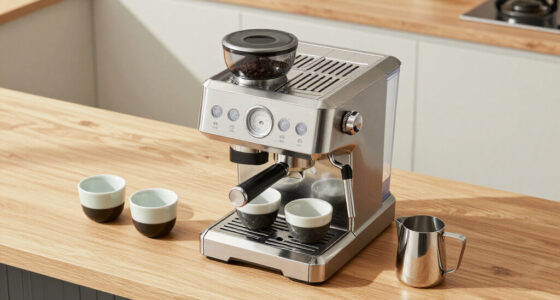
automatic coffee machine with milk frother
As an affiliate, we earn on qualifying purchases.
As an affiliate, we earn on qualifying purchases.
What You Sacrifice for Convenience: Control, Cost, and More
Super-automatic espresso machines are designed to streamline the brewing process, but this streamlined design often comes with significant tradeoffs. One major sacrifice is the reduction in control over key parameters such as grind size, tamping pressure, shot timing, and temperature. For coffee aficionados who enjoy experimenting to perfect their brew, this can be frustrating. The preset routines and limited manual adjustments mean you’re largely reliant on the machine’s programmed defaults, which might not always align with your taste preferences.
Beyond control, the cost of these machines is another critical aspect. High-quality models typically start around $1,000 and can exceed $3,000. These prices reflect their complex engineering and integrated features. However, the initial investment is just the beginning—repairs and replacements for specialized parts like sealed grinders or milk systems can be costly. Over time, maintenance expenses add up, especially if parts fail prematurely or require professional servicing.
Noise is an often-overlooked factor. Built-in grinders generate loud grinding sounds, which can be disruptive in quiet environments like early mornings or offices. Milk systems that draw from separate containers or use internal tubes can sputter or hiss during operation, adding to the noise level. Additionally, the type of beans you use influences machine longevity—oily beans can clog grinders and reduce lifespan, forcing you to weigh the convenience of pre-ground beans against potential maintenance issues.
These tradeoffs highlight that while super-automatics excel in convenience, they often do so at the expense of flexibility, cost-effectiveness, and quiet operation. Recognizing these compromises allows you to make an informed decision aligned with your priorities—whether that’s ease of use or control over every detail of your brew.
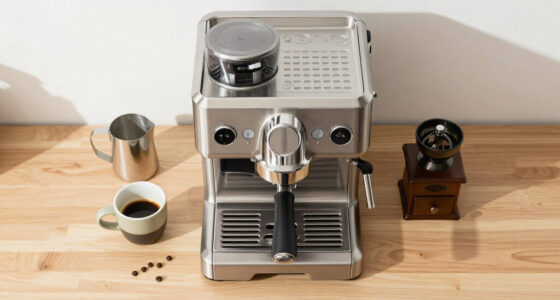
best super-automatic espresso machine for home
As an affiliate, we earn on qualifying purchases.
As an affiliate, we earn on qualifying purchases.
Matching a Super-Automatic to Your Coffee Life
Choosing the right super-automatic espresso machine requires thoughtful consideration of your daily coffee routine and lifestyle. If you typically make multiple drinks per day—especially milk-based beverages like lattes and cappuccinos—look for models with rapid, automatic milk frothing systems that store and dispense milk seamlessly. These features save time and effort, ensuring your morning routine remains smooth. Conversely, if you prefer only occasional espresso shots or enjoy manual control, a simpler model with easier access to cleaning ports and fewer automatic features might suit you better.
Size and space are also important. Compact machines fit more easily on small counters but may have limited water and bean capacity, requiring more frequent refills. Larger, feature-rich models often come with additional bulk and weight, which could be inconvenient if you need to move or store them. Consider your cleaning routine—if you dislike frequent maintenance, opt for a machine with straightforward cleaning procedures or removable parts that simplify the process.
By aligning your machine choice with your lifestyle, you ensure that your investment enhances your daily coffee experience rather than becoming a hassle. The goal is to find a balance between automation, control, space, and maintenance that fits your habits and preferences.
As an affiliate, we earn on qualifying purchases.
Latest Features to Watch for in 2026
Super-automatic machines continue to evolve rapidly, integrating advanced features that enhance user convenience but also influence maintenance routines. Today’s models often include large touchscreens with intuitive interfaces, allowing for easy customization of drink profiles—temperature, strength, volume—and saving these profiles for quick access. The addition of smartphone app connectivity enables remote brewing and maintenance scheduling, adding a new layer of convenience. However, these smart features can complicate repairs or software updates, potentially increasing service costs and downtime.
Milk system innovations now feature various designs—some with refrigerated milk containers stored in the fridge for freshness, others with internal tubes that draw from a separate milk reservoir. Each approach impacts cleaning frequency and ease; for example, refrigerated containers require regular rinsing, while internal tubes demand disassembly for thorough cleaning. Quiet, adjustable burr grinders are becoming common, reducing noise and allowing for more precise grind size adjustments, which can improve shot quality but may introduce additional maintenance steps.
Guided cleaning prompts, descaling alerts, and maintenance reminders are increasingly integrated into the user interface, helping owners stay on top of upkeep. Recent models also incorporate self-diagnostic tools that alert you to potential issues before they become costly repairs. While these features significantly improve user experience, they do not eliminate the need for routine cleaning and careful maintenance, which remain essential for optimal performance and longevity.
Common Questions About Super-Automatic Espresso Machines—Answered
Is a super-automatic espresso machine worth it? If you value speed and consistency over the ability to fine-tune every parameter, then yes, it’s a worthwhile investment. These machines deliver reliably good coffee with minimal effort, making them ideal for busy households or offices. However, if you prefer to experiment with grind size, tamping pressure, and shot timing, a super-automatic may feel limiting—since it automates these adjustments and offers less manual control.
Does it make real espresso? Yes, these machines operate under high pressure similar to commercial espresso machines, which is essential for authentic extraction. Nonetheless, achieving the ideal flavor depends heavily on using quality beans, proper grind settings, and consistent maintenance. Even the best machine can’t compensate for poor beans or skipped cleaning routines, which can diminish the espresso’s richness and crema.
How often does it need cleaning? Regular cleaning is critical. Daily tasks include emptying grounds and rinsing milk lines, while descaling should be performed every 1-3 months depending on water hardness and usage. Neglecting these routines leads to mineral buildup, flavor degradation, and mechanical issues, ultimately shortening the machine’s lifespan.
Are they hard to maintain? Not inherently, but they require discipline. Following cleaning prompts, regularly replacing filters, and performing descaling are all necessary to keep the machine functioning properly. Failure to do so risks clogging, bacterial growth, or mechanical failure, which can be costly and inconvenient.
Can they make cappuccinos and lattes? Most models are equipped with automatic frothing or milk storage systems, enabling quick preparation of milk-based drinks. The type of milk system—onboard or separate container—affects cleaning routines and convenience. Onboard systems are more integrated but may require more frequent cleaning of milk pathways.
Can I use any coffee beans? Generally yes, but oily or flavored beans can cause clogging or residue buildup in grinders. It’s advisable to follow manufacturer guidelines regarding bean types to ensure optimal performance and longevity.
How long will it last? The typical lifespan ranges from 3 to 7 years, depending on maintenance, water quality, and usage intensity. Proper care, timely repairs, and quality components extend the lifespan, but neglect can significantly shorten it. A good warranty and access to authorized repair services are valuable for long-term reliability.
Is a super-automatic better than a semi-automatic? Not universally. Super-automatics excel in delivering consistent, quick results with minimal effort, ideal for those who prioritize convenience. Semi-automatic machines provide more manual control and customization, appealing to enthusiasts willing to invest time and skill. Your choice depends on your preferences for control versus convenience and how much effort you want to put into brewing.
What should I compare before buying? Focus on drink versatility, grinder adjustments, ease of cleaning, water and bean capacity, machine size, warranty, and maintenance requirements. These factors determine how well the machine fits your lifestyle and how much ongoing effort it demands.
Conclusion
Super-automatic espresso machines can turn your kitchen into a café, serving quick, tasty drinks with the press of a button. But that convenience comes with ongoing cleaning chores, higher costs, and some control tradeoffs.
Think about your coffee habits, cleaning routine, and budget before taking the plunge. If you’re ready to accept the maintenance dance, these machines can be your daily coffee hero. If not, a semi-automatic or manual option might suit you better.
Remember: the best coffee machine is the one that fits your life and keeps you smiling every morning.
Fall Picks
fall essentials
As an affiliate, we earn on qualifying purchases.