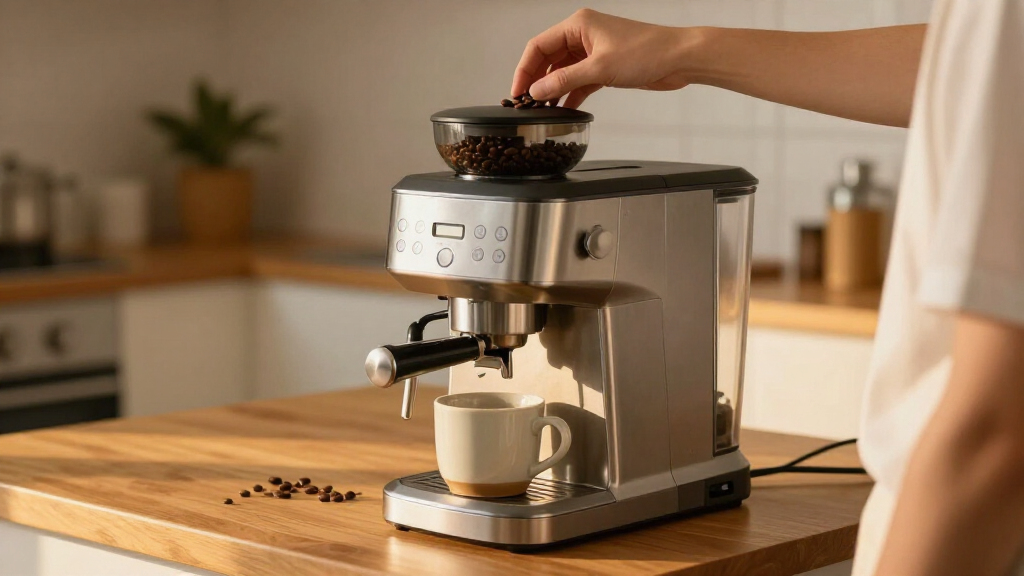

Choosing a coffee maker with a built-in grinder often comes down to how many cups you make at once. Single-serve models grind beans for each drink, which suits solo coffee drinkers and households with different tastes. Carafe models grind and brew a pot, making them a better fit when several people want coffee around the same time. The central tradeoff is individual flexibility versus batch capacity: single-serve machines can reduce leftover coffee, while carafe machines serve a group more quickly and often cost less per cup. Features and results vary by model, so compare the grinder, brewing controls, and cleaning demands alongside the format.
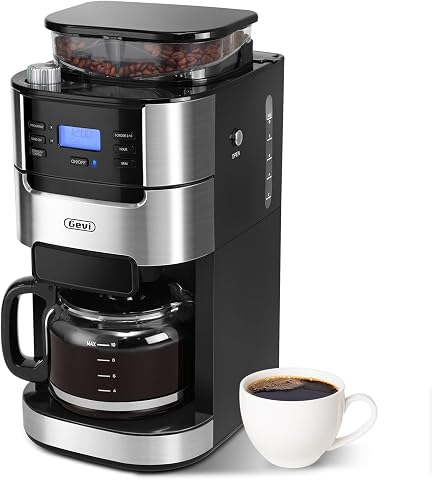
Gevi 10-Cup Drip Coffee Maker with Built-In Burr Grinder
- ✔ Capacity: 2 to 10 cups; 1.5 liters
- ✔ Grinder: Built-in burr grinder
- ✔ Grind settings: 8
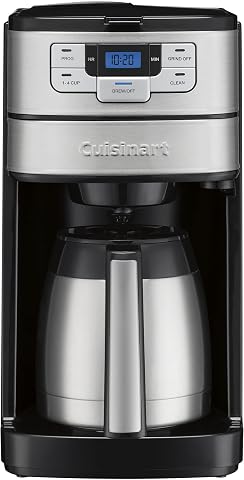
Cuisinart Automatic Grind & Brew 10-Cup Coffee Maker with Blade Grinder
- ✔ Capacity: 10 cups
- ✔ Grinder: Built-in blade grinder
- ✔ Carafe: Glass

BLACK+DECKER 12-Cup Grind and Brew Coffee Maker
- ✔ Capacity: Up to 12 cups
- ✔ Grinder: Built in; type not specified in supplied details
- ✔ Brewing: Grinds beans and brews coffee
At a Glance
| Criteria | Single-serve coffee makers with built-in grinders | Carafe coffee makers with built-in grinders | Winner |
|---|---|---|---|
| Best for | Solo drinkers, varied schedules, and individual servings | Couples, families, and people serving guests | Depends |
| Brewing capacity | One cup per brew; some models support travel mugs | Several cups per brew, commonly in a thermal or glass carafe | B |
| Freshness and waste | Grinds for each serving, so there is little brewed coffee left over | Freshly ground beans for a batch; coffee may sit after brewing | A |
| Convenience | Make a cup when wanted, without preparing a full pot | Brew once for multiple servings, with less repeat preparation | Depends |
| Drink flexibility | Often offers cup-size choices; espresso-style drinks depend on the model | Usually focused on drip coffee; batch strength and timing controls vary | A |
| Cleaning and upkeep | Clean the brew area and grinder regularly; grounds can collect in narrow pathways | Carafe and brew basket add washing; grinder needs routine attention | Depends |
| Value | Can be worthwhile for frequent single-cup use, though specialty features raise cost | Often strong value when multiple cups are brewed together | B |
Gevi 10-Cup Drip Coffee Maker with Built-In Burr Grinder
The Gevi is our lead pick because its burr grinder has eight settings, paired with three brew-strength options. That gives buyers more listed ways to tune the coffee than the Cuisinart’s blade grinder, while keeping the process automatic. Those settings matter most if you want to adjust the grind and strength to suit different beans or preferences; they also mean there are choices to learn and revisit. The product information advises adjusting settings to brewing results, a reminder that more control can take some experimentation.Its 2-to-10-cup range makes the Gevi more adaptable to changing batch sizes than a machine framed around a larger, up-to-12-cup brew. A reusable filter and two-hour keep-warm function support a routine that may include making a pot and returning to it later. Pre-brew technology is another part of its feature set, though buyers should focus on the controls and capacity that best match their own habits.The main practical concern is its 16.93-inch listed height, which makes cabinet clearance worth checking before purchase. The supplied details also do not establish a pre-ground coffee mode, so shoppers who want that flexibility should look more closely at the Cuisinart, whose grind-off option is explicit. Compared with the BLACK+DECKER, Gevi trades a smaller maximum batch for substantially more stated grinder and strength control. We rank it first for buyers who value that control enough to make room for the machine.
Pros:
- Burr grinder offers eight listed settings.
- Three brew-strength settings provide additional adjustment.
- Brews between 2 and 10 cups.
- Reusable filter and two-hour keep-warm function support everyday use.
Cons:
- Listed height may limit placement beneath kitchen cabinets.
- Its smaller maximum batch may not suit those who regularly serve larger groups.
- Supplied details do not specify a grind-off option for pre-ground coffee.
Best for: Coffee drinkers who want an automatic grinder with several grind and strength settings and usually brew no more than 10 cups.
Not ideal for: Buyers who need a 12-cup batch, want an explicitly listed grind-off option or cannot accommodate a tall machine.
Bottom line: We recommend the Gevi for buyers who want the most stated control over grinding and brew strength in this comparison and can accommodate its height.
“We recommend the Gevi for buyers who want the most stated control over grinding and brew strength in this comparison and can accommodate its height.”
Cuisinart Automatic Grind & Brew 10-Cup Coffee Maker with Blade Grinder
The Cuisinart earns its role through choice at brew time. It grinds whole beans just before brewing, but its grind-off option also lets you use pre-ground coffee. That makes it a more adaptable pick than the Gevi or BLACK+DECKER based on the features explicitly listed here: buyers can keep beans on hand for the usual routine and switch methods when they prefer. Its blade grinder is a simpler stated setup than the Gevi’s adjustable burr grinder, so shoppers whose main priority is choosing among grind settings may prefer the Gevi.Convenience is the Cuisinart’s other strength. Programmable operation supports a planned brewing routine, while Brew Pause lets someone pour before the cycle has finished. The 1–4 cup setting is useful when a full 10-cup batch would be excessive. It also includes a permanent gold-tone coffee filter and a charcoal water filter, plus a glass carafe. Together, those details make this the most explicitly equipped option for buyers who care about brewing features and included filtration.There are tradeoffs. Its stated capacity tops out at 10 cups, below the BLACK+DECKER’s 12-cup maximum, and its blade grinder offers no listed grind-setting range to match the Gevi’s eight options. A glass carafe may also be less appealing to someone specifically seeking a different carafe material; the supplied information does not give us a basis to compare durability. We place the Cuisinart second because its flexibility is compelling, but it gives up the Gevi’s stated grinder control and the BLACK+DECKER’s larger batch capacity.
Pros:
- Grinds whole beans just before brewing.
- Grind-off option accommodates pre-ground coffee.
- Programmable operation includes a 1–4 cup setting.
- Includes a permanent coffee filter, charcoal water filter and Brew Pause.
Cons:
- The listed grinder is a blade type, without a stated range of grind settings.
- Maximum stated capacity is 10 cups, less than the BLACK+DECKER.
- Uses a glass carafe, which may not match every buyer’s preference.
Best for: Buyers who want a programmable machine that can grind whole beans or brew pre-ground coffee, with a smaller-batch setting.
Not ideal for: Shoppers who prioritize adjustable burr-grinder settings or regularly need more than 10 cups per batch.
Bottom line: We recommend the Cuisinart when switching between whole and pre-ground coffee matters more than having a burr grinder with adjustable settings.
“We recommend the Cuisinart when switching between whole and pre-ground coffee matters more than having a burr grinder with adjustable settings.”
BLACK+DECKER 12-Cup Grind and Brew Coffee Maker
The BLACK+DECKER makes the clearest case for itself with its up-to-12-cup capacity. For households or occasions where a smaller pot means brewing again soon, that extra stated room can matter more than having a longer list of settings. Its central promise is simple: grind beans and brew coffee in one machine. Compared with the Gevi, it gives up the listed burr grinder, eight grind settings and brew-strength choices. Compared with the Cuisinart, it offers a larger maximum batch, while the Cuisinart provides more explicitly described ways to adapt brewing.That simpler positioning is useful for buyers who mainly want to combine grinding and brewing without choosing among many stated controls. But the product information cautions that grind size and coffee amount can affect brewing results, and that settings may need readjustment when either changes. In practice, this means buyers should expect to pay attention to their combination of grind and coffee amount rather than assume one setup will suit every batch. The guidance recommends consulting the user guide before first use.We rank this model third because the available description provides less detail about grinder type and adjustment options than the other two listings. That is a limitation in what we can compare, not proof that a feature is missing. Its 12-cup capacity remains its differentiator, but buyers who make smaller pots or want clearly specified grind control may find the Gevi a better match. Those who need a stated pre-ground mode and programmable features may lean toward the Cuisinart instead. Choose the BLACK+DECKER when batch size and a direct grind-and-brew setup outweigh those considerations.
Pros:
- Grinds beans and brews coffee in one machine.
- Stated capacity of up to 12 cups is the largest in this lineup.
- Straightforward fit for buyers focused on making a larger batch.
Cons:
- Brewing results may vary with grind size and coffee amount.
- Settings may need readjustment when grind size or amount changes.
- The supplied description does not specify grinder type or a range of adjustment settings.
Best for: Households that regularly make larger batches and want a machine that combines grinding and brewing.
Not ideal for: Buyers seeking a specified burr grinder, a stated range of grind settings or an explicitly listed option for brewing pre-ground coffee.
Bottom line: We recommend the BLACK+DECKER for buyers who value a 12-cup maximum more than the more detailed grinder controls or brewing flexibility listed for the other picks.
“We recommend the BLACK+DECKER for buyers who value a 12-cup maximum more than the more detailed grinder controls or brewing flexibility listed for the other picks.”
As an Amazon Associate we earn from qualifying purchases.
Key Differences
The format determines what the built-in grinder is doing for your routine. A single-serve machine grinds a small dose for one cup, so it can make fresh coffee without leaving a half-full pot to cool. That advantage matters most when people drink coffee at different times or want different cup sizes. The tradeoff is repeating the brew cycle for every serving; making coffee for a group can take longer and use more effort.
A carafe machine combines grinding and brewing for several servings at once. It is the more practical choice for shared breakfasts, guests, or anyone who refills a mug through the morning. Its batch format can make each serving economical, but coffee left in a glass carafe may lose heat and freshness while it waits. A thermal carafe can help retain heat, depending on the design.
Neither format guarantees better coffee. Grinder consistency, bean quality, water temperature, brew settings, and cleaning all affect the cup. Choose a single-serve model for portion control and different schedules; choose a carafe model for capacity and fewer brew cycles. Pay more for controls or drink options you will use regularly, rather than assuming a higher price alone means a better result.
Detailed Comparison
Best for (major difference)
Single-serve machines fit solo drinkers, staggered schedules, and households where each person wants coffee at a different time. Carafe machines suit shared routines where several cups are needed together. The winner depends on household habits; neither format is a universal fit.
Brewing capacity (Carafe coffee makers with built-in grinders wins — major)
A carafe machine wins clearly on capacity: one brewing cycle can make several cups. A single-serve model avoids making more than one person needs, but a group may have to wait through multiple cycles. For a household or regular guests, this is a major practical difference.
Freshness and waste (Single-serve coffee makers with built-in grinders wins — moderate)
Single-serve machines grind and brew per cup, limiting leftover coffee and making it easier to adjust each serving. Carafe machines also grind fresh beans, but the brewed batch can sit between pours. Single-serve wins for reducing brewed-coffee waste, while a carafe makes better use of time when everyone drinks together. The gap is moderate and depends on how much coffee you actually finish.
Convenience (moderate difference)
For one cup, single-serve usually wins because it brews only what is wanted. For a busy household, the carafe wins by preparing several servings at once. Neither is always simpler: repeated single cups take time, while a carafe requires filling and cleaning a larger brew setup. The result depends on serving size and timing.
Drink flexibility (Single-serve coffee makers with built-in grinders wins — minor)
Single-serve machines commonly let users choose a cup size, and some models add specialty drink functions. Those extras are model-specific, so check what the machine actually makes. Carafe machines generally focus on drip coffee and batch strength. Single-serve has the edge for varied individual portions, but not every model offers espresso or milk drinks.
Cleaning and upkeep (minor difference)
Both types need regular cleaning because built-in grinders can retain grounds and coffee oils. Single-serve machines have a smaller serving area but may have tight passages where grounds collect. Carafe machines add a brew basket and vessel to wash. The winner varies by design; prioritize removable, accessible parts and clear cleaning instructions.
Value (Carafe coffee makers with built-in grinders wins — moderate)
Carafe models often deliver better value when brewing multiple cups because one cycle serves several people. Single-serve models can justify a higher price for households that would otherwise brew and discard unused coffee or need separate servings. Compare the machine’s purchase cost and ongoing bean use with your actual routine; paying more for unused presets or drink functions adds little value.
Single-serve coffee makers with built-in grinders: Pros and Cons
Pros:
- Grinds beans for each individual serving
- Limits leftover brewed coffee
- Works well for different schedules and cup sizes
Cons:
- Multiple servings require repeated brew cycles
- Some models cost more for specialty functions
- Small grinder pathways may need careful cleaning
Carafe coffee makers with built-in grinders: Pros and Cons
Pros:
- Brews several cups in one cycle
- Convenient for families, guests, and shared mornings
- Often offers better value when making batches
Cons:
- Coffee can sit after brewing, especially in a glass carafe
- Less suited to people who want different drinks at different times
- Carafe and brew basket add washing
Who Should Choose What
Choose Single-serve coffee makers with built-in grinders if:
- You usually make one cup at a time and want to avoid leftover coffee.
- People in your household drink coffee at different times or want different serving sizes.
- You value per-cup brewing enough to accept repeating the cycle for each person.
Choose Carafe coffee makers with built-in grinders if:
- You routinely serve several coffee drinkers at once.
- You want to brew once and refill mugs through breakfast or a work session.
- Batch capacity and cost per serving matter more than choosing a fresh brew time for every cup.
Skip both if: Skip both if you rarely make coffee at home, do not want to maintain a grinder, or would rather use a separate grinder with a brewer that better matches your preferred coffee style.
Value for Money
A carafe machine is usually the better value for households that regularly finish a pot: it serves several people in one cycle, and its extra capacity can justify the purchase. A single-serve model earns its cost when a household often leaves brewed coffee unused or needs distinct portions at different times. Pay more for useful features such as a thermal carafe, adjustable brew strength, or genuinely useful cup-size settings. A premium price alone does not establish better coffee; grinder quality and easy maintenance matter more than a long feature list.
Final Verdict
Choose a carafe coffee maker with a built-in grinder if two or more people usually want coffee together, or if you drink several cups over a short period. It is the more practical and often better-value format for batch brewing. Choose a single-serve grinder machine if you mostly drink one cup at a time, your household keeps different schedules, or leftover coffee is a recurring problem. The deciding factor is how many servings you need per brew cycle: capacity favors the carafe; individual timing and portion control favor single-serve.
Frequently Asked Questions
Are coffee makers with built-in grinders worth buying?
They can be worthwhile if you want fresh-ground beans without a separate grinder. Compare grinder quality, cleaning access, and brewing controls, since performance varies across models.
Which type is better for a family?
A carafe model is usually better when several people drink coffee at roughly the same time. Choose single-serve if family members have different schedules or want different portions.
Does a built-in grinder make coffee taste better?
Grinding beans shortly before brewing can preserve freshness, but it does not guarantee a better cup. Bean quality, grind consistency, water, brewing settings, and cleaning also affect taste.
Is single-serve or carafe coffee cheaper to use?
A carafe often uses one brewing cycle to serve several people, which can make it better value for group use. Single-serve can reduce wasted brewed coffee if a pot would go unfinished. Actual costs depend on the machine, beans, and how much you drink.