TL;DR

Get coffee and tea gear delivered free with Prime
- Fast, free delivery on millions of items
- Prime Video, Amazon Music and more included
- Member-only deals all year
Cup warmers are small electric devices that help keep a hot drink warm, usually by heating the base of a cup rather than rapidly heating the liquid. A displayed temperature may refer to the plate, the cup surface, or the drink, so check what the number measures and match the warmer to your cup, routine, and safety needs.
Your coffee can feel scorching at the bottom of the mug and merely lukewarm at the first sip. That mismatch is why cup warmer temperature claims deserve a closer look: the number on a listing may describe the heating plate, not the drink.
This guide explains how cup warmers are meant to work, why cup shape and material matter, and what temperature details you should check before you buy. You’ll also learn when a plate warmer makes sense, when a heated mug may suit you better, and how to use either one safely around a busy desk.
Think of a warmer as a slow cooker for a single cup, not a kettle shrunk to coaster size. It can slow cooling while you answer emails or sit through a meeting, but it usually cannot bring a cold drink back to piping hot in a hurry. Knowing that difference saves you from expecting magic from a small device.
A warmer’s temperature figure may describe the plate or cup surface, not the drink.
Flat-bottomed cups usually transfer heat better than thick, insulated, or uneven-bottomed cups.
A lid can slow heat loss, while a larger drink volume and a cool or drafty room can change the result.
Plate warmers mainly slow cooling; they are not substitutes for kettles or rapid reheating.
Check your model’s compatibility, shutoff, placement, and cleaning instructions before use.
What a cup warmer can—and can’t—do for your drink
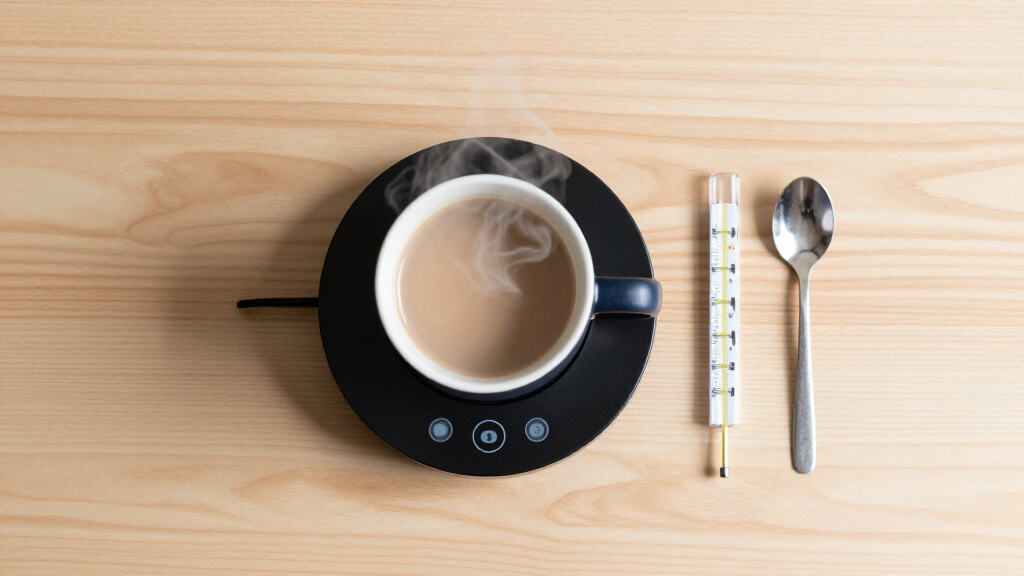
A cup warmer is a small electric device that helps keep a hot drink warm after you pour it. Most plug-in plate models transfer heat through the bottom of your cup, slowing the drink’s cooling rather than heating it quickly like a kettle. If you sip a mug of tea across a long work session, that steady support can make the last few sips more pleasant.
In everyday use, “keep warm” is a better expectation than “reheat.” Say you pour fresh coffee at 8:30 and get pulled into a 20-minute call. A warmer may help it lose heat more slowly while it sits; a cold cup left on the desk for an hour is another matter. It may warm gradually, but most desk warmers are not designed to rapidly heat cold coffee.
The difference comes down to the device’s job. A kettle sends substantial energy into water, while a plate warmer transfers heat through a contact point at the cup’s base. That’s like holding a hand against one side of a snowball: warmth moves, but it doesn’t reach every part at once. The drink volume, starting temperature, cup, room, and time all shape the result.
So when you see “constant temperature,” ask what stays constant and where it was measured. A controlled plate reading doesn’t promise that every sip in every mug reaches the same temperature. For example, a small flat-bottomed cup may warm more readily than a thick, heavy mug holding twice as much coffee. The useful question isn’t only “How hot does it get?” It’s “Will it keep my usual drink comfortable while I work?”
As an affiliate, we earn on qualifying purchases.
Read temperature claims without mistaking plate heat for drink heat
Cup warmers explained in one useful rule: the advertised temperature may refer to the plate, the cup surface, or the liquid, and those are different measurements. Check the product details for the measurement point and test conditions before treating a number as your future sip temperature. If the listing just gives a temperature without explaining it, you don’t have enough information to know what your drink will reach.
Imagine two mugs on the same warmer: one is thin and flat-bottomed, and the other is thick ceramic with a raised ring underneath. The plate may reach its stated temperature in both cases, but the second mug has poorer contact and takes longer to transfer heat. Add a larger serving or a drafty room, and the liquid’s temperature can differ again.
When product pages publish measurements, look for whether they tested the plate, mug surface, or liquid; how much liquid they used; what cup material they chose; and whether a lid was on. Those details make claims easier to compare. Without them, a temperature figure is more like a car’s advertised top speed than a promise about your daily commute: it tells you something, but not the whole story.
Use this quick checklist before you buy:
- Measurement: Does the temperature describe the plate, cup, or drink?
- Test setup: Does the maker state the cup type, liquid volume, and starting temperature?
- Control: Can you select a setting, or does the warmer run at one level?
- Safety: Does it list temperature control or automatic shutoff, and when do those features activate?
- Evidence: Are test conditions clear, or does “constant temperature” appear only as a broad marketing phrase?
A person who wants coffee warm through a 30-minute planning session needs a different answer from someone who expects precise temperature control all morning. The first may be happy with a basic warmer that slows cooling; the second should pay closer attention to measured drink temperature and control features.
As an affiliate, we earn on qualifying purchases.
Choose a cup that lets warmth reach your coffee
A flat-bottomed, heat-conductive cup usually works best on a plate warmer because it makes more direct contact with the heated surface. Thick ceramic, insulated double-wall cups, and uneven bases can transfer heat slowly or poorly. In practice, your favorite mug may matter as much as the warmer’s advertised wattage.
Take a common desk setup: you put a heavy handmade mug with a narrow foot ring on the plate. The warmer heats, but the mug touches it only around that ring, leaving less area to pass warmth into the drink. Swap it for a flat-bottomed cup and more of the base meets the plate. The change may improve heat transfer, though it won’t turn a maintenance warmer into a fast heater.
Insulated cups create a different tradeoff. Their walls are designed to slow heat loss, which is handy for carrying a drink but can also limit the warmth a plate warmer sends upward from the base. Metal cups and induction designs need special care: follow the manufacturer’s compatibility instructions rather than guessing. Not every metal cup works with every warmer, and induction systems require the intended compatible setup.
A lid can help, too. It reduces heat escaping from the drink’s exposed surface, much like pulling a blanket over a bowl of soup. If your coffee cools quickly between sips, try a compatible lid before assuming you need a hotter setting. Just avoid sealing or covering a cup in a way the maker warns against, and remember that the drink itself can still cause burns even when the outside of the cup feels comfortable.
Before buying, check the cups you already use. Set one on a flat surface and look for a broad, even base rather than a deep groove or small raised ring. If your daily mug is thick or insulated, compare the warmer’s guidance with a dedicated heated mug instead of assuming every cup will perform alike.
heated mug with temperature control
As an affiliate, we earn on qualifying purchases.
As an affiliate, we earn on qualifying purchases.
Compare plate warmers, USB models, and heated mugs
Plate warmers are usually simple and suited to slowing cooling, while heated mugs can offer more direct temperature control at a higher cost and with charging or powered-base needs. USB models prioritize compactness, but their performance varies with power output and design. There is no single best style: your choice depends on how long you sip, how much control you want, and where you’ll use it.
Picture a shared office desk with a standard wall outlet nearby. A basic plate warmer may suit someone who uses a compatible mug and wants fewer lukewarm sips between meetings. A person working away from outlets may prefer a compact USB design, but should check its power specifications and avoid assuming that “USB-powered” means the same heating performance as a wall-powered model.
A heated mug changes the arrangement: instead of warming an ordinary cup from below, the mug itself is designed to manage its temperature with a powered base or other built-in system. That can provide more direct control, but it adds charging, cleaning, and cost considerations. Features vary by model, so check what the controls actually do rather than relying on labels alone.
| Type | Best fit | What to check | Main tradeoff |
|---|---|---|---|
| Plate warmer | Keeping a compatible mug warm at a desk | Base contact, settings, shutoff, and what temperature measures | Results depend heavily on cup shape and material |
| USB warmer | A compact setup where portability matters | Power output, cable requirements, and maker’s cup guidance | Heating ability varies; compact doesn’t mean powerful |
| Heated mug | More direct temperature management during longer sipping | Battery life or powered base, cleaning rules, and control range | Typically costs more and requires its intended power system |
For a 15-minute coffee break, a basic warmer may be plenty. If you nurse one drink through several hours and care about a particular serving temperature, a heated mug may fit better—provided you accept the extra charging and cleaning routine. Match the product to your real day, not the most impressive number on its packaging.
As an affiliate, we earn on qualifying purchases.
Check controls and safety before leaving a warmer on
A cup warmer is safe to use only when you follow the instructions for its specific model. Some include temperature controls or automatic shutoff; others may not, and shutoff timing varies. Never assume a warmer will turn itself off just because another model you’ve seen has that feature.
Consider a busy morning: you grab your mug to take a call in another room, then forget the warmer is still plugged in. An automatic shutoff can reduce the risk of leaving it running, but it doesn’t replace checking the instructions or placing the device carefully. Keep the warmer on a stable, dry surface, away from the edge of the desk, loose papers, and spots where a sleeve can catch its cord.
The heating plate and a hot drink can both cause burns. Keep the device away from children and pets, and don’t touch a heated surface to test whether it’s still warm. If coffee spills, unplug the warmer before cleaning and follow its directions. Do not immerse the plate or electronics in water; a damp cloth may be suitable only if the manufacturer allows it.
Spills deserve extra attention if you drink tea, hot chocolate, or another beverage that can leave sticky residue. Check whether your warmer is intended for beverages and how the maker says to clean the surface. A tipped cup can turn a tidy work break into a slick desk and a damaged device, so use a stable mug and leave room around the warmer rather than wedging it between notebooks and a keyboard.
Safety rule: Check your own model’s shutoff and cleaning instructions. A hot plate, spilled liquid, or unattended drink can cause trouble even when the warmer seems simple.
Use a warmer for steady warmth, not instant reheating
A typical desk warmer is designed to maintain warmth and slow cooling, not to heat a cold drink quickly. If your coffee has gone cold, the plate may warm it gradually, but the time and result depend on the warmer, cup, drink volume, and starting temperature. For a drink that needs rapid reheating, use a method intended for that job rather than waiting for a small plate to do it.
Here’s a realistic desk routine: you pour 250 millilitres of fresh coffee, take a few sips, and set the mug back on a compatible warmer. That’s a reasonable use case. If you find the same mug hours later, cold and half-full, switching the warmer on won’t guarantee a quick return to your preferred drinking temperature. The warmer’s low-contact heat has to move through the cup and into the liquid.
If a drink cools faster than you like, try improving the setup before chasing a hotter specification. Use a compatible flat base, keep the mug on the plate, and add a suitable lid to reduce heat loss. Smaller pours can also help: a fresh half-cup is often more enjoyable than expecting a large mug to stay uniformly hot through a long stretch of meetings.
Some newer designs offer adjustable settings, timers, compact USB power, or smart-mug controls. These features can make the routine easier, but performance still varies. A timer tells you something about how long the device runs, not necessarily what temperature the drink reaches. A “constant temperature” claim is only useful when the manufacturer explains the measurement point and test conditions.
One practical test can help you judge fit: use your usual cup and drink volume, note the starting temperature if you can measure it safely with a food thermometer, and check the liquid again after a consistent interval. Repeat with the lid on if that’s how you normally drink. This doesn’t create a lab-grade result, but it gives you a fairer comparison than swapping cup, volume, and room conditions each time.
Frequently Asked Questions
Do cup warmers actually keep coffee hot?
They can slow cooling and maintain warmth, but results depend on the warmer, cup material and shape, drink volume, room conditions, and whether you use a lid. A plate warmer usually performs best with a compatible, flat-bottomed cup. It may keep a fresh drink more pleasant between sips, but it does not promise one set temperature for every mug.
Can a cup warmer heat cold coffee?
It may warm cold coffee gradually, but most desk models are designed to maintain warmth rather than reheat quickly. The liquid has to absorb heat through the cup’s base, so a thick or uneven mug can slow the process. If you want a fast hot drink, use a device intended for reheating.
What temperature will my drink reach?
There is no single temperature that applies to every warmer and drink. A listed number may describe the heating plate or cup surface, while the liquid’s temperature also depends on cup material, volume, starting temperature, a lid, and room conditions. Check the manufacturer’s measurement details instead of assuming the number is your drink temperature.
Which cups work best with a plate warmer?
A flat-bottomed cup that transfers heat effectively usually makes better contact with a plate warmer. Thick ceramic, insulated cups, and uneven bases may heat more slowly or poorly. For metal cups or induction models, follow the warmer maker’s compatibility instructions rather than guessing.
Can I leave a cup warmer on all day?
Only follow the instructions for your specific model. Some warmers have automatic shutoff or temperature controls; others may not, and shutoff times vary. Use the warmer on a stable, dry surface, keep it away from children and pets, and never assume it will switch off unless the instructions say so.
Conclusion
Buy for the drink you actually make, the cup you actually use, and the time you actually spend sipping. A temperature number without a clear measurement point can’t tell you whether your coffee will stay pleasant, but cup compatibility, a lid, and clear safety instructions give you more useful clues.
Think of a plate warmer as a patient little heat keeper, not a kitchen kettle in disguise. Choose the right cup, check the details, and your next meeting may end with warm coffee instead of a forgotten, chilly mug.
Halloween Picks
halloween
As an affiliate, we earn on qualifying purchases.