
TL;DR

Get coffee and tea gear delivered free with Prime
- Fast, free delivery on millions of items
- Prime Video, Amazon Music and more included
- Member-only deals all year
Spraying from a bottomless portafilter usually means water is escaping through weak spots in the coffee puck, often because of uneven grounds, clumps, cracks, or a poor fit in the basket. Keep your dose steady, distribute and tamp evenly, check the basket, and change one variable at a time; judge the result by repeatability and taste, not appearance alone.
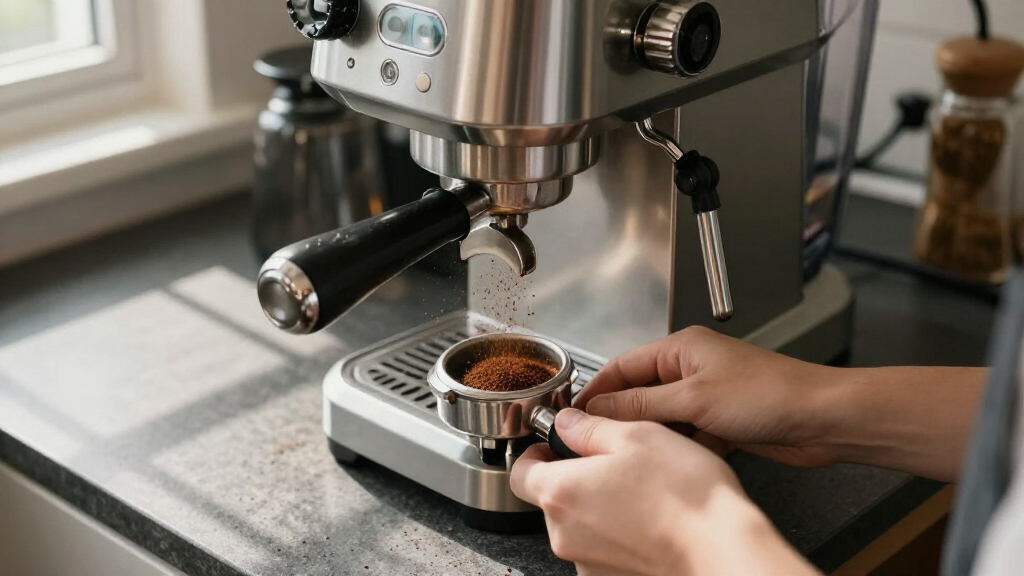
A thin espresso jet can shoot sideways from a bottomless portafilter and land on the counter before you can grab a cup. That messy little stream is useful: it shows you that water has found an easier route through some part of the coffee puck. But it does not tell you, all by itself, whether your grind, distribution, tamp, or basket caused the problem.
This guide will help you read the spray without blaming the first thing you see. You’ll learn what channeling looks like, which preparation problems to check first, how to run a controlled troubleshooting test, and when the basket or machine deserves a closer look. The goal isn’t a spotless video-perfect shot. It’s a repeatable espresso that tastes good.
A bottomless portafilter is best thought of as a window, not a cure. It exposes flow that a spouted portafilter hides, which makes it handy while dialing in. It also makes every uneven stream look dramatic, even when a few stray droplets don’t ruin the cup.
A repeated jet usually signals uneven water flow through the puck, but it cannot identify one cause by itself.
Keep your dose steady, distribute grounds evenly, break up visible clumps, and tamp level before changing several variables.
Grind finer only when the shot’s speed supports that adjustment, and make the change gradually.
Check that the basket is clean, undamaged, and seated properly if careful preparation does not change the spray.
Taste the espresso and look for repeatable patterns; a few droplets do not automatically ruin a shot, and a clean-looking shot can still taste poor.
What Spraying From a Bottomless Portafilter Tells You
Spraying from a bottomless portafilter usually means water is escaping through a weak spot in the coffee puck, a pattern commonly called channeling. You may see a fine mist, a wandering stream, or a narrow jet shooting from the basket. The pattern is a clue that flow is uneven, not a precise diagnosis of what caused it.
A well-prepared puck offers water fairly even resistance. If one patch is looser, cracked, or separated from the basket wall, water follows that easier route rather than moving evenly through the grounds. Think of a garden hose finding a gap in a compacted dirt bank: most of the surface holds, but one weak point lets the pressure break through.
A few droplets at the start of a shot can be less concerning than a persistent, forceful jet. For instance, if the espresso gathers into a centered flow after a brief splatter and the shot tastes balanced, you may not need to change anything. If the stream keeps whipping sideways and the cup tastes sharply sour, hollow, or harsh, you have a stronger reason to investigate.
Appearance still can’t tell you exactly what the espresso tastes like. A tidy-looking shot can taste flat, and a little spray doesn’t automatically make a shot undrinkable. Use the visual pattern, shot timing, and your taste together; each gives you a different piece of the puzzle.
As an affiliate, we earn on qualifying purchases.
Why Uneven Grounds Turn Into Sudden Sideways Jets
Spraying from a bottomless portafilter happens when water finds a path through the puck that offers less resistance than the surrounding coffee. Unevenly distributed grounds, clumps, cracks, or gaps near the basket wall can create those routes. Once water breaks through, it can carry fine coffee particles with it and shoot out as a visible jet.
Ground coffee is not a perfectly solid block. It is a packed bed of small particles, and water moves through the spaces between them. If you leave a dense clump on one side and a loose patch on the other, water tends to rush through the loose patch. That rush may widen the path as the shot continues, much like a narrow trickle cutting a groove in wet sand.
Preparation steps can interact. A tilted tamp may leave the puck denser on one side, but uneven distribution before tamping can create the same kind of imbalance even if your tamp looks level. The portafilter is usually not the first thing to blame, though a basket that is damaged, dirty, or seated poorly can add another route for water to escape.
For example, imagine you dose the same amount each morning but tap the portafilter hard to settle the grounds. That may leave a compact ring and a looser center—or shift coffee away from the edge. When the shot starts, water can find that uneven spot. The spray is the result; the preparation habit is only one possible cause.
Read the spray as evidence of uneven flow, not a verdict on your tamp. Several small factors can combine to make one weak spot.
As an affiliate, we earn on qualifying purchases.
Check These Six Causes Before You Change Your Technique
Spraying from a bottomless portafilter most often points you toward puck preparation, but you should check several possible causes before deciding what went wrong. Start with the easy-to-repeat details: dose, distribution, clumps, tamp level, grind, and basket condition. A single dramatic jet doesn’t prove which one needs attention.
- Uneven distribution: Grounds piled on one side can leave the puck with different densities. Spread them across the basket before tamping.
- Clumps: Small clumps can act like firm islands beside looser coffee. Break them up gently if your grounds visibly bunch together.
- Inconsistent tamping: A tilted tamp can leave an uneven puck. Aim for a level, repeatable press instead of adding force.
- Grind and dose: A grind that is too coarse can make a shot run quickly; too much or too little coffee for the basket can affect puck shape and headroom.
- Puck disturbance: Knocking or bumping the portafilter after tamping can crack or loosen the surface.
- Basket and fit: Coffee residue, a damaged basket, or a basket that is not seated correctly can interfere with even flow.
These checks matter for different reasons, so avoid treating them as interchangeable fixes. Distribution and clumps affect how resistance is spread across the puck; tamping can make the bed level, but extra force cannot redistribute coffee that is already uneven. Grind changes resistance throughout the puck, while dose changes both the depth of the bed and the space above it. A dose that is too high can leave too little headroom and risk disturbing the puck against the shower screen; one that is too low may leave a shallow bed that is easier for water to penetrate unevenly. Basket cleanliness and fit are separate hardware checks: they help rule out blocked openings or a seating problem rather than correcting puck preparation.
Think of the checks as different questions, not six fixes to apply all at once. If the grounds look lumpy, distribution is a more direct lead than grind; if the shot is also unusually fast, grind may deserve attention after preparation is consistent. A dose mismatch matters because it changes the depth and shape of the bed, so matching a basket’s intended capacity can make results more repeatable. But changing dose also changes extraction conditions, so keep it fixed while testing another factor. A visibly damaged or dirty basket is different again: cleaning or replacing it can eliminate a hardware variable, but it cannot compensate for uneven grounds.
Suppose you see spraying from a small gap near the basket edge and notice your dose sits unusually low in the basket. That’s a useful lead: check whether the dose suits that basket before deciding you need a harder tamp. If water is escaping through weak spots in the puck, a focused jet that appears repeatedly at the same point may be a clue, but it still doesn’t prove the cause. The same visible spot can reflect a recurring preparation pattern, basket condition, or how the basket is seated.
Start with the factor you can observe and repeat. If the basket has old coffee oils or blocked holes, clean and inspect it first; otherwise, changing grind and technique at once makes it difficult to tell whether either helped. Work through the checks in a deliberate order, preserving the dose and other settings when testing one suspected cause.
As an affiliate, we earn on qualifying purchases.
Use This Step-by-Step Test to Find the Real Cause
Spraying from a bottomless portafilter is easiest to troubleshoot when you hold most variables steady and change one thing at a time. If you alter the grind, dose, distribution, and tamp in one shot, you may get a better result—but you won’t know why. Use the same coffee and dose for a short series, then make one deliberate change.
- Clean and inspect: Rinse the basket and portafilter, clear visible residue, and check that the basket sits flat and has no obvious damage.
- Set a repeatable dose: Weigh the same amount for each test and use a dose suited to the basket, rather than filling it by guesswork.
- Distribute evenly: Level the grounds across the basket. If clumps are present, break them up gently before tamping.
- Tamp level: Press straight down with consistent pressure. You don’t need to keep pressing harder after the grounds stop compressing.
- Pull and observe: Note when the spray begins, whether it repeats in the same area, and how the shot flows.
- Change one variable: If the shot also runs too quickly, try a slightly finer grind while keeping the dose and preparation steady. Otherwise, address the clearest preparation issue first.
- Taste and repeat: Compare the next shot with the first. Repeat the change once before deciding it helped.
For instance, if your first shot sprays and runs fast, but you also change the dose and start stirring the grounds differently, you’ve built a mystery instead of a test. Keep a quick note: dose, grind setting, what you changed, spray pattern, and taste. Even a scrap of paper beside the grinder can reveal that one distribution change stopped the recurring jet.
Change your grind gradually rather than making a dramatic jump. A finer setting may help when a shot is running too quickly, but it can make the shot run too slowly if you overcorrect. The point is not to chase a perfectly smooth stream in one attempt; it is to find a preparation you can repeat and assess.
As an affiliate, we earn on qualifying purchases.
Know When a Little Spray Is Fine—and When to Worry
Spraying from a bottomless portafilter deserves attention when it repeats, persists, or comes with poor-tasting espresso, but a few stray droplets don’t automatically mean the shot has failed. A short flick of coffee at the beginning is different from a hard jet that continues through extraction. Judge the whole shot, not one splash.
Pay attention to the pattern. Does the same concentrated stream appear in the same place across several shots? Does the espresso start unevenly and then settle, or does it keep breaking into separate streams? A repeated pattern is a reason to inspect your puck preparation and basket; one random droplet may simply be a small variation in how the puck formed.
Taste gives the visual evidence context. If a shot sprays but tastes sweet and balanced, you may choose to leave your setup alone. If it sprays and tastes sharply sour, bitter, or strangely thin, the combination suggests uneven extraction or another dialing-in problem. A neat-looking shot can still taste poor, so no-spray is not a guarantee of good espresso.
Consider a weekend shot that spits once as the first drops emerge, then forms a steady stream and tastes pleasant. There’s little value in rebuilding your whole routine over that one flick. By contrast, if each morning’s shot sends a jet across the drip tray and tastes harsh, you have a repeatable signal worth testing systematically.
Keep your counter and hands safe while you test. Hot espresso can burn, and a bottomless portafilter can direct hot liquid outside the cup. Use a stable cup, keep your face clear of the basket, and wipe up spills after the machine and portafilter are safe to handle.
Choose Tools for the Problem, Not for the Mess
Spraying from a bottomless portafilter may improve when you address a specific preparation problem, but no accessory guarantees a spray-free shot. A distribution needle can break up visible clumps; a precision basket may suit a particular dose and setup; and a puck screen may affect how water meets the puck. Their usefulness depends on your coffee, basket, grinder, and routine.
A needle tool is most relevant if your grounds arrive in obvious clumps. For example, if a light sweep through the basket breaks apart small lumps and your shots become more consistent, it may be helping with that issue. If the grounds already look even and the basket dose is wrong, adding a new tool won’t solve the underlying mismatch.
A puck screen is not a substitute for even distribution or a level tamp. It can change the top of the puck and may keep the shower screen cleaner, but it cannot repair a crack or an uneven bed underneath. Likewise, a different basket may work well for one dose and grind while behaving differently with another.
Home-barista practice increasingly favors controlled dosing and careful distribution over relying on tamp pressure alone. That’s a practical shift, not a promise that one gadget will fix every shot. Try an accessory only when you can name the problem it is meant to address, and compare shots with the rest of your routine unchanged.
If you use a needle, keep it clean and handle it carefully; the tips are sharp. Clean coffee equipment according to the manufacturer’s instructions, and don’t put hands near hot parts or moving mechanisms. A repeatable routine is usually more valuable than a drawer full of tools that make your preparation harder to track.
Check the Basket and Machine Before You Blame the Coffee
Spraying from a bottomless portafilter can come from the basket or setup as well as the puck, so check the hardware when careful preparation changes nothing. Confirm that the basket is clean, undamaged, and seated correctly in the portafilter. A persistent leak or spray pattern deserves a hardware check before you keep changing your grind.
Remove the basket when the equipment is cool, then look for dents, residue, or blocked holes. A basket that rocks or sits oddly may not fit the portafilter properly. Coffee oils and fine particles can collect in small openings over time, so rinse and clean the parts using the machine maker’s care instructions.
For example, if you have prepared the same dose carefully for several shots and the spray always seems to start near a visibly damaged area, inspect that basket rather than repeatedly tamping harder. If another suitable basket behaves differently with the same coffee and preparation, you have a useful clue. It still helps to change only the basket for the comparison.
Machine behavior can also complicate the picture. If the flow changes suddenly, the machine leaks, or the portafilter doesn’t lock in as it normally does, stop and consult the manufacturer’s guidance or a qualified repair service. Don’t reach into a hot machine or try to adjust internal parts while it is powered or under pressure.
The bottomless portafilter itself does not create channeling; it removes the spouts that would otherwise hide the flow pattern. That makes it a useful diagnostic window, but also a dramatic one. A spray can look alarming even when the underlying issue is a small, correctable setup problem.
Frequently Asked Questions
Why is my bottomless portafilter spraying?
Most often, water has found an easier route through an uneven or disrupted coffee puck. Clumps, uneven distribution, cracks, dose mismatch, or a tilted tamp can contribute, and a dirty or poorly seated basket is also worth checking. The spray is a clue, not proof of one specific mistake.
Does spraying mean I tamped incorrectly?
Not necessarily. A tilted tamp can create uneven resistance, but distribution, grind, dose, puck disturbance, and basket fit can cause similar symptoms. Focus on a level, repeatable tamp rather than simply pressing harder.
Should I grind finer to stop the spray?
Try a slightly finer grind if the shot also runs too quickly, but don’t change grind just because you saw one droplet. Keep your dose and puck preparation steady so you can tell whether the adjustment helped. A grind change alone may not correct a clump or a damaged basket.
Will a WDT tool or puck screen stop spraying?
A needle distribution tool can help break up visible clumps, and a puck screen may suit some setups, but neither guarantees a spray-free shot. Match the tool to a problem you can identify, then compare shots with the rest of your routine unchanged.
Is a little spraying normal, and does it ruin the espresso?
A few droplets can happen, especially at the start of a shot, and they don’t automatically ruin the cup. Persistent, forceful jets are more useful as a troubleshooting signal. Taste the espresso and watch whether the pattern repeats before changing your routine.
Can the basket or machine cause spraying?
Yes. Check that the basket is clean, undamaged, and seated correctly before assuming the puck is the only issue. If the machine leaks or its behavior changes suddenly, stop and follow the manufacturer’s care guidance or ask a qualified technician for help.
Conclusion
When your bottomless portafilter sprays, don’t respond by tamping harder or changing everything at once. Keep the dose steady, prepare the puck evenly, check the basket, and test one adjustment at a time. The spray tells you that flow has found a weak spot; repeatable shots and a good-tasting cup help you discover why.
Treat each jet as a small arrow pointing toward your next check—not as a kitchen-wide espresso emergency. Make one careful change, pull another shot, and let the cup have the final word.
Halloween Picks
halloween
As an affiliate, we earn on qualifying purchases.