
TL;DR

Get coffee and tea gear delivered free with Prime
- Fast, free delivery on millions of items
- Prime Video, Amazon Music and more included
- Member-only deals all year
A fast espresso shot reaches its target yield sooner than your recipe expects, often because the grind is too coarse, the coffee bed is too shallow, or water is channeling through uneven grounds. If the espresso tastes sour or thin, grind a little finer first, keep dose and yield steady, and check puck preparation; if it tastes balanced, the short time may be fine. Track dose, yield, time, and taste rather than treating one timing target as a rule.
Your double espresso can hit its target yield before you finish setting the cup down. A recipe calling for 36 grams in 27–32 seconds may gush out in 15–20, leaving a pale stream and a cup that tastes sharp, thin, or hollow. That is frustrating, but the timer is a clue, not a verdict.
This guide shows you why fast espresso shots run and how to slow them without changing five things at once. You’ll learn what to check first, how to spot channeling, and when a quick shot may still be worth drinking. The goal is not to force every coffee into one timing window; it’s to make a repeatable shot that tastes good.
A fast shot reaches its target yield sooner than expected; around 15–20 seconds can prompt a check, but time alone does not prove poor extraction.
If the espresso tastes sour or thin and flows evenly, try a small finer grind adjustment before changing dose or yield.
If the stream sprays, spurts, or favors one side, improve distribution and tamp level before grinding much finer.
Match your dose to the basket instead of adding coffee blindly, and keep dose and target yield steady while dialing in.
Record dose, yield, time, grind setting, and taste so you can repeat a good shot and understand what changed.
Fast Espresso Shots: Why They Run Away and How to Slow Them Down
A quick shot is a clue, not a verdict. Learn what the flow and flavor reveal, then make one measured adjustment at a time.
Your cup—not a universal stopwatch target—gets the final vote.
The core principle18 g coffee → about 36 g espresso
A reference range, not a rule
Time to inspect taste and flow
Keep dose and yield steady
Why shots gush
Water moves quickly when the coffee bed offers too little resistance—or when it finds a shortcut through uneven grounds. Start with the most likely cause, then use the cup to guide the next move.
Grind too coarse
Larger particles leave wider paths. A small finer adjustment is often the first test for an evenly fast, sour or thin shot.
Shallow coffee bed
A dose below the basket’s suitable range can reduce resistance. Match the basket; adding coffee blindly can overfill it.
Uneven puck
Clumps, gaps, or a tilted tamp create easy routes. Water may channel through some areas while leaving others under-extracted.
Changing beans
Older coffee or a difficult-to-extract light roast can behave differently. A new bag may need a fresh grind setting.
Equipment differences
Basket design, grinder consistency, shower-screen condition, and machine behavior all influence how water flows.
Recipe mismatch
Different coffees may prefer different yields and times. One timing target will not suit every bean and setup.
Speed is a clue. Flavor is the test.
Compare shots at the same dose and target yield. Then observe the stream and taste before deciding whether to change grind, puck preparation, or recipe.
Even and fast Grind / recipe
- A uniformly quick stream often points toward a grind or recipe adjustment.
- If the cup tastes sour, watery, or thin, try a small finer grind step first.
- If it tastes sweet and balanced, record the recipe and consider keeping it.
Uneven or spraying Puck prep
- Sudden spurts, sideways spray, or flow favoring one side can suggest channeling.
- Break up clumps, distribute grounds evenly, and tamp level before grinding much finer.
- Finer grounds may slow flow but cannot reliably fix an uneven puck.
Slow it down, one move at a time
Hold dose and target yield steady while testing one small adjustment. This makes the result easier to read and repeat.
Grind a little finer
Use a small step. A modest grinder change can have a noticeable effect on flow.
Confirm basket dose
Use a dose suited to the basket. Avoid adding coffee blindly or pressing grounds against the screen.
Prepare the puck evenly
Break up clumps, distribute grounds, level the bed, and tamp flat with consistent pressure.
Check clean, consistent equipment
Inspect the basket and shower screen; check that the grinder is producing consistent grounds.
Taste before changing the recipe
If it is balanced, keep it. If it is sour or thin, test a finer grind or a longer yield—one variable at a time.
From fast shot to useful next step
A short log beats a guess
Record the same details each time. You will see how a coffee, grinder setting, or basket changes the shot—and know which adjustment helped when a cup gets better.
What a fast espresso shot tells you—and what it doesn’t
A fast espresso shot reaches its target yield sooner than the recipe expects, but speed alone does not tell you whether the coffee tastes bad. For example, if your usual target is 36 grams in 27–32 seconds and the scale reads 36 grams at 17 seconds, you have a reason to investigate, not a diagnosis.
Shot time changes with the coffee, grinder, basket, machine, and recipe. A darker, more soluble coffee can behave differently from a lightly roasted one, and a new bag may need a different grind even if you keep the same dose. Think of the timer like a dashboard light: useful, but not the whole story.
Start by tasting. A fast shot that is sour, watery, and short on sweetness often points to under-extraction. A quicker shot that tastes sweet and rounded may simply suit that coffee’s recipe. The distinction matters: blindly chasing a 30-second shot can turn a pleasant espresso bitter or dry.
Say your 18-gram dose produces 36 grams in 20 seconds. If it tastes thin and lemony, try a finer grind. If it tastes balanced, write down the recipe and keep it. Your cup—not a universal stopwatch target—gets the final vote.
espresso coffee grinder fine setting
As an affiliate, we earn on qualifying purchases.
As an affiliate, we earn on qualifying purchases.
Why espresso gushes when the coffee bed offers too little resistance
Fast espresso shots run when water finds too little resistance in the coffee bed or takes an easy route through it. The most common starting suspect is a grind that is too coarse: larger particles leave wider spaces, so water passes through quickly rather than extracting steadily. This matters because water has less contact with the coffee as it rushes through, so it may dissolve less of the sweet, balanced flavors you want. A finer grind increases resistance and contact time, but too fine a setting can make flow uneven or stall the shot.
Dose matters too. A basket designed for a certain amount of coffee may have a shallow bed if you use much less than its suitable range. Less coffee can mean less resistance, although simply adding more is not a safe shortcut. An overfilled basket can press against the shower screen and create a different set of problems. The practical tradeoff is to choose a dose that fits the basket first, then use grind size to fine-tune flow rather than treating extra coffee as a brake.
Uneven grounds can create channels—little paths where water races through while other parts of the puck stay less extracted. Clumps, a tilted tamp, or coffee piled high on one side can all contribute. The result can be a cup that combines sharp, under-extracted flavors from bypassed areas with harsher flavors from the paths water has hammered through. You might see a steady-looking flow that suddenly spurts or sprays; those clues are different from a uniformly quick stream.
Beans play a part as well. Older coffee may offer less resistance, while very light roasts can be harder to extract. If a bag that worked last week suddenly gushes after several weeks on the counter, freshness may be part of the change, though grind setting and preparation still deserve a check. This is why a grinder setting is not permanent: changes in the beans can alter flow, and compensating with a small grind adjustment is often simpler than changing the dose or recipe.
As an affiliate, we earn on qualifying purchases.
Use these clues to tell a coarse grind from channeling
You can narrow down a fast shot by watching its flow and tasting the cup: a uniformly fast stream often points toward a grind or recipe adjustment, while sudden spurts, spraying, or flow from one side suggest uneven puck resistance. Neither sign is absolute, but together they give you a better starting point than time alone. A uniformly fast shot suggests water is moving quickly across much of the puck; channeling suggests it is moving quickly through only a few routes, leaving other areas under-extracted.
A scale helps make the comparison fair. Keep your dose and target yield the same, then note when the first drops appear, how the stream develops, and what the espresso tastes like. For instance, if 18 grams of coffee repeatedly produces 36 grams in 18 seconds with an even stream, try a small grind change. If the stream sprays sideways, check distribution before tightening the grind further. That distinction matters because finer grounds may slow a uniformly fast shot, but they cannot reliably repair an uneven puck; they may instead make water force its way through the weakest spots.
Use a simple log. Write down the coffee, dose, yield, time, grinder setting, and a few taste words such as “sour,” “sweet,” or “dry.” That record turns a frustrating morning into a useful test. You may spot that shots speed up as a bag ages or that one particular basket needs a different grind. It also helps you avoid undoing a good change: if you adjust several variables at once, you may get a better cup without knowing which adjustment helped.
Remember that a very fine grind can also make channeling more obvious. If the shot slows but sprays, don’t keep grinding finer in a panic. Break up clumps, distribute grounds evenly, and tamp level. You want a puck that resists water consistently, not a blocked path with a few weak spots. The aim is not maximum resistance; it is resistance spread evenly enough that water extracts the whole bed rather than rushing through a shortcut.
As an affiliate, we earn on qualifying purchases.
Follow this one-change-at-a-time method to slow the shot
To slow a fast shot, hold dose and target yield steady while you make one small adjustment at a time. That gives you a clear read on what changed instead of turning espresso dialing-in into guesswork. If your 18-gram dose is yielding 36 grams in 18 seconds, start with the grind before changing the recipe. Keeping the other variables fixed is useful because espresso responds to several things at once; if the cup improves, you can link that improvement to the adjustment rather than guessing.
- Set a repeatable baseline. Choose a dose suited to your basket and weigh your target yield. A common starting ratio is 1:2: 18 grams of dry coffee to about 36 grams of espresso. A consistent baseline lets you compare shots fairly; if the dose or yield drifts, a change in time may not reflect the grind adjustment.
- Grind a little finer. Make a small adjustment, since a tiny grinder movement can make a large difference. Pull another shot with the same dose and target yield. Finer particles usually increase resistance, slowing flow and giving water more opportunity to extract flavor, but large jumps can overshoot into a bitter, dry, or uneven shot.
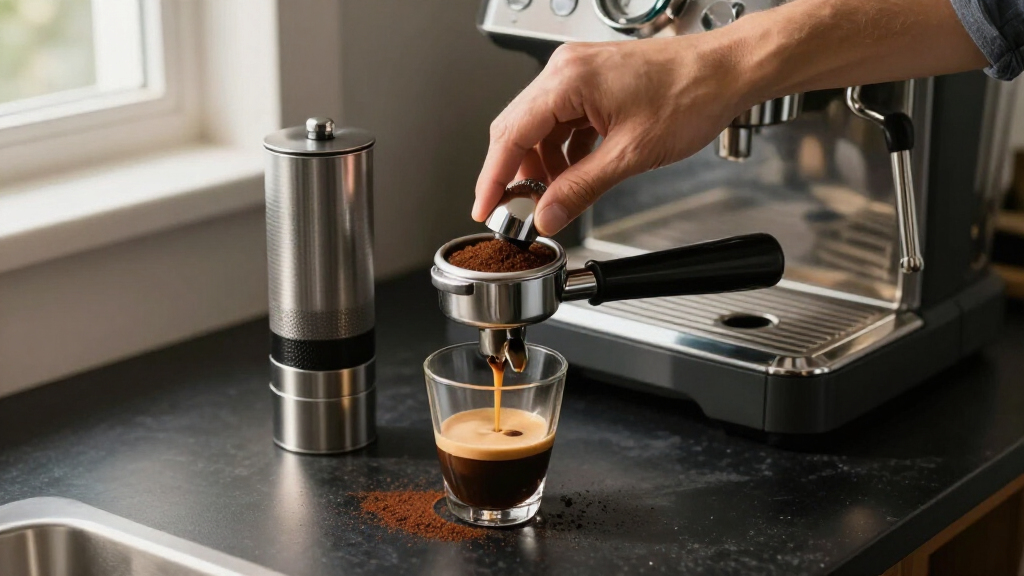
- Prepare the puck evenly. Break up visible clumps, distribute the grounds across the basket, level the surface, and tamp flat with consistent pressure. Even preparation helps water meet similar resistance throughout the puck. This is especially important if you see spraying or one-sided flow; grinding finer to compensate for unevenness can leave channels in place.
- Watch and taste. Record the time, flow, and flavor. If it remains sharp and thin with a steady stream, adjust finer again by a small amount. If it slows but tastes harsh or dry, you may have gone too far; return slightly toward the previous setting rather than assuming slower is always better.
- Change the recipe only after the basics. If the grind and puck are consistent, test a slightly longer or shorter yield to find the coffee’s best flavor. Changing yield alters the balance of flavors in the cup, so it can improve taste even when the flow time is acceptable—but it answers a different question from whether the grind is too coarse.
For example, a shot that moves from 18 seconds to 25 seconds after one fine adjustment has given you useful information. If it becomes bitter or dry, you may have gone too far, or the chosen yield may not suit the coffee. Move back a little and taste again rather than changing dose, grind, and yield together. The tradeoff is straightforward: more resistance can help a thin, sour shot, but the goal is balanced flavor and repeatability, not the longest possible extraction.
As an affiliate, we earn on qualifying purchases.
Check your basket, beans, and tamp before adding more coffee
When a fast shot persists, check that your dose matches the basket, your coffee is in good condition, and the basket and shower screen are clean. These checks matter because a grind adjustment cannot fix every flow problem, and raising the dose blindly can leave you with an overfilled basket instead of a balanced shot. Each check removes a possible source of variation before you make a change that might solve the wrong problem.
Look at your basket’s intended capacity or the machine’s guidance, then weigh the dose rather than relying on the grinder timer. A dose that is too low can leave a shallow bed; a dose that is too high can crowd the basket. For example, if your basket suits around 18 grams, test near that amount before deciding to add another gram just to slow the flow. A snug fit matters because the coffee bed needs room to expand and should not be pressed into the shower screen; dose is about matching the basket, not maximizing resistance.
Clean out old grounds and oils from the basket, and check that the shower screen isn’t clogged or dirty. Also notice whether your grinder produces clumps or visibly uneven grounds. A quick brush and a more even distribution can make the next shot steadier, especially if the previous one sprayed or favored one side. Clean equipment is not a substitute for dialing in, but it removes residue or blockage that could make flow inconsistent and confuse your diagnosis.
Tamping harder is rarely the dependable fix. Aim for a flat, consistent tamp; pressing with extra force does not reliably compensate for coarse grounds or uneven distribution. If your shot still runs fast after a careful puck prep, make a small grind change and pull again. The simplest adjustment is often the one that teaches you the most: it shows whether the problem responds to increased resistance before you change the recipe or dose.
Know when a quick shot needs fixing—and when it doesn’t
A fast shot needs attention when it also tastes sour, thin, or weak; a quick shot that tastes sweet and balanced may not need fixing. Espresso recipes are starting points, not laws, and different beans can taste best at different yields and times. Your palate helps you decide whether speed is a real problem. This is important because extraction time is an indirect measurement: it can signal how water moved through the puck, but it cannot tell you on its own whether the result is pleasant or balanced.
A common starting point is a 1:2 brew ratio, such as 18 grams of ground coffee yielding about 36 grams of espresso. But that does not mean every coffee must reach 36 grams in exactly 30 seconds. A coffee may taste more rounded with a shorter yield, while another may need a longer one to bring out sweetness. Change one part of the recipe at a time and keep notes. A shorter yield means less water passes through the coffee, which can preserve body but may leave a sour shot unresolved; a longer yield can bring out more sweetness, but may also push the cup toward dryness. Taste each adjustment rather than assuming one direction is always better.
Modern machines may offer pre-infusion or flow control. Pre-infusion can wet the puck more gently, which may help with even extraction, but it cannot reliably repair a grind that is too coarse, a mismatched dose, or poor distribution. Treat these features as tuning tools, not magic buttons. They can give water time to spread through the puck before full pressure, but the result still depends on a suitably prepared bed and an appropriate grind. Relying on a feature to hide an underlying problem can make shots harder to repeat.
Imagine a new bag gives you 36 grams in 22 seconds, yet the espresso tastes rich and pleasantly sweet. You can keep that recipe instead of grinding finer just to hit an arbitrary time. If the same shot tastes sharp and watery, then a careful finer adjustment makes sense. Fast is a measurement; delicious is the goal. When the cup is good, consistency and notes matter more than forcing it into a timing window designed as a starting point.
Frequently Asked Questions
Should I grind finer if my espresso gushes out?
Usually, yes—especially when the shot tastes sour, thin, or weak and the stream runs evenly. Make a small adjustment and keep your dose and target yield the same so you can judge the result.
Can tamping harder slow an espresso shot?
Usually not in a reliable way. Aim for a level, consistent tamp; grind size, dose, and even puck preparation affect flow more than simply pressing harder.
Why is my shot fast even though I tamp firmly?
A firm tamp cannot compensate reliably for a coarse grind, unsuitable dose, or uneven grounds. Check whether water is channeling, then adjust the grind in small steps while keeping the recipe steady.
Is a fast espresso shot always under-extracted?
No. A fast time is a clue, not a verdict. Taste the espresso: sour or thin flavors suggest you may need a finer grind or a recipe change, while a sweet, balanced cup may be fine as it is.
Can old coffee beans make espresso run fast?
They can contribute. As coffee ages, it may offer less resistance and extract less consistently, though grind, dose, and puck preparation also affect flow. If an older bag starts gushing, compare its taste and timing with a fresh bag using the same recipe.
Should I increase the dose to slow the shot?
Only if your dose is below the basket’s suitable range. Use the basket capacity as a guide, weigh the coffee, and avoid overfilling the basket just to add resistance.
Conclusion
When espresso runs fast, don’t reach for a harder tamp or change every setting at once. Keep your dose and yield steady, check the flow, and make a small grind adjustment if the cup tastes sour or thin. Then taste again.
Let the coffee set the pace. A good shot is not a number on a timer; it’s a cup that tastes balanced, drop after measured drop.
Halloween Picks
halloween
As an affiliate, we earn on qualifying purchases.