
TL;DR

Get coffee and tea gear delivered free with Prime
- Fast, free delivery on millions of items
- Prime Video, Amazon Music and more included
- Member-only deals all year
While tamping pressure is often emphasized, research shows that evenness of puck preparation and distribution are more critical for consistent, high-quality espresso. Focus on uniform dosing and level tamping to improve your shot more reliably than chasing a specific force.
Ever wonder if pressing harder on your espresso tamp really makes a difference? The truth is, tamping pressure is less of a game-changer than many believe. When you focus solely on how hard you tamp, you might overlook the real keys to a better shot.
In this guide, you’ll learn why evenness in puck preparation and consistent distribution often trump force. These elements influence how water flows through your coffee, affecting extraction and flavor far more than tamping pressure does.
Then, we’ll explore practical steps to optimize your workflow, so every shot hits the mark without obsessing over the exact pounds of force you use.Consistent puck preparation and even water flow matter more than precise tamping pressure.
Focus on distributing grounds evenly before tamping to prevent channeling.
Tamp firmly enough to level and compress, but avoid obsessing over force — repetition beats force.
Use tools like WDT and calibrated tampers to improve puck uniformity, not to compensate for poor technique.
Adjust grind size, dose, and brew ratio more often than tamp force for better shot control.
Tamping Pressure Is Less Important Than One Thing
Research and practical barista experience agree: once the coffee bed is fully compressed, pressing harder doesn’t proportionally improve the shot. The real key is evenness — uniform distribution and a level puck that guides water evenly through the coffee every single time.
Five Takeaways at a Glance
What actually moves the needle on shot quality — ranked by how reliably each factor improves your espresso.
Consistent puck prep beats precise pressure. Even water flow through a uniform coffee bed does more for extraction than any target force number.
Distribute before you tamp. Breaking up clumps and evening out density prevents channeling — water’s tendency to find the path of least resistance.
Firm, level, repeatable. Compress and level the grounds with a motion you can reproduce shot after shot. Obsessing over pounds of force misses the point.
WDT and calibrated tampers aid, not replace. They improve puck uniformity — they can’t compensate for poor distribution or an unlevel tamp.
Adjust the levers that matter. Change grind size, dose, and brew ratio based on shot time and taste — not tamp force. One variable at a time.
What Tamping Does — and What It Doesn’t
Tamping’s job is to compress the grounds into a flat, stable bed. It is leveling and compacting — not squeezing with all your might. Here’s how the beliefs compare with the evidence.
| Claim | What Really Happens | Impact on Shot |
|---|---|---|
| “Press harder for better extraction” | Once grounds are fully compressed, extra force adds almost nothing | ✗ Minimal |
| “A specific pressure number is essential” | Force is hard to reproduce; repeatability is what counts | ~ Indirect |
| “Tamping too hard causes bitterness” | Bitterness traces to grind size, extraction & channeling — not tamp force | ✗ Not direct |
| “An uneven tamp matters” | A tilted tamp creates a sloped puck that channels water sideways | ✓ Significant |
| “Distribution matters most” | Even density guides water uniformly — the foundation of extraction | ✓ Highest |
Where Your Attention Should Go
Relative influence on shot consistency and flavor, based on practical barista experience and comparative testing. Grind, distribution, and dose dominate; tamp force matters mainly at the extremes.
Think of your puck as a landscape. Gaps, clumps, and slopes invite water to run straight through. A flat, well-distributed puck is the foundation — no amount of force can fix uneven grounds.
Modern Tools That Shift the Focus
Equipment makers now emphasize preparation consistency over raw force. These tools reduce the impact of small variations — but only as aids to good technique.
Distribution Needles
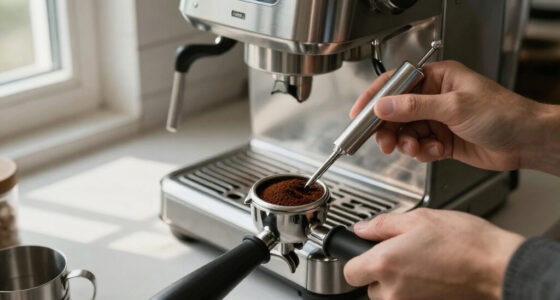
Break up clumps from clumpy grinders for a more even puck — improving flow regardless of tamp pressure. Judge by shot consistency, not hype.
Calibrated Tampers
Set to a fixed pressure (e.g. 30 lbs), they make the motion repeatable — but they cannot correct uneven grounds or poor distribution.
Workflow Consistency
A fixed, repeatable prep routine — same dose, same distribution, same tamp — eliminates the inconsistencies that force alone can never fix.
Common Questions, Answered
Q1How hard should I tamp?
Firmly and evenly, until the grounds are compacted. Repeatability matters more than chasing a specific force.
Q2Does tamp pressure affect shot time?
It can, especially if tamping is inconsistent. In ordinary use, grind size and puck preparation have a larger, more dependable effect.
Q3Should I tamp twice or polish the puck?
A single level tamp is generally enough. Extra twisting or repeated tamping may disturb the puck without solving distribution problems.
Q4What matters more than tamping pressure?
Even distribution and a level, consistent puck — alongside getting the grind size, dose, and brew ratio right.
What tamping really does — and what it doesn’t
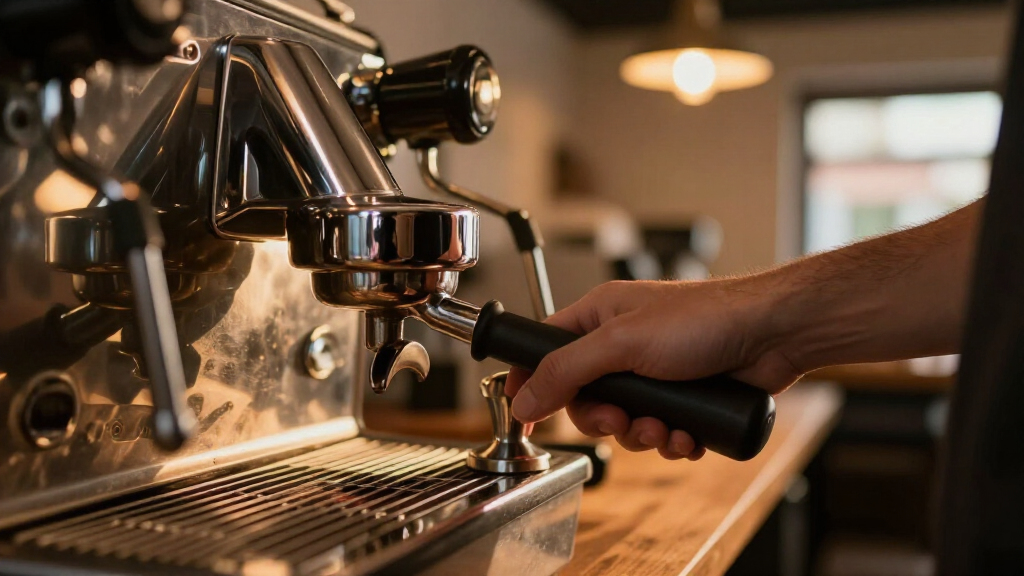
Tamping’s main job is to compress the coffee grounds into a flat, stable bed. This helps water flow evenly, avoiding channels or uneven extraction. But tamping doesn’t need to be a battle of force. Think of it more as leveling and compacting than squeezing with all your might.
For example, a barista using a light, consistent press can produce a perfectly flat puck, while someone pressing harder might create uneven density if the tamp isn’t level. The goal is a uniform, well-compacted bed—not necessarily a specific pressure.
Overemphasizing force can cause more harm than good. Excessive pressure might distort the puck, leading to uneven flow, or simply waste effort. Instead, aim for a firm, level tamp that you can reproduce every time.
As an affiliate, we earn on qualifying purchases.
Why your focus on tamp pressure might be misplaced
Many baristas and home brewers believe that pressing harder results in better extraction. But research and practical experience tell a different story. The challenge is that tamp force is hard to control and reproduce. Even slight variations can lead to inconsistent shots.
Variables like dose, grind size, distribution, and water flow have a bigger impact because they directly influence how evenly water interacts with the coffee bed. When tamping force varies, it often introduces inconsistency rather than fixing it. Small differences in force usually have minimal effect if other variables are optimized, but inconsistent tamping can cause water to find uneven pathways, resulting in channeling and flavor loss.
Understanding this helps you prioritize the steps that truly matter. If your puck is evenly distributed and level, slight variations in tamping force won’t significantly harm your shot. Conversely, focusing too much on force may divert attention from critical prep steps like distribution and grind adjustment.
As an affiliate, we earn on qualifying purchases.
Why even distribution and leveling matter more than force
Think of your coffee puck as a landscape. Gaps, clumps, or slopes invite water to run straight through, causing uneven extraction. Distributing grounds evenly and tamping level creates a smooth, uniform bed that guides water evenly through the coffee.
Distributing grounds properly—whether through tools like a WDT needle or gentle stirring—breaks up clumps and ensures a consistent density across the puck. This step is crucial because it directly affects how evenly water flows during extraction. When grounds are unevenly distributed, water will preferentially flow through the path of least resistance, leading to channeling, under-extraction, and flavor imbalance.
Level tamping builds on this by compressing the grounds uniformly, but only if the distribution is already even. A flat, well-distributed puck acts like a well-laid foundation—no matter how much force you apply, if the grounds are uneven from the start, the shot quality will suffer. Therefore, focusing on distribution and leveling addresses the root causes of inconsistent shots, rather than relying solely on tamping force to fix underlying issues.
As an affiliate, we earn on qualifying purchases.
How to tamp firmly enough — and keep it consistent
The goal isn’t to crush the grounds but to tamp firmly enough to compress and level the coffee. How much force? It varies. The key is repeatability. Use the same amount of pressure each time, whether that’s a gentle press or a firm push.
For example, some baristas use a calibrated tamper set to a specific pressure, like 30 pounds. Others develop a feel that produces a flat, even puck without excessive force. The main point is to be consistent, not to hit a magic number.
Remember, keep your tamp level. An uneven tamp creates slopes that channel water, regardless of how hard you press. Practice your motion—press straight down, stop at the same point, and avoid twisting or multiple tamping steps which can disturb the grounds. The consistency of your technique ensures that your puck remains uniform shot after shot, making the force secondary to your control over technique and positioning.
As an affiliate, we earn on qualifying purchases.
The real workflow that improves espresso — not just tamping
Adjusting grind size and dose often has a bigger impact than tamping pressure. For example, if your shot pulls too fast, fine-tune the grind. If it’s too sour, increase the dose or adjust the brew ratio. Tamping remains part of the process, but it’s one piece of a larger puzzle.
Here’s a simple way to approach it:
- Start with a consistent dose (e.g., 18 grams) and grind size.
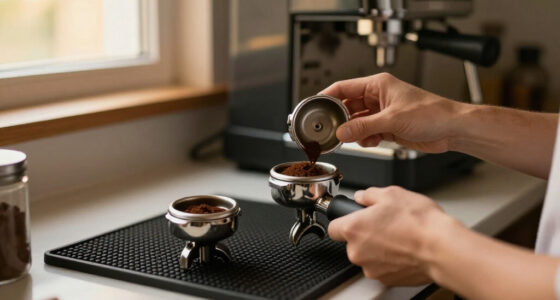
- Distribute grounds evenly using a tool or gentle stir.
- Tamp level and firm enough to level the bed.
- Pull a shot, observe flow and taste.
- Adjust grind size or dose based on shot time and flavor, not tamp force.
This holistic approach addresses all critical variables, reducing the emphasis on force and increasing control over shot quality. It’s about understanding that tamping is just one part of a multi-step process that, when properly managed, yields more consistent and delicious espresso.
Recent trends — tools and techniques that shift focus
Recently, home baristas and equipment makers have emphasized tools like calibrated tampers, distribution needles, and workflow routines. These tools aim to make puck preparation more consistent, reducing the impact of small force variations.
For example, a calibrated tamper set to 30 pounds helps develop a uniform feel, but it’s only as good as the distribution. Similarly, WDT tools help break up clumps, leading to a more even puck, which improves flow regardless of tamp pressure. These tools act as aids to good technique, not replacements for understanding the underlying principles of puck preparation.
By focusing on proper distribution and leveling, these tools help eliminate the inconsistencies that force alone cannot fix. They serve as reminders that the core of good espresso lies in the quality of preparation, not just the force applied during tamping. Integrating these tools into a consistent workflow ensures more reliable results and helps develop better technique over time.
Common questions — and what really matters
How hard should I tamp? Tamp firmly enough to level and compress the grounds, but avoid excessive force. The key is consistency—using the same pressure each time ensures your puck has the same density and flow characteristics.
Will tamping too hard cause bitterness? Not directly. Bitterness is more related to over-extraction from grind size or brew time. Tamping force has minimal impact on flavor if other variables are optimized.
Does tamp pressure affect shot time? It can if your tamping is inconsistent. But more often, grind size and puck prep have a bigger influence on flow rate and extraction. Keeping tamping consistent helps ensure shot timing is controlled by these variables.
What’s more important than tamp pressure? Focus on even distribution, leveling, and using the correct grind size and dose. These factors directly influence extraction quality and consistency.
Should I use tools like WDT or calibrated tampers? They can help create a more uniform puck, especially if your grinder produces clumps or uneven grounds. However, they are aids, not substitutes for good technique and workflow discipline.
Frequently Asked Questions
How hard should I tamp?
Tamp firmly enough to level and compress the grounds, but avoid excessive force. The key is consistency—use the same pressure each time for reliable results.Can tamping too hard cause espresso bitterness?
Not directly. Bitterness usually results from over-extraction due to grind size or brew time. Tamping pressure has less impact than these factors.Does tamp pressure affect shot time?
It can, especially if your tamping is inconsistent. But more often, grind size and puck preparation have a larger effect on flow rate and shot timing.What should I prioritize: tamp pressure or distribution?
Distribution and leveling matter more. A well-distributed, flat puck guides water evenly, which is more important than the force of tamping.Are calibrated tampers worth it?
They can help develop a consistent feel, but they don’t fix uneven grounds or poor distribution. Technique and workflow remain essential.Conclusion
Remember, the real secret to better espresso isn’t how hard you press—it’s how evenly and consistently you prepare the puck. Focus on distribution, leveling, and workflow. When those elements are dialed in, tamping becomes a simple, repeatable step rather than a source of doubt.
Next time you pull a shot, pause and ask: am I creating a level, even bed? If yes, your coffee will thank you. Better espresso isn’t about brute force; it’s about smart, steady prep.
Halloween Picks
halloween
As an affiliate, we earn on qualifying purchases.