
TL;DR

Get coffee and tea gear delivered free with Prime
- Fast, free delivery on millions of items
- Prime Video, Amazon Music and more included
- Member-only deals all year
TDS (Total Dissolved Solids) measures how concentrated your espresso is — what percentage of the liquid is dissolved coffee — while extraction yield measures how much of the grounds dissolved into the cup. Traditional espresso sits at 8–12% TDS with 18–22% extraction yield. You can have a strong-but-sour shot or a weak-but-balanced one, so knowing both numbers tells you exactly what to fix.
Your espresso tastes bitter, so it must be “too strong,” right? Not necessarily. That bitterness usually means over-extraction, not excessive strength — and the fix is the opposite of what most people instinctively do. Diluting an over-extracted shot just gives you watery bitterness.
Here’s the thing that changes everything once it clicks: strength and extraction are two completely different measurements. Strength is about your water. Extraction is about your grounds. Once you separate them, refractometer numbers stop being intimidating trivia and start being a diagnostic tool.
In this guide, you’ll learn what TDS actually measures, how to calculate extraction yield from it, the reference numbers that matter, and how to use it all to fix sour or bitter shots. No lab coat required.
TDS measures concentration (what % of the liquid is coffee); extraction yield measures how much of the grounds dissolved — strength is about water, extraction…
Calculate extraction yield as: brewed coffee weight × TDS ÷ dose. A 36g shot at 10% TDS from an 18g dose = 20% EY, right in the balanced zone.
Reference ranges: espresso 8–12% TDS and 18–22% extraction per SCA standards; below ~18% trends sour, above ~24–26% trends bitter.
Sour/bitter complaints point to extraction fixes (grind, time, temperature); too-intense/too-weak complaints point to strength fixes (ratio, dose).
Always stir, cool, and filter your sample before reading — crema and CO₂ will skew TDS measurements.
What Is TDS? The Percentage of Your Shot That’s Actually Coffee
TDS stands for Total Dissolved Solids — the percentage of your beverage’s mass that consists of dissolved coffee compounds. If your espresso reads 9% TDS, that means 9% of what’s in the cup is dissolved coffee material and the other 91% is water. That’s it. It’s a concentration measurement, nothing more.
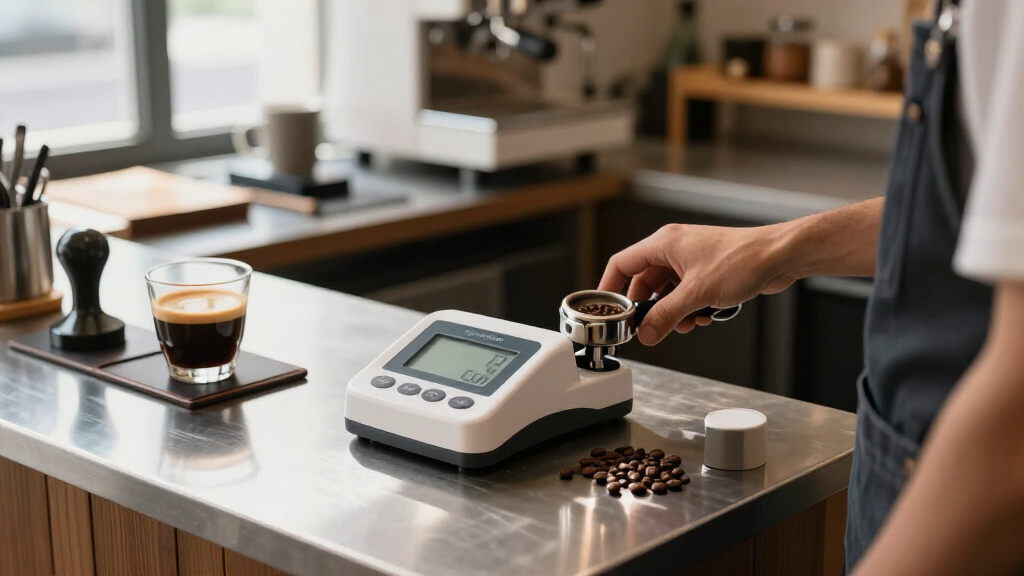
You measure it with a refractometer — a device that shines light through a drop of coffee and calculates how much the dissolved solids bend that light. The VST Coffee Refractometer is the industry classic at $600+, but newer options like the DiFluid R2 (often under $200) have made measurement accessible to home enthusiasts.
Here’s the part most people miss: TDS tells you how concentrated the drink is, not how good it is. Two shots can both read 10% TDS. One tastes like blueberry jam and cocoa. The other tastes like ash and lemon juice. Same number, wildly different coffee.
A high TDS reading guarantees exactly one thing: a concentrated shot. It guarantees nothing about flavor balance.
TDS vs. Extraction Yield: The Confusion That Ruins Troubleshooting
TDS and extraction yield answer two different questions. Strength (TDS) asks: how concentrated is the liquid in my cup? Extraction yield (EY) asks: what percentage of my coffee grounds dissolved into the cup? Strength is about the water; extraction is about the grounds. Confusing them is the single most common reason people “fix” their espresso in the wrong direction.
They connect through one formula:
Extraction Yield = Brewed Coffee Weight × TDS ÷ Dose
Real example: you pull a 36g shot at 10% TDS from an 18g dose. Run the math: (36 × 0.10) ÷ 18 = 20% extraction yield. That lands right in the balanced zone. Now imagine the same shot reads 14% TDS — that’s (36 × 0.14) ÷ 18 = 28% extraction, which would taste harsh and bitter. Or 6% TDS: 12% extraction, sour and thin.
The four quadrants of this system are worth memorizing:
| Scenario | TDS (Strength) | Extraction | How It Tastes |
|---|---|---|---|
| Strong + under-extracted | High | Below ~18% | Harsh, sour, heavy, salty |
| Strong + well-extracted | High | 18–22% | Intense, balanced, classic espresso |
| Weak + under-extracted | Low | Below ~18% | Thin, sour, disappointing |
| Weak + over-extracted | Low | Above ~24–26% | Dilute but bitter and astringent |
See that fourth row? That’s the turbo shot territory — coarser grinds and faster pulls (some as quick as 15 seconds) can hit high extraction at lower TDS. It’s a legitimate style, not a failure, and it’s challenged traditional espresso norms in recent years.
The Numbers That Actually Matter (And When to Ignore Them)
The SCA standard for espresso is 8–12% TDS, with an extraction yield of roughly 18–22%. For comparison, filter coffee sits way down at 1.15–1.45% TDS — which tells you espresso is roughly 8–10 times more concentrated than drip coffee. These ranges come from decades of taste testing plotted on the classic SCAA Brew Control Chart.
But treat these as starting points, not laws. Below roughly 18% extraction, shots trend sour and salty. Above roughly 24–26%, they trend bitter and astringent. Between those lines lives a wide band of preference — and strength, unlike extraction, is mostly personal taste. Some modern analysts argue espresso’s true optimum stretches up to 20–26% extraction, and research suggests the traditional 22% ceiling reflects grind non-uniformity (channeling) rather than a universal chemical limit.
Context changes your target, too:
- Straight espresso: aim for 8–12% TDS, classic 1:2 ratio (e.g., 18g in, 36g out), 25–30 seconds
- Milk drinks: milk dilutes TDS dramatically, so higher-strength shots (longer ratios like 1:1.5, or higher TDS) often cut through better in a latte
- Turbo shots: deliberately coarser and faster — lower TDS, higher extraction, lighter body
A 10% TDS shot that tastes perfect to you in a cappuccino might taste overwhelming as a straight doppio. The number didn’t change — the context did.
Why Your Shot Tastes Weak but Measures Strong (And Other Puzzles)
When a shot measures high TDS but tastes weak or hollow, the culprit is usually under-extraction hiding inside high strength. You’ve concentrated plenty of coffee material, but you pulled it from the grounds too fast or too coarsely, so the desirable sweet compounds never made it into the cup. The fix isn’t more coffee — it’s a finer grind or a longer contact time to raise extraction.
Here’s a simple troubleshooting sequence for the two most common complaints:
- Shot tastes sour or salty: calculate EY. If it’s under 18%, grind finer, extend the shot, or raise temperature slightly.
- Shot tastes bitter or drying: if EY is over ~24%, grind coarser, shorten the ratio, or lower temperature.
- Shot tastes balanced but too intense: extraction is fine — extend your ratio (e.g., 1:2 to 1:3) to lower TDS.
- Shot tastes balanced but watery: tighten the ratio or increase the dose to raise TDS.
Notice the pattern: taste faults in the sour/bitter dimension point to extraction problems; intensity complaints point to strength problems. That single distinction will save you from more wasted shots than any gear upgrade.
How to Measure TDS Without Skewing the Numbers
Accurate TDS readings require a little technique, because espresso is messy stuff. Crema and CO₂ skew readings badly — the bubbles and emulsified oils read as solids that aren’t really dissolved coffee. According to measurement best practices shared across the brewing-data community, you need to filter or degas your sample first.
Here’s the correct process:
- Pull your shot and stir it thoroughly — the first drops and last drops have different concentrations.
- Let it cool below body temperature (refractometers compensate for heat, but cooling reduces error and off-gasses CO₂).
- Filter a small sample through a paper syringe filter, or at minimum wait for the crema to settle.
- Place a few drops on the refractometer prism with a clean pipette and read.
Two more gotchas. First, brewing water TDS is a separate measurement — you want roughly 75–150 ppm in your water, and that’s a completely different scale from beverage TDS percentage. Second, cheap refractometers vary in calibration. Coffee-specific devices (VST, DiFluid R2, Atago PAL-Coffee) outperform generic Brix meters, and readings can differ between devices or sessions. Track trends on your device rather than comparing absolute numbers against someone else’s.
If your readings bounce around between sessions, suspect your sampling technique before suspecting your machine.
Do You Even Need a Refractometer? An Honest Answer
No — and that’s the honest answer. Palates are excellent measuring instruments, and plenty of championship-level baristas work primarily by taste. What a refractometer buys you is the ability to isolate variables: when you change one thing (grind, dose, temperature) and your EY moves from 19% to 21%, you know the change did something real, even if the taste difference is subtle.
It’s most valuable for troubleshooting. That “tastes weak but should be strong” puzzle from earlier? A measurement turns a guessing game into a diagnosis in thirty seconds. It’s also genuinely fun if you’re the type who likes data — the rise of data-driven brewing culture, popularized by figures like Scott Rao and James Hoffmann, happened partly because measurement makes experimentation repeatable.
But know the limits:
- TDS can’t measure flavor balance — only concentration
- It can’t tell you whether your shot tastes good — you still have to drink it
- Numbers create false confidence if your sampling technique is sloppy
Think of it like a kitchen scale for brewing. You can cook great food without weighing flour, but once you start weighing, you can repeat your successes.
Frequently Asked Questions
What is a good TDS number for espresso?
The SCA standard range is 8–12% TDS for espresso, paired with 18–22% extraction yield. But “good” depends on context: for milk drinks, higher TDS shots often work better because milk dilutes concentration dramatically. For turbo shots, lower TDS with high extraction is the whole point. Treat 8–12% as a starting point, then adjust to your palate and the drink format.
How is TDS different from extraction yield?
TDS measures what percentage of your liquid is dissolved coffee — it’s about concentration in the cup. Extraction yield measures what percentage of your grounds dissolved into the cup. You calculate EY as: brewed coffee weight × TDS ÷ dose. A shot can be strong but under-extracted (harsh and sour) or weak but well-extracted (dilute but balanced).
Can I measure TDS with a cheap refractometer?
Coffee-specific devices like the DiFluid R2 (under $200) have become accurate enough for serious home use, closing much of the gap with the $600+ VST. Avoid generic Brix meters — they’re built for sugar solutions and read coffee unreliably. Whichever device you use, track trends on that same device rather than comparing absolute numbers across brands, since calibration differences are real.
Why does my shot taste weak but measures high TDS?
High strength with a weak or hollow taste usually means under-extraction inside a concentrated shot. Run the EY formula — if it lands under 18%, your grind is likely too coarse or your shot too fast, so the sweet, balanced compounds never dissolved. Fix it with a finer grind or longer contact time, not by adding more coffee.
Does higher extraction always taste better?
No. Up to a point, higher extraction pulls more desirable compounds into the cup — that’s why modern techniques push toward 20–26% for espresso. But beyond roughly 24–26%, bitterness and astringency dominate. Research also suggests the traditional 22% ceiling reflects grind non-uniformity and channeling more than a hard chemical limit, so well-distributed, uniform grinds can go higher before tasting bad.
Conclusion
Next time a shot tastes off, don’t ask “is this too strong?” Ask two questions instead: is the concentration wrong, or is the extraction wrong? That one habit separates people who fix their espresso from people who just pull more shots and hope.
Because in the end, the numbers are just a map. Your tongue still has to drive the car — but with TDS and extraction yield in your toolkit, at least you’ll know which road you’re on.
Halloween Picks
halloween
As an affiliate, we earn on qualifying purchases.