
TL;DR

Get coffee and tea gear delivered free with Prime
- Fast, free delivery on millions of items
- Prime Video, Amazon Music and more included
- Member-only deals all year
Office espresso capacity means more than how many drinks a machine can make in an hour: you also need to account for rushes, drink type, refills, cleaning, and downtime. Track actual drink demand for a typical week, estimate the busiest 30-minute period, then compare that workload with the machine’s practical workflow and service needs.
A coffee machine can keep up with an office all day and still lose the morning rush. If 15 people line up between 8:30 and 8:50, a machine’s advertised hourly output won’t tell you whether anyone will get to the meeting on time.
That’s why office espresso machine capacity is not a single number. You need to account for how many drinks your team makes, when they make them, which drinks they choose, and how often someone has to refill or clean the machine. Think of capacity as a busy coffee bar’s rhythm, not a bucket that holds a fixed amount.
This guide gives you a practical way to estimate demand, compare machine types, and spot hidden limits before you buy. You’ll also see why a 20-person office can need more capacity than a 40-person one—and how a short demand log can keep you from paying for equipment your team won’t use.
Track drinks in 30-minute blocks for a typical workweek; daily totals hide morning queues.
Separate milk drinks from espresso-only drinks because preparation time and cleaning needs differ.
Compare machine types by user tasks, not labels or advertised hourly output alone.
Include water, beans, grounds-bin capacity, cleaning, and downtime in your estimate.
Match equipment to normal peak demand, and handle rare event spikes with a temporary plan.
Count drinks by time of day, not employees
Office espresso machine capacity starts with drinks per time period, not headcount. The number of employees gives you a rough audience; it doesn’t tell you how many will want coffee, whether they drink espresso, or whether they arrive together. Track actual cups during a typical workweek, then note the busiest windows.
For example, a 30-person studio might serve just 18 espresso drinks in a day because many people bring tea or work remotely. A 16-person sales office could make 28 drinks before lunch if visitors arrive early and most employees stop at the machine twice. The smaller office may need faster service, even with fewer people.
Run a simple count for five workdays. Record drink totals in 30-minute blocks, and mark milk drinks separately from straight espresso. If the machine serves 32 drinks daily but 12 arrive between 8:30 and 9:00, that half-hour matters more to your purchase than the daily total alone.
Keep the log low-friction: a tally sheet beside the machine works, or you can ask a volunteer to record drinks at the start and end of each day. Include guests and training days if they reflect normal use. A single unusually busy Monday can skew your estimate, so look for a pattern rather than treating one day as the forecast.
As an affiliate, we earn on qualifying purchases.
Turn your coffee log into a useful capacity target
To set a capacity target, estimate daily drinks, peak demand, and the time people can wait. Use your busiest regular interval—not an unusual event—as the main test. Capacity planning is a bit like sizing an elevator: the average load matters, but the rush decides whether people get stuck waiting.
- Count daily drinks. Use a normal five-day sample and separate espresso drinks from tea, batch coffee, or other beverages.
- Find the peak window. Add drinks made during the busiest 30 or 60 minutes, and note whether they arrive in a cluster.
- Sort by drink complexity. A short espresso and a milk-based drink do not take the same hands-on time, especially when users share one milk system.
- Allow for interruptions. Include refilling beans and water, rinsing parts, and clearing a queue—not just the machine’s brew cycle.
- Choose a comfortable pace. Compare the expected rush with the manufacturer’s stated output and ask how that figure was measured.
Suppose a 25-person office logs 24 drinks daily, with nine between 9:00 and 9:30. If seven are cappuccinos or lattes, a machine that brews quickly but needs hands-on milk preparation may still create a queue. You might shorten the line by offering batch coffee during the rush, changing the milk workflow, or choosing a more automated setup.
Leave room for growth if your office is hiring, but don’t buy for a hypothetical crowd without a reason. A realistic target should cover ordinary busy mornings, not a once-a-year all-hands event. If a special event creates a spike, a temporary catering plan can cost less than owning oversized equipment every day.
commercial espresso machine for office
As an affiliate, we earn on qualifying purchases.
As an affiliate, we earn on qualifying purchases.
Compare machine types by the work they remove
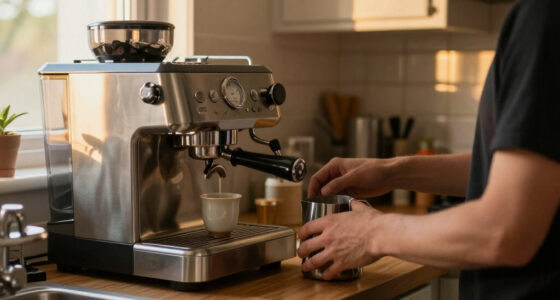
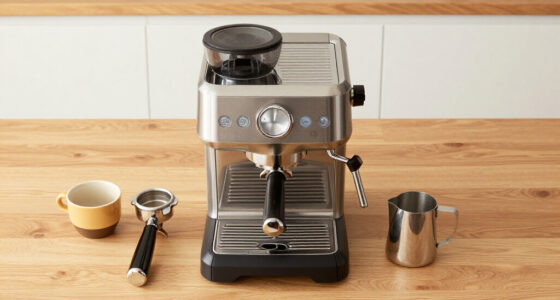
Office espresso machines differ in capacity because they assign different tasks to the user. A semi-automatic machine gives you control but asks someone to grind, dose, tamp, brew, and manage milk. A super-automatic machine automates more of that sequence, which can shorten training and reduce variation when many people make drinks.
Think about a Monday morning with eight coworkers waiting. With a semi-automatic setup, one confident coffee maker may produce excellent drinks, but each new user can slow the line while figuring out the grinder and steam wand. A super-automatic machine may serve more people with less skill, though its drink menu, cleaning needs, and milk system still shape its real-world pace.
| Machine type | What users do | Capacity tradeoff |
|---|---|---|
| Semi-automatic | Handle grinding, dosing, brewing, and often milk steaming | Flexible and hands-on; throughput depends heavily on the operator |
| Automatic | Start a programmed brew cycle; some steps remain manual | Reduces repeat work, but milk preparation or workflow can still slow service |
| Super-automatic | Select a drink while the machine handles most preparation | Easy for shared use; the machine’s drink cycle and cleaning schedule still set limits |
| Commercial high-volume | Use a more production-oriented setup, often with trained operators | Can suit heavy demand, but takes more space, budget, and upkeep |
None of these labels guarantees a particular number of drinks per hour. Ask vendors for the rated output, what drink that number assumes, and whether it includes grinding, milk steaming, or recovery between shots. If your team wants a wider buying overview, compare the practical features in a guide to espresso machines for office kitchens alongside your own demand log.
high capacity coffee machine for workplace
As an affiliate, we earn on qualifying purchases.
As an affiliate, we earn on qualifying purchases.
Check the bottlenecks beyond the brew cycle
A machine’s practical capacity depends on its slowest recurring step. A fast brew cycle won’t clear a queue if someone must refill a small water tank every few drinks, reload beans during the rush, or wash a milk container before the next latte. Capacity is a chain; one slow link sets the pace.
Imagine a 20-person office with a grinder that doses quickly but a compact water reservoir. The machine may handle the first wave smoothly, then stop just as the last few people reach the kitchen. The same issue appears with a small bean hopper when the team favors double shots or when staff forget to check supplies before a busy morning.
Check the size and access of the water reservoir, bean hopper, grounds container, drip tray, and milk system. Bigger containers reduce interruptions, but they can take up more counter space and may be awkward to lift or clean. A plumbed water connection can reduce refills, though installation and filtration add cost and may not suit a rented office.
Ask how long the machine needs between repeated drinks and whether it can prepare coffee and milk at the same time. Also check how many drinks it can make before its grounds bin or drip tray needs attention. The details matter: a machine that is easy to reload before the rush may outperform a larger unit that staff avoid maintaining.
office coffee maker with quick refill
As an affiliate, we earn on qualifying purchases.
As an affiliate, we earn on qualifying purchases.
Count cleaning and downtime as part of capacity
Cleaning and maintenance reduce usable capacity whenever they take the machine out of service. Espresso machines handle hot water, coffee oils, milk residue, and wet grounds; those parts need regular care to keep drinks tasting good and equipment working as intended. A machine that makes many drinks but gets neglected won’t sustain that output.
Picture the kitchen after a morning rush: sticky milk on the wand, a full grounds bin, and a drip tray close to overflowing. If nobody owns cleanup, the next person may wait while the machine runs a rinse cycle—or find a sour smell in the milk system. Assign a simple closing routine and follow the manufacturer’s cleaning directions for the model you buy.
Build the cleaning time into your estimate. Some tasks happen daily, while deeper cleaning and servicing follow the manufacturer’s schedule; there isn’t one universal weekly or monthly interval for every machine. Keep cleaning products and instructions near the machine, and train more than one person so a vacation or sick day doesn’t leave the coffee station unattended.
Food safety matters, especially with milk. Keep perishable milk refrigerated at 40°F (4°C) or below, return it promptly after use, and discard it if it has sat out too long or its safety is uncertain. Clean milk-contact parts as directed, and treat dairy, soy, oat, and other alternatives as potential allergen or cross-contact concerns. A clearly labeled pitcher and a rinse between milk types can help, but follow your workplace’s allergy procedures.
Practical rule: A machine’s useful capacity is the drinks it can serve reliably, after you account for refills, cleaning, and normal interruptions.
Choose enough capacity without buying more machine than you need
The right machine covers your normal rush without forcing you to pay for idle capacity all day. Oversizing can bring higher purchase and service costs, a larger footprint, and more cleaning work. Undersizing can leave coworkers queued up, frustrated, or reaching for coffee elsewhere.
Consider a 12-person office where six people want a drink at 9:00, but only two choose espresso and the rest are happy with batch coffee. A large commercial machine may be unnecessary; a smaller espresso setup plus a separate coffee brewer could fit the actual pattern better. In a 35-person design studio where 20 people want specialty drinks before a daily stand-up, a faster, more automated workflow may earn its space.
Compact high-performance designs and connected features can help, but don’t treat them as magic. Usage analytics may reveal peak times, while alerts can remind staff about maintenance; they cannot fix a poorly sized water supply or a slow milk workflow. Energy-saving modes can trim idle energy use, though you should check warm-up behavior if the machine sits off overnight and faces a sharp morning rush.
Before choosing, measure the counter and leave room to open doors, remove reservoirs, and clean the machine. Check electrical and water requirements with your facilities team, and confirm who handles service when the machine fails. For an office with unpredictable visitor traffic, reliable support and easy daily care may matter more than the highest advertised drink count.
Frequently Asked Questions
How do I estimate the right espresso-machine capacity for my office?
Count drinks for a typical workweek and record when people make them, especially during the busiest 30- or 60-minute window. Separate milk drinks from straight espresso, then account for refills, cleaning, and the wait your team will accept.
How many office drinks per hour should a machine make?
There is no reliable one-size-fits-all figure because drink recipes, operator skill, and machine design affect output. Ask how the manufacturer measured its stated rate and compare that figure with your actual peak-hour log, including preparation and recovery time.
Is a super-automatic machine better for a busy office?
It can be a good fit when many users need a consistent drink without learning grinder and milk-steaming steps. It is not automatically faster for every menu, so check its drink cycle, milk-system cleaning, refill needs, and service requirements.
Can a small office justify a commercial espresso machine?
Yes, if the office has concentrated demand, frequent visitors, or a strong need for rapid service. If only a few people want espresso and most are happy with batch coffee, commercial equipment may add expense, space, and maintenance without solving a real problem.
How does cleaning affect espresso-machine capacity?
Cleaning removes a machine from service and takes staff time, while missed cleaning can affect drink quality and equipment operation. Follow the model’s instructions, keep milk refrigerated at 40°F (4°C) or below, and assign clear daily and scheduled maintenance tasks.
Conclusion
Choose an office espresso machine for the busiest ordinary part of your day, not the biggest number on its box. Count real drinks, watch the morning rush, and include the human work of refilling, cleaning, and making milk drinks.
When you size the whole workflow—not just the brew cycle—the coffee station stops feeling like a bottleneck and starts running like a well-timed little café.
Fall Picks
fall essentials
As an affiliate, we earn on qualifying purchases.