TL;DR

Get coffee and tea gear delivered free with Prime
- Fast, free delivery on millions of items
- Prime Video, Amazon Music and more included
- Member-only deals all year
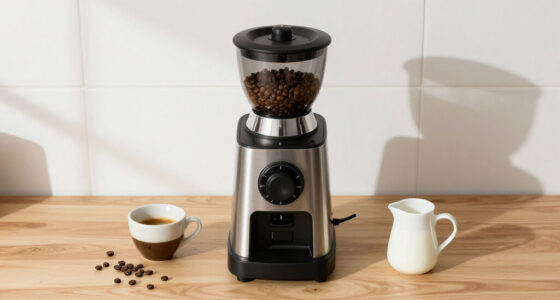
An all-purpose burr grinder can grind for both espresso and filter coffee, saving counter space and the cost of a second machine. Its performance depends on more than its adjustment range: check how precisely it adjusts, how consistently it grinds at both ends, and how much coffee it retains when you switch. One grinder works best when its compromises fit your routine.
Your espresso tastes sour, your filter coffee is ready to bloom, and the grinder is still set for yesterday’s brew. One burr grinder can handle both jobs, but switching between them asks more of the machine than simply turning a dial. Espresso needs fine, repeatable control; filter coffee usually needs a coarser grind that produces a clear cup.
This guide explains what “all-purpose” really means, where the compromises show up, and which features make a shared grinder easier to live with. You’ll also get a practical buying checklist, so you can decide whether one machine suits your counter, your coffee habits, and your espresso setup.
Treat “all-purpose” as a broad label, then check adjustment precision and tests at espresso and filter settings.
Match your priorities to how often you brew each method and whether your espresso basket is pressurized.
Look at adjustment range, step size, particle consistency, retention, burr alignment, and maintenance as separate traits.
Expect method changes to involve setting adjustments and possibly clearing retained grounds.
Compare one grinder’s convenience and cost with the extra space and expense of two dedicated grinders.
One grinder.
Two very different cups.
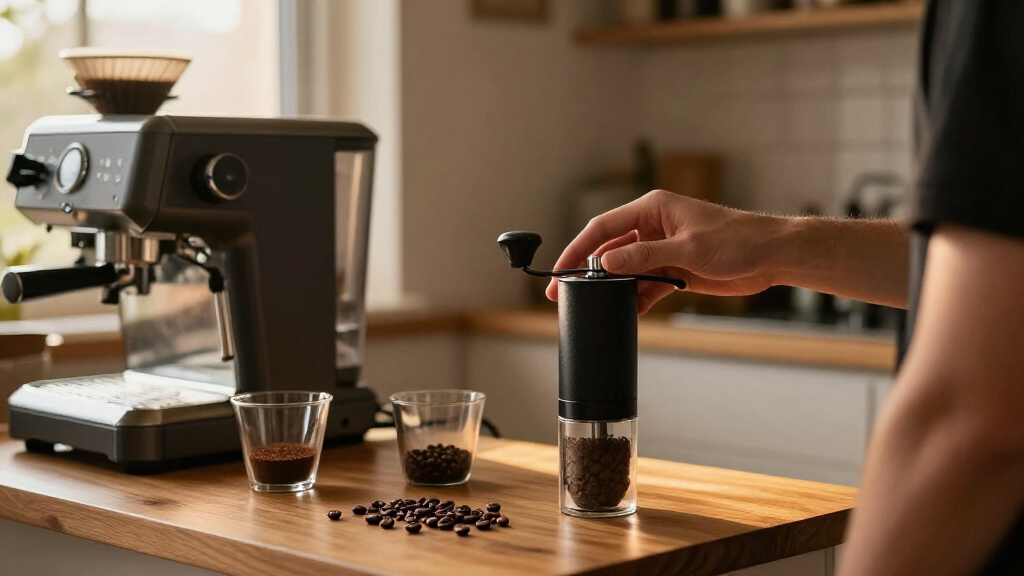
An all-purpose burr grinder can cover espresso and filter coffee in one footprint. The real question is how precisely it adjusts, how consistently it grinds at both ends, and how much coffee stays behind when you switch.
“All-purpose” is a starting point, not a specification.
The term has no strict technical definition. It may mean a grinder physically reaches both ends, offers espresso-friendly adjustment, or is simply marketed for several brew methods. Check the mechanism and evidence behind the claim.
Can it reach both ends?
A broad adjustment range gets you from fine espresso to coarser filter settings. That alone says little about the quality of the grounds.
Can you tune the shot?
Small, repeatable changes help control espresso flow. Large jumps can leave you choosing between a shot that runs too fast and one that runs too slowly.
Does the cup stay balanced?
Too many fines can slow a filter pour and muddy the cup; too many large particles can leave it thin or uneven.
Espresso and filter pull the grinder in different directions.
Espresso responds to small grind changes because they alter how quickly water passes through the coffee puck. Filter coffee generally uses a coarser grind and benefits from an even particle spread for a clear, balanced cup.
| Brewing method | What it asks of the grinder | What to look for |
|---|---|---|
| Espresso | ✓ Fine grind with precise, repeatable adjustment to tune shot flow. | Small steps or stepless control; tests that show dialing-in with your kind of machine and basket. |
| Filter coffee | ✓ Coarser grind with a balanced particle distribution for a steady pour. | Brew tests at coarse settings; notes on clarity, fines, and flow. |
| Switching methods | ~ Setting changes can leave grounds from the previous brew inside. | Low retention, easy adjustment, and a workflow for clearing retained coffee. |
Basket matters: Pressurized espresso baskets tolerate a wider range of grind sizes. Unpressurized baskets usually need finer control and more precise dialing-in.
Judge each capability on its own.
A grinder can have a wide range but coarse adjustment steps, or low retention without a consistent particle spread. Recent designs often emphasize stepless or fine adjustment, easier burr access, and single-dose workflows; these features still need evidence in use.
Small, repeatable steps
Useful for dialing espresso. Stepless control can make tiny changes; a well-designed stepped grinder can also work when its steps suit your setup.
Less coffee left behind
Low retention can reduce stale grounds entering the next dose. Switching may still call for a purge or a brush-out.
Stable burrs, easy access
Burr alignment, motor workload, and cleaning access shape everyday performance. Flat or conical burrs alone do not predict your preferred cup.
Choose for the coffee you actually make.
The best compromise follows your routine, your espresso setup, and how much switching work you are willing to do.
Map a typical week
Which method fills most of your cups? Give that one the most weight.
Check your espresso basket
Pressurized is more forgiving; unpressurized usually asks for finer dialing.
Find tests at both ends
Look for shot adjustments and filter results with equipment and coffee details.
Price the whole workflow
Weigh one grinder’s cost and footprint against two dedicated machines and the effort of switching.
Look for evidence that matches your use.
Reviews that test the same grinder at espresso and filter settings tell you more than a “wide range” claim by itself.
- Adjustment: Are espresso changes small and repeatable?
- Consistency: Are shot performance and filter cups both described?
- Retention: How much coffee remains when you change settings?
- Maintenance: Can you reach the burrs for routine cleaning?
- Workload: Does the motor and workflow fit how many doses you grind?
- Compatibility: Do tests use a machine and basket like yours?
From your routine to the right kind of compromise.
Quick answers before you buy.
Can one grinder really do both?
Yes. Many grinders cover both ranges, but their performance and switching convenience vary. Look for tests at fine and coarse settings.
Is a stepless grinder better for espresso?
Stepless adjustment allows very small changes, which can help with dialing-in. A well-designed stepped grinder can also work if its steps fit your setup.
What an All-Purpose Grinder Can—and Can’t—Promise
An all-purpose burr grinder is a grinder intended to cover both espresso and filter coffee settings, but the label has no strict technical definition. One maker may use it for a model with a broad adjustment range; another may mean only that the burrs physically reach both ends. The name alone doesn’t tell you how well the grinder performs at either setting.
That distinction matters when you make espresso at breakfast and pour-over after lunch. A dial can move from very fine to fairly coarse while offering adjustment steps too large for repeatable espresso dialing. Reaching a setting is not the same as controlling it.
Espresso is demanding because a small change in grind size can alter how quickly water passes through the coffee puck. Filter brewing also depends on particle distribution: too many very fine particles can make a cup taste muddy or slow a pour, while larger chunks may leave it thin. A shared grinder has to make usable grounds across these different demands.
Check the adjustment mechanism, the manufacturer’s compatibility notes, and reviews that test the same grinder at both espresso and filter settings. “Espresso capable” also depends on your machine and basket. A pressurized basket tolerates a wider range of grind sizes than an unpressurized basket, which usually asks for finer control.
For example, a beginner with a pressurized espresso machine may find an all-purpose model straightforward, while someone using an unpressurized basket may spend more time adjusting shot flow. Both can enjoy the same grinder; they simply ask different things from it.
Products Worth Considering

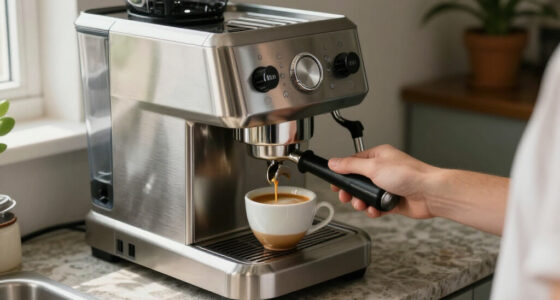
De'Longhi Magnifica Evo Automatic Espresso Machine with Milk Frother – Silver

De'Longhi Magnifica Evo Fully Automatic Espresso Machine with Manual Milk Frother

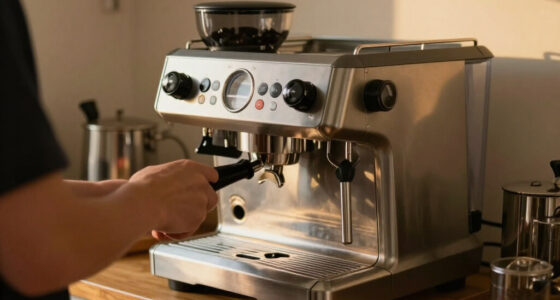
Breville BES870XL Barista Express Espresso Machine, Brushed Stainless Steel
As an affiliate, we earn on qualifying purchases.
Why Espresso and Filter Coffee Pull a Grinder in Different Directions
Espresso and filter coffee reward different grind behavior: espresso needs fine grounds and precise adjustment, while filter methods generally use coarser grounds and benefit from a balanced particle mix. That difference is the heart of the compromise. The grinder has to serve two brewing methods that respond to grind size in different ways.
With espresso, you may adjust a shot after tasting it or watching it run too fast. A small grind change can make water move more slowly through the coffee. If a grinder’s steps jump from too fast to too slow, dialing in feels like trying to tune a radio between two stations.
Filter coffee gives you a different target. Imagine brewing a cup on a quiet Sunday morning: the grounds should let water pass at a steady pace, leaving enough sweetness and clarity to taste the coffee’s character. A distribution with too many fines can turn that cup heavy; too many large particles can leave it weak or uneven.
The grinder’s burrs break beans into a spread of particle sizes rather than identical grains. Burr design and alignment affect that spread, along with adjustment and the grinder’s overall build. Flat or conical burrs alone don’t settle which grinder will produce the cup you prefer.
If you mostly drink espresso and make a filter pot once a month, prioritize fine adjustment and espresso consistency. If pour-over is your daily ritual and espresso is occasional, weigh filter results more heavily. The best compromise follows your actual routine, rather than an imaginary week in which every brew method gets equal attention.
Which Features Make Switching Between Brewing Methods Easier?
Fine, repeatable adjustment and low retention make a shared grinder easier to use across methods. A wide range helps you reach espresso and filter settings; small, consistent adjustments help you find a setting that works. Those are separate advantages, and a useful buying decision checks for both.
Think about a weekday routine: you make espresso before work, then want a filter brew on Saturday. If the grinder holds onto old grounds, a few espresso particles may fall into the first coarse dose. Low retention reduces leftover coffee during that change, though no design necessarily clears every ground without help.
A steady, well-aligned burr set and a motor suited to your workload also matter. If you grind several doses in a row, consider whether the machine and its workflow fit that pace. Easy burr access can make cleaning less fiddly; a single-dose workflow may suit you if you weigh each dose rather than keeping beans in a hopper.
Before buying, look for detailed tests that describe the coffee, machine, and basket used. A claim of “wide range” doesn’t show whether espresso steps are fine enough, and a low-retention design doesn’t prove the grinder produces a consistent particle spread. Reviews that brew at both ends offer more useful evidence.
- Adjustment: Can you make small, repeatable changes for espresso?
- Retention: How much coffee stays inside when you switch settings?
- Consistency: Do tests describe both shot performance and filter cups?
- Maintenance: Can you access the burrs for routine cleaning?
For example, if a review shows a grinder moving smoothly between espresso and filter but offers no dialing-in details, you still don’t know whether its espresso steps suit your machine. Look for the evidence that matches how you brew.
How to Choose One Grinder for Your Actual Coffee Routine
Choose a grinder by matching its strengths to your main brewing method and switching habits. The most useful choice is not necessarily the one with the longest adjustment range; it’s the one that makes your everyday cup reliably and doesn’t make occasional changes a chore.
- Count your brews for a typical week. If you pull espresso most mornings and make one filter brew on Sunday, favor a grinder with reliable espresso adjustment.
- Check your espresso basket. Pressurized baskets are more forgiving; unpressurized baskets usually demand finer, more precise dialing.
- Find tests at both ends. Look for shot adjustments, filter brew results, and details about equipment and beans.
- Think through a method change. Ask how the grinder handles retained grounds, cleaning, and setting changes.
- Compare the full cost and counter space. One machine often costs less and occupies less space than two, though higher-end all-purpose grinders can still be expensive.
Try that checklist with a real kitchen. If your counter barely fits a kettle and espresso machine, one grinder may make the whole setup feel calmer. If you make espresso several times a day and get frustrated by tiny changes in shot flow, a specialist grinder could better fit your patience and priorities.
Some home users also prefer a grinder that is easy to adjust without losing track of their usual settings. If you alternate methods often, record the settings that work for each coffee and machine. Your beans can still change how a shot behaves, but notes give you a helpful starting point.
If you want a more detailed buying overview, Espressoguide’s guide to choosing an all-purpose burr grinder offers a related next step. Use any buying guide alongside method-specific reviews so you can check how a grinder performs in your kind of cup.
What You Gain and Give Up With One Grinder
One grinder usually saves space and money, while two dedicated grinders can make each brewing method simpler to optimize. The better arrangement depends on which benefit you’ll notice every day. A second machine costs more and needs a home; a shared machine may ask you to adjust, clear, or re-dial when you change methods.
Consider two coffee drinkers sharing a small apartment kitchen. They each use the same grinder: espresso on weekdays, a filter brewer on weekends. One machine keeps the counter open, but changing settings and dealing with retained grounds becomes part of the weekend routine.
A different household may brew espresso several times every day and care deeply about precise shot adjustments. For them, a dedicated espresso grinder may feel easier, while a separate filter grinder can stay set for a coarser brew. The extra cost and space may be worthwhile if the household has room and values quick, repeatable switching.
| Setup | What you gain | What to weigh |
|---|---|---|
| One all-purpose grinder | Less counter space and usually a lower cost than buying two grinders | Adjustment precision, retained grounds, and time spent switching |
| Two dedicated grinders | Each grinder can stay set for its main brewing method | More upfront cost, storage space, and equipment to maintain |
Neither burr size nor the flat-versus-conical label settles this comparison by itself. Your cup, routine, grinder adjustment, alignment, and retention all matter. If you rarely switch methods, the convenience of two fixed settings may matter less; if you switch every day, it can be a real part of the decision.
When a Shared Grinder Fits—and When It Frustrates
A shared grinder suits you best when you value flexibility, counter space, or a lower total cost more than peak performance at one brewing method. It can cover both styles well enough for satisfying coffee, even if it doesn’t match a specialist at every setting. That’s a practical choice, not a flaw.
Suppose you make a cappuccino on weekdays and a large filter brew when friends visit. A versatile grinder lets you keep one workflow and one set of burrs on the counter. You might adjust the setting before the weekend brew and brush or purge a small amount of retained coffee, depending on your grinder’s design.
The arrangement may feel less satisfying if espresso is your daily craft and every shot needs careful adjustment. You may also prefer a dedicated filter grinder if a particular clarity or cup profile matters most to you. The tradeoff can show up as time and consistency rather than a dramatic failure: you still make coffee, but you spend longer getting to the cup you want.
There’s also a middle ground in how you use the grinder. Some people switch methods only when they finish a bag of beans; others move between espresso and filter several times a week. The first pattern gives you fewer setting changes, while the second makes adjustment convenience and retention more noticeable.
A grinder that reaches both ends of the dial is only useful if it gives you the control and consistency your brewing routine needs.
When you read reviews, seek concrete details: repeated espresso dialing, filter brews, setting changes, and cleaning. A grinder’s label can introduce its intended use, but brewing evidence tells you whether the compromise suits your kitchen.
Frequently Asked Questions
Can one grinder really make espresso and filter coffee?
Yes. Many grinders cover both settings, but their control and consistency can vary. Check reviews that test the same grinder for espresso and filter, and consider how demanding your espresso basket is.
Is a stepless grinder better for espresso?
Stepless adjustment allows very small changes, which can help when you dial in espresso. A stepped grinder can also work if its steps are fine enough for your machine, coffee, and basket.
Will switching grind settings waste coffee?
It can, because grounds retained inside the grinder may come out after you change settings. Low-retention designs reduce leftover grounds but may not eliminate them; check switching tests and instructions for your model.
Do I need separate grinders if I switch between methods?
Not necessarily. One grinder can work well if its adjustment range, consistency, and switching routine suit you. Separate grinders can be easier if you make both styles frequently and want each machine to stay at its usual setting.
Can an all-purpose grinder work with any espresso machine?
No. Compatibility depends on whether the grinder can adjust finely and precisely enough for your machine and basket. Pressurized baskets are generally more forgiving than unpressurized baskets.
Are flat burrs always better than conical burrs for mixed brewing?
No burr shape guarantees a better all-purpose grinder. Burr geometry, alignment, adjustment, and the coffee you enjoy all affect the result, so compare actual espresso and filter tests instead of choosing by shape alone.
Conclusion
Start with your weekly coffee routine, then pick a grinder that handles your main brewing method well and your occasional method comfortably. Check adjustment precision, performance at both settings, and what happens to retained grounds when you switch; the word “all-purpose” can’t answer those questions for you.
If one machine fits your kitchen and your habits, it can be a sensible bridge between espresso and filter. Choose for the cups you actually make, and your grinder will feel less like a compromise and more like the quiet center of your coffee routine.