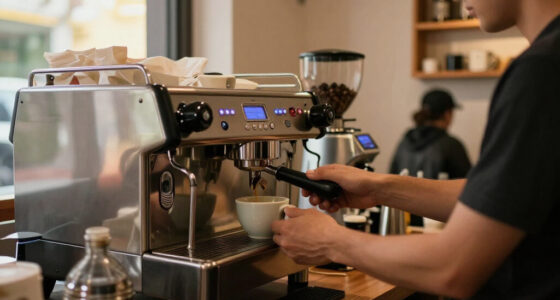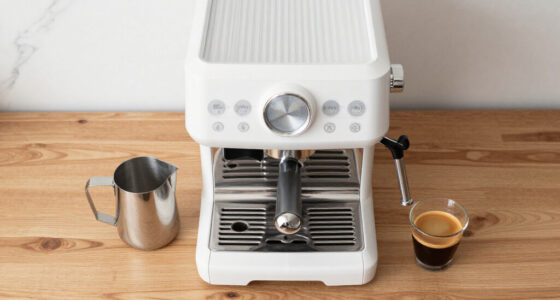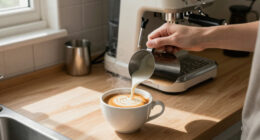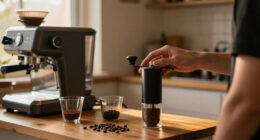
Choosing the best grinder and tamper combo machines often comes down to balancing counter space against extraction consistency. The Breville Barista Express stands out as the best overall pick because it integrates a conical burr grinder with a portafilter-based workflow that allows for manual tamping control, unlike fully automated units. For those prioritizing versatility, the Ninja Luxe Cafe Pro offers a unique hybrid approach, combining espresso, cold brew, and drip coffee in a single footprint, though it sacrifices some traditional espresso depth. The primary tradeoff in this category is between automation and control; combo machines save space but often limit grind adjustment compared to standalone grinders. I have evaluated seven distinct models to help you determine whether an integrated unit fits your brewing habits or if the compromise isn’t worth the convenience.

Get coffee and tea gear delivered free with Prime
- Fast, free delivery on millions of items
- Prime Video, Amazon Music and more included
- Member-only deals all year
Complete the kit


Key Takeaways
- Integrated grinders in combo machines typically offer fewer grind settings than standalone burr grinders, limiting fine-tuning for light-roast beans.
- The Breville Barista Express remains the benchmark for manual control within a combo format, despite lacking a built-in automatic tamper.
- Fully automatic machines like the GeniCup prioritize convenience with one-touch tamping but often struggle with consistent pressure distribution compared to manual methods.
- Cold brew capabilities are becoming a standard differentiator, with machines like the Ninja Luxe Cafe Pro leveraging multi-function designs to justify higher price points.
- Build quality varies widely, with plastic-heavy budget models showing faster wear on grinding burrs than stainless steel constructions in premium picks.


| grinder and tamper combo machine | Dimensions | Weight | Material | Wattage |
|---|---|---|---|---|
| Flyseago 2-in-1 Commercial Esp | — | — | Plastic, Stainless Steel | — |
| GeniCup Espresso Machine with | 10.93"D x 10.55"W x 14.39"H | — | — | 1400 Watts |
| Espresso Machine with Grinder | 12" L x 10" W x 14" H | 15 pounds | — | — |
| AMZCHEF Espresso Machine with | 12.5"D x 10.82"W x 13.38"H | 13.9 pounds | Stainless Steel | 1500 watts |
| AMZCHEF Espresso Machine with | 11.2" D x 9.1" W x 14.2" H | 3.8 pounds | — | 1350 watts |
| Breville Barista Express Espre | 13.8" D x 12.5" W x 15.9" H | 22.1 lbs | Stainless steel exterior | — |
| Ninja Luxe Cafe Pro 4-in-1 Esp | 13.39" D x 12.48" W x 14.84" H | 27.1 pounds | Stainless Steel | 1650 watts |
More Details on Our Top Picks
Flyseago 2-in-1 Commercial Espresso Grinder with Built-in Tamper and 64mm Flat Burr
This unit stands out because it solves the tamping bottleneck that plagues most combo machines. While home-focused options like the GeniCup Espresso Machine rely on manual tamping, the Flyseago integrates an electric tamper delivering 10-30 kg of pressure, ensuring consistent puck density without wrist strain. Its 64 mm flat burr offers superior grind uniformity for espresso compared to the conical burrs found in the Spacekey or AMZCHEF models, though this comes at the cost of versatility for coarser brews. The heavy-duty metal frame is built for continuous café shifts, unlike the plastic-heavy components often seen in budget home units. However, the lack of a brew head means you still need a separate espresso machine, making it a workflow tool rather than a complete solution.
Pros:- Integrated electric tamper ensures consistent pressure without manual effort
- 64 mm flat burr provides high uniformity for precise espresso shots
- 1 kg hopper reduces refill frequency during busy periods
- Adjustable portafilter holder accommodates various basket sizes
Cons:- Does not brew coffee; requires a separate espresso machine
- Large footprint may crowd tight countertops
- Primarily optimized for espresso, less ideal for coarse grinds
Best for: Small café owners or home baristas who pull multiple shots daily and want to eliminate manual tamping variability.
Not ideal for: Users seeking a single all-in-one machine; this is a grinder/tamper station, not a brewer.
- Burr Size:64 mm
- Burr Material:SUS420 Stainless Steel
- Grind Settings:14
- Tamper Pressure:10-30 kg
- Hopper Capacity:35 oz (1 kg)
- Material:Plastic, Stainless Steel
Our verdict“Choose this if you already own a brewer and need to streamline your prep workflow with automated tamping.”
GeniCup Espresso Machine with Built-in Grinder, 20 Bar Pressure, 68oz Water Tank, Cold Brew & PID Temperature Control
The GeniCup strikes a compelling balance between feature density and price. Unlike the AMZCHEF 5560, which uses a standard grinder, the GeniCup offers 20 adjustable grind settings and a robust PID temperature control system that keeps extraction within the ideal 194°F-203°F range. Its inclusion of a cold brew function adds versatility that many competitors lack, while the 13-second heat-up time makes it ready for immediate use. However, the semi-automatic nature means you must manually tamp, a step the Flyseago automates. The large 68oz tank reduces refills, but the unit’s footprint is significant, potentially overwhelming smaller kitchen counters compared to the more compact Spacekey model.
Pros:- PID control maintains consistent extraction temperatures
- 20 grind settings allow fine-tuning for different beans
- Includes milk frothing pitcher and portafilter in the box
- Fast 13-second heat-up time for quick service
Cons:- Manual tamping required for each shot
- Large dimensions (10.9″ x 10.5″ x 14.4″) limit placement options
- Semi-automatic workflow has a learning curve
Best for: Home baristas who want professional features like PID and cold brew without paying premium brand prices.
Not ideal for: Users with very limited counter space or those who prefer fully automatic operation.
- Pressure:20 Bar
- Grinder Type:Stainless Steel Conical Burr
- Temperature Control:PID & NTC
- Water Tank:68 fl oz
- Dimensions:10.93″D x 10.55″W x 14.39″H
- Wattage:1400 Watts
Our verdict“This is the smart pick for value-conscious buyers who prioritize temperature stability and included accessories over automation.”
Espresso Machine with Grinder and Frother, 30 Grind Settings, 20 Bar
Spacekey packs an impressive amount of functionality into a 12″ x 10″ x 14″ footprint, making it a strong competitor to the bulkier GeniCup. The standout feature is the 30-step grind adjustment, offering more granularity than the 14 settings on the Flyseago or the 20 on the AMZCHEF 5560. This allows for precise dialing in of espresso shots. The LCD display simplifies operation for those intimidated by analog dials. While the 1.8L tank is adequate, the machine’s 15-pound weight makes it difficult to reposition. Compared to the AMZCHEF CM1626, it lacks the touchscreen interface, but it compensates with a more intuitive physical layout for quick adjustments.
Pros:- 30 grind settings offer exceptional versatility for different beans
- Compact footprint fits easily on smaller counters
- LCD display provides clear operational feedback
- Removable water tank simplifies cleaning and refilling
Cons:- Heavy at 15 lbs, making it hard to move
- Steep learning curve for navigating multiple settings
- Plastic construction may feel less premium than steel-heavy rivals
Best for: Apartment dwellers or office users who need a compact footprint without sacrificing grind precision.
Not ideal for: Beginners who may find 30 grind settings overwhelming to navigate initially.
- Grinder Settings:30
- Pressure:20 bar
- Water Tank:1.8 liters (60.9 oz)
- Dimensions:12″ L x 10″ W x 14″ H
- Weight:15 pounds
- Display:LCD digital
Our verdict“Ideal for those who need maximum grind flexibility in a package that won’t dominate the countertop.”
AMZCHEF Espresso Machine with Grinder, Temp Control, 44 Grind Settings
For the obsessive home barista, the AMZCHEF CM1626 offers the highest grind resolution in this lineup with 44 adjustable settings. This surpasses the Spacekey’s 30 settings, allowing for minute adjustments that can dramatically affect shot extraction. The smart touch screen interface streamlines the programming of pre-infusion and temperature, a significant upgrade over the manual controls on the GeniCup. The dedicated cold brew mode is executed with one touch, removing the guesswork. However, the complexity of the interface and the high number of settings can lead to analysis paralysis. It is also heavier than the compact Spacekey, though its 12.5″ depth is manageable for most standard counters.
Pros:- 44 grind settings provide unmatched precision for espresso dialing
- Touchscreen interface simplifies complex temperature and pre-infusion settings
- One-touch cold brew function adds convenience
- Precise temperature control (190°F–201°F) caters to light and dark roasts
Cons:- Complex interface may confuse beginners
- Higher price point relative to simpler combo units
- Heavy at 13.9 lbs, limiting portability
Best for: Experienced home baristas who want to fine-tune every variable of the espresso extraction process.
Not ideal for: Casual users who just want a quick coffee without managing 44 different grind positions.
- Grind Settings:44
- Temperature Range:190°F–201°F
- Wattage:1500 watts
- Dimensions:12.5″D x 10.82″W x 13.38″H
- Weight:13.9 pounds
- Material:Stainless Steel
Our verdict“Select this machine if you enjoy the technical side of coffee and want the finest grind control available in a combo unit.”
AMZCHEF Espresso Machine with Grinder, 20 Bar, Latte & Cappuccino, Black
This AMZCHEF model strips away the complexity of its CM1626 sibling, offering a straightforward 20-setting grinder and 3-level PID control. It is significantly lighter than the Spacekey, making it easier to handle, though its 11.2″ depth still requires dedicated space. The adjustable pre-infusion (3-10s) is a rare feature at this level, helping to reduce channeling in fresh beans. Compared to the GeniCup, it lacks the cold brew function and the larger water tank, but it makes up for it with a more compact profile. It is the logical choice for those entering the world of espresso who find the 44-setting AMZCHEF or the manual tamping of the Flyseago too demanding.
Pros:- Simple 3-level PID control reduces the learning curve
- Adjustable pre-infusion improves shot consistency for beginners
- Compact design saves valuable counter space
- Integrated steam wand handles basic latte and cappuccino needs
Cons:- Only 20 grind settings limit fine-tuning potential
- Smaller water tank requires more frequent refilling
- Build quality feels lighter than premium steel competitors
Best for: Beginners who want to try espresso without being overwhelmed by excessive settings or features.
Not ideal for: Users who need high-volume output or advanced customization like cold brew modes.
- Pressure:20 bar
- Wattage:1350 watts
- Grinder Settings:20
- Dimensions:11.2″ D x 9.1″ W x 14.2″ H
- Weight:3.8 pounds
- Temperature Control:3-level PID
Our verdict“A solid starting point for new espresso enthusiasts who prioritize ease of use over granular control.”
Breville Barista Express Espresso Machine
The Breville Barista Express stands out because it refuses to automate the craft of espresso making. Unlike the fully automatic Ninja Luxe Cafe Pro, which guides you through steps, this machine places the power in your hands. The integrated conical burr grinder allows you to dial in grind size with precision, a critical factor for extracting balanced flavors from different beans. You get a 54mm portafilter that requires manual tamping, forcing you to engage with the process. This approach yields deeper flavor complexity if you are willing to learn, but it demands patience and practice. Compared to simpler combo machines, the PID temperature control ensures stability, reducing the frustration of sour or bitter shots. However, the learning curve is steep, and the heavy stainless steel build means it is not a machine you will move around often.
Pros:- Integrated grinder with adjustable settings allows precise control over extraction.
- PID temperature control maintains stable brewing temperatures for consistent shots.
- Manual steam wand provides excellent control for creating microfoam.
- Robust stainless steel construction ensures durability and heat retention.
Cons:- Steep learning curve makes it difficult for absolute beginners to get good results immediately.
- Large footprint and heavy weight require significant counter space.
- Cleaning the grinder and portafilter is more time-consuming than automatic machines.
Best for: Coffee enthusiasts who want to learn the manual skills of espresso making and value flavor customization over convenience.
Not ideal for: Busy households or beginners who want push-button consistency without the hassle of dialing in grind settings and tamping.
- Power:1600 watts
- Voltage:120 V
- Dimensions:13.8″ D x 12.5″ W x 15.9″ H
- Weight:22.1 lbs
- Water Tank Capacity:67 oz
- Grinder Type:Integrated conical burr grinder
- Portafilter Size:54 mm
- Material:Stainless steel exterior
Our verdict“Choose this machine if you view espresso making as a hobby you want to master, rather than a quick caffeine fix.”
Ninja Luxe Cafe Pro 4-in-1 Espresso Machine
If the Breville Barista Express is for the purist, the Ninja Luxe Cafe Pro is for the household that wants everything in one box. This machine excels at versatility, offering espresso, drip coffee, and rapid cold brew modes, which the Breville lacks entirely. The Barista Assist technology simplifies the process by guiding users through grind and dose adjustments, significantly lowering the barrier to entry for those intimidated by manual espresso machines. The dual froth system automates milk texture, removing the skill requirement for steaming milk. While it may not offer the same depth of manual control as dedicated semi-automatic machines, it delivers consistent, café-style drinks with minimal effort. The tradeoff is a lack of granular control over every variable, and its substantial weight makes it a permanent fixture on your counter.
Pros:- Four-in-one functionality covers espresso, drip coffee, and cold brew needs.
- Barista Assist technology guides users for consistent results without guesswork.
- Dual froth system automates milk texturing for hands-free operation.
- Built-in grinder with 25 settings adapts to various bean types.
Cons:- Very heavy at over 27 pounds, making it difficult to relocate or store.
- Limited manual control compared to traditional semi-automatic espresso machines.
- Complex feature set may feel overwhelming for users who only want simple espresso.
Best for: Families or multi-person households that need to serve different coffee styles, from cold brew to lattes, with minimal effort.
Not ideal for: Espresso purists who insist on manual tamping and precise, independent control over every stage of the extraction process.
- Wattage:1650 watts
- Voltage:120 V
- Capacity:68 fluid ounces
- Dimensions:13.39″ D x 12.48″ W x 14.84″ H
- Weight:27.1 pounds
- Grinder Settings:25
- Material:Stainless Steel
Our verdict“This is the ideal choice for those who prioritize convenience and variety over the traditional craft of espresso making.”
How We Picked
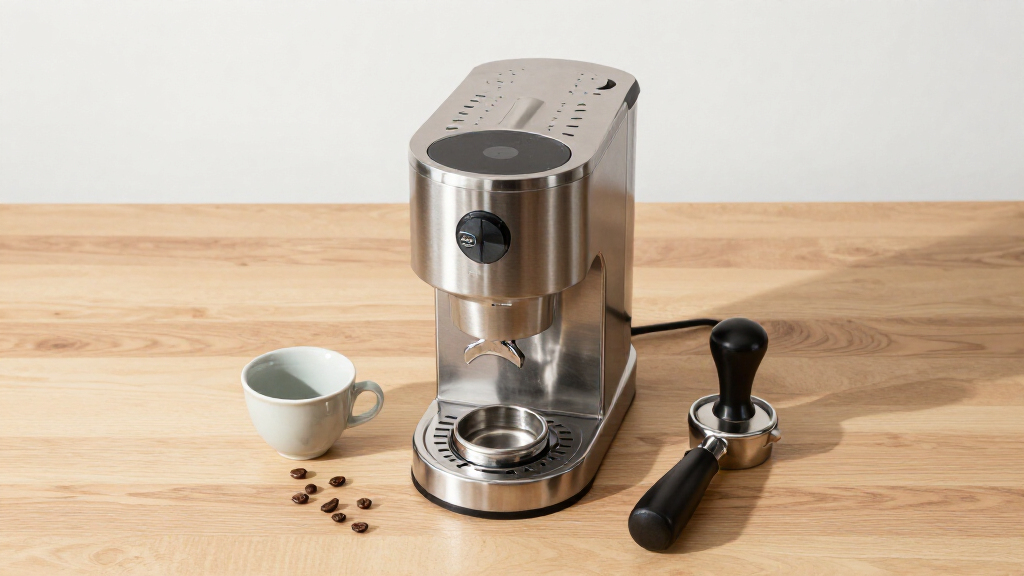
To identify the best grinder and tamper combo machines, I evaluated each model based on three core pillars: extraction consistency, workflow efficiency, and build durability. I prioritized machines that offer meaningful grind adjustment, as the ability to dial in a shot is the primary reason home baristas choose combo units over pod machines. I also assessed the integration of the tampering mechanism, noting whether the machine relies on manual pressure or automated compression, and how each method affects puck uniformity.
Ranking logic favored machines that strike a balance between ease of use and coffee quality. Products that offered high grind counts but poor pressure stability were penalized, while those with solid construction and reliable temperature control were elevated. I excluded models with non-replaceable burr sets or those lacking basic pressure profiling features, ensuring the final list represents viable long-term investments for serious home enthusiasts.
| grinder and tamper combo machine | Material |
|---|---|
| Flyseago 2-in-1 Commercial Esp | Plastic, Stainless Steel |
| GeniCup Espresso Machine with | — |
| Espresso Machine with Grinder | — |
| AMZCHEF Espresso Machine with | Stainless Steel |
| AMZCHEF Espresso Machine with | — |
| Breville Barista Express Espre | Stainless steel exterior |
| Ninja Luxe Cafe Pro 4-in-1 Esp | Stainless Steel |
Factors to Consider When Choosing Best Grinder And Tamper Combo Machines
Understanding the specific mechanics of integrated systems helps you avoid buying a machine that looks good but brews poorly. These factors determine whether a combo unit will serve you for years or become a cluttered kitchen ornament.
Grind Adjustment Range
Most combo machines use conical burrs, which are compact but offer a narrower adjustment range than flat burrs found in standalone units. If you plan to brew light roasts, which require precise micronic adjustments, many entry-level combos will fail you. Look for machines with at least 30 distinct steps, though professional-grade options often provide stepless or micro-adjustments. A wider range allows you to dial in extraction times more accurately, preventing the bitter or sour tastes that result from mismatched grind sizes. Without this flexibility, you are locked into a specific coffee profile, limiting your experimentation as your palate develops.
Tamper Integration Methods
Tampering ensures water flows evenly through the coffee puck, and combo machines handle this in two ways: manual portafilters or automated internal tampers. Manual tamping, as seen in the Breville Barista Express, gives you direct control over pressure and distribution, which is vital for high-quality shots. Automated systems, common in super-automatic hybrids, save time but often compress unevenly if the basket isn’t perfectly filled. If you value the ritual of espresso making and want to troubleshoot channeling issues, choose a model with a manual portafilter. If speed is your priority, an automated tamper reduces effort but may cap your ceiling for extraction quality.
Boiler Type and Temperature Stability
Temperature consistency is the backbone of good espresso, and combo machines often use thermoblocks to save space. While thermoblocks heat up quickly, they can struggle to maintain stable temperatures during back-to-back shots compared to dual boilers. PID temperature control is a critical feature to look for, as it allows you to adjust brewing temperatures for different roast levels. Without PID, you are stuck with a factory-set temperature that may be too hot for dark roasts or too cool for light ones. Check if the machine allows simultaneous brewing and steaming, as some single-boiler combos require you to wait between functions, disrupting your workflow.
Counter Footprint and Maintenance
Combo machines are designed to save space, but their integrated parts make cleaning more complex than standalone units. Grinders in these machines are often fixed, meaning you cannot easily remove them to clean out old grounds or oils. This can lead to stale coffee residue affecting future shots if not vacuumed regularly. Consider the accessibility of the bean hopper and grind chute; if it is difficult to reach, you may neglect cleaning. Additionally, measure the height clearance needed for the water tank and bean hopper, as some models are taller than they appear, potentially fitting under standard upper cabinets.
Versatility Beyond Espresso
Many modern combo machines, such as the Ninja Luxe Cafe Pro, include modes for cold brew, drip coffee, or hot water. This versatility can justify the investment if you share a kitchen with non-espresso drinkers. However, these multi-function modes often use different extraction paths that may compromise the dedicated espresso quality. If you primarily drink espresso, a dedicated machine might offer better value. If you want an all-in-one solution for a small household, prioritize machines with clearly separated brew paths for different drink types to avoid flavor cross-contamination and ensure each beverage is brewed to its specific standard.
Frequently Asked Questions
Do grinder and tamper combo machines make as good espresso as separate units?
Generally, separate units offer superior espresso quality because standalone grinders provide finer adjustment and more consistent particle size. Combo machines compromise on burr size and motor power to fit within a compact chassis. However, high-end combos like the Breville Barista Express can produce café-quality shots if the user learns to dial in the grind precisely. The gap narrows significantly with mid-range machines, but for light-roast specialty coffee, a separate grinder is still the better choice. If you drink medium to dark roasts, a combo machine is often sufficient for daily enjoyment.
Is an automatic tamper better than a manual one in these machines?
Automatic tampers offer consistency and convenience, removing the learning curve of applying even pressure. They are ideal for beginners or those who want a quick, repeatable shot without fuss. Manual tamping, however, allows for advanced techniques like distribution tools or puck prep that can significantly improve extraction. Enthusiasts often prefer manual control because it allows them to troubleshoot channeling issues by adjusting their technique. If you are new to espresso, an automatic tamper reduces variables, but it limits your ability to upgrade your skills later.
How often do I need to clean the built-in grinder in a combo machine?
You should clean the built-in grinder every two to four weeks, depending on usage and bean oiliness. Unlike standalone grinders, combo units often have fixed burrs that require vacuuming or compressed air to remove static-clinging grounds. Neglecting this leads to rancid oil buildup, which imparts a bitter, off-flavor to fresh beans. Check the manufacturer’s guide for disassembly instructions, as some models have magnetic or snap-off housings that make cleaning easier. Regular maintenance also prevents burr wear and ensures the motor does not strain against compacted coffee grounds.
Can I use pre-ground coffee in a grinder and tamper combo machine?
Most combo machines are designed to work exclusively with whole beans, as the portafilter and dosing system rely on the grinder’s output volume. Using pre-ground coffee often results in incorrect dosing, leading to weak or overflowing shots. Some models offer a bypass doser or a separate chute for pre-ground coffee, but this feature is rare in integrated units. If you frequently use pre-ground coffee, you are better off buying a separate espresso machine without a grinder. Check the product specifications specifically for a ‘pre-ground bypass’ feature before assuming compatibility.
What is the biggest drawback of buying a combo machine instead of separate parts?
The biggest drawback is the lack of upgradeability. If the grinder fails in a combo machine, you often have to replace the entire unit, whereas with separate machines, you can replace just the grinder. Additionally, combo machines limit your ability to experiment with different grind profiles, as you are locked into the specific burr set provided by the manufacturer. This can be frustrating if you develop a taste for lighter roasts that require finer, more precise grinding than the integrated system can provide. You are trading long-term flexibility and repairability for immediate convenience and space savings.
Conclusion
Selecting the best grinder and tamper combo machines depends entirely on how much control you want versus how much convenience you need. For most home baristas seeking a balance of quality and space, the Breville Barista Express is the best overall choice due to its manual portafilter system and reliable build. If you prioritize versatility and want to serve different coffee styles to a household, the Ninja Luxe Cafe Pro is the best for multi-beverage households, despite its slightly lower espresso ceiling. Beginners should look at the AMZCHEF models for their high grind settings and affordable entry point, though be aware of their plastic components. For those who demand premium features and temperature stability, the GeniCup with PID control offers the best premium experience in this compact category. Ultimately, choose the model that matches your willingness to perform maintenance and your desire to tweak extraction parameters.