TL;DR
Built-in grinder machines combine grinding and brewing in one appliance, making fresh espresso easier to prepare with less counter clutter. They do not automatically make better coffee: grind control, cleaning access, bean freshness, service options, and your preferred brew styles matter more than an impressive feature count. Choose an integrated machine for a compact, convenient routine; choose separate equipment if you want greater flexibility and easier component upgrades.
Your morning coffee routine can shrink to one appliance, one bag of beans, and a press of a button. That tidy setup is the big promise of built-in grinder machines: they keep grinding and brewing together, usually in an espresso machine with an integrated coffee grinder.
That convenience has real value when your counter is crowded or you want fewer steps before work. But fewer appliances do not always mean fewer compromises. The grinder may be harder to service, its settings may limit your control, and a machine that suits espresso may not suit the French press you make on weekends.
This guide will help you weigh convenience against flexibility, compare integrated and separate setups, and check the details that matter before you buy. You’ll also see how cleaning, freshness, and repair plans affect the coffee you drink every day—not just the machine’s feature list.
An integrated grinder saves counter space and reduces steps, but it does not guarantee better-tasting espresso.
Compare grind adjustment by its useful range and precision, not by the number of settings alone.
Check cleaning access and follow the manual; never wash grinder parts with water unless the manufacturer permits it.
Confirm whether the machine accepts pre-ground coffee, and review warranty coverage and local repair options before buying.
Choose a built-in grinder for a compact espresso routine; consider separate equipment if you want more brew styles, upgrades, or independent repairs.
Built-In Grinder Machines: Convenience With Hidden Trade-Offs
One appliance, one bag of beans, one button. Integrated grinder machines promise a tidy path from whole beans to espresso — but fewer devices do not always mean fewer compromises. Grind control, cleaning access, bean freshness, and repair options matter more than an impressive feature count.
What built-in grinders actually do for your morning
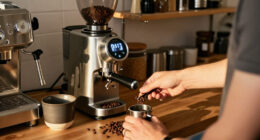
Load beans into the hopper, adjust grind and dose, and grind directly into a portafilter or dosing chamber — no carrying grounds across the kitchen. Simpler to use is not the same as better coffee: freshly ground beans preserve more aroma, but the grinder still needs suitable burrs, workable adjustments, and regular cleaning.
Fewer Steps
Beans to espresso without switching devices. A genuine luxury on a rushed weekday — one appliance, one control, one clean counter.
Automation Has Limits
Programmable dosing and guided setup reduce guesswork, but automation does not remove the need to learn how your beans behave.
Routine Matters
Perfect for a single daily espresso. Restrictive if weekends call for French press or your skills outgrow the built-in grinder.
Integrated or separate: what matters to you
Treat the trade-off as one-package simplicity versus independent choice — not a simple price contest. An all-in-one can cost less than separate high-quality components, but a separate grinder can be upgraded without replacing your brewer.
| Priority | Built-In Grinder | Separate Grinder |
|---|---|---|
| Counter Space | ✓ Fewer devices and a tidier footprint | ✗ More appliances and cable space |
| Daily Routine | ✓ Fewer handoffs from beans to brew | ~ More separate steps and controls |
| Upgrades | ✗ Grinder choice stays tied to the machine | ✓ Replace or improve either component independently |
| Repair | ✗ A fault may affect the whole appliance | ✓ A working brewer or grinder can remain in use |
| Other Brew Styles | ~ May have limited adjustment beyond espresso | ✓ Choose a grinder suited to multiple methods |
Does the grinder give you enough control?
Espresso depends on fine, repeatable adjustments — a small grind change alters how quickly water passes through the coffee. The right setting shifts with beans, roast, age, and even humidity. It is never a number you pick once.
Open New Beans
A fresh bag of darker roast can turn your usual setting into a sharp, quick shot.
Read the Shot
Gushing shot → grind finer. Barely dripping → coarser setting or different dose.
Adjust & Repeat
Clean, repeatable controls make dialing in easy; limited settings leave you bouncing.
Check Full Range
Great at fine espresso settings may still mean no convenient coarse range.
What to check before trusting convenience features
Think of automation as a helpful hand, not a coffee-making autopilot. Put each feature through a mental routine test before you buy:
- Grind adjustment: compare the useful range and precision — not the number of settings printed on the box.
- Cleaning access: look for accessible burrs and clear instructions; never wash grinder parts with water unless the manufacturer permits it.
- Pre-ground option: confirm whether the machine accepts pre-ground coffee, often through a bypass chute.
- Warranty & repair: review coverage and local service options — one failed part can sideline the whole appliance.
- Hopper freshness: a poorly sealed hopper exposes beans to heat, air, and light, undoing the fresh-grinding advantage.
- Total cost: an all-in-one can cost less than separate components — but weigh it against upgrade limits.
Five things to remember
An integrated grinder saves counter space and reduces steps, but it does not guarantee better-tasting espresso.
Judge grind adjustment by its useful range and precision — never by the number of settings alone.
Check cleaning access and follow the manual; never wash grinder parts with water unless permitted.
Confirm pre-ground compatibility, and review warranty coverage and local repair options before buying.
Choose a built-in grinder for a compact espresso routine; choose separate equipment for more brew styles, upgrades, and independent repairs.
What do built-in grinder machines actually do for your morning routine?
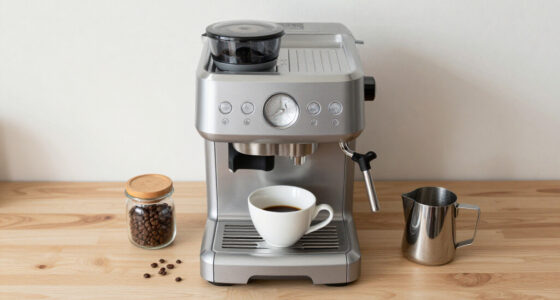
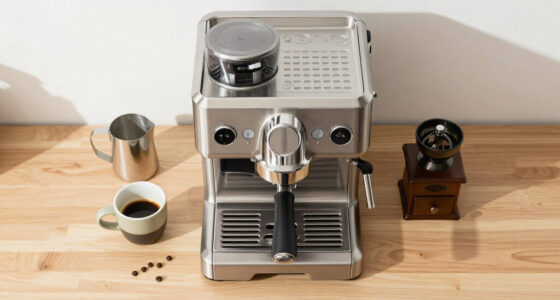
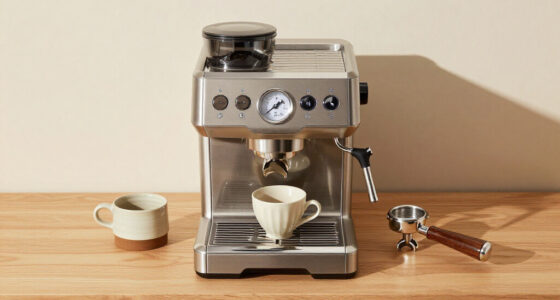
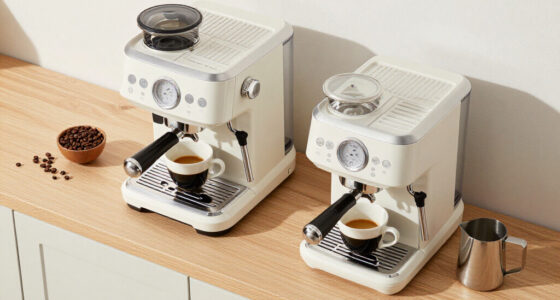
Built-in grinder machines combine a coffee grinder and brewing system in one appliance, so you can move from whole beans to espresso without switching devices. In most cases, you load beans into a hopper, adjust the grind and dose, then grind directly into a portafilter or dosing chamber. The setup cuts counter clutter and reduces the number of steps between opening the bean bag and pulling a shot.
That can feel like a small luxury on a rushed weekday. You can keep a machine on the counter, tap a control, and avoid carrying grounds from a separate grinder across the kitchen. Some machines with an integrated coffee grinder also guide dose settings or offer programmable controls, but the details vary by model; automation does not remove the need to learn how your beans behave.
There is a useful distinction between an appliance that is simpler to use and one that makes better coffee. Freshly ground beans can preserve more aroma than coffee ground long before brewing, but the integrated grinder still needs suitable burrs, workable adjustments, and regular cleaning. A stale bag or poorly maintained grinder can undermine the convenience quickly.
Think about a household where one person makes a single morning espresso and wants the kitchen clear. One appliance may suit that routine perfectly. If another person wants a coarse grind for French press, or likes to change grinders as their skills grow, the all-in-one setup may feel restrictive instead of streamlined.
built-in espresso machine with grinder
As an affiliate, we earn on qualifying purchases.
As an affiliate, we earn on qualifying purchases.
Which setup suits your priorities: integrated or separate?
A built-in grinder machine is usually a stronger fit when you value compactness and convenience; a separate grinder and espresso machine usually give you more freedom to upgrade, service, and choose your grind range. Neither setup guarantees better coffee on its own. Your daily routine, brewing habits, and tolerance for repair delays should guide the choice.
| What matters to you | Built-in grinder | Separate grinder |
|---|---|---|
| Counter space | Fewer devices and a tidier footprint | More appliances and cable space |
| Daily routine | Fewer handoffs from beans to brew | More separate steps and controls |
| Upgrades | Grinder choice stays tied to the machine | Replace or improve either component independently |
| Repair | A fault may affect the whole appliance | A working brewer or grinder can remain in use |
| Other brew styles | May have limited adjustment beyond espresso | Can choose a grinder suited to multiple methods |
For example, if you make two espressos before leaving for work and rarely brew anything else, an integrated grinder can make the counter calmer and the routine quicker. If you alternate between espresso and pour-over, a dedicated grinder may give you more useful settings. The best fit depends on the model, not only the appliance category.
Compare total purchase cost, too. An all-in-one can cost less than buying a high-quality espresso machine and grinder separately, but a separate grinder can be upgraded without replacing your brewer. If the grinder in an integrated machine becomes the weak link, you may have fewer straightforward options. Treat the trade-off as one-package simplicity versus independent choice, not as a simple price contest.
As an affiliate, we earn on qualifying purchases.
How can you tell whether the grinder gives you enough control?
Built-in grinder machines need enough adjustment to help you dial in espresso, because a small change in grind can affect how quickly water passes through the coffee. The right setting depends on the beans, roast, age, and even humidity; it is not a permanent number you pick once. Check whether the grinder allows practical, repeatable changes rather than judging it by the number of settings printed on the box.
Those numbers do not compare cleanly across brands. One grinder may offer many closely spaced adjustments, while another offers fewer steps over a useful range. For espresso, what matters is whether you can respond when a shot runs too fast or too slowly. A shot that gushes into the cup may need a finer grind; one that barely drips may call for a coarser setting or a different dose.
Imagine you open a new bag of darker-roasted beans and your usual setting produces a sharp, quick shot. You may need to adjust the grind, dose, or both. A machine with clear controls makes that learning process easier. A machine with limited settings can leave you bouncing between “too fast” and “too slow,” even when you change carefully.
Also ask whether the grinder suits your whole coffee routine. A grinder that performs well at fine espresso settings may not offer a convenient coarse range for French press or batch brewing. More features do not automatically mean better grinding. Look for a range and adjustment feel that match the drinks you actually make, and check whether the machine lets you grind separately if you want to experiment.
best built-in coffee machine for espresso
As an affiliate, we earn on qualifying purchases.
As an affiliate, we earn on qualifying purchases.
What should you check before trusting convenience features?
Convenience features are useful when they make your routine repeatable, but they cannot substitute for good coffee, sound adjustment, or basic care. Programmable dosing, digital displays, guided setup, automatic milk frothing, and assisted tamping can reduce guesswork for beginners. Their value depends on how well each feature works in practice and whether you can still control the parts that affect your cup.
For instance, automatic dosing can help two weekday shots taste more alike, but a new bag of beans may still need a different grind setting. An assisted tamping feature may make preparation neater, yet it cannot make old beans smell lively again. Think of automation as a helpful hand, not a coffee-making autopilot.
Before buying, put the features through a routine test in your head: Can you change the dose without digging through menus? Is it easy to remove the portafilter or catch grounds without spilling? Can you use pre-ground coffee through a bypass chute if the grinder stops working? Models differ, so check the manual rather than assuming a feature exists.
- List your usual drinks: Decide whether you mainly make espresso, milk drinks, or several brew styles.
- Test the controls: Check grind adjustment, dose options, and how easily you can repeat a setting.
- Inspect cleaning access: Find the instructions for the burr area, hopper, and coffee pathways.
- Check the fallback plan: Confirm bypass compatibility, warranty terms, and local repair service.
A guided setup can be a welcome first-week aid, especially if you are new to espresso. But your best setting will still shift when your beans change. Choose helpful controls; do not pay extra just because a display makes the machine look more advanced.
compact espresso machine with grinder
As an affiliate, we earn on qualifying purchases.
As an affiliate, we earn on qualifying purchases.
How do you keep the grinder clean and your coffee tasting fresh?
Regular cleaning helps an integrated grinder deliver more consistent coffee, because fine grounds and coffee oils collect around grinder and brewing parts. Follow the manufacturer’s schedule and cleaning directions; accessible burrs and clear instructions make it more likely that you will keep up the routine. Do not wash burrs or grinder parts with water unless the manual says you can.
Consider a simple scenario: you use oily dark-roast beans every morning, then leave the hopper full for weeks. Oils and old fragments can cling inside, and the remaining beans sit exposed to air and light. The convenience of a hopper does not protect beans from losing aroma, especially if its seal is poor or the machine sits somewhere warm.
Keep beans in a well-sealed container away from heat and direct light, and grind close to brewing time. Empty stale grounds when the machine’s directions recommend it, and wipe or brush accessible parts as instructed. Do not improvise with water, sharp tools, or cleaning products that the manual does not approve; a quick shortcut can damage parts or leave unwanted residue.
Cleaning frequency depends on how much you brew and which beans you use. A household making several coffees a day may need more frequent attention than someone pulling one shot each morning. Set a recurring reminder based on the machine’s manual, and treat changes in taste or grinding consistency as a reason to check the recommended cleaning steps. Good upkeep is less glamorous than a touch screen, but it protects the aroma and reliability you bought the machine for.
What happens when an all-in-one machine needs repair?
When a grinder and brewer share one appliance, a problem in one part can make the whole setup harder to use. An integrated grinder can be difficult to replace independently, and the machine may be out of action while a technician repairs it. That does not mean every integrated machine is unreliable; it means repair access and service support belong on your buying checklist.
Suppose the grinder stops feeding beans but the espresso brewing unit still works. If your model has a bypass chute, you may be able to use pre-ground coffee temporarily, as long as the manual explains how. Without that option, a grinder fault can turn the entire machine into a repair job. Check warranty coverage, service arrangements, and whether parts or local support are available where you live.
A separate setup has its own downside: it takes more space, and you have another appliance to clean and maintain. But if the grinder fails, you may still be able to use the espresso machine with an alternative grinder or suitable pre-ground coffee. That independent fallback can matter if you rely on your coffee routine every day.
Before buying, look beyond warranty length and check what the warranty covers, how service works, and whether shipping the machine away is required. Also ask how long a repair might leave you without it; the answer can depend on location and parts availability. A compact, seamless setup is lovely when it works, but repairability decides how painful a fault becomes.
Which trade-offs matter most when you make your final choice?
The right machine is the one whose compromises match your real habits, not an imagined version of your coffee routine. Integrated grinders favor fewer steps and less counter clutter; separate grinders favor independent upgrades and broader choice. If you mostly drink espresso, convenience may outweigh versatility. If you enjoy different brewing methods, that same convenience can turn into a daily limitation.
Imagine comparing two kitchens: one has a narrow counter shared by a toaster and kettle, while the other has room for a grinder and espresso machine side by side. The compact kitchen may benefit more from combining grinding and brewing. The roomier kitchen may let you choose a grinder that handles espresso one day and a coarser brew the next, without asking one appliance to do every job.
Use these questions to make the decision concrete:
- How much counter space can you spare without crowding your prep area?
- How often do you change beans, and do you enjoy adjusting a shot as beans age?
- Do you make other coffee styles that need a coarser grind?
- Can you clean the grinder easily using the maker’s approved method?
- Can you get service or a replacement if the grinder fails?
Do not let a long settings list or an automatic milk feature distract you from those answers. A modest machine that fits your routine and can be cleaned is often a better choice than a feature-heavy one that you rarely use. Convenience is real; so are its hidden costs in flexibility, maintenance, and service.
Frequently Asked Questions
Are built-in grinder espresso machines worth buying?
They can be worth it if you value counter space and convenience and mostly make espresso or milk drinks. If you want broader grind options, independent upgrades, or easier component replacement, a separate grinder may suit you better. Compare the specific machine’s adjustment, cleaning access, and service support before deciding.
Does an integrated grinder automatically make better coffee?
No. Grinding just before brewing can help preserve aroma, but cup quality also depends on bean freshness, grind consistency, adjustment, brewing, and cleaning. A built-in grinder makes fresh grinding convenient; it does not guarantee that the grinder suits your beans or that the machine is well maintained.
Can I use pre-ground coffee if the built-in grinder breaks?
Some machines have a bypass chute for pre-ground coffee, but the feature and its limits vary. Check the model’s manual before buying, including how much coffee it accepts and which brewing modes can use it. A bypass can be a useful fallback, but it may not make the machine usable if another part has failed.
Can an integrated grinder handle French press or drip coffee?
It depends on the grinder’s adjustment range and how easily you can select coarser settings. Many built-in grinders focus on espresso, so they may be less convenient for French press, drip, or pour-over. If you regularly switch brew methods, check the full range and consider a separate grinder designed for that variety.
How often should I clean a built-in coffee grinder?
Follow the cleaning schedule and method in the machine’s manual; frequency depends on how often you brew and the beans you use. Remove stale grounds and clean accessible parts as directed, but do not wash burrs or grinder parts with water unless the manufacturer allows it. Clear access and simple instructions make regular maintenance easier to keep up.
What should I check before buying a machine with an integrated grinder?
Check grind adjustment, dose control, cleaning access, bypass compatibility, warranty coverage, and local repair options. Then consider whether the grinder suits all the coffee styles you make and whether the appliance fits your available counter space. A feature list cannot tell you how convenient the machine will be in your own kitchen.
Conclusion
Choose an integrated grinder when fewer devices and a smoother espresso routine matter more than independent upgrades. Choose a separate grinder when you want more control, more brew styles, or a simpler way to replace one part without replacing everything.
Before you buy, check the grind controls, cleaning access, bypass option, and repair support. The best machine is the one that still fits your kitchen—and your coffee habits—after the new-machine excitement fades.