TL;DR

Get coffee and tea gear delivered free with Prime
- Fast, free delivery on millions of items
- Prime Video, Amazon Music and more included
- Member-only deals all year
A dosing cup grinder is an espresso grinder designed to grind coffee into a removable cup rather than directly into a portafilter. This workflow became popular because it reduces mess, simplifies single dosing, and improves repeatability for home users who frequently switch beans. It adds a transfer step but offers superior cleanliness and control compared to direct grinding.
You grind your beans, and a cloud of fine dust settles on your counter. Grounds scatter around the portafilter basket. You tap the grinder, and more coffee falls out later. This is the daily reality for many home espresso enthusiasts who grind directly into their portafilter.
Enter the dosing cup grinder. This simple accessory changes the entire routine. Instead of fighting static and spills, you grind into a dedicated cup. You then transfer that neat pile of coffee into your basket. It sounds minor, but it addresses several persistent annoyances in home brewing.
In this guide, we’ll explore why the cup workflow became so popular. We’ll look at how it improves cleanliness, supports single dosing, and enhances repeatability. We’ll also discuss when this method might slow you down. By the end, you’ll know if this workflow fits your kitchen and your brewing style.
Dosing cup grinders reduce mess and static by containing grounds in a removable vessel before transfer to the portafilter.
The cup workflow is ideal for single dosing and frequent bean switches, offering better control and less waste.
A dosing cup adds a transfer step, which may slow down high-volume brewing but improves cleanliness for home users.
Cup compatibility varies by grinder model; always check dimensions and attachment styles before purchasing.
The cup does not fix grinder retention or stale coffee; it only improves the handling of the grounds that exit the grinder.
Dosing Cup Grinders: Why Cup Workflow Became Popular
A removable cup catches grounds before they reach the portafilter. That small change gives home baristas a cleaner handoff, more control over single doses, and a calmer way to switch beans.
How the cup changes the routine
Instead of grinding into the basket, the barista collects the dose in a removable vessel, then moves it when ready.
Measure beans
Weigh a dose for the shot, whether you use a hopper or single-dose setup.
Grind into cup
Place the cup under the chute or in its compatible fork or holder.
Check and settle
Tap or inspect the grounds; manage clumps before they enter the basket.
Transfer and prep
Pour grounds into the portafilter, distribute, then tamp as usual.
Why the buffer helps: it keeps the portafilter away from the grinder’s static-prone output until you are ready to prepare the puck.
Small vessel, useful control
The appeal is practical: fewer stray grounds, a defined dose, and a more orderly transition between grinder and espresso machine.
Contain the scatter
Grounds stay in a vessel until poured, helping keep the counter and portafilter rim cleaner.
Measure each shot
Weigh and grind one portion at a time, handy for freshness, precision, and bean changes.
Bridge basket sizes
Some cups can transfer between different portafilters or baskets; fit depends on the design.
Catch more grounds
A cup can funnel awkward or small doses that might otherwise miss a narrow basket.
Separate the stages
A clear handoff makes it easier to inspect, settle, and prepare grounds consistently.
Switch with less fuss
Keep doses distinct as you move between coffees, while remembering the grinder can still retain grounds.
Cup workflow vs. direct grinding
Neither method wins in every setting. The right choice depends on whether cleanliness and control matter more than speed.
| Consideration | Dosing cup | Direct to portafilter |
|---|---|---|
| Counter cleanliness | ✓ Grounds contained before transfer | ~ Grounds can scatter around basket |
| Single dosing | ✓ Easy to weigh and handle a dose | ~ Possible, with less of a buffer |
| Speed | ~ Adds a transfer step | ✓ Direct route to puck preparation |
| Static control | ✓ Easier to manage in one vessel | ~ Grounds may cling to basket or rim |
| Fit and setup | ~ Cup or adapter compatibility varies | ✓ Uses the portafilter directly |
| Retention | ~ Depends on grinder and technique | ~ Depends on grinder and technique |
✓ Tends to suit the workflow · ~ Depends on setup and priorities
A cup helps with output handling
It does not change what remains inside the grinder. Keep these coffee terms separate when evaluating an accessory.
Retention
Coffee left inside the grinder after grinding. A dosing cup does not automatically reduce it; grinder design, cleaning, and use matter.
Exchange
Older coffee displaced by a new dose. The cup contains grounds that exit the chute, but does not eliminate exchange inside the grinder.
Dry air, beans, grind setting, and grinder design affect how much coffee clings to the cup.
Check cup diameter, height, and whether it sits in a portafilter, attaches to a grinder, or stands freely.
The cup is the receiving vessel; single dosing means grinding a measured portion for each preparation.
Burr condition, adjustment, cleaning, and puck preparation continue to shape the shot.
Which workflow fits your day?
The cup’s value rises when you want more control over each dose. A fast, repeated service routine may favor direct grinding.
For the curious home brewer
Choose a cup when you switch coffees often, value a tidy counter, or want to inspect a dose before it reaches the basket.
- Useful for weighed, single doses
- Can reduce grounds lost around narrow baskets
- Check adapter fit, storage, and accessory cost
- Expect an extra transfer and possible static
For a speed-first routine
Grind straight into the portafilter when quick service and fewer handoffs matter most.
- Fewer steps from grinder to puck
- Convenient for repeated café-style shots
- May need more cleanup around the basket
- Still depends on grinder retention and technique
The short version
A cup contains grounds before they reach the portafilter, helping reduce mess.
It pairs naturally with single dosing and frequent changes between beans.
Expect one extra step: grind, transfer, then prepare the puck.
Check dimensions and attachment style; cups are not universally compatible.
A cup handles exiting grounds; it does not fix retention or stale coffee.
Cleaner handling, with a deliberate handoff.
The dosing cup became popular because it makes everyday home espresso feel more controlled: contain the dose, manage the transfer, and keep the basket ready for puck prep. For many home users, that small pause is worth the added step.
How a Dosing Cup Grinder Actually Works
A dosing cup grinder is an espresso grinder designed to grind coffee into a removable cup. The barista places beans in the grinder, grinds them into the cup, then transfers the grounds to the portafilter. The mechanism is straightforward, but the workflow shift is significant because it decouples the mechanical act of grinding from the delicate process of puck preparation.
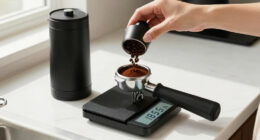
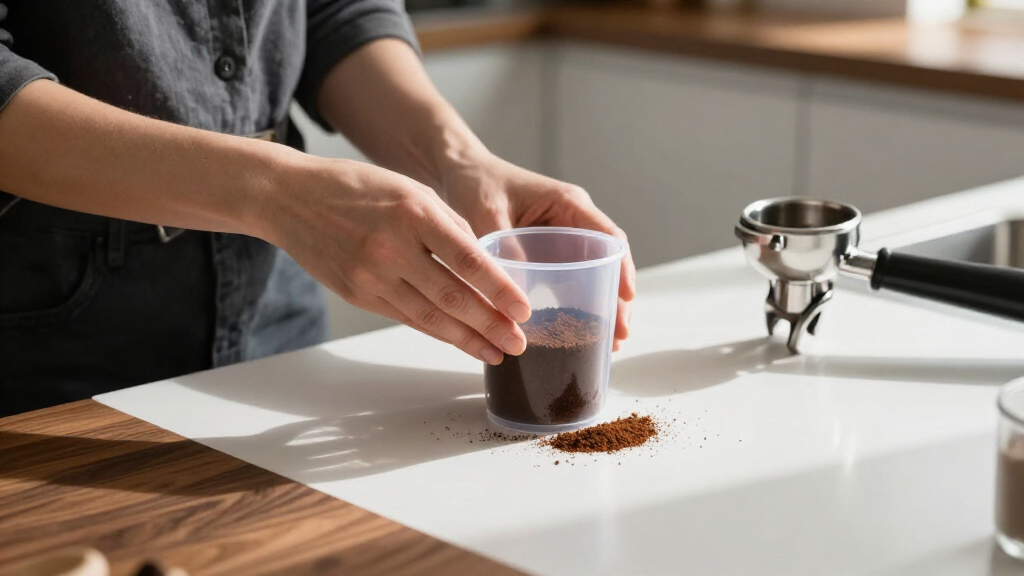
Typically, you place the cup under the grinder’s chute. The cup often has a magnetic base or a specific shape that locks into the grinder’s fork. This ensures it stays centered and stable during grinding. Once the grinding cycle finishes, you lift the cup away. You then tip or pour the grounds into your portafilter basket.
This separation of steps is key. In a direct-grind workflow, the portafilter sits under the chute. Any static or clumping affects the basket directly, potentially causing uneven density before you even begin tamping. With a cup, you have a buffer zone. You can inspect the grounds, tap the cup to settle them, or use a tool to break up clumps before they ever touch your basket. This intermediary step transforms coffee grounds from a chaotic output into a manageable material.
Some systems use cups that fit into or align with a particular portafilter, though compatibility is not universal. For instance, certain grinders feature a fork that holds both the portafilter and the cup, allowing you to swap them quickly. Others require you to hold the cup manually. Regardless of the design, the goal remains the same: contain the coffee before it hits the basket. This containment is crucial because it allows for a more deliberate approach to dose distribution, reducing the likelihood of channeling caused by uneven initial placement.
Products Worth Considering

Ninja Luxe Café Premier 3-in-1 Espresso Machine, Drip Coffee & Cold Brew

Breville Barista Pro Espresso Machine with Grinder, Brushed Stainless Steel

Breville Bambino Espresso Machine, Brushed Stainless Steel
As an affiliate, we earn on qualifying purchases.
Why Cleaner Transfers Make This Workflow Popular
Grounds can be tipped from the cup into a portafilter basket with less scattering than when grinding directly into the basket. This is especially useful for home setups, where the grinder sits near other equipment and the counter is cleaned by hand. The implication here is not just aesthetic; a clean portafilter rim is essential for creating a proper seal during extraction, which directly impacts shot consistency.
When you grind directly into a portafilter, static electricity often causes grounds to cling to the chute or the sides of the basket. You end up with coffee on the rim, on the counter, and sometimes on your hands. Cleaning this up mid-brew is tedious. It breaks your flow and leaves a mess. More importantly, coffee residue on the rim can compromise the gasket seal, leading to leaks and inconsistent pressure during the brew.
With a dosing cup, the mess is contained. If grounds stick to the cup, they stay in the cup. You can tap the cup gently to release them. You can also use a small brush or a puff of air to clear the cup’s interior before your next dose. This keeps your portafilter rims clean, which is critical for a proper seal during extraction. By isolating the static-prone environment to a single, easy-to-clean vessel, you reduce the variables that contribute to shot variability.
Consider a busy morning scenario. You’re making coffee for two people. You switch beans between the first and second shot. With direct grinding, you might need to wipe the chute and the basket between doses. With a cup workflow, you simply empty the first cup, rinse it if needed, and grind the second dose. The portafilter stays untouched until you’re ready to load it. This reduces the number of surfaces you need to clean between shots, streamlining the transition between different coffee profiles without introducing cross-contamination or residual grounds from the previous dose.
The Perfect Match for Single Dosing Enthusiasts
Many cup workflows pair naturally with single dosing: weigh a portion of beans, grind it, and use that dose without keeping a large quantity of beans in a hopper. This appeals to people who switch coffees often or want to measure each shot precisely. The tradeoff here is time versus freshness and variety; you sacrifice the convenience of a hopper for the benefit of using fresh, precisely measured doses of different beans.
Single dosing requires precision. You weigh your beans, drop them into the grinder, and grind. If you grind directly into the portafilter, you’re committed. If the grind size is wrong, you’ve already messed up the puck, and correcting it requires discarding grounds and starting over. With a cup, you have a moment to pause. You can check the grind texture in the cup before transferring. If the grind is too coarse or fine, you can adjust the grinder and re-grind the beans in the cup without contaminating your portafilter or wasting a shot attempt.
Moreover, single dosing often involves small doses, like 15 to 18 grams. These small amounts are prone to static and loss. A dosing cup acts as a funnel. It catches grounds that might otherwise miss a narrow basket. This is particularly helpful for small or awkward doses. You lose less coffee to the counter, which matters when you’re using expensive, light-roast beans. The economic implication is clear: reducing waste on premium beans offsets the cost of the accessory and the extra time spent in the workflow.
For those who rotate beans frequently, the cup workflow simplifies the transition. You can grind a dose of Ethiopian beans into one cup, transfer it, and then grind a dose of Colombian beans into the same cup. There’s no need to purge the grinder or worry about cross-contamination as much as you might with a hopper-based system. The cup keeps the doses separate and distinct. This separation ensures that the flavor profile of each shot is pure, allowing for a more accurate sensory evaluation of the coffee itself.
Comparing Cup Workflow vs. Direct Grinding
Choosing between a dosing cup and direct grinding depends on your priorities. One method prioritizes speed and simplicity; the other prioritizes cleanliness and control. Here’s how they stack up in a typical home environment.
| Feature | Dosing Cup Workflow | Direct Grinding Workflow |
|---|---|---|
| Cleanliness | High. Grounds contained in cup; less counter mess. | Low. Static causes scattering on rims and counters. |
| Speed | Slower. Requires transfer step. | Faster. Grind and tamp immediately. |
| Single Dosing | Excellent. Easy to handle small doses. | Good. Can be messy with small doses. |
| Equipment | Requires cup and possibly adapter. | Minimal. Just grinder and portafilter. |
| Repeatability | High. Defined steps reduce variables. | Moderate. More variables in transfer. |
The dosing cup workflow adds a step: grind, transfer, then prepare the puck. For a home user who takes their time, this extra step is often negligible. It might add ten seconds to the process. In return, you get a cleaner workspace and more consistent pucks. The implication is that for hobbyists, the marginal gain in consistency and cleanliness outweighs the marginal loss in speed.
Direct grinding is faster, but it demands more cleanup. You might spend extra time wiping the chute and the basket rim. If you’re in a rush, direct grinding wins. If you’re brewing for pleasure, the cup workflow often feels more controlled and less chaotic. The choice ultimately reflects your brewing philosophy: do you optimize for throughput, or do you optimize for the ritual and precision of the craft?
Understanding Retention and Static in Cup Workflows
It’s important to clarify what a dosing cup does and does not do. A dosing cup is a workflow tool, not a guarantee of low retention or better espresso. Grinder geometry, adjustment, burr condition, cleaning, and technique still matter. Understanding this distinction prevents disappointment; the cup is a management tool, not a mechanical fix for grinder limitations.
Retention is coffee left inside the grinder. Exchange is older coffee displaced by a new dose. A cup helps contain the output, but does not automatically solve either issue. If your grinder has high retention, you’ll still get stale coffee in the cup. The cup just catches it more neatly. This means that while your counter may be cleaner, the quality of your espresso may still suffer if you do not perform regular purges or backflushes to address internal retention.
Static electricity is another factor. Dry air, bean characteristics, grind setting, and grinder design can affect how much coffee clings to the cup. A dosing cup may make static easier to manage, but results differ. Some users find that a small amount of moisture applied to beans before grinding reduces static, but this should be done cautiously and in line with the grinder maker’s guidance. The implication is that static is an environmental and mechanical variable that requires holistic management, not just a change in container.
For instance, if you grind very fine for espresso, static tends to increase. The grounds cling to the cup’s walls. You might need to tap the cup firmly to release them. This is manageable. In contrast, if you grind directly into a basket, the same static might cause grounds to stick to the basket’s sides, leading to channeling during extraction. The cup gives you a chance to address static before it affects your shot, allowing you to ensure an even bed of coffee before tamping. This proactive management of static is a key advantage for shot consistency.
When to Skip the Cup for a Faster Routine
Not every situation calls for a dosing cup. If you’re running a small café or serving multiple guests quickly, speed is king. In these cases, grinding directly into the portafilter is usually the better choice. The time saved on the transfer step adds up over dozens of shots, making the cup workflow inefficient for high-volume environments where throughput is the primary metric of success.
Also, consider your equipment. If your grinder and portafilter are perfectly aligned, and you’ve mastered your technique, direct grinding can be quite clean. Some high-end grinders are designed with anti-static features and precise chutes that minimize scatter. If you already have a clean workflow, adding a cup might feel like unnecessary clutter. The tradeoff here is that while the cup offers control, a well-calibrated direct grind offers efficiency without sacrificing too much cleanliness.
Furthermore, cup compatibility can be a hassle. Cups and adapters may be model-specific. If you change grinders, your cup might not fit. This limits flexibility. For users who like to experiment with different gear, this can be a drawback. You might find yourself searching for best grinders with portafilter holders that integrate seamlessly with your existing workflow. This fragmentation of accessories can add to the cost and complexity of your setup, potentially outweighing the benefits of the cup itself.
Ultimately, the best workflow depends on use. A home user who changes beans may value a cup highly; a café aiming for maximum speed may prefer direct grinding into the portafilter. Assess your own habits. If you’re constantly cleaning up spills, the cup is a worthy addition. If you’re rushing out the door, skip it. The decision should be based on a realistic assessment of your daily routine and your tolerance for minor messes versus minor time delays.
Frequently Asked Questions
Does a dosing cup make better espresso?
Not by itself. It can make dosing and transfer more consistent and reduce mess, but espresso quality also depends on the coffee, grinder, recipe, machine, and puck preparation.Is a dosing cup the same as a dosing funnel?
No. A dosing cup catches grounds after grinding. A dosing funnel sits on the portafilter basket to reduce spills while grounds are being added or distributed.Do I need a dosing cup for single dosing?
No. You can single-dose directly into a portafilter or another container. A cup is useful if it makes weighing, catching, or transferring grounds easier.Does a dosing cup reduce grinder retention?
Not on its own. Retention is determined largely by the grinder’s internal design and operating conditions. A cup contains the grounds that exit the grinder; it does not remove grounds left inside.Will any dosing cup fit my grinder and portafilter?
No. Cup dimensions and attachment styles vary. Check the grinder’s opening and the portafilter or basket dimensions before buying. Product descriptions may use “58 mm” to refer to a particular compatibility point, so confirm exactly what that measurement means.Conclusion
The popularity of the dosing cup workflow isn’t just a trend. It’s a practical response to the specific needs of modern home espresso. It solves the annoyance of static and scatter, making the process feel more deliberate and clean. For many, the extra ten seconds spent transferring grounds is a small price to pay for a cleaner counter and a more consistent puck.
Try it for a week. Grind into a cup, transfer the grounds, and notice the difference. If you find yourself cleaning up less and enjoying the process more, the cup workflow might be your new standard. If not, you’ve lost nothing but a few seconds. Your espresso, and your kitchen, will thank you for the experiment.