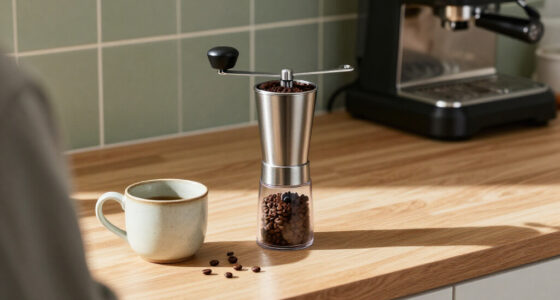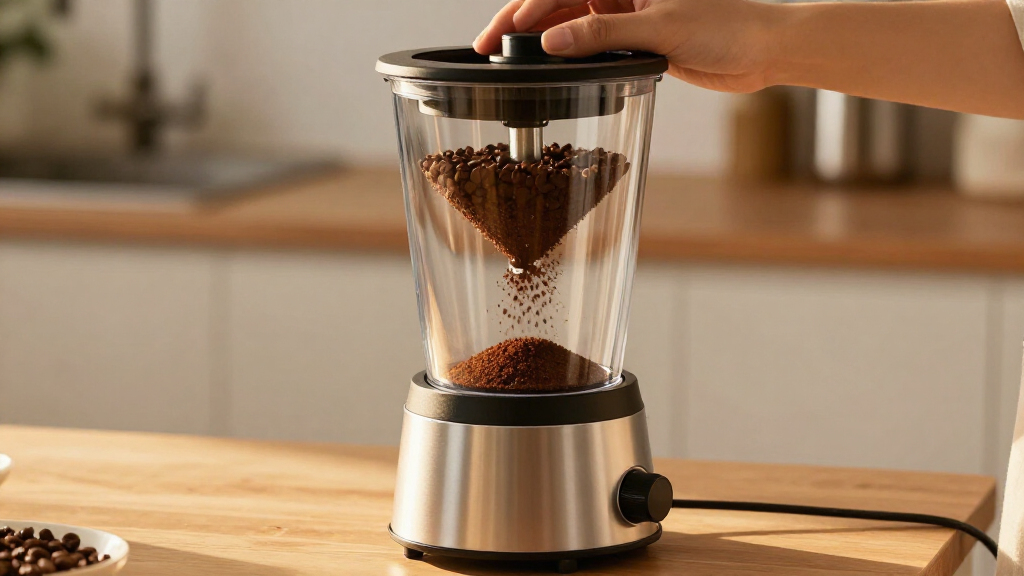

The best coffee grinders with anti-static technology reduce grounds clinging to the grinder or scattering across your counter, but they differ in grind range, controls, and ease of cleaning. My best overall pick is the Fellow Opus 2 for buyers prioritizing a premium, versatile grinder; the SHARDOR 64mm Electric Burr Grinder stands out for its 100 settings, while the AMZCHEF 48-Setting Grinder offers a practical focus on reducing static mess. A wider range of settings can help with varied brew methods, but it does not automatically mean easier adjustment or better grounds handling. I compare the tradeoffs across all 10 options so you can match the grinder to your brewing habits and counter space. Read on for the full breakdown and a guide to choosing the features that matter most.

Get coffee and tea gear delivered free with Prime
- Fast, free delivery on millions of items
- Prime Video, Amazon Music and more included
- Member-only deals all year
Complete the kit


Key Takeaways
- Anti-static claims are not all equally specific: several listings explicitly highlight anti-static or reduced-static handling, while others provide no clear detail in their product names, so check the manufacturer’s description before treating this feature as confirmed.
- More grind settings mainly help frequent brew-style switchers: SHARDOR’s 100 settings and RIOSKY’s 60 provide finer adjustment potential than the 35-setting KIDISLE, but setting count alone does not establish grind quality or consistency.
- The lineup spans different control styles: RIOSKY adds an LCD touch screen, Aromvel lists a 40-second timer, and other models keep the emphasis on burr grinding and adjustment range.
- Several models cluster around 38 to 51 settings: Aromvel, AMZCHEF, and Aromaster each list 48; Novalife and Ksionka list 38; this makes usability, verified static control, and maintenance more useful decision points than small setting-count differences.
- Premium and value are different priorities here: Fellow Opus 2 is the premium-oriented choice, while models with broad settings or explicit less-static claims may better suit shoppers focused on adjustment options or a tidier workflow.
| Aromvel Conical Burr Coffee Grinder with 48 Grind Settings and 40-Second Timer |  | Best for Portafilter Convenience | Burr size: 40 mm | Grind settings: 48 | Grinding speed: 450 RPM | VIEW LATEST PRICE | See Our Full Breakdown |
| RIOSKY Conical Burr Coffee Grinder with 60 Settings and LCD Touch Screen |  | Best for Adjustable Dosing | Grind settings: 60 | Timer: 1–60 seconds, adjustable in 1-second increments | Cup dosing: 1–8 cups | VIEW LATEST PRICE | See Our Full Breakdown |
| SHARDOR 64mm Electric Burr Coffee Grinder with 100 Grind Settings |  | Best Premium-Style Anti-Static Pick | Burr type: 64 mm SUS420 stainless steel flat burrs | Grind settings: 100 | Housing: Die-cast aluminum | VIEW LATEST PRICE | See Our Full Breakdown |
| Novalife Electric Burr Coffee Grinder with 38 Grind Settings |  | Best Compact Pick for Static Reduction | Burr type: Stainless steel conical burrs | Grind settings: 38 | Timer: 5–60 seconds | VIEW LATEST PRICE | See Our Full Breakdown |
| KIDISLE Electric Conical Burr Coffee Grinder, 51 Settings |  | Best for Versatile Espresso Dosing | Burr type: 40 mm stainless steel conical burrs | Grind settings: 51 | Grind speed: 350–450 RPM | VIEW LATEST PRICE | See Our Full Breakdown |
| KIDISLE Conical Burr Coffee Grinder, 35 Settings, Anti-Static, Black |  | Best for Easy Everyday Cleanup | Grind settings: 35 | Hopper capacity: 8.5 ounces | Recommended batch size: 2–12 cups | VIEW LATEST PRICE | See Our Full Breakdown |
| AMZCHEF Burr Coffee Grinder, 48 Settings, Less Static Mess, Metallic Silver |  | Best for Timed, Repeatable Dosing | Grind settings: 48 | Burrs: 40 mm stainless steel conical burrs | Hopper capacity: 10.6 ounces | VIEW LATEST PRICE | See Our Full Breakdown |
| Fellow Opus 2 Conical Burr Coffee Grinder |  | Best Premium Pick for Fine Grind Tuning | Grinder type: Electric conical burr grinder | Burr size: 48 mm | Grind adjustment: Stepless | VIEW LATEST PRICE | See Our Full Breakdown |
| Ksionka Conical Burr Coffee Grinder with 38 Grind Settings |  | Best for Scheduled Grinding and Cleanup | Burr size: 40 mm | Grind settings: 38 | Timer: 7 settings, 5–60 seconds | VIEW LATEST PRICE | See Our Full Breakdown |
| Aromaster Conical Burr Coffee Grinder, 48 Settings, Anti-Static, Silver |  | Best for Small, Fresh-Ground Batches | Grind settings: 48 | Capacity: 3.9 ounces | Burr material: Stainless steel | VIEW LATEST PRICE | See Our Full Breakdown |
| coffee grinders with anti static technology | Dimensions | Grind settings | Timer | Weight |
|---|---|---|---|---|
| Aromvel Conical Burr Coffee Gr | 7.7 × 4.5 × 13.8 inches | 48 | 0–40 seconds | 4.6 pounds |
| RIOSKY Conical Burr Coffee Gri | 6.8 × 4.7 × 12.2 inches | 60 | 1–60 seconds, adjustable in 1-second increments | 3.8 pounds |
| SHARDOR 64mm Electric Burr Cof | 14.4 × 8.9 × 16.1 inches | 100 | — | 11.4 pounds |
| Novalife Electric Burr Coffee | 6.7 × 3.9 × 12.2 inches | 38 | 5–60 seconds | — |
| KIDISLE Electric Conical Burr | 8 × 5 × 13.7 inches | 51 | — | — |
| KIDISLE Conical Burr Coffee Gr | 5.2 × 4.72 × 11.81 inches | 35 | — | 4.4 pounds |
| AMZCHEF Burr Coffee Grinder | 7.4 × 5.1 × 13.4 inches | 48 | Up to 40 seconds in 0.5-second increments | 5.4 pounds |
| Fellow Opus 2 Conical Burr Cof | 7.95 × 5.12 × 10.49 inches | — | — | — |
| Ksionka Conical Burr Coffee Gr | 4.13 × 6.89 × 12.2 inches | 38 | 7 settings, 5–60 seconds | — |
| Aromaster Conical Burr Coffee | 8 × 5 × 16 inches | 48 | Adjustable, up to 40 seconds | — |
More Details on Our Top Picks
Aromvel Conical Burr Coffee Grinder with 48 Grind Settings and 40-Second Timer
The Aromvel pairs anti-static design with a useful set of espresso accessories, making it a practical choice for home baristas who want to grind directly into a portafilter. Its holder accommodates 51–58 mm portafilters, and the included dosing cup offers another way to collect grounds. Compared with the KIDISLE Electric Conical Burr Coffee Grinder, Aromvel has fewer grind settings and a shorter, 40-second timer, while KIDISLE adds cup-based dosing and two cradles. Aromvel’s 48 settings still cover several brewing styles, and its 450 RPM speed is designed to limit heat buildup. The tradeoff is a plastic body and the need to supply your own portafilter; its accessories help with workflow, not grinder durability.
Pros:- Anti-static design is intended to reduce scattered grounds during dosing and cleanup.
- Holder fits 51–58 mm portafilters, with a dosing cup included as an alternative.
- 48 settings accommodate espresso through French press.
- 450 RPM grinding speed is designed to help limit heat buildup.
Cons:- Plastic construction may feel less durable than metal-bodied alternatives.
- Portafilters are not included.
- The 40-second timer is shorter than the 60-second timer on the KIDISLE model.
Best for: Home espresso drinkers with a 51–58 mm portafilter who want included dosing accessories and a compact grinder.
Not ideal for: Buyers seeking a metal-bodied grinder, a timer longer than 40 seconds, or a portafilter included in the box.
- Burr size:40 mm
- Grind settings:48
- Grinding speed:450 RPM
- Timer:0–40 seconds
- Bean hopper capacity:10.6 oz
- Portafilter compatibility:51–58 mm
- Dimensions:7.7 × 4.5 × 13.8 inches
- Weight:4.6 pounds
Our verdict“Choose Aromvel if you want anti-static grinding and included portafilter accessories, and can accept a plastic body and a shorter timer.”
RIOSKY Conical Burr Coffee Grinder with 60 Settings and LCD Touch Screen
RIOSKY stands out for buyers who want to tailor both grind size and quantity rather than rely on a simple timed setting. Its 60 grind settings are paired with a 1–60-second timer adjustable in one-second steps and dosing for 1–8 cups. That makes it more flexible for varied batch sizes than the Aromvel CG206, whose timer tops out at 40 seconds and does not list cup-based dosing. RIOSKY also has removable burrs and parts, which can make routine cleaning more manageable—an important complement to its static-conscious roundup positioning, though the product details do not specify a particular anti-static mechanism. The compact footprint and quiet-operation claim suit shared spaces, but its 8.82-ounce hopper and plastic construction are less compelling for large households or buyers prioritizing a metal chassis.
Pros:- 60 grind settings cover a broad range of brewing methods.
- Timer adjusts from 1 to 60 seconds in one-second increments.
- Cup dosing supports quantities from 1 to 8 cups.
- Removable parts and an included brush support cleaning access.
Cons:- The 8.82-ounce hopper may require frequent refills for larger batches.
- Plastic is part of the construction.
- The provided details do not identify a specific anti-static feature.
Best for: People brewing different batch sizes who value touch controls, adjustable timing, and removable parts for cleaning.
Not ideal for: Households that grind large quantities at once or shoppers who require a clearly specified anti-static system or all-metal construction.
- Grind settings:60
- Timer:1–60 seconds, adjustable in 1-second increments
- Cup dosing:1–8 cups
- Bean hopper capacity:8.82 ounces
- Burr material:Stainless steel
- Dimensions:6.8 × 4.7 × 12.2 inches
- Weight:3.8 pounds
- Warranty:1 year
Our verdict“Pick RIOSKY for flexible timed and cup-based dosing, but choose another option if a documented anti-static system is your main requirement.”
SHARDOR 64mm Electric Burr Coffee Grinder with 100 Grind Settings
SHARDOR is the most feature-rich option here for buyers who want fine adjustment and direct espresso dosing alongside an explicitly listed anti-static grounds container. Its 64 mm flat burrs, aluminum grinding chamber, and 100 grind settings offer a different proposition from the smaller conical-burr Aromvel and KIDISLE models: more adjustment points and a larger, heavier countertop setup. Programmable single- and double-shot dosing, plus a portafilter holder, make espresso workflow its clearest strength. The anti-static container is intended to limit clumping and stray grounds, but the grinder’s 14.4 × 8.9 × 16.1-inch footprint takes meaningful counter space. Its listed hopper capacity is inconsistent between 17.6 ounces and 1.1 pounds, so I would not rely on that figure for precise batch planning.
Pros:- Anti-static grounds container is specifically listed to help reduce clumping and mess.
- 100 settings provide more adjustment points than the other grinders in this batch.
- Programmable single- and double-shot dosing supports espresso routines.
- Die-cast aluminum housing and grinding chamber offer a sturdier-feeling construction than plastic-bodied alternatives.
Cons:- The large footprint and 11.4-pound weight make it less suited to tight counters or frequent storage.
- Hopper capacity is reported inconsistently as 17.6 ounces and 1.1 pounds.
- The feature-rich design may be more grinder than casual drip-coffee drinkers need.
Best for: Espresso-focused home baristas who have counter space and want flat burrs, detailed adjustment, and programmable shot dosing.
Not ideal for: Small-kitchen owners, buyers seeking a lightweight grinder, or anyone who needs a clearly consistent hopper-capacity specification.
- Burr type:64 mm SUS420 stainless steel flat burrs
- Grind settings:100
- Housing:Die-cast aluminum
- Hopper capacity:Listed as 17.6 oz and 1.1 pounds
- Power:350 watts
- Weight:11.4 pounds
- Dimensions:14.4 × 8.9 × 16.1 inches
- Dosing:Programmable single- and double-shot dosing with manual override
Our verdict“Choose SHARDOR for a substantial espresso-oriented setup with explicit anti-static grounds handling, provided you have room for its larger body.”
Novalife Electric Burr Coffee Grinder with 38 Grind Settings
Novalife suits buyers who want a small footprint and a direct approach to reducing leftover grounds. At 6.7 × 3.9 × 12.2 inches, it is narrower than the Aromvel and KIDISLE grinders, while its static-reduction technology and chamber blower are designed to clear grounds that might otherwise cling inside. That combination makes cleanup its main point of difference, not a high setting count: 38 grind settings are fewer than the 48 on Aromvel and the 51 on KIDISLE. The 5–60-second timer with memory is more flexible than Aromvel’s 40-second limit, though the provided details do not list a hopper capacity or espresso dosing accessories. Its plastic construction also puts it behind SHARDOR for buyers seeking a more substantial body.
Pros:- Compact dimensions suit counters with limited width.
- Static-reduction technology is paired with a chamber blower to help clear retained grounds.
- 5–60-second timer provides a wider range than Aromvel’s 0–40-second timer.
- Memory function can retain the last timer setting.
Cons:- 38 settings offer fewer adjustment points than Aromvel’s 48 or KIDISLE’s 51.
- Plastic construction may feel less substantial than SHARDOR’s die-cast aluminum body.
- The provided product data does not specify hopper capacity or included espresso accessories.
Best for: Apartment brewers with limited counter space who want static reduction, a chamber-clearing blower, and a timer that remembers the last setting.
Not ideal for: Espresso users who want a portafilter holder, buyers needing a documented hopper capacity, or shoppers prioritizing metal construction.
- Burr type:Stainless steel conical burrs
- Grind settings:38
- Timer:5–60 seconds
- Functions:Memory function, static reduction, chamber blower
- Wattage:200 watts
- Dimensions:6.7 × 3.9 × 12.2 inches
- Material:Plastic
- Voltage:120 volts
Our verdict“Pick Novalife for a narrow grinder with static-reduction and chamber-clearing features, not for the widest grind range or espresso accessories.”
KIDISLE Electric Conical Burr Coffee Grinder, 51 Settings
KIDISLE brings together anti-static technology, timed grinding, cup-based dosing, and two portafilter cradles, giving it the broadest workflow flexibility among the smaller conical models here. Its 51 settings exceed the Aromvel’s 48, while its 1–60-second timer and 1–12-cup mode offer more ways to set a dose than Aromvel’s 0–40-second timer. The 0.1-second timer precision is useful for fine adjustments, and the included cradles fit 50–54 mm and 58 mm portafilters. Compared with SHARDOR, it takes up less space and weighs less, but trades the larger flat-burr setup and die-cast aluminum housing for a plastic-and-stainless-steel build. Its 12.5-ounce capacity is generous for this compact style, though still a limit for frequent large-batch grinding.
Pros:- Anti-static technology is designed to reduce scattered grounds and residue.
- 51 settings and two dosing modes support different brewing styles and quantities.
- Timer adjusts from 1 to 60 seconds with 0.1-second precision.
- Includes cradles for 50–54 mm and 58 mm portafilters.
Cons:- Plastic components remain part of the housing.
- The 12.5-ounce capacity may be limiting for frequent large batches.
- Its conical-burr setup has fewer listed settings than SHARDOR’s 100-setting flat-burr model.
Best for: Home brewers who alternate between espresso and batch coffee and want direct portafilter grinding with adjustable timed or cup-based dosing.
Not ideal for: Buyers seeking an all-metal housing, a large-format flat-burr grinder, or capacity for frequent high-volume batches.
- Burr type:40 mm stainless steel conical burrs
- Grind settings:51
- Grind speed:350–450 RPM
- Grind modes:Time (1–60 seconds) and cup (1–12 cups)
- Timer precision:0.1 seconds
- Capacity:12.5 ounces
- Dimensions:8 × 5 × 13.7 inches
- Warranty:2 years
Our verdict“Choose KIDISLE if you want a compact anti-static grinder that can handle both portafilter dosing and cup-based batches.”
KIDISLE Conical Burr Coffee Grinder, 35 Settings, Anti-Static, Black
I’d pick the KIDISLE CG9406-UL for a straightforward daily routine where visible fill levels and easy cleaning matter more than fine-grained control. Its 35 grind settings cover common methods from espresso to French press, while the anti-static feature is intended to reduce grounds clinging to the container and counter. The transparent 8.5-ounce hopper and grounds container make it easier to see when beans or coffee need replenishing, and removable parts plus the included brush simplify upkeep.
Compared with the AMZCHEF Burr Coffee Grinder, it has fewer settings and a smaller hopper, but its 4.4-pound build is more compact. The tradeoff is its plastic construction and a suggested batch range of 2–12 cups, which may not suit larger households or buyers seeking a more substantial-feeling grinder.
Pros:- 35 settings cover several common brewing methods.
- Transparent 8.5-ounce hopper and grounds container make fill levels easy to monitor.
- Removable parts and included cleaning brush support routine maintenance.
- Compact 4.4-pound design is easier to fit into a modest kitchen.
Cons:- Plastic construction may feel less substantial than metal-bodied alternatives.
- Recommended batch size is limited to 2–12 cups.
- Has fewer settings and a smaller hopper than the AMZCHEF model.
Best for: Coffee drinkers who make small-to-medium batches and want visible fill levels with simple routine cleaning.
Not ideal for: Frequent large-batch brewers or buyers who prefer metal construction and a broader range of grind adjustments.
- Grind settings:35
- Hopper capacity:8.5 ounces
- Recommended batch size:2–12 cups
- Power:200 watts, 120 volts
- Weight:4.4 pounds
- Dimensions:5.2 × 4.72 × 11.81 inches
- Material:Plastic
- Warranty:2 years
Our verdict“Choose the KIDISLE if you want a compact, easy-to-clean grinder for everyday batches and can accept plastic construction and a more limited setting range.”
AMZCHEF Burr Coffee Grinder, 48 Settings, Less Static Mess, Metallic Silver
The AMZCHEF is the strongest fit here for buyers who want grind adjustments and dosing controls in one interface. Its 48 settings span espresso through French press, and the LED touchscreen sets grinding time in half-second increments up to 40 seconds. That precision gives repeat brews a more consistent starting point than the simpler timer and controls listed for the Ksionka. Anti-static technology and a stainless steel container are aimed at keeping loose grounds under better control, while the tinted, removable 10.6-ounce hopper offers room for more beans between refills.
The cost in convenience is counter space: at 13.4 inches tall and 7.4 inches long, it has a larger footprint than the compact KIDISLE. Its feature-rich display may also be unnecessary for anyone who mainly grinds one amount using one brew method.
Pros:- 48 settings accommodate a broad range from espresso to French press.
- Touchscreen timer adjusts in 0.5-second increments for more repeatable dosing.
- Anti-static technology and a stainless steel container help contain scattered grounds.
- Removable 10.6-ounce hopper has a trap-door design for refilling and cleaning.
Cons:- Its 13.4-inch height and wider footprint may be awkward on compact counters.
- Touchscreen and fine timer controls may add complexity for basic brewing routines.
- Larger than the KIDISLE, so it is less suited to kitchens where storage space is limited.
Best for: Home brewers who switch between brew methods and want touchscreen timing to help repeat doses.
Not ideal for: People with tight counter space or a simple one-setting routine who do not need touchscreen controls.
- Grind settings:48
- Burrs:40 mm stainless steel conical burrs
- Hopper capacity:10.6 ounces
- Timer:Up to 40 seconds in 0.5-second increments
- Power:150 watts, 120 volts AC
- Weight:5.4 pounds
- Dimensions:7.4 × 5.1 × 13.4 inches
- Material:Stainless steel
Our verdict“Pick the AMZCHEF if timed dosing and broad grind choice matter more to you than a small countertop footprint.”
Fellow Opus 2 Conical Burr Coffee Grinder
The Fellow Opus 2 stands apart for buyers who want to make small, deliberate changes to grind size rather than choose from a fixed list of settings. Its stepless adjustment supports tuning across espresso, pour-over, drip, French press, and cold brew, while 48 mm conical burrs and near-zero grind retention target more consistent use with less stale coffee left inside. The anti-static design and two magnetic catch cups also address different parts of the mess: grounds cling less, and the cups connect neatly for collection.
Compared with the AMZCHEF, which offers a touchscreen timer and a stated 10.6-ounce hopper, the Opus 2 emphasizes adjustment and low retention instead of documented timed dosing or capacity. Its listed specifications omit both grind capacity and operating noise, so buyers planning larger batches or quiet early-morning use have less information to work with.
Pros:- Stepless grind adjustment allows fine tuning across brewing methods.
- 48 mm conical burrs support a wide espresso-to-cold-brew range.
- Anti-static design and near-zero retention aim to reduce mess and leftover grounds.
- Includes two magnetic catch cups, automatic shutoff, and tool-free burr access.
Cons:- The product data does not state grind capacity.
- Operating noise is not specified, which may matter in shared or quiet kitchens.
- Unlike the AMZCHEF, it has no listed touchscreen timer with precise time increments.
Best for: Espresso and filter coffee drinkers who regularly adjust grind size and value low retention and tidy grounds collection.
Not ideal for: Buyers who need a stated hopper or batch capacity, depend on timed dosing, or want published operating-noise information.
- Grinder type:Electric conical burr grinder
- Burr size:48 mm
- Grind adjustment:Stepless
- Grind range:Espresso to cold brew
- Retention and static features:Anti-static technology; near-zero grind retention
- Portafilter compatibility:54 mm and 58 mm
- Dimensions:7.95 × 5.12 × 10.49 inches
- Warranty:2-year standard warranty
Our verdict“Choose the Opus 2 if you want stepless grind tuning and low-retention cleanup, and do not need a stated batch capacity or timer specification.”
Ksionka Conical Burr Coffee Grinder with 38 Grind Settings
The Ksionka BD-CG011 brings together a practical set of controls for people who want repeatable grinding without a touchscreen. Its seven timer settings, covering 5 to 60 seconds, and memory function help retain a familiar routine, while the air blower and anti-static technology are designed to make cleanup easier and reduce grounds left behind. With 38 settings and 40 mm conical burrs, it covers several common brewing styles, though it offers less adjustment range than the AMZCHEF or Fellow Opus 2.
The narrow 4.13-inch dimension may suit counters where width is at a premium, but the listed capacity is only 2–12 cups. The product information also suggests misting beans in very dry conditions to further reduce static, a hands-on step that undercuts the convenience of its anti-static feature for some households.
Pros:- 38 settings cover espresso, drip, pour-over, and French press.
- Timer offers seven settings from 5 to 60 seconds, with a memory function.
- Air blower and anti-static technology are designed to reduce retained grounds and cleanup effort.
- Narrow 4.13-inch dimension can suit counters short on width.
Cons:- The suggested 2–12-cup capacity may not meet larger batch needs.
- Listing recommends misting beans in very dry conditions to further manage static.
- Offers fewer grind settings than the AMZCHEF and no stepless adjustment like the Fellow Opus 2.
Best for: Home brewers who repeat the same batch size and want timer memory plus tools to clear retained grounds.
Not ideal for: People who want the broadest grind adjustment or a fully hands-off approach to static control in dry conditions.
- Burr size:40 mm
- Grind settings:38
- Timer:7 settings, 5–60 seconds
- Capacity:2–12 cups
- Power:200 watts, 120 volts
- Dimensions:4.13 × 6.89 × 12.2 inches
- Material:Stainless steel
- Warranty:1 year
Our verdict“Choose the Ksionka if timer memory and cleanup aids matter more than maximum grind adjustment or avoiding occasional bean misting.”
Aromaster Conical Burr Coffee Grinder, 48 Settings, Anti-Static, Silver
The Aromaster CG204 is a good match for buyers who want many grind choices but usually prepare modest amounts at a time. Its 48 settings span espresso-fine through French press-coarse, and the adjustable timer runs for up to 40 seconds. Anti-static features aim to keep grounds contained, while a removable ring burr and included brush make routine cleaning more accessible than with a grinder that requires harder-to-reach disassembly. The 3.9-ounce capacity also favors grinding only what a smaller brew needs rather than keeping a large hopper filled.
Compared with the larger-hopper AMZCHEF, the Aromaster offers less bean capacity and less detailed timer increments in its listed specs. Its 16-inch height may also be inconvenient under low cabinets, and cleaning calls for care: the burr must be dry before reassembly.
Pros:- 48 settings cover espresso through French press.
- Anti-static features are designed to keep grounds more contained.
- Removable ring burr and included brush support easier maintenance.
- Adjustable timer runs up to 40 seconds.
Cons:- 3.9-ounce capacity is smaller than the AMZCHEF’s 10.6-ounce hopper.
- At 16 inches tall, it may not fit comfortably beneath low cabinets.
- Burr must be kept dry before reassembly after cleaning.
Best for: Solo drinkers or smaller households who want a wide grind range and prefer grinding modest amounts fresh.
Not ideal for: Frequent high-volume brewers, kitchens with low overhead clearance, or buyers who want a large hopper between refills.
- Grind settings:48
- Capacity:3.9 ounces
- Burr material:Stainless steel
- Timer:Adjustable, up to 40 seconds
- Dimensions:8 × 5 × 16 inches
- Power:Electric, 120 V, 60 Hz
- Cleaning features:Removable ring burr and included brush
- Service coverage:12-month repair service
Our verdict“Pick the Aromaster for varied brewing and smaller fresh-ground batches, but choose the AMZCHEF if you need more hopper capacity.”
How We Picked
I compared the 10 grinders on criteria that affect daily use: how clearly each product communicates its static-reduction feature, the range and usability of grind adjustment, control options, and the likely effort involved in keeping the grinder clean. I treated product names and stated specifications as evidence of listed features, not proof of measured grind performance or a particular level of static reduction. When a listing did not make an anti-static detail clear, I considered that uncertainty relevant to a roundup built around this feature.
The ranking favors a balanced fit for varied home brewing, clear buyer-relevant differentiation, and useful controls over a high setting count alone. That puts the Fellow Opus 2 in the premium all-rounder position, while SHARDOR earns attention for its 100-setting range and AMZCHEF for its explicit less-static positioning. The remaining grinders are differentiated by their stated adjustment range, timer or screen controls, and how specifically their listings describe static handling; buyers should check current manufacturer details before purchasing.
Factors to Consider When Choosing Best Coffee Grinders With Anti Static Technology
Static control can make coffee preparation tidier, but it should not be the only measure of a grinder. I’d weigh the feature against your brew methods, how much control you want, and whether routine cleaning fits your habits. These broader checks can prevent paying for settings you will not use or assuming an anti-static label guarantees a completely mess-free counter.
Check What “Anti-Static” Actually Means
Product descriptions may use terms such as anti-static, less static, or low mess without explaining the mechanism or how much grounds retention to expect. Treat these as claims about the intended benefit, not a promise that grounds will never cling or scatter. Look for clear manufacturer information about the feature and any recommended operating or cleaning steps. If the listing is vague, prioritize a retailer’s return policy and consult the manufacturer’s current specifications before buying. A small amount of static can also vary with the beans and room conditions, so no single label predicts every kitchen’s results. The best choice is the one whose stated feature and care instructions match your expectations.
Match Adjustment Range to Your Brewing Routine
A large number of settings is most useful when you regularly move between brew styles or fine-tune a recipe. If you make the same coffee in the same way each morning, a smaller range may be simpler and just as practical. Do not assume that more numbered steps mean more usable control: the adjustment system should be easy to repeat and understand. Before choosing, identify the brewing methods you actually use and whether you need to change settings often. A grinder that offers many adjustments can add flexibility, but may add complexity for someone who prefers a set-and-repeat routine. Think about control that you will use, not just the largest number on the box.
Decide Whether Timers and Screens Help or Distract
A timer can help make dosing more repeatable, while a screen may make settings easier to read or adjust. Those controls are useful if you value a more guided workflow, but they do not replace weighing coffee when precise dosing matters to you. Touch controls and additional electronics may also mean more steps to learn and more surfaces to keep clean. Consider whether you prefer a direct physical adjustment or a digital interface before choosing. If several people share the grinder, clear controls can reduce accidental changes. For a simple daily routine, prioritize intuitive operation over a feature list.
Plan for Cleaning and Grounds Retention
Static reduction can limit mess, but it does not remove the need to clean the burr area and grounds path. Check the manufacturer’s instructions for safe access, cleaning tools, and any parts that should not get wet. A grinder that is awkward to clear may be frustrating even if its counter stays tidy during normal use. Think about how often you switch beans: frequent changes make easy access and clearing more valuable. Avoid assuming that a removable-looking component is designed for washing unless the manual says so. Regular, appropriate care helps prevent stale grounds from affecting the next batch.
Consider Capacity, Counter Space, and Noise
Capacity and footprint shape everyday convenience more than they affect a headline setting count. Measure the available counter area, including room to open lids or remove parts for cleaning. If you grind for several people, a larger hopper or grounds container may reduce repeated filling, while a compact setup can suit a small kitchen. Noise matters when you grind early or share a living space, but product descriptions do not always provide comparable measurements. Look for reliable dimensions and capacity details rather than estimating from product photos. Choose a size that fits your actual batch routine instead of buying extra capacity you are unlikely to use.
Pay More for the Benefits You Will Notice
A premium model makes sense when its build, controls, or versatility address a real part of your routine. It is less compelling if you only need a consistent starting point for one brew method and will not use advanced adjustment. Compare the specific features offered rather than treating a premium label as evidence of better static control. For beginners, simple controls and straightforward cleaning may matter more than maximum range. For experienced home brewers, repeatable adjustments across different methods may justify a more capable grinder. Set your priorities before comparing models so the feature list does not become the buying plan.
Frequently Asked Questions
Does an anti-static coffee grinder stop grounds from sticking completely?
No grinder should be assumed to eliminate static or scattered grounds in every kitchen. The amount of cling can vary with the beans, environment, and grinder design, and product wording may not describe a standardized test. Treat anti-static as a feature intended to reduce mess, not a guarantee of a spotless workflow. Check the manufacturer’s explanation and care guidance if this is your main reason for buying. If you need certainty, choose a seller with a clear return policy and try the grinder in your own routine.
Should I choose the SHARDOR’s 100 settings over a grinder with fewer settings?
Choose the 100-setting SHARDOR if you like making fine adjustments or often switch between brewing methods. More steps can give you more points to test, but they do not prove that the grinder produces better grounds or that each step will matter in your cup. A simpler grinder with fewer settings may be easier to operate if you repeat one recipe. Consider whether you want to experiment and whether the adjustment system is easy to return to a preferred setting. Setting count is one factor, not a stand-in for overall performance.
Which listed grinders make the clearest anti-static claim?
The product names for the KIDISLE 35-setting Black model and Aromaster 48-setting Silver model explicitly include “Anti-Static,” while AMZCHEF describes “Less Static Mess.” Those phrases make the intended benefit clearer than names that do not mention static control. They still do not establish how much static each grinder reduces under your conditions. Review the current product listing and manufacturer details for the exact feature description and instructions. If static reduction is your deciding factor, give that documentation more weight than a broad grind-setting count.
Is an LCD screen worth choosing over a simpler grinder?
An LCD screen can be useful if you want settings and controls presented clearly, especially when more than one person uses the grinder. It may be unnecessary if you prefer a basic routine and rarely change your grind. A screen does not by itself tell you whether a grinder handles grounds well or suits your preferred brew method. Compare the interface with the controls you already find comfortable, and check how the unit is cleaned and operated. If you are unsure, prioritize ease of use over adding digital features for their own sake.
What should I verify before buying a grinder labeled anti-static?
Check the current manufacturer listing for the exact anti-static wording, what component or process it refers to, and any care instructions. Confirm the grinder’s adjustment range, capacity, dimensions, and control type against your actual brewing routine. Look for cleaning guidance, since static reduction does not replace routine maintenance. Avoid relying on a product title alone when the claim is central to your choice. If details are missing, contact the manufacturer or choose a seller with a workable return policy.
Conclusion
For a premium, versatile choice, I’d start with the Fellow Opus 2; for the broadest listed adjustment range, the SHARDOR 64mm grinder is the standout. The AMZCHEF 48-setting model suits buyers drawn to an explicit less-static-mess claim, while the RIOSKY is the pick for shoppers who want an LCD touch screen and a 60-setting range. Beginners should prioritize clear controls and manageable cleaning over maximum settings, making a straightforward option such as the Novalife 38-setting grinder worth comparing with their needs. For a specific anti-static label, look closely at the KIDISLE 35-setting Black and Aromaster 48-setting Silver listings, and verify current feature details before ordering. The right choice is the one whose static-control claim, adjustment range, and daily workflow fit together—not simply the model with the most settings.