TL;DR

Get coffee and tea gear delivered free with Prime
- Fast, free delivery on millions of items
- Prime Video, Amazon Music and more included
- Member-only deals all year
Single dosing means weighing and grinding only the beans you need for each drink, which makes freshness and bean changes easier to manage. Low retention describes how little coffee remains in or exchanges through the grinder, but no workflow guarantees zero carryover. Weighing, feeding, clearing, and testing the grinder consistently gives you a more useful measure of what happens at home.
Your grinder can hold onto yesterday’s coffee even when today’s dose goes in fresh. A few grounds clinging inside the burr chamber or chute may seem trivial, yet they can change the delivered weight and, sometimes, mix older coffee into your next shot. That is the practical problem behind single dose grinders and the promise of low retention.
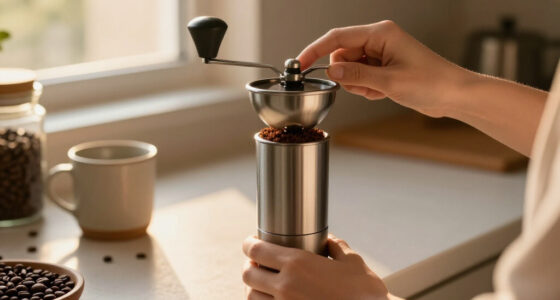
Single dosing means you weigh the beans for each drink and grind that amount, rather than keeping a supply in the hopper. It gives you fresh doses, easy bean changes, and direct control over how much coffee you use. This guide explains what retention measures, why a grinder’s design is only part of the story, and how to create a routine you can repeat. You’ll also learn how to check your own grinder without treating one weigh-in as a universal score.
Single dosing means weighing and grinding only the beans needed for each drink; it does not guarantee zero retention.
Static retention measures grounds left after a grind, while exchange retention describes older grounds released in a later dose.
Repeat tests with the same beans, dose, grind setting, feed method, and clearing steps to compare results fairly.
Bellows and purge doses can reduce carryover, but they add handling or use extra coffee and do not promise complete clearing.
Choose a grinder for grind quality and the brewing methods you use, then treat retention and workflow as additional factors.
Coffee workflow / field guide 01
Single Dose Grinders: The Workflow Behind Low Retention
Weigh only the beans you need, grind them fresh, and make bean changes easier. The real measure of low retention comes from a repeatable routine—and no workflow guarantees zero carryover.
One weigh-in shows what stayed behind today. It cannot reveal every older ground that may leave with tomorrow’s dose.
Static retention ≠ exchange retention01 / Read the result
What “low retention” really tells you
Input-to-output weight difference estimates grounds that did not leave during that grind. Older grounds released later are a separate question.
Static retention
Grounds left inside after a dose. Some may cling to the burrs, chamber, or chute; scatter and static can also affect the scale reading.
0.3 g shortfall in this example; not a universal grinder score.
Exchange retention
Older coffee that comes out during a later grind. It may mix into a new dose even when the current input and output weights look close.
Conceptual track only; it does not represent measured quantity.
“Zero retention” is marketing shorthand. Grounds can remain in the grinder and later exchange into another dose. A low number is useful only alongside the conditions and clearing method.
02 / Repeat the method
Test retention without fooling yourself
Keep the coffee, dose, setting, feeding, and clearing steps steady. The routine makes comparisons more meaningful than a single number.
Weigh in
Choose one coffee and measure a known dose, such as 18 grams.
Grind alike
Hold the grind setting and bean-feeding method constant.
Collect & weigh
Use the same catch cup, then subtract output from input.
Clear & repeat
Record taps, brushing, or bellows use. Run several trials.
A later 18.0 g result after clearing may mean the clearing step released grounds left behind. Scatter, static, and scale variation can also influence the reading.
03 / Match the routine
Fresh doses come with trade-offs
Single dosing works well when freshness, small batches, and frequent bean changes matter more than speed across several back-to-back drinks.
Switch beans often
Weigh a dose from the bag you want, then store the remaining beans airtight. Alternating espresso and filter coffees takes less hopper management.
More handling
A scale and a few extra steps are part of the process. Back-to-back drinks may be faster from a filled hopper.
Ease of clearing
Short grind paths, accessible burr chambers, anti-popcorning features, and bellows can support the routine. Results still depend on technique.
Low retention does not guarantee even particle size, good espresso extraction, or the right grind range. Consider burr design and alignment, motor performance, adjustment range, and build quality for the brewing methods you use.
04 / Make a fair comparison
Control the conditions
Bean type, roast, dose, grind setting, humidity, and technique all shape observed results. Write down what you did before comparing runs.
| Factor | Keep consistent | Why it matters |
|---|---|---|
| Coffee & dose | ✓ Same beans, same weight | Different beans and dose sizes can change how grounds cling or move. |
| Grind setting | ✓ Same setting | Espresso and coarse filter grinds are not comparable trials. |
| Feeding & collection | ✓ Same method and cup | Consistent handling reduces avoidable variation in the measured output. |
| Clearing routine | ~ Record every step | Taps, brushing, and bellows can change what leaves the chute. |
| Carryover check | ~ Test a later dose | Input minus output alone cannot show all exchange retention. |
Bellows and purge doses are tools, not guarantees. Bellows may push out remaining particles but can stir fines or chaff and add handling. A purge dose uses coffee and may reduce carryover without eliminating it.
05 / Trace the dose
From beans to the next brew
Think of the grinder as a short hallway: most coffee passes through, while a few particles may linger and leave with the next group.
Clean and maintain the grinder even when its design aims to reduce retention. Low retention does not make a grinder self-cleaning.
What Low Retention Really Tells You About Your Grinder
Low retention means that relatively little ground coffee remains in a grinder after you grind a dose, but it does not mean that nothing stays behind or comes out later. Single dose grinders aim to make dose-by-dose grinding practical; the phrase describes a way of using a grinder, not a guarantee about its internals. If you put in 18 grams and collect 17.7 grams, the missing 0.3 grams may cling inside, scatter, or be affected by static.
That input-to-output difference is called static retention: what remains after a grind. Exchange retention describes older grounds that leave during a later grind. These are different questions. Your scale can show a 0.3-gram shortfall today, but it cannot tell you whether a trace of yesterday’s coffee will join tomorrow’s dose.
Think of the grinder as a short hallway. A clean hallway lets most people pass straight through, but a few can linger by the door and walk out with the next group. In a kitchen example, you might weigh 18 grams of a light roast for espresso, then switch to a darker bean for a filter brew. A small amount left in the chute can travel with the second batch, even if most of the first dose reached your cup.
That is why “zero retention” works better as marketing shorthand than as a literal description. Grounds can cling to burrs, a chamber, or a chute, and results change with dose size, roast, humidity, grind setting, and technique. A low number is useful, but only when you know what was weighed and how the grinder was cleared.
As an affiliate, we earn on qualifying purchases.
Why Your Routine Matters as Much as the Grinder Design
Single dose grinders perform most consistently when you use the same dose, feed the beans the same way, and follow the same clearing routine every time. A short grind path, accessible burr chamber, bellows, and anti-popcorning features can make a grinder easier to clear, but your habits still shape the result. If you tap one day and use bellows the next, you are measuring two workflows.
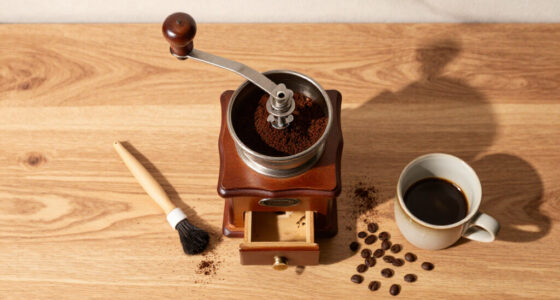
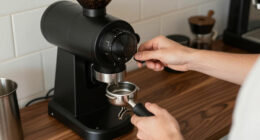
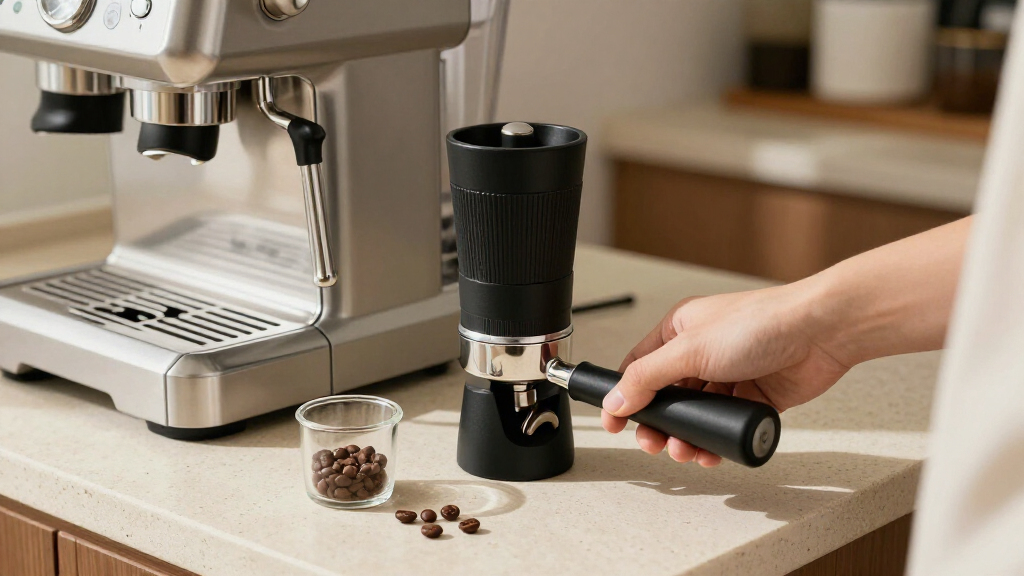
Start with the beans you actually plan to brew. Weigh them before grinding, feed them steadily, and collect the grounds in the same cup or portafilter. Some grinders benefit from a brief manual clearing step or bellows after grinding; others need little help. Treat each action as part of your method, and record it if you compare results.
For example, imagine making two morning espresso drinks. You weigh 18 grams for the first, grind, then give the chute two gentle taps. For the second, you repeat the same dose and taps. That small routine creates a fair comparison. If you squeeze the bellows five times for one dose but skip it for the next, the output weights may differ because of your handling rather than a change in the coffee.
Bellows can push remaining particles out, but they add a step and can send chaff or fines into the air or onto the counter. A vigorous puff may also scatter grounds. The right routine is the one you can repeat cleanly. If you make one coffee before work, a few extra seconds may feel worthwhile; when you pull several drinks back to back, a hopper workflow may feel faster.
As an affiliate, we earn on qualifying purchases.
How to Test Retention Without Fooling Yourself
Test retention by weighing a known dose, weighing the collected output, repeating the same grind conditions, and writing down every clearing step. The difference between input and output gives you a practical estimate of static retention for that run. It does not capture every ground that may exchange into a later dose, so test more than once and keep the conditions steady.
- Choose one coffee and dose. For example, use 18 grams of the same beans for each trial.
- Keep the grind setting fixed. Do not compare an espresso grind with a coarse filter setting.
- Feed and collect consistently. Use the same bean-feeding method and the same dry catch cup.
- Weigh the output. Subtract the collected weight from the input weight and note the difference.
- Repeat and record clearing. Run several trials, noting whether you tapped, brushed, or used bellows.
Suppose your first 18-gram dose yields 17.8 grams, and the next yields 18.0 grams after you clear the chute. That variation tells you more than a single result: your clearing step may release grounds that stayed behind, while normal scatter or scale variation can also affect the numbers. Keep the scale level and use the same container to reduce avoidable noise.
Then check for exchange. After grinding one coffee, switch to a visibly different roast and grind a measured dose without purging. Note any older grounds you see, but remember that appearance does not reveal every particle. A purge dose can reduce carryover, yet it uses coffee and may not remove all exchange. Measurements only mean something alongside their conditions: beans, dose, setting, humidity, and workflow.
coffee grinder static retention test
As an affiliate, we earn on qualifying purchases.
As an affiliate, we earn on qualifying purchases.
When Single Dosing Makes Your Coffee Routine Easier
Single dosing suits you when you value fresh portions, small batches, or frequent bean changes more than the speed of grinding several drinks from a filled hopper. You weigh only what you plan to brew, rather than keeping beans in the grinder between sessions. That can make it simple to switch from a chocolatey medium roast in your espresso to a bright, citrusy coffee for a pour-over.
Consider a home setup where you buy two 250-gram bags and alternate between them through the week. With a hopper, changing coffee may mean emptying beans and managing what remains in the grinder. With single dosing, you weigh a dose from the bag you want, grind, and store the rest in an airtight container. The workflow has more handling up front, but it makes variety feel less like a chore.
There is a trade-off. You need a scale, a place to set the dose, and a moment to feed the beans. A person making one espresso before a commute may accept those seconds for precise control. Someone preparing six drinks for guests may prefer to keep beans ready in a hopper and grind repeatedly without weighing each portion.
For each drink, single dosing gives you a clear starting weight and makes it easier to compare recipes or beans. It does not promise better flavor on its own: burr geometry, alignment, grind adjustment, coffee freshness, water, and technique still matter. If you are comparing designs or deciding which features suit your routine, a guide to single dose espresso grinders can help you identify what to check; confirm current specifications with manufacturers before buying.
As an affiliate, we earn on qualifying purchases.
Why Low Retention Cannot Rescue a Poor Grind
Low retention does not guarantee good coffee; it only describes how much grounds remain or exchange in a particular workflow. Grind quality still depends on burr design and alignment, motor performance, adjustment range, and how well the grinder matches your brewing method. A clean, nearly empty chamber is no consolation if the grinder cannot produce a useful espresso setting or a consistent filter grind.
Think of retention as the cleanliness of a paintbrush and grind quality as the brush’s ability to make a smooth line. A clean brush helps, but it cannot fix stiff bristles or the wrong shape. In practical terms, a grinder that clears well may still be frustrating if tiny adjustment steps make espresso dialing-in difficult, or if its usable range does not suit both espresso and pour-over.
Some people want one grinder for every brew method. That can work when the adjustment range and performance cover both ends, but changing between espresso and filter settings may require substantial adjustment. If you brew espresso each morning and switch to a coarse batch brew on weekends, check whether the grinder makes those changes easy and repeatable. A model optimized for a narrower range may suit you better than one that claims to do everything.
Use retention as one part of your decision, alongside grind quality, workflow, cleaning access, and noise. A grinder that leaves a little more coffee behind but makes excellent, repeatable shots may suit your priorities better than a lower-retention design that is awkward to adjust. The useful question is not only how much coffee stays inside, but whether the complete setup supports the drinks you make.
What Changes the Number You See on the Scale
Retention measurements vary because coffee and grinder conditions vary. Bean type, roast level, dose size, grind setting, humidity, static, and the way you operate the grinder can all change what stays behind or scatters. That is why a measurement from one test cannot promise the same result in every kitchen.
A dry winter morning, for example, can make grounds cling to a chute more readily than a humid afternoon. A dark roast may behave differently from a dense light roast, and a small 10-gram dose may leave a different proportion of coffee behind than a larger one. Espresso settings also produce finer grounds than many filter settings, changing how particles move through the grinder.
Picture two people reporting a 0.2-gram difference. One weighed a 20-gram dose of medium roast coffee after using bellows; the other weighed 15 grams of a light roast and did not clear the chute. The matching number does not make their tests equivalent. The measurement needs its context before you can use it to compare grinders or predict your own results.
For a useful home comparison, change one variable at a time and keep notes. Write down the coffee, dose, setting, output, and clearing method. If you are switching beans, note whether you purged and how much coffee that used. The small record may seem fussy for one morning, but it helps explain why a grinder feels consistent one week and messy the next.
Keep a Low-Retention Grinder Clean and Predictable
A low-retention grinder still needs cleaning, because small amounts of coffee can accumulate around the burrs, chamber, and chute. A design that releases most grounds during normal use may reduce buildup, but it is not self-cleaning. Regular attention helps preserve flavor and keeps the grinder operating reliably.
Follow the manufacturer’s cleaning instructions and schedule, especially before removing burrs or using any cleaning product. As a simple example, if you notice stale, oily smells near the chute or see grounds collecting around the exit, brush accessible areas as directed. Do not pour water into the grinder unless the manufacturer explicitly permits it; moisture can damage parts and leave grounds clumped inside.
Cleaning also matters when you change coffees. A brief brush or purge may help reduce the taste of an old bean in a new brew, though neither action promises that every old particle is gone. If you switch between a heavily flavored coffee and a delicate light roast, you may notice carryover more readily than when you move between similar beans.
Keep cleaning separate from your everyday clearing routine. Bellows after each dose can move loose grounds, while periodic cleaning addresses accumulation and residue. One does not replace the other. If your output weight drifts, the grinder sounds different, or coffee begins to smell stale, check the manual and inspect the accessible areas before assuming that the burr setting is at fault.
Frequently Asked Questions
Are single dose grinders really zero retention?
Usually not in an absolute sense. Small amounts of coffee can cling to the burrs, chamber, or chute, and some older grounds may leave during a later grind. “Zero retention” is best understood as shorthand for a design that aims to minimize retention.
Do I need bellows to clear a single-dose grinder?
No. Bellows can help move remaining grounds, but their effect depends on the grinder and your technique. They add a step and can scatter chaff or fines, so use them if they make your workflow more consistent and clean.
Will single dosing make my coffee taste better?
It can make fresh portions and bean changes easier, which may suit your routine. It does not guarantee better taste: the burrs, grind setting, coffee, water, and recipe still shape the cup. A low-retention grinder with a poor grind for your brew method can still make disappointing coffee.
How much coffee will my grinder retain?
There is no universal amount. Results depend on the grinder, beans, dose size, setting, humidity, and clearing routine. Weigh input and output over repeated trials under consistent conditions to estimate what happens in your own setup.
Can one grinder handle espresso and filter coffee?
Some grinders work well across both, while others are built for a narrower grind range. Check the adjustment range, ease of switching settings, and performance for the drinks you make. Moving between espresso and filter may require time to reset and dial in the grinder.
Does low retention mean I can clean my grinder less often?
No. A low-retention design may reduce the grounds left after each dose, but residue can still accumulate around the burrs and chute. Follow the manufacturer’s cleaning instructions and keep cleaning distinct from any daily bellows or tapping routine.
Conclusion
Build your single-dose routine around repeatable weighing, steady feeding, and one clearing method you can stick with. Measure input and output across several runs, and read the result in context; a single number cannot capture every old ground that may leave later.
Low retention is a useful design goal, not a magic trick. Treat your grinder like a well-used coffee path: keep it clear, learn where grounds linger, and let each fresh dose begin with a process you trust.
Halloween Picks
halloween
As an affiliate, we earn on qualifying purchases.