TL;DR

Get coffee and tea gear delivered free with Prime
- Fast, free delivery on millions of items
- Prime Video, Amazon Music and more included
- Member-only deals all year
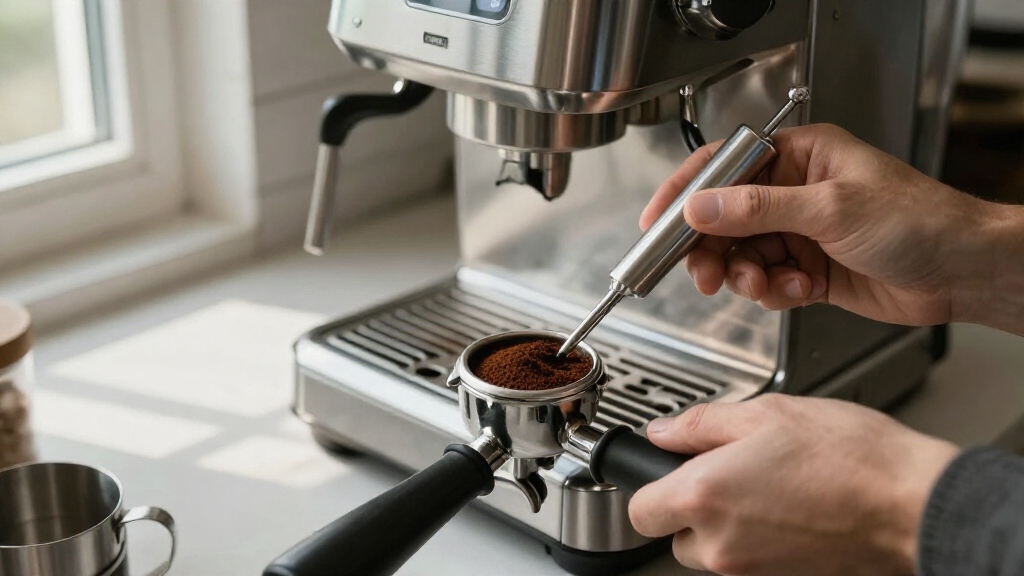
The Weiss Distribution Technique (WDT) uses fine needles to break up clumps and spread espresso grounds before tamping. It became a recognizable home espresso ritual because it is easy to demonstrate and may improve consistency when grounds are clumpy, but it cannot guarantee better extraction or replace a sound overall routine.
WDT means Weiss Distribution Technique: fine needles break up clumps and spread espresso grounds before tamping.
The method is most plausibly helpful when your grounds look clumpy or unevenly distributed.
Use fine, thin needles and gentle motions that reach through the full coffee bed, including near the edges.
Keep your dose, recipe, and tamp steady when you compare shots with and without WDT.
Judge WDT by repeatability and taste; it cannot fix every extraction problem or guarantee a better shot.
Home espresso • Puck preparation
Why WDT Became the Weird Little Ritual Espresso Needed
A few seconds of needle work can loosen clumps and spread grounds before tamping. The aim is a more consistent coffee bed—not a guaranteed better shot.
01 / What changes
Clumps out. A more even bed in.
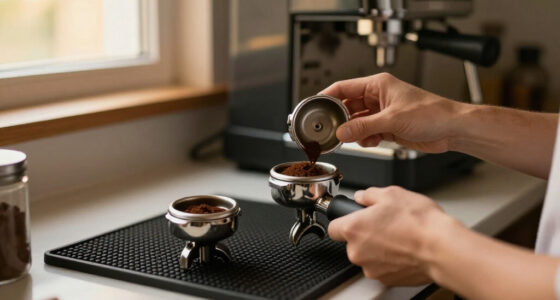
Espresso packs finely ground coffee into a compact puck. If parts of the bed differ in density, water may move through some areas more readily than others. WDT works on the grounds before tamping, helping separate stuck particles and distribute them through the basket.
Look for dense clumps
Dark pellets or patches in the basket can be a clue that grounds have stuck together. A clump alone does not prove a shot will fail.
Reach through the bed
Fine needles move through the coffee to break up clumps and spread grounds, including lower layers and areas near the edges.
Tamp consistently
The goal is an even bed before tamping. Dose, grind, water, basket, machine, and routine still shape the shot.
02 / Why it caught on
A visible fix for a visible problem
WDT fits between grinding and tamping, needs little space, and turns an otherwise hidden preparation choice into a short, teachable gesture. That combination helped it travel through coffee forums, demonstrations, and social video.
Grounds can stick together in the basket.
A small, clear action addresses the bed.
The whole technique fits in a quick demo.
Enthusiasts compare prep and taste results.
03 / A measured claim
Consistency is the useful test
WDT is most plausibly useful when grounds are clumpy or unevenly distributed. Breaking up clumps may help create a more uniform starting bed, but results vary with the grinder, coffee, basket, and preparation routine.
What WDT can—and cannot—do
These bars show the strength of the practical claim, not measured performance or a research score.
04 / The simple routine
Gentle, full-depth, repeatable
There is no single needle pattern established as best for every grinder and basket. Aim to loosen the whole bed without making your motion a new source of variation.
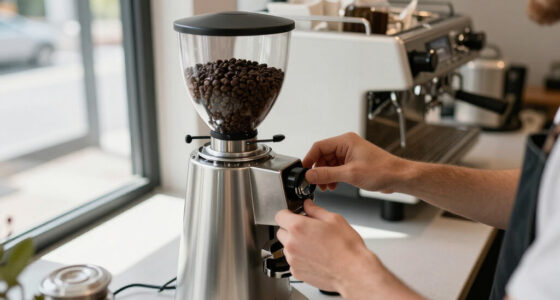
Grind into the basket
A dosing funnel can help keep scattered grounds off the counter while you work.
Choose fine needles
Thin needles should move through grounds with little resistance. Thick tools may push the bed around.
Work depth and edges
Use controlled movements through the full bed. Avoid leaving dense pockets along the basket wall.
Tamp, pull, and taste
Keep your tamp steady, then judge the cup and shot repeatability—not just the surface appearance.
Overworking the grounds
A dramatic swirl can look persuasive on camera. A motion you can repeat is more useful.
One variable at a time
Stirring cannot compensate for an unsuitable grind, inconsistent dose, or changing tamp.
05 / Compare the approaches
Different motions, different jobs
Tapping and shaking move grounds through the basket. WDT uses needles to separate clumps directly. Each can change distribution, but they do not act on the coffee in exactly the same way.
| Approach | What it does | When it may suit you |
|---|---|---|
| WDT | Uses fine needles to break up clumps and spread grounds through the bed. | ✓ Grounds look clumpy or uneven before tamping. |
| Tapping | Moves grounds as you tap the basket or portafilter. | May help settle or shift grounds; clumps can remain intact. |
| Shaking | Moves grounds around the basket through a shaking motion. | Can redistribute grounds, though results depend on the motion and setup. |
06 / Follow the logic
From visible clump to a better-informed choice
Treat WDT as a practical experiment. The tool is useful when it helps you prepare the puck more consistently and enjoy the result.
Notice what is actually in the basket.
Loosen through the bed and near edges.
Keep the rest of the routine consistent.
Compare across several similar shots.
Let repeatability and the cup decide.
What WDT changes before you tamp
WDT is a way to break up clumps and spread ground coffee more evenly in an espresso basket before tamping. You move one or more fine needles through the coffee bed so grounds that have stuck together separate and distribute more consistently. The name stands for Weiss Distribution Technique.
Espresso puts a compact puck of finely ground coffee in the path of pressurized water. If parts of that puck differ in density, water may pass more readily through some areas than others. A little clump is not proof that a shot will fail, but visible clumps are a useful clue that the bed may need attention.
Think of filling a small garden bed with dry soil: if you leave a few packed lumps, water can run around them rather than through the soil evenly. WDT aims to loosen the coffee before you press it into a puck. For example, if your grinder leaves several dark, compact pellets in the basket, gentle needle work can break those apart and spread the grounds across the basket.
The goal is an even bed before tamping, not a particular needle dance. WDT can help with distribution, but the shot still depends on dose, grind, coffee, water, basket, machine, and how consistently you prepare the puck.
As an affiliate, we earn on qualifying purchases.
Why WDT became the espresso ritual everyone recognizes
WDT became a recognizable ritual because it addresses a visible preparation problem with a simple action that is easy to show and repeat. A barista can stir a basket for a few seconds, tamp, and pull a shot; viewers can see the whole step in a short video. That helped the method travel through coffee forums, demonstrations, and social media.
There is a practical reason for its appeal, too. A needle tool is generally a small addition to a home setup, and the technique fits between grinding and tamping without requiring a new machine. When enthusiasts compared routines, this was a concrete step they could discuss: break up the clumps, cover the bed, tamp consistently, then taste the result.
Imagine a home barista dialing in a new bag on Saturday morning. Their grinder drops grounds into the basket with a few obvious clumps. A short, controlled WDT routine gives them a repeatable way to address what they can see, while also making a satisfying little moment in the workflow. The ritual feels elaborate because the needles are visible; the underlying idea is straightforward.
As home espresso grew more focused on repeatability, WDT joined tools such as dosing funnels and puck screens in the familiar counter-top routine. The Weiss distribution technique is easy to recognize, but its popularity does not prove that every pattern works equally well or that every shot needs it. Visibility made it memorable; a plausible practical purpose helped it stick.
As an affiliate, we earn on qualifying purchases.
When breaking up clumps can help your shot
WDT is most plausibly useful when your grounds are clumpy or unevenly distributed. Fine coffee particles can stick together, with static and grinder design among the possible contributors. Separating those clumps may help create a more uniform bed before tamping, which can make your preparation more repeatable.
That is a measured claim, not a promise of a sweeter or more balanced shot every time. Extraction depends on several variables at once. If your grind is too coarse, your dose is inconsistent, or your tamp varies from shot to shot, stirring alone cannot fix those problems.
For instance, suppose two morning shots use the same dose and recipe, but one basket contains dense clumps and the other looks evenly distributed. WDT gives you a way to make those starting beds more alike. If the shots then become more consistent in flow and taste, the step may be helping your workflow. If nothing changes, the tool may not be addressing the source of variation in your setup.
There is no single needle pattern established here as best for every basket and grinder. The useful question is whether gentle work through your coffee bed improves repeatability and taste. A dramatic needle swirl can look persuasive on camera; a steady routine and a cup you enjoy are better measures.
WDT can improve distribution; it cannot guarantee a better espresso shot.
As an affiliate, we earn on qualifying purchases.
How to use WDT without making puck prep fussy
Use WDT by loosening the full coffee bed gently, then tamping consistently. A controlled routine helps you judge whether the method is useful instead of adding a new source of variation. You do not need an elaborate pattern: aim to separate clumps and distribute grounds, including near the basket edges.
- Grind into the basket. A dosing funnel can help keep grounds off the counter, especially if your grinder tends to scatter them.
- Use fine, thin needles. They should move through the grounds with little resistance. Thick tools can push coffee around instead of separating it gently.
- Work through the depth. Move the needles through the whole bed with controlled motions, paying attention to the lower layers and edges. Avoid aggressive stirring that makes your routine hard to repeat.
- Tamp as you normally do. Keep your tamp consistent, then pull the shot and note the taste and flow.
Picture a basket with a small ring of grounds stuck against one side. If you only rake across the surface, that dense patch may remain. Gentle movements through the bed can help distribute grounds more fully; after tamping, judge the cup rather than whether the surface looks like a tiny whisked landscape.
Try the same dose and recipe across several shots before deciding. If your WDT motion changes every time, you cannot tell whether the technique helped. Repeatable preparation is the useful outcome, even when the tool itself is simple.
As an affiliate, we earn on qualifying purchases.
WDT, tapping, and shaking solve different problems
WDT directly separates clumps with needles, while tapping or shaking moves the grounds through the basket. These approaches can all change distribution, but they do not act on the coffee in exactly the same way. If clumps are the issue you can see, WDT addresses them directly.
| Approach | What it does | When it may suit you |
|---|---|---|
| WDT | Uses fine needles to break up clumps and spread grounds through the bed | Your grounds look clumpy or uneven before tamping |
| Tapping | Moves grounds as you tap the portafilter | You want a simple way to settle or shift the bed |
| Shaking | Redistributes grounds by moving the basket | You prefer a quick, tool-free motion and can keep it consistent |
Say your grinder leaves a mound on one side of the basket, along with several compact pellets. Tapping might help settle the mound, while shaking may spread grounds around. Neither motion necessarily breaks apart each pellet as directly as working through it with fine needles.
That does not mean WDT wins for every person or setup. A grinder that produces few clumps may leave little for needles to fix, and a simple, steady routine may suit your morning better. Compare methods using the same coffee, dose, and recipe, then decide based on consistency in the cup and how reliably you can repeat the preparation.
How to tell whether WDT earns its place on your counter
Keep WDT in your routine if it makes your shots more repeatable or tastes better to you. Judge the technique by what happens across several similar shots, not by how neat the coffee looks after stirring. A uniform-looking surface is not, by itself, proof of a better extraction.
Try a small comparison at home: use the same beans, dose, basket, and recipe for a few shots prepared with your usual routine, then a few with gentle WDT. Keep other variables steady as you can. If your grinder dose or tamp changes at the same time, the comparison becomes harder to interpret.
For example, one espresso drinker may find that a clumpy grinder produces shots that vary from one morning to the next. WDT might make the puck preparation feel easier to reproduce, and the cups may become more alike. Another drinker with fluffy, evenly falling grounds may notice no meaningful difference. Both are reasonable outcomes because equipment and coffee vary.
Watch for signs that the routine itself is getting in the way: needles that are too thick, vigorous stirring that shifts grounds unpredictably, or a new pattern that you cannot repeat. If you see no clumps and taste no improvement, simplify. The best preparation is the one you can do consistently and that produces espresso you enjoy.
For key points for deciding, ask: Are clumps visible? Can I move through the full bed gently? Does the method improve consistency across shots? Those answers matter more than how elaborate the tool looks.
What WDT cannot fix in an espresso routine
WDT cannot correct every cause of uneven extraction. It addresses distribution of grounds before tamping, so it cannot compensate for a poorly matched grind, changing dose, inconsistent tamp, or other preparation and equipment variables. Nor does it guarantee that water will flow evenly through every puck.
Suppose your shot runs much faster after you switch to a coarser grind. Stirring the grounds more carefully will not restore the flow you had with the finer setting. Or imagine that one morning you dose 18 grams and the next you use 17 grams. Even careful needle work cannot make those two starting recipes identical.
WDT can also become a source of inconsistency if your technique varies. One day you may gently cover the bed; the next you may stir hard and push grounds up the sides. The name of the technique does not make every motion effective. Use fine needles, work carefully through the coffee, and keep your tamp steady.
When a shot disappoints, treat WDT as one part of the routine rather than the whole diagnosis. Check the recipe and grind, then look at how evenly the grounds sit before tamping. If clumps are absent and your preparation is stable, changing the needle pattern may not be the most useful next step. Good puck prep is a chain of small, repeatable actions, and WDT handles just one link.
Frequently Asked Questions
What does WDT stand for?
WDT stands for Weiss Distribution Technique. It uses fine needles to break up clumps and distribute grounds in an espresso basket before tamping. The name is associated with espresso enthusiast John Weiss, who popularized the method.
Does WDT make espresso taste better?
It can help when your grounds are clumpy or unevenly distributed, but it does not guarantee a better-tasting shot. Compare several shots with the same coffee, dose, and recipe, then judge by taste and repeatability.
Do I need a special WDT tool?
No special tool is required to understand the principle: fine needles move through the grounds and separate clumps. A purpose-made tool can be easier to handle consistently, while thick needles may push grounds around rather than gently loosen them.
Should I stir only the surface or the whole bed?
Work gently through the full coffee bed so you address lower layers as well as the surface. Include the areas near the basket edges, where grounds can remain unevenly distributed. Keep the motion controlled and repeatable.
Can WDT prevent channeling?
No. WDT may help make distribution more even before tamping, but it cannot guarantee against uneven water flow or fix every source of channeling. Grind, dose, tamp, coffee, basket, and machine all affect the shot.
Is WDT worth doing for every shot?
That depends on your grinder, coffee, and routine. If your grounds are visibly clumpy and WDT makes your shots more consistent, it may earn its few seconds. If you see no clumps and notice no difference in the cup, you may not need the extra step.
Conclusion
WDT became espresso’s weird little ritual because it gives you a visible, repeatable way to tackle clumpy grounds before tamping. Try it gently if your basket shows clumps, keep the rest of your routine steady, and let repeated shots tell you whether it helps. A good espresso routine should serve the cup, not the countertop performance. If the needles make your mornings more consistent, keep them close; if not, let the coffee flow without the extra dance.Halloween Picks
halloween
As an affiliate, we earn on qualifying purchases.