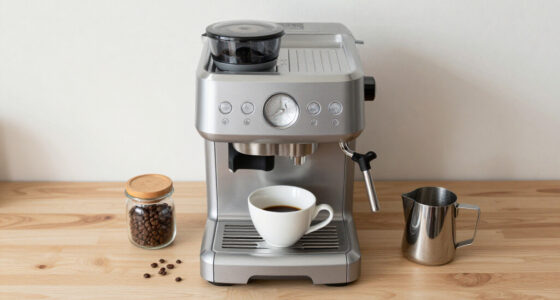
TL;DR

Get coffee and tea gear delivered free — and shop member deals
- Fast, free delivery on millions of items
- Access to Prime Big Deal Days deals on October 6–7
- Prime Video, Amazon Music and more included
Rotary pump espresso machines use a rotating mechanism to move water at brewing pressure, usually with a steadier, quieter sound than vibration pump machines. They cost more because the pump is more complex and often comes in a larger machine with heavier-duty parts or plumbing options. Pay extra when quiet operation, frequent use, or a direct water line matters to you; pump type alone does not improve the taste in your cup.
The first espresso shot of the morning can sound like a tiny power tool waking the whole kitchen. A rotary pump machine often softens that buzz, but the quieter counter comes with a higher price tag.
Here’s what you’re paying for: the pump’s construction, the machine built around it, and conveniences such as sustained use or a plumbed water line. You’ll also see where the premium stops helping—because quiet pressure does not automatically mean better espresso.
A rotary pump usually makes a lower, steadier sound than the sharper buzz of a vibration pump, though the full machine still makes noise.
Rotary pump machines often cost more because of pump construction and the heavier-duty components or plumbing options they may include.
Pump type alone does not guarantee better espresso; grinder quality, temperature stability, and technique matter greatly.
Check whether a model supports reservoir use or requires direct plumbing, then account for filtration, water hardness, and installation.
Frequent users and people who value a quieter kitchen may get more from the premium than occasional home baristas.
A buyer’s guide · Espresso equipment
Rotary Pump Espresso Machines: Why Quiet Pressure Costs More
A rotary pump often replaces the sharp morning buzz with a lower, steadier hum. The premium pays for a more complex pump and a machine built for frequent use, heavier components, or plumbing options. Whether that’s worth it depends on your kitchen and routine.
Usually less buzzy; the full machine still makes noise.
Often larger, heavier, and more costly.
Some support a tank, a water line, or both.
Pump type alone does not guarantee better espresso.
01 / How it works
A pump moves water. Your setup shapes the taste.
A rotary pump uses a rotating mechanism to move water at brewing pressure. Its action is generally steadier than the rapid pulsing associated with many vibration pumps.
When you start a shot, the pump pushes water through the coffee puck. A vibration pump often makes a pronounced, rattly buzz; a rotary pump tends to sound like a lower hum. Heating, water flow, and cups on the drip tray still contribute to the noise.
Think of the pump as the engine behind the water, not a flavor button. A coarse grind or poorly prepared puck can still make a fast, disappointing shot, no matter how smooth the pump sounds.
Typical sound character
Illustrative sound character only; not a measured decibel comparison. Countertops, cabinetry, and machine design affect what you hear.
02 / What the premium buys
More than a quieter pump
The higher price often reflects the construction of the pump and the larger machine architecture around it. Features and costs vary by model.
01 · Construction
Complex mechanism
Rotary pumps have more moving parts and are generally designed for long service, including commercial settings.
02 · Machine design
Heavier-duty build
Larger boilers, sturdier components, and commercial-style fittings can add engineering, material cost, and weight.
03 · Convenience
Water-line options
Some models connect to direct plumbing, saving reservoir refills. Plumbing is a machine feature, not a pump requirement.
03 / Compare before you pay
Rotary and vibration pumps at a glance
Both types can make excellent espresso in a well-designed machine. Choose based on sound, space, water setup, and how often you make drinks.
| What matters | Rotary pump | Vibration pump |
|---|---|---|
| Sound | ✓ Usually quieter and less buzzy | ~ Usually louder and more noticeable |
| Pressure delivery | ✓ Generally smoother | ~ Pulsed; the brew system can moderate it |
| Size and cost | ✗ Often larger and more expensive | ✓ Common in compact, lower-cost machines |
| Water supply | ~ Some models support tank or direct plumbing | ~ Usually reservoir-fed; designs vary |
| Best fit | Frequent use, quieter kitchens, plumbed setups | Lower cost, less space, occasional home use |
Actual noise, water options, and performance depend on the specific machine. Pump type and pressure stability alone do not determine shot quality.
Consider rotary
You make drinks frequently, value a quieter kitchen, or want the option of a direct water line and are comfortable with the larger footprint and higher price.
Consider vibration
You make espresso occasionally, have limited counter space, or would rather put the extra budget toward a capable grinder.
04 / A practical decision
Match the machine to your morning
Start with your drink volume, kitchen, and water setup. Then compare those needs with the price and service requirements.
When the premium earns its place
One Saturday cappuccino may not make the extra quiet or sustained-use capacity valuable. Several people pulling back-to-back shots before work may appreciate both. A small apartment and early starts can also make lower pump noise worthwhile—even if you never use plumbing.
- 01Count how many drinks you make in a row on a typical day.
- 02Measure the machine and consider how sound travels through counters and cabinets.
- 03Confirm whether the model uses a reservoir, requires plumbing, or supports both.
- 04Compare grinder quality and temperature stability alongside pump type.
- 05Ask who services the pump and whether parts are available where you live.
- 06Listen to the specific model or find a sound test if quiet operation is a priority.
05 / Ownership matters
Plan for water, upkeep, and service
A rotary pump does not make a machine maintenance-free. Water quality and the maker’s care instructions matter throughout ownership.
Direct plumbing can save refill trips, especially in a busy household, but it adds a connection to manage. Plan for suitable filtration, water hardness, and leak prevention, and follow the manufacturer’s guidance to help avoid scale buildup.
Some rotary pump repairs can be more involved than replacing a simple vibration pump. Check service access, routine maintenance, parts availability, warranty terms, and the total cost of any required connection kit before buying.
Trace the trade-off
From routine to right fit
A useful buying decision follows the whole chain—from the way you make coffee to the machine you can maintain.
- 1Count your drinksOccasional cups or a daily queue?
- 2Check your spaceFootprint, height, and sound paths.
- 3Choose water setupReservoir, plumbing, or both.
- 4Compare the whole setupGrinder, temperature, and upkeep.
- 5Decide what earns the costQuiet, capacity, and convenience.
What a Rotary Pump Does During Your Espresso Shot
A rotary pump uses a rotating mechanism to move water at brewing pressure, creating a steadier flow than the rapid pulsing associated with many vibration pumps. That smoother action often sounds like a low hum rather than a sharp buzz. The pump supplies pressure; the rest of the machine still controls how water meets the coffee.
In a typical morning routine, you lock in a portafilter and start the shot. A vibration pump may make a pronounced, rattly buzz as it pushes water through the puck, while a rotary pump tends to make less of a scene. You will still hear heating elements, water flow, and cups clinking on the drip tray.
Think of the pump as the engine behind the water, not a flavor button. A fine grinder, fresh beans, stable temperature, and a well-prepared puck have more direct influence on taste. A smooth pump cannot rescue a shot that runs too fast because the grind is too coarse.
Why the Quieter Pump Raises the Price
Rotary pump espresso machines cost more because their pumps have more complex moving parts and are commonly paired with larger, heavier-duty machine components. The added expense can also cover a design that supports frequent drink making or direct plumbing. You pay for a whole machine architecture, not just a different sound.
A compact vibration-pump machine may fit neatly beside your kettle and rely on a small reservoir. A rotary model may have a larger boiler, sturdier components, and the fittings needed to connect to a water line. Those choices add material and engineering costs, as well as weight and counter space.
Some rotary pump machines can also run from a reservoir, which gives you flexibility without installing plumbing. That feature is model-specific, though. Before buying, check whether you can switch between tank and line operation, what accessories the machine needs, and whether the connection kit adds to the total price.
Price alone does not tell you how quiet a machine will be. A pump’s sound can carry through a counter or cabinetry, and other components contribute noise. If you share a thin-walled apartment or make coffee while someone sleeps, try to hear the specific model or find a sound test before treating “rotary pump” as a guarantee of silence.
Compare Rotary and Vibration Pumps Before You Pay More
Choose a rotary pump when lower pump noise, frequent use, or plumbing options matter more to you than a smaller footprint and lower entry price. Choose a vibration pump when you want a compact, usually less expensive machine for occasional home drinks. Either type can produce excellent espresso in a well-designed setup.
| What you care about | Rotary pump | Vibration pump |
|---|---|---|
| Sound | Usually quieter and less buzzy | Usually louder and more noticeable |
| Pressure delivery | Generally smoother | Pulsed, though the brewing system can moderate the effect |
| Size and price | Often larger and more expensive | Common in compact, lower-cost machines |
| Water supply | Some models support a reservoir or direct plumbing | Usually reservoir-fed, though designs vary |
| Best fit | Frequent use, quieter kitchens, plumbed setups | Lower cost, limited space, occasional use |
For example, if you make one cappuccino on Saturday, the extra quiet and continuous-use capacity may not change your daily life. If three people make back-to-back drinks every morning, a machine designed for sustained use may feel more comfortable and convenient.
Pressure smoothness also deserves context. The brewing system can moderate the pulsing from a vibration pump, and pump type by itself does not determine shot quality. Think about the whole machine and your routine, not one specification in isolation.
Decide Whether Quiet Pressure Fits Your Routine
The rotary pump espresso upgrade makes the most sense when you will notice its practical benefits several times a week. Start with your kitchen, drink volume, and water setup; then compare those needs with the machine’s price and service requirements. A quieter start to the day is valuable, but only if you want it enough to pay for it.
- Count your drinks. If your household pulls several shots in a row most days, sustained use may matter more than it does for a single weekend espresso.
- Check your space. Measure the machine’s footprint and height, and think about how sound travels through your counter or cabinets.
- Confirm the water options. Verify whether the model works from a reservoir, requires plumbing, or supports both.
- Compare the complete setup. Consider grinder quality and temperature stability alongside pump type, since they play a major role in the cup.
- Ask about service. Find out who can service the pump, what routine maintenance the maker specifies, and whether replacement parts are available where you live.
Imagine you live in a small apartment and pull two early shots before work. A quieter machine could be worth the premium even if you never use a direct water line. If your machine sits in a separate kitchen and sees only a few shots each week, that same premium might be better spent on a capable grinder.
For a broader look at the category, you can compare the considerations in this guide to espresso machines with rotary pumps. Check current specifications, pricing, and warranty terms with the maker before you buy, since those details change over time.
Plan for Water, Maintenance, and More Involved Repairs
A rotary pump machine still needs suitable water, routine upkeep, and access to service. Its construction may suit frequent use, but that does not make every model maintenance-free or guarantee reliability. Water quality and the maker’s care instructions matter just as much after the purchase as they do before it.
Direct plumbing saves you from refilling a reservoir, especially when several people use the machine. It also adds a water connection to manage, along with filtration and attention to hardness. A poorly planned line can create leaks, and unsuitable water can cause scale buildup, so follow the manufacturer’s guidance and use an appropriate water treatment plan.
Repairs can also be more involved than replacing a simple vibration pump. Before you commit, check whether local technicians service the model and whether the warranty covers pump work. A machine that makes six drinks every morning may justify that service path; for light use, a simpler machine can be easier to live with.
Keep the machine clean and follow its stated maintenance schedule, including descaling only as directed for its water conditions and design. Don’t assume every machine needs the same treatment. Your manual is the right guide for cleaning, water care, and when to arrange professional service.
Pay extra for a rotary pump when quieter operation, back-to-back drinks, or direct plumbing will make a clear difference in your kitchen. If you mainly want better-tasting espresso, put the pump in perspective: grind, dose, temperature, and extraction still shape what reaches your cup.
That distinction matters at the counter. A person who wakes before the rest of the household may value a lower, steadier pump sound every morning. Someone who makes a single afternoon espresso in a busy kitchen may barely notice the difference.
Before you decide, ask whether the machine’s reservoir option, footprint, water needs, and service support fit your home. The best premium is the one that solves a real, repeated annoyance. If the quiet matters to you every day, it can earn its place; if not, a well-designed vibration pump machine may leave more room in your budget for coffee and a good grinder.
Buy the quieter pump for the kitchen you have and the drinks you make—not for a promise of better flavor.
Frequently Asked Questions
Does a rotary pump make better-tasting espresso?
Not by itself. A rotary pump can deliver pressure smoothly, but grind, dose, temperature, and extraction have a major effect on taste. A well-designed vibration-pump machine can also make excellent espresso.
Can I use a rotary pump machine without plumbing it in?
Many models can draw water from a built-in reservoir, but the feature varies by machine. Check the manufacturer’s specifications before buying, especially if you want the choice to use a tank or a direct water line.
How much quieter is a rotary pump?
It is generally less buzzy and steadier sounding than a vibration pump, but there is no single noise level that applies to every machine. Countertops, cabinets, and other operating parts affect what you hear, so listen to the specific model or look for a measured sound test.
Is plumbing a rotary pump espresso machine worth it?
Plumbing can save repeated reservoir refills when you make many drinks, but it calls for a suitable connection, filtration, and attention to water hardness and leaks. For occasional use, a reservoir-fed model may be simpler to own.
Are rotary pump machines more reliable?
They are often designed for sustained use, but reliability depends on construction, water quality, maintenance, and access to service. Repairs may also be more involved, so check the warranty and local service options before you buy.
Conclusion
Remember the simplest buying rule: pay for a rotary pump when quiet, frequent use, or plumbing will improve your routine—not because you expect the pump to fix your espresso. Choose for the mornings you actually have, then let the machine’s low hum be the soundtrack to a better-prepared shot.
Fall Picks
fall essentials
As an affiliate, we earn on qualifying purchases.