TL;DR

Get coffee and tea gear delivered free — and shop member deals
- Fast, free delivery on millions of items
- Access to Prime Big Deal Days deals on October 6–7
- Prime Video, Amazon Music and more included
Semi-automatic espresso machines give you control over shot timing, temperature, and pressure, but how much control you get depends on the machine’s features. Your involvement shapes the flavor and consistency of your espresso, making it ideal for those eager to learn. The key is understanding what each control actually does, not just the labels.
Imagine pulling an espresso shot and feeling the rich, dark aroma fill your kitchen. That moment of control — deciding exactly when to stop the flow — is what makes semi-automatic machines so appealing. It’s not just about brewing coffee; it’s about mastering a craft, one shot at a time.
If you’re considering a semi-automatic espresso machine, understanding what control really means can save you from buying a device that doesn’t match your skill level or expectations. This guide breaks down the core features, practical choices, and how each element affects your daily coffee ritual.
Control in semi-automatic machines means you manually start and stop the shot, influencing flavor and extraction.
Features like PID, pressure profiling, and pre-infusion deepen your control but also add complexity.
More control options help to customize shots but require learning and maintenance.
Choose a machine based on your willingness to experiment, skill level, and desired consistency.
Good control doesn’t replace technique — mastery of grind, dose, and tamp matters just as much.
The home barista’s guide · Espresso, explained
Semi-Automatic Espresso Machines: What Control Really Means
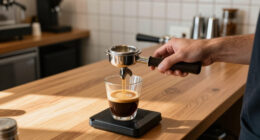
You choose when the shot begins and ends. The machine supplies heat and pressure; your preparation, judgment, and technique shape what lands in the cup.
Stop extraction at your chosen yield or taste.
Grind, dose, distribution, and tamp.
Adjustment options depend on the design.
Recipe, scale, grinder, and practice help.
What each control actually changes
More adjustment can open up new ways to shape a shot. It also asks you to understand how the variables work together.
Shot timing
You initiate and stop brewing. Changing yield and extraction time can shift flavor balance; repeatable results take practice.
Coffee prep
Grind size, dose, distribution, and tamp shape water flow. The machine cannot fix an uneven puck or unsuitable grind.
Temperature
A stable brew temperature supports consistency. PID control may help maintain it and, on some machines, adjust it for different coffees.
Pressure
Profiling can vary pressure through extraction. Pump ratings alone do not show pressure at the coffee puck or how a shot behaves.
Pre-infusion
A gentle initial wetting can promote more even flow. Its timing and strength affect results, and options differ across models.
Milk texture
You operate the steam wand and learn to texture milk. This is a separate skill from dialing in espresso.
More control, more to manage
Look beyond feature names. Ask what the machine lets you change, what it holds steady, and what it expects you to learn.
| Feature | What it does | Potential benefit | What it asks of you |
|---|---|---|---|
| Manual shot stop | You stop the flow at your chosen yield. | + Direct control over the shot. | ~ Attention and a repeatable recipe. |
| PID temperature | Controls brew temperature; some models allow adjustment. | + More stable, predictable brewing. | ~ Choosing settings suited to the coffee. |
| Pressure profiling | Changes pressure during extraction. | + Room to explore different shot styles. | ~ More variables and a steeper learning curve. |
| Pre-infusion | Wets the coffee puck before full pressure. | + Can encourage more even extraction. | ~ Timing and behavior vary by machine. |
| Programmable buttons | May stop a shot at a saved volume or time. | + Can make repeated drinks more convenient. | ~ The label alone does not define automation level. |
Semi-automatic: you prepare the coffee and initiate brewing. Product terms vary, so check which steps the machine performs for you.
The grinder matters. Espresso needs fine, adjustable grinding. Budget, counter space, warm-up, cleaning, and water care are part of ownership.
Match the machine to your routine
A broader range of settings can support experimentation and consistency, but it brings added cost, care, and time. Start with the workflow you actually want.
Getting started
Prioritize stable temperature, straightforward shot control, and a capable grinder. Build skill with grind, dose, and tamp before adding variables.
Curious enthusiast
Consider PID temperature control, pre-infusion, or pressure adjustment if you want to experiment and learn how each change affects flavor.
Frequent workflow
Compare single-boiler, heat-exchanger, and dual-boiler designs. Brewing and steaming convenience, cost, and maintenance differ by setup.
Scale + grinder + recipe: a measured dose and yield, repeatable preparation, and a shot timer or saved settings can help reproduce results. Manual brewing still varies.
More options mean more practice. They can help tailor a shot to beans and taste, while adding decisions, maintenance, and daily steps.
The craft is a chain of small decisions
Each step affects the next. A machine provides the platform; your technique and a consistent routine connect the pieces.
Grind & dose
Set the coffee amount and grind for the recipe.
Distribute & tamp
Prepare an even puck for water to pass through.
Begin the shot
Initiate brewing and observe the extraction.
Stop at your yield
Use taste and a scale to guide the shot end.
Adjust & repeat
Change one variable, then record what improves.
What Does ‘Control’ Really Mean in a Semi-Automatic Espresso Machine?
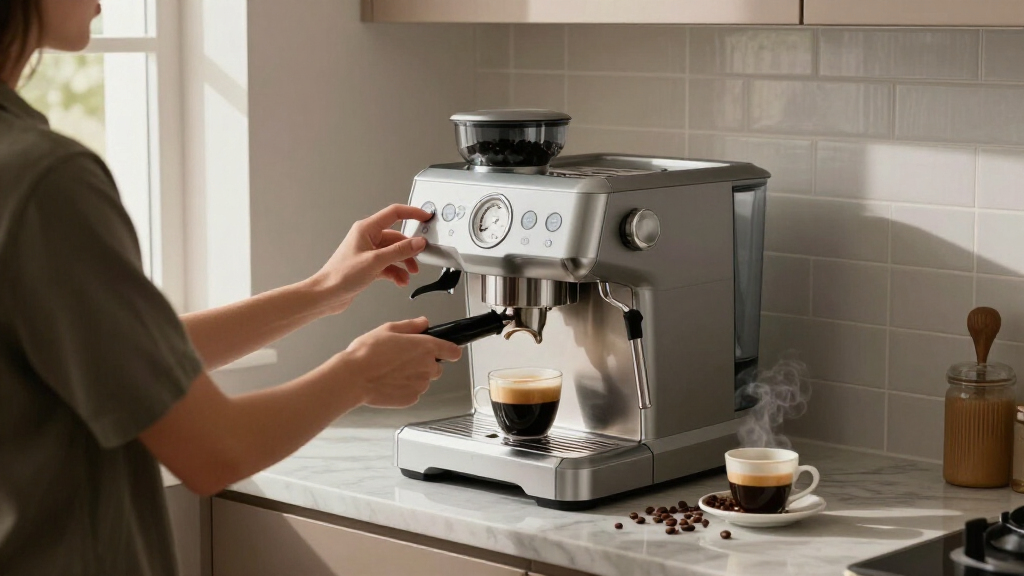
At its core, control in a semi-automatic machine means you decide when water begins and ends its flow through the coffee. You manually start the shot, and you stop it, giving you direct influence over extraction time and shot volume.
For example, you grind fresh beans, dose them into the basket, tamp with precision, then manually press a button or pull a lever to start the water. When you judge the shot has reached your preferred volume or taste, you stop it. This hands-on approach is what separates semi-automatics from fully automatic or super-automatic machines, where many steps are automated.
But control isn’t just about timing. It also covers temperature management, pressure during extraction, and milk steaming. Some machines offer adjustable settings, while others keep things fixed. Your level of involvement directly influences the flavor, consistency, and even how quickly you can produce drinks.
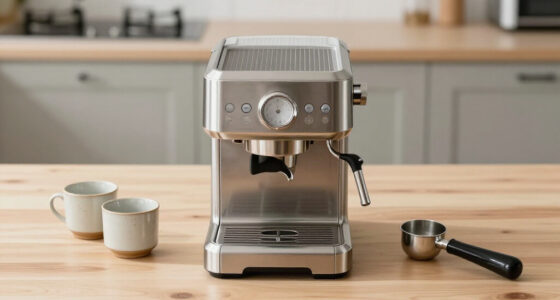
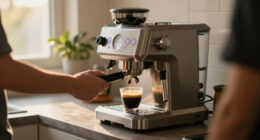
semi-automatic espresso machine with PID control
As an affiliate, we earn on qualifying purchases.
As an affiliate, we earn on qualifying purchases.
How Different Control Options Impact Your Coffee
Control options vary widely, and understanding them helps you pick the right machine. Here’s what you’ll encounter:
| Feature | What It Does | Impact on Brewing |
|---|---|---|
| Shot timing | You start and stop the extraction manually. | Allows customization of shot volume; however, it requires skill to master consistent timing, which directly impacts flavor balance. Poor timing can lead to under-extraction (sour, weak) or over-extraction (bitter, harsh). Mastery here means understanding how shot length correlates with taste and adjusting accordingly. |
| Temperature control | Adjusts or maintains water temperature during extraction. | Consistent temperature is crucial for proper extraction. Machines with PID controllers can maintain a stable temperature, reducing variability between shots. Variations in temperature can cause uneven extraction, affecting flavor complexity and clarity. The ability to tweak temperature for different beans or roast levels allows for more precise brewing but also demands understanding of how temperature influences flavor profiles. |
| Pressure profiling | Adjusts pressure during extraction, often with a pre-set or manual control. | This feature allows you to mimic the nuances of professional espresso extraction. By controlling pressure at different stages, you can enhance sweetness, reduce bitterness, and bring out more delicate flavors. However, it requires a good understanding of how pressure impacts extraction and flavor, and misusing it can lead to inconsistent results. The tradeoff is complexity versus control—more advanced machines enable sophisticated techniques but demand more skill. |
| Pre-infusion | Softly wets the coffee puck before full pressure. | Pre-infusion helps prevent channeling — uneven water flow — which can cause under-extraction in parts of the coffee bed. Proper pre-infusion results in more uniform extraction, leading to richer, more balanced flavors. It’s especially useful with fresh or coarser grinds. The tradeoff is timing: too long or too gentle pre-infusion can under-develop the coffee, while too aggressive can cause over-extraction or delays in brewing. |
Each feature shapes how hands-on you are, and how much the machine does for you. For example, a machine with pressure profiling allows you to experiment with different extraction styles, which can unlock complex flavors but requires understanding the interplay of pressure, temperature, and timing. Conversely, a fixed-pressure machine simplifies operation but limits customization, potentially capping flavor potential.
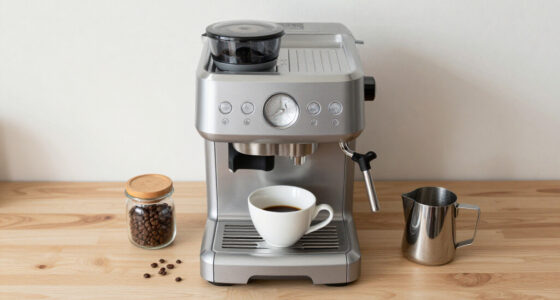
manual espresso machine with pressure profiling
As an affiliate, we earn on qualifying purchases.
As an affiliate, we earn on qualifying purchases.
Why Your Choice of Control Levels Affects Your Coffee Results
Think of control like tuning a musical instrument. The more you can fine-tune and adjust, the more precisely you can shape the final sound. In espresso, that tuning is your shot’s flavor profile—its sweetness, acidity, body, and aroma. The level of control you have directly influences how well you can tailor the shot to your specific beans and taste preferences.
For instance, a beginner might prefer a machine with minimal controls—just a straightforward brew button—because it reduces the chance of making mistakes. But this simplicity also limits the ability to adapt to different beans or roast levels, potentially resulting in less nuanced flavor extraction. On the other hand, an experienced barista or enthusiast benefits from adjusting pressure profiles, temperature, and timing, which allows for experimentation and fine-tuning to bring out the best qualities of each coffee.
Choosing a machine that offers a broader range of controls means embracing a learning curve but also gaining the flexibility to explore different brewing techniques. This flexibility can be the difference between a generic shot and a truly expressive espresso that highlights the unique characteristics of your beans. The tradeoff is that more controls require more knowledge and effort, but they unlock the potential for more complex, personalized results.
As an affiliate, we earn on qualifying purchases.
Choosing the Right Machine Based on Your Control Needs
Not all semi-automatic machines are created equal. Your decision should hinge on how much control you want and your willingness to learn. Here’s a quick guide:
- Beginner: Opt for a machine with stable temperature and simple shot control. Look for models with easy-to-use pressure gauges and minimal fuss. These machines help you build foundational skills without overwhelming complexity, allowing you to focus on mastering grind and tamp techniques first.
- Enthusiast: Choose a machine with PID temperature control, pressure profiling, and pre-infusion. Be prepared to experiment and develop a deeper understanding of how each parameter influences flavor. This level encourages learning and mastery, leading to more consistent and refined shots over time. It’s an investment in both skill and flavor potential.
- Professional at home: Consider dual-boiler setups, advanced pressure profiling, and perhaps app-controlled features for precise adjustments. These machines cater to serious hobbyists or small-scale professionals who want maximum control and consistency. The tradeoff is cost, complexity, and maintenance, but the payoff is the ability to tailor shots with high precision and repeatability.
For example, a home barista wanting to learn the nuances of espresso might prefer a machine with a PID and pressure profiling to achieve consistent, high-quality shots. Meanwhile, someone who just wants good espresso with minimal fuss may lean toward a simpler model that still delivers decent results without the need for extensive adjustments.
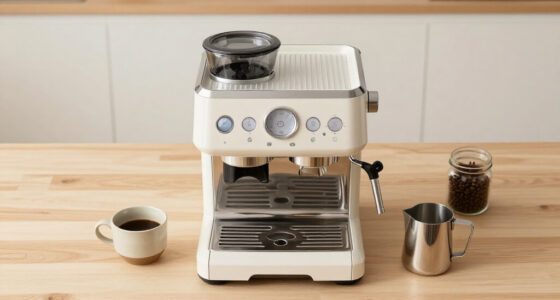
espresso machine with pre-infusion feature
As an affiliate, we earn on qualifying purchases.
As an affiliate, we earn on qualifying purchases.
How Control Impacts Workflow and Daily Routine
Control features influence how you approach each brewing session. A machine with adjustable temperature, pressure, and shot timing demands more prep and attention but offers richer learning opportunities. It’s akin to driving a manual transmission car versus an automatic: the manual demands more engagement but provides greater mastery and control over the ride.
For example, you might spend time weighing beans, adjusting grind size, and timing each shot meticulously. This process, while time-consuming initially, leads to a better understanding of how each variable affects the final espresso. Over time, this knowledge enables you to reproduce your ideal shot consistently, making the extra effort worthwhile.
Alternatively, a more straightforward semi-automatic might only require pressing a button and stopping when the shot looks right. It’s quicker and more convenient, especially for busy mornings, but offers less opportunity for customization or learning. The tradeoff is convenience versus precision—your choice depends on whether you value mastery or speed.
Additionally, workflow depends on recovery time—how fast the machine warms up, how quickly it can go from one shot to the next, and whether it can brew and steam simultaneously. Machines that can handle multiple tasks efficiently enable you to produce multiple drinks in a shorter time, which is essential if you’re serving guests or making multiple drinks in a busy routine.
The Latest Trends in Control Features for Home Espresso Machines
Recent trends focus on giving home users more precise control without overly complicating the process. PID temperature control, pressure profiling, and pre-infusion are now common in mid-range models, reflecting a desire for both quality and ease of use.
Some machines even include app-based controls, allowing you to tweak settings remotely or save recipes. For example, a recent model might let you set temperature curves or pre-infusion times via an app, then execute them at the push of a button. This integration offers convenience and precision, making advanced techniques more accessible to home users.
However, keep in mind that more features can mean a steeper learning curve and additional maintenance. The key is whether these controls genuinely improve your brewing or simply add marketing fluff—true control should translate into better, more consistent shots, not just complexity for its own sake.
Your Quick Guide to Picking a Semi-Automatic Based on Control
Ready to buy? Here’s a quick checklist:
- Decide if you want to experiment with pressure and temperature — then look for PID and pressure profiling features. Think about whether you’re ready to handle the complexity these features introduce, or if you prefer a more straightforward experience.
- Check if the machine has a good steam wand for milk — essential for lattes and cappuccinos. A powerful steam wand can also be a sign of overall build quality and control over milk texturing.
- Assess your willingness to learn: do you want a simple setup or one that rewards experimentation? Honest self-assessment here can save you frustration and ensure satisfaction.
- Factor in your budget, including grinder and accessories. High-end controls often come with increased cost, but they can significantly enhance your brewing capabilities if you’re committed to mastering them.
For example, if you love tinkering and want the best shot quality, an entry-level machine with PID and pre-infusion might be perfect. If you prefer quick, consistent results with minimal fuss, opt for a simpler semi-automatic with fewer controls but reliable performance.
What Beginners Need to Know About Control and Consistency
When starting out, it’s easy to think more control equals better coffee. But that’s not always true. Beginners should focus on mastering basics first, like grind size, tamping, and shot timing, because these foundational skills have a far greater impact on consistency than complex control features.
For example, an inexperienced barista might feel overwhelmed by adjusting temperature, pressure, and pre-infusion settings. Instead, they should start with a machine that offers stable, reliable temperature and simple shot control. This allows them to develop a feel for the process without unnecessary complication. As confidence and skill grow, they can gradually explore more advanced controls to refine their results.
Remember, even the most sophisticated control features won’t compensate for poor technique or stale beans. Consistency is built on a combination of good habits, technique, and a machine that supports stable brewing conditions. Patience and practice are key, and incremental learning will lead to better, more repeatable shots over time.
Maintenance and Control: What You Need to Keep in Mind
Advanced control features often mean more maintenance routines. Machines with pressure profiling or PID controllers require regular cleaning, descaling, and water quality management to function optimally. Neglecting maintenance can lead to calibration drift, inconsistent temperature, or even damage to sensitive components.
For instance, a PID controller may need software updates or recalibration over time to maintain accuracy. Machines with complex backflushing routines demand diligent cleaning to prevent clogs and ensure longevity. Additionally, water quality is paramount—using filtered water with low mineral content reduces scale buildup and helps maintain stable temperature control. Following the manufacturer’s maintenance schedule is essential for preserving performance and extending your machine’s lifespan. Investing time in proper upkeep ensures your control features remain precise, and your espresso continues to improve with each shot.
Frequently Asked Questions
Can I make espresso with a semi-automatic machine if I’m a beginner?
Absolutely. Semi-automatic machines are great for beginners who want to learn the craft. Start simple, master the basics like grind and tamp, then gradually explore shot timing and temperature adjustments.Does more control mean better coffee?
Not necessarily. More control offers room for refinement, but consistent results depend on technique, grind quality, and fresh beans. Control is a tool, not a shortcut to perfect espresso.Are semi-automatic machines hard to maintain?
They can be more involved than fully automatic models. Regular cleaning, descaling, and water quality management are essential, especially if you use advanced features like pressure profiling or PID temperature control.Is a machine with pressure profiling worth the extra cost?
If you enjoy experimenting and want to extract complex flavors, then yes. Pressure profiling allows precise adjustment during extraction, but it’s best suited for those willing to learn and tweak.How do I know if a semi-automatic machine offers enough control?
Check if it has features like PID temperature control, pressure profiling, pre-infusion, and adjustable pressure. These enable more precise control over your shots and flavor profile.Conclusion
Control in a semi-automatic espresso machine isn’t just a feature; it’s a philosophy. It’s about your involvement shaping every shot, from grind to pour. When you understand what each control does, you unlock the full potential of your coffee.
So, ask yourself: are you ready to take the reins and craft espresso that reflects your taste and skill? That’s where the real magic happens — in every manual stop, every adjustment, every perfect shot.
Fall Picks
fall essentials
As an affiliate, we earn on qualifying purchases.