TL;DR

Get coffee and tea gear delivered free with Prime
- Fast, free delivery on millions of items
- Prime Video, Amazon Music and more included
- Member-only deals all year
A double shot of espresso doesn’t always mean twice the caffeine or coffee solids. It depends on what is measured—dose, yield, or recipe—and factors like beans, roast, and extraction. Knowing the difference helps you understand what you’re drinking.
Ever ordered a “double shot” and wondered if it’s really twice as strong as a single? The truth is, not necessarily. Many coffee lovers assume a double means double the caffeine and coffee solids, but it’s more complicated than that.
Understanding what a double shot really represents can change how you order and enjoy your espresso. It’s not just about size—it’s about measurements, recipes, and natural coffee variations. Let’s break down why a double shot isn’t always twice the coffee or caffeine, and how to spot the real differences in your cup.
A double shot uses more coffee grounds, but does not guarantee twice the caffeine or coffee solids.
Volume measurements can be misleading; the real measure is the dry coffee weight and extraction quality.
Beans, roast level, and brewing technique significantly influence caffeine content, regardless of shot size.
Modern cafes measure espresso by grams—dose and yield—making shot strength more transparent.
Always ask how many grams of coffee are used when ordering if caffeine content matters to you.
ESPRESSO, MEASURED · A QUICK GUIDE
Why a Double Shot Is Not Always Twice the Coffee
“Double” describes a serving or recipe, not a guaranteed caffeine multiplier. Dose, yield, beans and extraction all shape what reaches your cup.
01 / START WITH THE RECIPE
Dose and yield are different measurements
The dose is the dry coffee put into the basket. Yield is the espresso that comes out. A common modern recipe uses 18 g in and produces about 36 g out.
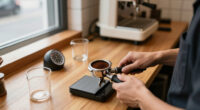
Weigh the grounds
A “double” often means a larger dry dose than a single. Cafés choose their basket and recipe, so the number of grams can differ.
Weigh the espresso
Yield is the liquid espresso by weight. It is not the same as millilitres, and it does not tell you caffeine by itself.
A flexible serving name
Some cafés use a double as their standard espresso. Basket sizes and house recipes vary; there is no universal definition.
This is an example recipe, not a rule for every café. “Double” alone does not reveal the exact dose or caffeine.
02 / LOOKS CAN DECEIVE
Volume is not a reliable shortcut
Crema adds foam and bubbles to the apparent volume, then settles. Millilitres can make two shots look different even when the underlying recipes tell a clearer story.
What the cup shows
A larger-looking shot is not automatically a proportionally stronger one.
For a better comparison: check the dry dose and the recipe. The amount of caffeine also depends on the coffee itself and how the shot was extracted. Espresso is concentrated by volume, but a small serving often has less total caffeine than a standard mug of brewed coffee. Recipes and serving sizes vary.
03 / WHAT CHANGES CAFFEINE
The beans and the brew both matter
Even with a larger dose, caffeine does not scale with perfect predictability. Ingredient differences and brewing choices change the final cup.
Species and growing conditions
Robusta usually has more caffeine by weight than arabica. A blend’s composition and growing conditions matter too.
Not just a darker taste
Roast affects bean mass and flavor. Dose tells you how much dry coffee went in; roast color alone cannot reveal caffeine per cup.
Grind, time and technique
Grind size, water temperature, brewing time and barista technique affect extraction. Two cafés can make different shots from similar doses.
A double is often more coffee than a single, but bean choice and extraction mean “twice the dose” does not guarantee “twice the caffeine.”
04 / TRACE THE CUP
From coffee grounds to what you taste
A useful way to think about espresso is as a chain of decisions. Each step shapes the drink, while the word “double” leaves some details unspecified.
Choose beans
Species and blend set a starting point for caffeine.
Set the dose
Weigh dry grounds to know the coffee input.
Pull the shot
Recipe and technique shape extraction and yield.
Serve the drink
Milk changes size and taste, not espresso caffeine already extracted.
05 / ORDER WITH CLARITY
Five takeaways for your next espresso
Cafés increasingly describe recipes in grams. Asking one simple question can tell you more than the single or double label.
A double often uses more coffee grounds, but does not guarantee exactly twice the caffeine or solids.
Volume can mislead because crema changes the apparent size and settles over time.
Beans, roast, dose and extraction all influence what ends up in the cup.
Drink size is not shot count: a large latte may have one shot, while a small drink may have two.
When caffeine matters, ask how many shots or how many grams of coffee the café uses.
“How many shots—or how many grams of espresso dose—are in this drink?”
What exactly does a ‘double shot’ mean in the coffee world?
Most baristas and cafes label a ‘double shot’ as using about 18-20 grams of coffee grounds to produce a shot of espresso. But that doesn’t mean it’s twice the caffeine or coffee solids of a single shot. It’s simply a larger dose of dry coffee grounds.
Think of it like a recipe: if a single shot uses 7 grams of coffee, a double might use 14 grams, but the extraction process and resulting caffeine aren’t necessarily scaled in the same way. It’s a serving size, not a precise measure of strength.
For example, a cafe might pull a single shot with a 7-gram dose and produce about 30 millilitres of espresso, while a double uses 14 grams and yields 60 millilitres. These numbers vary across shops, making ‘double’ a flexible term.
As an affiliate, we earn on qualifying purchases.
Why volume measurements can be misleading when comparing shots
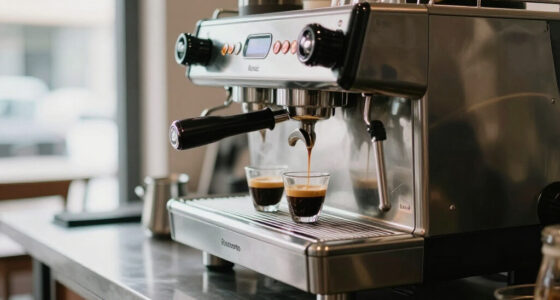
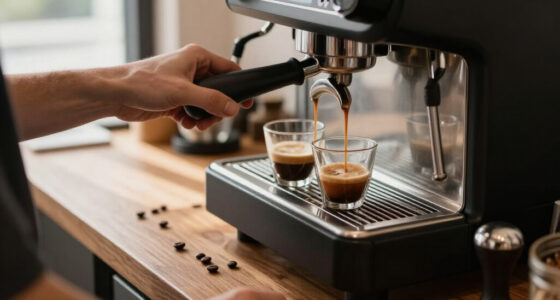
Many people look at the size of their espresso—measured in millilitres—and assume a larger shot means more caffeine. But that’s not always true. The volume includes crema, which adds a layer of foam and bubbles that can inflate the apparent size.
For instance, a single shot might be 30 ml, while a double could be 60 ml. But if the double has more crema or excess foam, it can look bigger without necessarily containing twice the caffeine or coffee solids.
Plus, crema settles over time and varies with extraction. Using volume alone can trick you into thinking a double is always stronger, but the real measurement is the dry coffee weight and extraction efficiency.
Understanding this distinction matters because relying solely on volume can lead to overestimating the strength of a double shot. The actual caffeine content depends on how much coffee was used and how well it was extracted, not just how big the foam or liquid appears.
As an affiliate, we earn on qualifying purchases.
How the beans, roast, and extraction affect caffeine content
The natural caffeine in coffee depends on several factors—type of bean, roast level, grind size, and brewing time. Robusta beans can contain up to twice the caffeine of Arabica beans by weight, but blends often mix these varieties.
For example, a dark roast might taste stronger or more robust but can sometimes have slightly less caffeine per gram than a light roast because roasting reduces bean mass and caffeine content slightly. This means that darker roasts, despite their bold flavor, may not necessarily deliver more caffeine per shot, which can be counterintuitive for many drinkers.
Extraction efficiency plays a role too. Even if you double the dose, if the water doesn’t extract the caffeine fully—due to grind size, temperature, or time—the increase in caffeine is less than proportional. This is why a double shot isn’t always twice as caffeinated as a single: the quality of extraction and bean properties heavily influence the final caffeine level.
In real-world terms, a 7-gram single shot might have 60 mg of caffeine, while a 14-gram double could have 120 mg, but variations in beans, roast, and extraction can cause this ratio to fluctuate. The key takeaway is that the inherent variability in coffee ingredients and brewing process means the caffeine boost from a double isn’t guaranteed to be double that of a single.
As an affiliate, we earn on qualifying purchases.
Recipe and technique: how baristas make doubles different
Baristas don’t just double the coffee and call it a day. They tweak grind size, tamping pressure, and extraction time to get the best flavor and caffeine out of each dose. These variables directly impact how much caffeine ends up in your cup.
For example, pulling a double with 18 grams of coffee might take 25 seconds, while a single with 9 grams could take 20 seconds. The goal isn’t just more coffee—it’s about balance and optimizing extraction. Variations in technique can lead to differences in caffeine content even when the same dose is used.
Some cafes use different baskets or grind finer for doubles, which impacts caffeine yield. Even with the same dose, two cafes might serve a double that has different caffeine levels based on their technique. This means that a ‘double’ isn’t a fixed measure but a result of specific brewing parameters.
So, a double is more than just twice the grounds; it’s a carefully calibrated recipe that affects the final caffeine and flavor profile, highlighting the importance of technique and equipment in achieving consistent strength.
As an affiliate, we earn on qualifying purchases.
What you’re really getting: caffeine, solids, and size
Here’s the heart of the matter: a double shot generally contains more coffee solids and caffeine than a single, but the exact amount varies based on multiple factors. A typical single shot has about 30 ml of espresso, with roughly 60 mg of caffeine, depending on beans and extraction quality.
The double might have 60 ml and around 120 mg of caffeine, but it can differ based on recipe and beans. This variability means that the size and dose are only part of the story—what truly matters is how much coffee was used and how well it was extracted.
For example, if a cafe uses a 20-gram dose for a double and extracts it well, the caffeine content can be higher, but if the extraction is weak or the beans are low in caffeine, the increase isn’t guaranteed. This highlights that the actual caffeine content depends on multiple intertwined factors, not just the number of grams used.
In short, size and dose influence the content, but natural variability, extraction efficiency, and bean properties matter just as much, making the actual caffeine in your cup a nuanced outcome rather than a fixed number.
How cafés now describe espresso: dose, yield, and shot size
More cafés today measure their espresso recipes in grams—dose and yield—rather than just ‘single’ or ‘double.’ This shift helps baristas and customers understand exactly what’s in the cup, including the actual weight of coffee and liquid, which directly impacts strength and flavor.
For example, a shop might serve an 18 g dose with a 36 g yield, making it a precise double. Others might use a 20 g dose for a slightly larger or smaller shot, depending on the desired flavor profile. This approach provides greater transparency and consistency, allowing for better control over caffeine and solids in each shot.
This practice makes the term ‘double’ less fixed and more about the actual recipe, highlighting the importance of knowing the specific grams of coffee and liquid involved. It also enables baristas to tailor shots more precisely to achieve the desired strength and profile, rather than relying on vague labels.
So, when you order, asking for the dose and yield in grams gives a clearer picture than just requesting a double, helping you understand what’s really in your cup.
Should you worry about caffeine—how much is too much?
Many wonder if two shots are a lot of caffeine. It depends. A typical double shot with 120 mg of caffeine is below the FDA’s recommended limit of 400 mg per day for most adults. However, the real concern lies in cumulative intake and individual sensitivity.
While one double shot might be within safe limits, drinking multiple doubles in a short period can quickly exceed recommended daily caffeine levels, leading to jitters, insomnia, or other health issues. The variability in caffeine content, due to beans and extraction, means that some doubles might contain more or less caffeine than the average, making it harder to gauge your intake precisely.
Additionally, larger drinks like lattes or Americanos often contain multiple shots, but the total caffeine depends on the number of shots, not the drink size itself. Being aware of how many shots you’re consuming helps manage intake better, especially if caffeine sensitivity or health concerns are factors.
Ultimately, moderation and awareness are key. Knowing the number of shots and their approximate caffeine content allows you to make informed choices about your daily caffeine consumption.
What’s the takeaway? How to get the coffee you want
The key is understanding what a double shot really means. It’s not a promise of twice the caffeine or solids, but a larger dose of coffee grounds, often with a different recipe.
Ask your barista: how many grams of coffee are in your shot? How much liquid do they extract? These details give a clearer picture of the caffeine and flavor profile you’re getting.
And remember: if caffeine matters, the number of shots is more important than the size of your drink.
Next time you order, be specific. Say, “I’d like a double with 18 grams of coffee, please.” It’s a simple step that makes a big difference.
Frequently Asked Questions
Does a double shot have twice the caffeine of a single?
Not necessarily. While a double shot generally contains more caffeine because it uses more coffee grounds, extraction efficiency, bean type, and roast level all influence the actual caffeine content. So, it’s often more than just double or less, depending on these factors.How much caffeine is in one or two espresso shots?
A typical single shot has around 60 mg of caffeine, and a double has about 120 mg. But these numbers vary based on beans, roast, and brewing method. Always ask your barista for specifics if caffeine intake matters.Is espresso stronger than drip coffee?
It depends how you measure strength. Espresso is more caffeine-dense per millilitre, but a mug of drip coffee usually contains more total caffeine because of the larger serving size. So, a shot packs a punch, but your mug might still win overall caffeine content.Why does a larger latte sometimes have the same caffeine as a small one?
Because the caffeine comes from the espresso shots, not the milk or drink size. A larger latte may just contain more milk, not more espresso. Ask how many shots are in your latte for clarity.Do dark-roast beans have more caffeine than light-roast beans?
No, dark roasts tend to have slightly less caffeine per gram because roasting reduces bean mass and caffeine slightly. The caffeine content depends more on the bean variety and dose used.Conclusion
Understanding that a double shot isn’t always twice as strong helps you make smarter choices about your coffee. It’s about what’s in the cup—dose, recipe, and beans—not just size or label.
Next time you order, ask for the dose in grams and the extraction details. Clear questions lead to better coffee and fewer surprises. Your perfect espresso isn’t just about size—it’s about precision and knowing what’s behind that beautiful crema.
Fall Picks
fall essentials
As an affiliate, we earn on qualifying purchases.